Bed Bug Infested Furniture Disposal Dubai: Getting It Out Safely
The Junk Services Dubai Team 5 min read
Furniture that has picked up an infestation is not a normal collection, because how it leaves the property matters as much as that it leaves at all. This guide covers how infested sofas, chairs and other upholstered pieces are wrapped and handled, what is never donated, and where treatment fits before disposal.
An infested piece of furniture carries a real risk of spreading the problem to a shared corridor, a lift, a neighbouring unit or the rest of a truck load if it is handled the way ordinary furniture is. The difference is entirely in the sequence: containment happens before the piece is moved, not after.
This applies mainly to upholstered furniture: sofas, armchairs, upholstered dining chairs and mattresses, since fabric and padding are what an infestation lives in. Our guide to mattress removal covers the same wrapping principle for mattresses specifically.
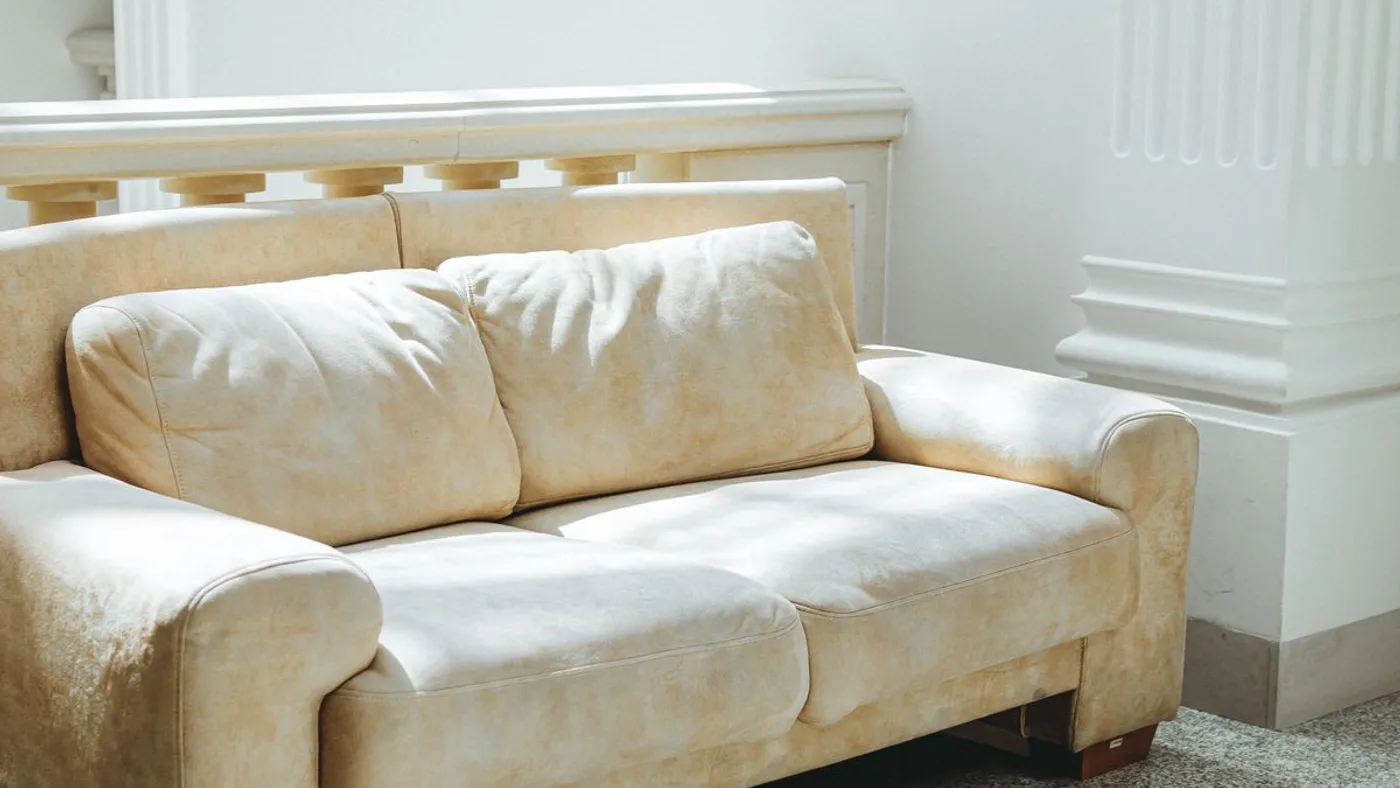
Sofas and armchairs: The most common source, given deep upholstery and cushions. Loose cushions are bagged separately from the frame.
Mattresses: Wrapped the same way as any mattress leaving the property, with the wrapping treated as a hygiene seal rather than just protection in transit.
Upholstered dining or accent chairs: Handled individually if only one piece is affected, rather than assuming the whole set needs the same treatment.
Hard furniture: Tables, wardrobes and other non-upholstered pieces are a much lower risk and are usually cleared as a normal collection.
Wrapping and Bagging Before Anything Moves
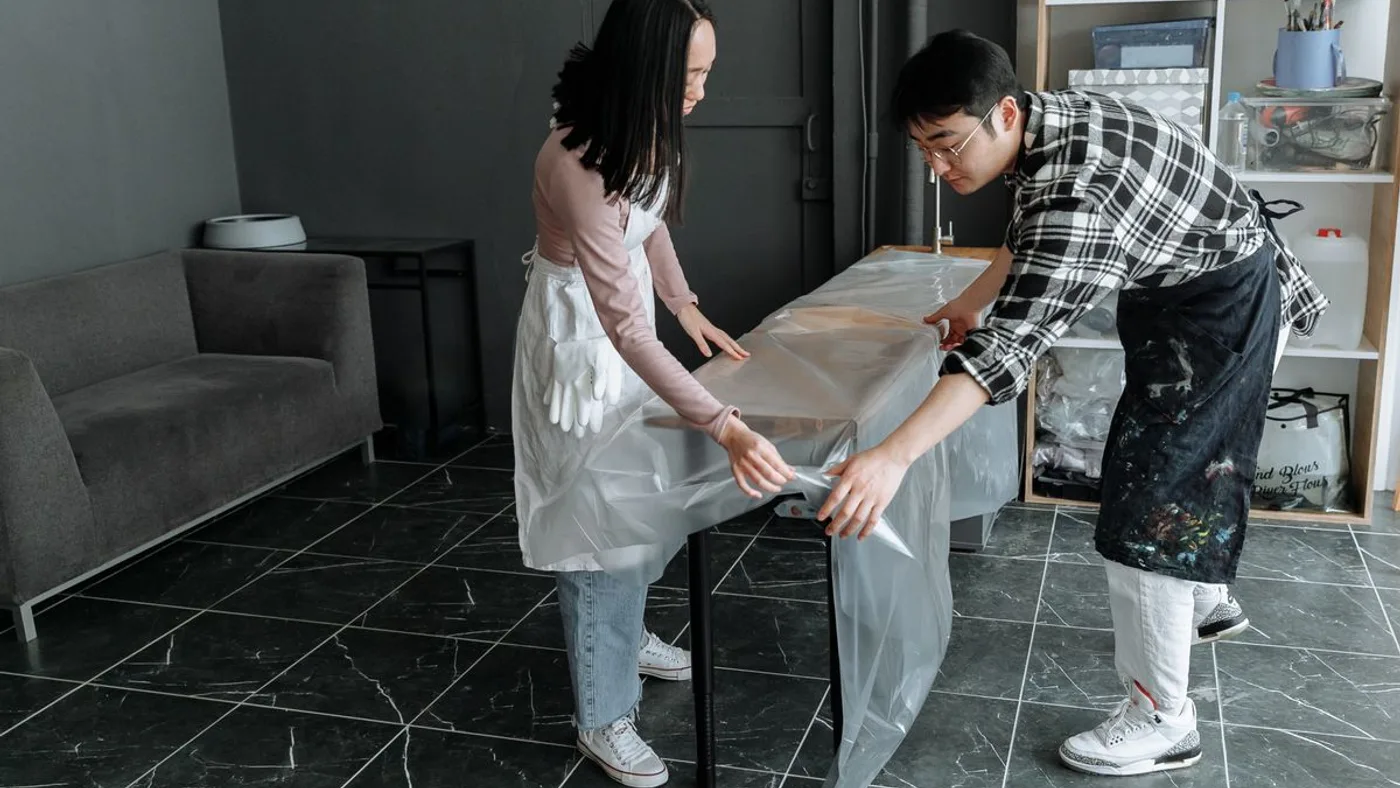
The piece is wrapped or bagged inside the room it came from, before it crosses a hallway, a lift or a stairwell. This single step is what keeps a contained problem from becoming a building-wide one, and it is done regardless of how far the piece has to travel afterwards.
Wrapping happens in the room the item came from, before it crosses a shared corridor or lift.
A sofa or armchair is typically sealed in heavy plastic sheeting, with any loose cushions bagged separately rather than left exposed. The wrapped piece then travels directly to the vehicle without being set down in a communal area on the way.
What This Guide Does Not Cover
A junk removal crew handles the disposal side: wrapping, lifting and hauling the piece away for responsible disposal. Identifying an infestation, confirming its extent and treating the rest of a property are jobs for a licensed pest control specialist, and a removal crew does not carry out treatment or make a diagnosis.
If you suspect an infestation but are not certain, it is worth having it confirmed before booking a large removal, since the wrapping and handling steps are only needed for a genuinely affected piece rather than for furniture that is merely worn.
Why Donation Is Never the Route
Infested furniture is disposed of, never donated or resold, regardless of how good the piece otherwise looks. Passing on a piece with a live infestation moves the problem into someone else's home, which is the one outcome the wrapping and sealing process exists to prevent.
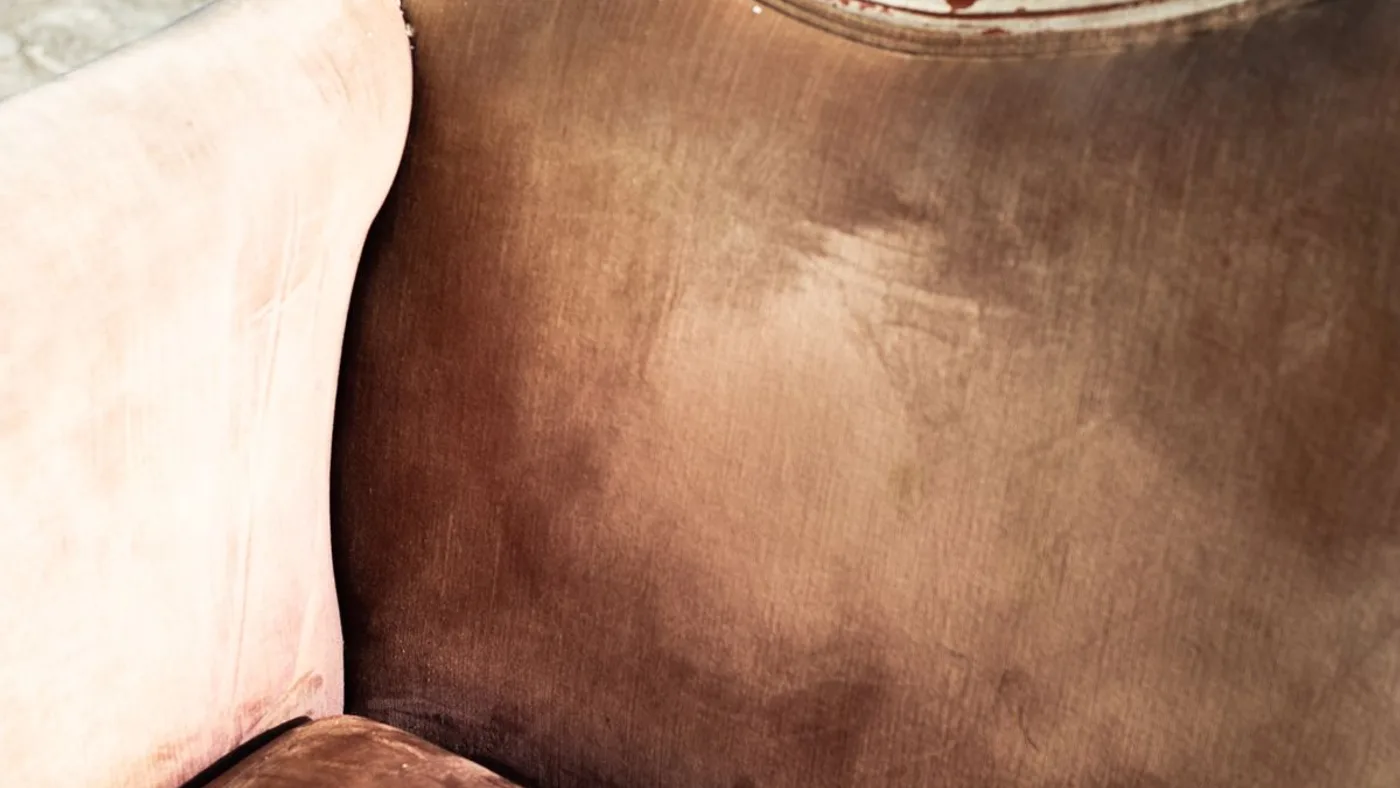
Visible staining alone does not mean infestation, but a piece with a confirmed problem is disposed of, not donated.
This is a different call from ordinary condition-based sorting. A worn or stained sofa in otherwise sound shape can usually still be donated, which our sofa removal guide covers, but that route closes entirely once an infestation is confirmed.
Furniture condition
Route
Handling
Confirmed infestation
Disposal only, never donation or resale
Wrapped or bagged in the room before it moves
Worn, stained or faded but no infestation
Usually still donated or resold
Handled as a normal collection
Uncertain, not yet confirmed
Have it confirmed first
Treated as normal until confirmed one way or the other
Condition alone does not decide the route. A confirmed infestation closes the donation route regardless of how the piece otherwise looks.
What Happens After Collection
The wrapped piece stays sealed through loading and transport, rather than being unwrapped for sorting.
It is kept apart from other furniture in the same load rather than stacked directly against it.
It is taken for disposal as waste rather than routed through any donation or resale stream.
Any bagged cushions or loose covers travel with the main piece rather than separately.
Booking a Same-Building or Multi-Unit Situation
In a Dubai tower, an infestation sometimes affects more than one unit, particularly in a building with a high turnover of short-let or rental tenants. Coordinating a single visit that clears more than one affected unit reduces how many times wrapped furniture has to pass through shared corridors and lifts.
A landlord or property manager dealing with several units in one building can arrange this kind of coordinated visit rather than booking each unit separately. Our guide to junk removal for property managers covers how multi-unit access is arranged more generally.
Preparing for a Wrapped Collection
1Have the infestation confirmed by a pest control specialist before booking, if you are not already certain.
2Identify every affected piece rather than just the most obvious one, since an infestation often spreads to more than one item in a room.
3Keep the affected furniture in the room it is already in rather than moving it yourself before the crew arrives.
4Mention every affected piece by name when you book, so the crew brings enough wrapping material.
5Avoid vacuuming or disturbing the furniture heavily right before collection, which can spread rather than contain the problem.
Key Takeaways
Infested furniture is wrapped or bagged inside the room it came from, before it crosses any shared space.
This applies mainly to upholstered pieces: sofas, armchairs, upholstered chairs and mattresses.
A removal crew handles disposal only; treatment and diagnosis are a licensed pest control specialist's job.
Infested furniture is always disposed of, never donated or resold, regardless of its condition otherwise.
Coordinating multiple affected units in one building reduces how often wrapped furniture crosses shared corridors.
Why Choose Junk Service in Dubai
As a local, fully insured team, Junk Services Dubai makes clearing your space simple — fast pickups, fair upfront pricing and responsible disposal across every Dubai community.
Same-Day Availability
Book today and, where crews are free, we clear it today — with no rush surcharge.
Fair, Upfront Pricing
A flat price agreed before we arrive, based on volume, items and access. No surprises.
Insured, Uniformed Crews
Background-checked teams who do all the lifting and protect your floors, lifts and walls.
Responsible Disposal
We sort for reuse, donation and recycling in line with Dubai Municipality guidance.
Our editorial team is made up of the crews and coordinators who clear homes, villas and offices across Dubai every day. We share practical, first-hand guidance on decluttering, disposal and responsible waste removal in the UAE.
FAQ
Frequently Asked Questions
It is wrapped or bagged inside the room it came from before it moves, then carried directly to the vehicle without being set down in a shared corridor or lift along the way.
No. A removal crew handles the wrapping, lifting and disposal of the furniture itself. Diagnosing and treating an infestation is a licensed pest control specialist's job, not the removal crew's.
No. Infested furniture is always disposed of rather than donated or resold, regardless of how sound the piece otherwise looks, since passing it on would move the problem into someone else's home.
Mainly upholstered pieces, since fabric and padding are what an infestation lives in: sofas, armchairs, upholstered dining chairs and mattresses. Hard furniture like tables is a much lower risk.
Have it confirmed first if you are not certain. The wrapping and sealing steps are specifically for a confirmed infestation, and worn or stained furniture without one can usually go through a normal donation or disposal route instead.
Yes. Coordinating a single visit for several units reduces how many times wrapped furniture passes through shared corridors and lifts, which is worth arranging directly with the crew.
Yes. It stays sealed through loading and transport and is kept apart from other furniture in the same load rather than stacked against it.
Final Thoughts
The step that matters most with infested furniture is the one that happens before it ever leaves the room. Wrapping and sealing on the spot is what keeps a contained problem from becoming a shared corridor's problem, and it is not a step worth skipping to save a few minutes.
Have the infestation confirmed, then book the removal separately from any treatment. Our furniture removal team handles the wrapping and disposal safely.
Book a Pickup for Infested Furniture
Tell us the piece, your area and floor, and whether the infestation has been confirmed. We will confirm how it will be wrapped and a flat price before the crew arrives.
WhatsApp Us the details, Book a Pickup for a slot that suits you, or Contact Us to coordinate a multi-unit visit in the same building.
The easy way to handle mattress removal in Dubai — why old mattresses can't be dumped, how responsible disposal and recycling work, apartment, villa and hotel collection, same-day pickup, hygiene, and Dubai Municipality compliance.
A practical guide to sofa removal in Dubai — old sofa, sectional, couch, recliner and sofa-bed pickup from apartments, villas and offices, how collection works, preparing your sofa, and responsible donation, resale and recycling.
A property manager is not booking one clearance, they are running a schedule. How between-tenancy clears are scoped, how building access is arranged once, and what changes when the same crew works across a portfolio.

 Guides