Broken Furniture Removal Dubai: When a Piece Is Past Saving
The Junk Services Dubai Team 7 min read
A broken wardrobe is easier to ignore than an unwanted one, because there is no decision left to make about it. It stays in the spare room with a door off its hinge for a year. This guide covers where the line between old and broken sits, what tends to break furniture in Dubai specifically, and why a damaged piece usually has to come apart before it can leave the room.
The distinction is not cosmetic, and it decides what happens to the piece after it leaves your door. Old furniture has somewhere to go. Broken furniture does not.
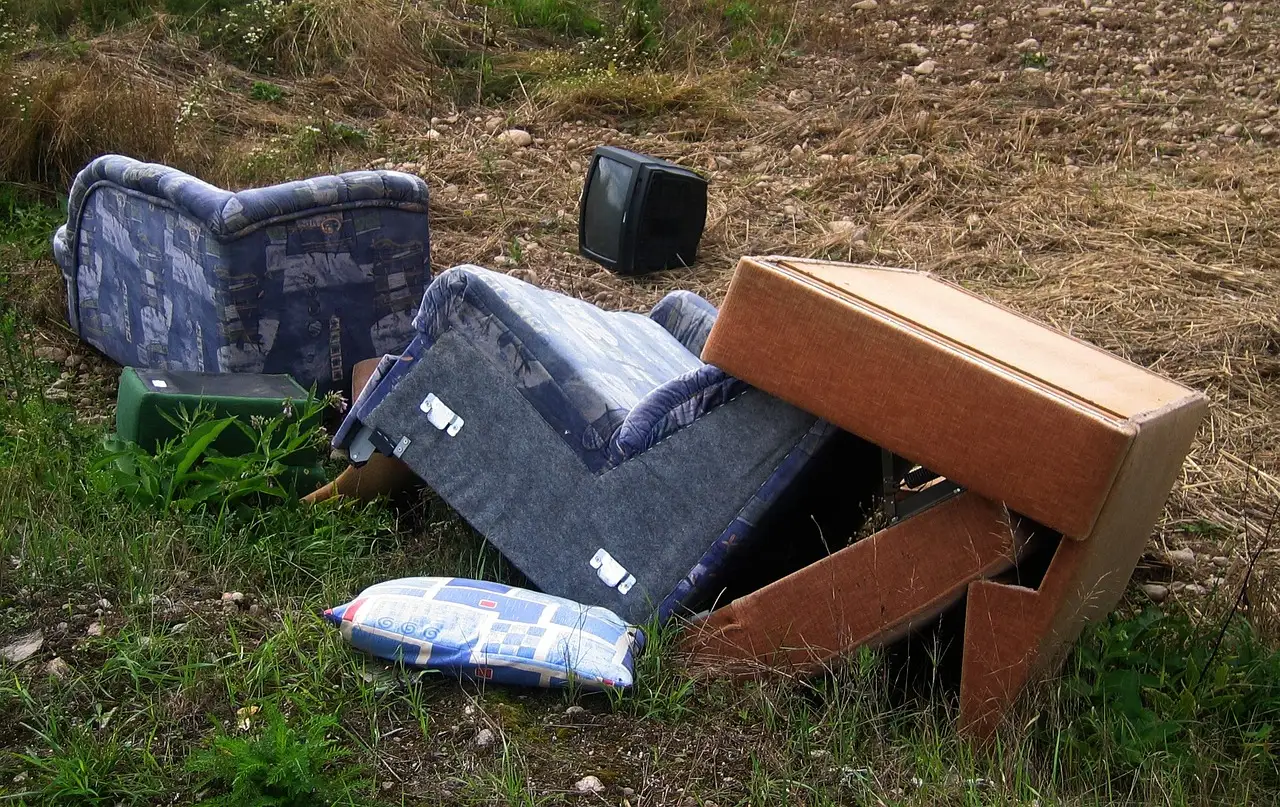
A piece is treated as broken once its structure or surface has failed rather than merely worn: a joint that no longer holds, a swollen board, a cracked frame, water damage, mould, or upholstery that has torn through to the foam. Scuffs, faded fabric and dated styling are wear, and a worn piece is often still donatable.
If what you have is dated rather than damaged, old furniture removal is the closer guide, because a usable piece is worth routing to donation instead.
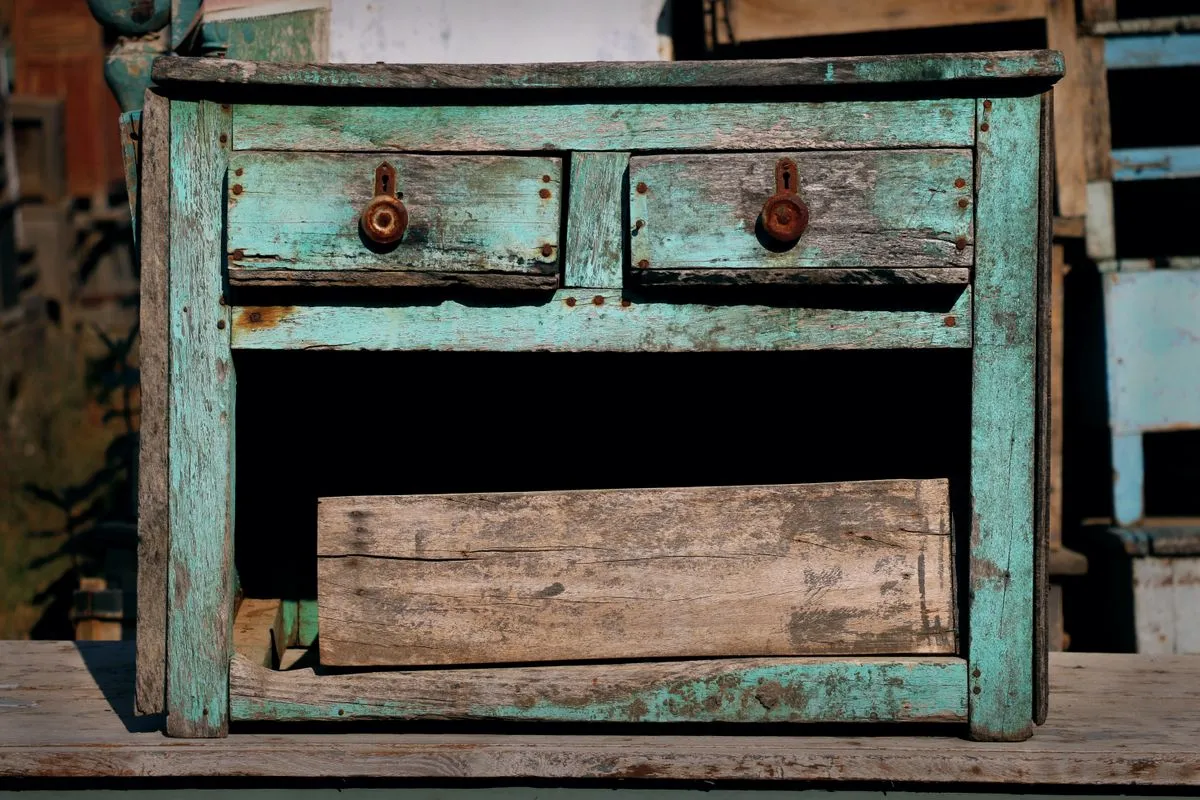
Split timber and a failed drawer front put this piece past repair. Once a joint has gone, the value is in the material rather than the furniture.
Why a Broken Piece Has No Donation Route
Charities and resale outlets in Dubai apply a working-condition test, and they apply it strictly, because a damaged donation becomes their disposal cost rather than their stock.
So a broken piece goes to material separation instead. That is the honest answer, and it is a better outcome than a landfill load: the timber, metal, foam and glass are split apart and sent down separate streams rather than travelling together as mixed waste.
Condition
Where it goes
What the crew does
Working, clean, structurally sound
Donation or resale
Carried out whole and wrapped to protect it in transit
Worn but usable
Donation where a partner will take it
Assessed on site; carried out whole where possible
Structurally failed or water damaged
Material separation and recycling
Dismantled, with timber, metal and foam split apart
Mould, pest activity or heavy contamination
Disposal, kept separate from the rest of the load
Wrapped before it leaves the room and loaded last
Condition decides the route, not the item. The same wardrobe can take any of these four paths depending on what has happened to it.
Where things end up in more detail, including which materials genuinely get recovered, is covered in our guide to junk recycling and donation.
What Breaks Furniture in Dubai
The failure patterns here are specific enough that a crew can usually guess the cause before hearing it. Four dominate.
Water from an air-conditioning unit: A blocked condensate drain overflows onto whatever sits below the indoor unit. Bedside tables, wardrobe bases and the underside of a bed frame take the damage, often unnoticed for weeks until the board has already swelled.
Humidity in an uncooled room: Particleboard and MDF absorb moisture and delaminate at the joints. This happens fastest in a room where the air conditioning is switched off for a summer, which describes most spare rooms, maid's rooms and villa garages.
Direct sun on a balcony or terrace: Resin whitens and goes brittle, timber greys and splits, and fabric loses its strength long before it looks worn. A chair that survived two winters can fail in one August.
Repeated flat-pack moves: Cam-lock and dowel joints in flat-pack furniture are designed to be assembled once. Dubai's lease cycle means a wardrobe often gets taken apart and rebuilt three or four times, and the holes stop gripping.
The flat-pack point is the one worth acting on. If a unit has already moved twice, it is usually cheaper to clear it at the end of the tenancy than to pay to move a piece that will not survive being rebuilt again.
Why Broken Furniture Usually Has to Come Apart
An intact wardrobe can often be walked out whole by two people. A broken one frequently cannot, and the reason is structural rather than dimensional.
A piece with a failed joint cannot be tilted or lifted from one side without the rest of it folding, which makes a straight carry unsafe.
Swollen board crumbles under a strap, so it cannot be secured the way sound furniture is.
A cracked glass top or mirrored panel has to be wrapped and removed separately before anything else moves.
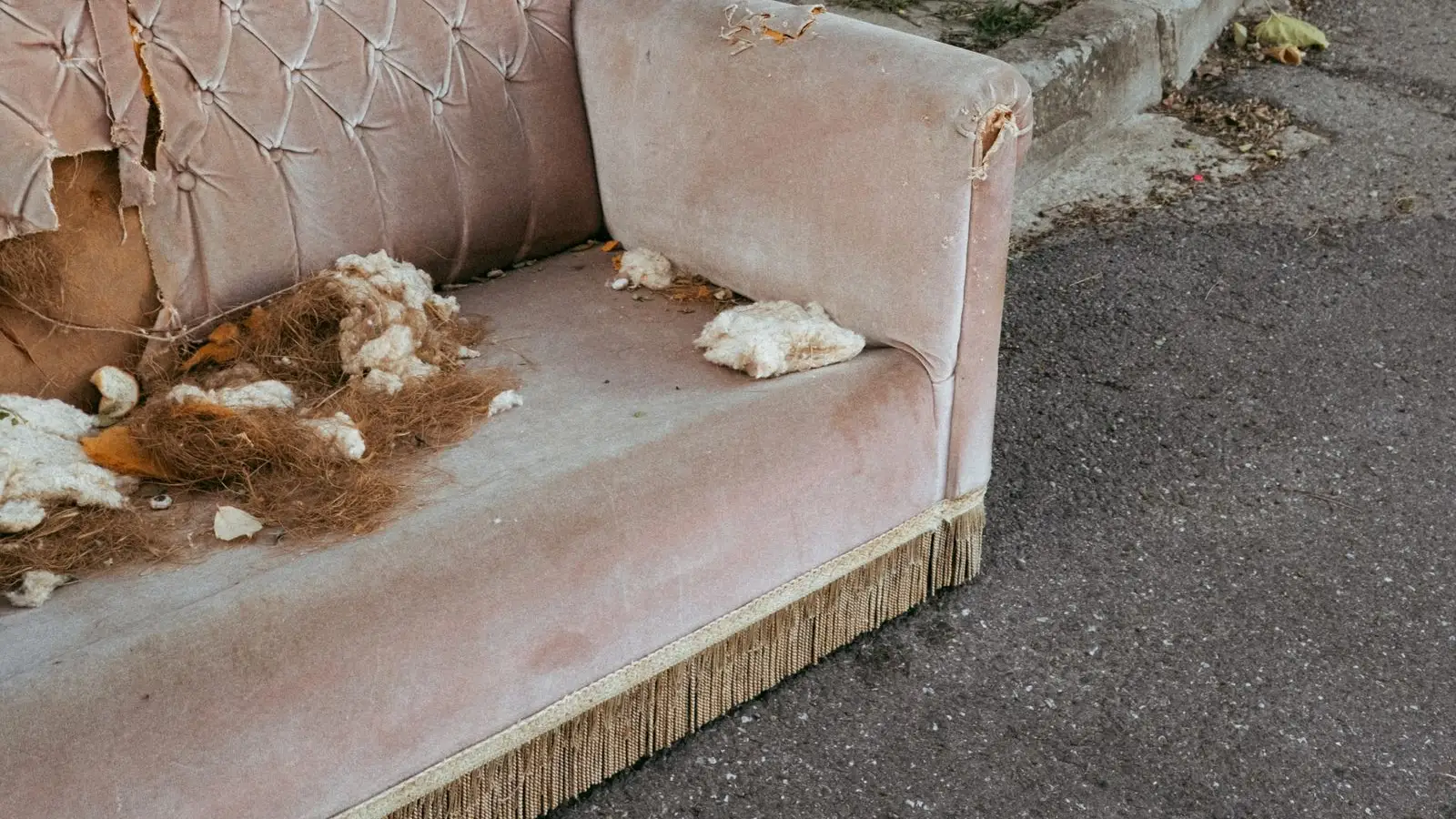
Torn upholstery sheds foam through a corridor and a lift, so a damaged sofa is bagged rather than carried open.
Pest-affected or mouldy items are wrapped in the room itself to keep them from contaminating a shared lift or the rest of the load.
Crews carry the tools for this, and dismantling a damaged piece on site is normal rather than an extra service. It is worth mentioning the damage at booking, because it changes how long the slot needs to be, and in a tower it changes whether protective covering goes up in the lift first.
A chair in pieces is easier to remove than a chair that collapses halfway down a stairwell. Dismantling happens in the room, not on the way out.
What It Costs Against Removing an Intact Piece
Broken furniture is not charged as damaged goods. It is priced on the same basis as anything else: the crew time it takes, the route out of the property, and the disposal it needs.
Where a damaged piece does differ is that two of those three tend to be higher. Dismantling adds time on site, and material separation is a longer disposal route than handing something to a donation partner. A broken wardrobe therefore sits above a working one of the same size, though the gap is smaller than most people assume.
If a piece is genuinely unstable, the useful instruction is to leave it alone. A wardrobe held together by its back panel is more dangerous to a resident moving it than to a crew that expects it.
Send a photo of the damage rather than describing it. A crew can tell from an image whether the piece needs dismantling in the room, whether glass has to come out first, and whether the job needs two people or three, which is what sets the slot length.
1Photograph the piece from a distance and then close on the actual break, since the two answer different questions.
2Say what the piece is made of. Solid timber, particleboard, metal and glass each change how it comes apart.
3Give the floor and whether there is a service lift, so lift protection can be arranged before the slot rather than on the day.
4Mention water damage, mould or pest activity explicitly. These change the wrapping the crew brings and the order the item is loaded in.
5Leave the piece where it stands and stop using it. An unstable item is most dangerous to the person trying to move it alone.
In an apartment in Dubai Marina or JVC, mention the floor and whether a service lift has to be reserved. Broken items are more likely to need protective covering in the lift, and that has to be arranged with building management before the slot rather than on the day.
Key Takeaways
A piece is broken once its structure or surface has failed, not when it has merely worn.
Damaged furniture has no donation route, so it goes to material separation instead of resale.
Air-conditioning water leaks, uncooled humidity, balcony sun and repeated flat-pack moves cause most furniture failure in Dubai.
A broken piece often has to be dismantled in the room, because a failed joint makes a straight carry unsafe.
Glass, torn upholstery and pest-affected items are wrapped before they leave the room.
Broken furniture costs slightly more than an intact piece of the same size, driven by dismantling time and the disposal route.
Why Choose Junk Service in Dubai
As a local, fully insured team, Junk Services Dubai makes clearing your space simple — fast pickups, fair upfront pricing and responsible disposal across every Dubai community.
Same-Day Availability
Book today and, where crews are free, we clear it today — with no rush surcharge.
Fair, Upfront Pricing
A flat price agreed before we arrive, based on volume, items and access. No surprises.
Insured, Uniformed Crews
Background-checked teams who do all the lifting and protect your floors, lifts and walls.
Responsible Disposal
We sort for reuse, donation and recycling in line with Dubai Municipality guidance.
Our editorial team is made up of the crews and coordinators who clear homes, villas and offices across Dubai every day. We share practical, first-hand guidance on decluttering, disposal and responsible waste removal in the UAE.
FAQ
Frequently Asked Questions
Yes. Condition has no bearing on whether a piece is collected, only on where it goes afterwards. A wardrobe with a collapsed carcass or a sofa torn through to the foam is a routine collection, dismantled on site and separated into materials.
No, and it usually makes the job harder. Loose panels and exposed fixings are more awkward and less safe to carry than a piece that is dismantled in a controlled order by a crew with the right tools. Leave it as it stands.
It is wrapped in the room before it moves, kept separate from the rest of the load, and sent for disposal rather than recycling or donation. Mould rules out both of the better routes, and containing it matters most in a building with a shared lift.
Yes. The glass is dealt with first, wrapped and removed as a separate item before the frame is touched, so nothing is carried through a hallway loose. Tell us it is glass when you book so the crew arrives with wrapping material.
Operationally, yes. Water-damaged board is heavier than dry board and crumbles under a strap, so it is dismantled rather than carried whole, and it is usually loaded on its own to keep damp away from the rest. Photograph it before removal if you intend to claim for it.
The board itself has no scrap value, since particleboard and MDF cannot be recycled the way solid timber can. What is recovered is the metal: hinges, runners, rails and frames are separated out, which is why a piece is taken apart rather than crushed whole.
Yes, and that is the more efficient booking. The damaged item is separated from the donatable items during loading rather than at the property, so putting a broken wardrobe on the same visit as a room clearance costs less than booking it on its own.
Final Thoughts
The thing that keeps broken furniture in a spare room for a year is not the cost of removing it. It is the sense that a damaged piece is somehow harder to deal with than a good one, when the opposite is true: there is no decision to make about where it should go.
Photograph the damage, mention the floor, and let a furniture removal crew take it apart where it stands.
Arrange Collection for a Damaged Piece
WhatsApp us a photo of the broken item with your area and floor. We will confirm a flat price, bring the tools to dismantle it in the room, and separate the timber, metal and foam for recycling after collection.
A complete guide to old furniture removal in Dubai — sofa, bed, wardrobe, dining and office furniture pickup for apartments and villas, with responsible recycling, donation and Dubai Municipality-compliant disposal.
Furniture removal in Dubai isn't sold off a rate card. Here's what genuinely moves the price of a piece, and why a wardrobe can cost more to clear than a sofa.
The right way to handle furniture disposal in Dubai — how to choose between recycling, donating and disposal, item-by-item guidance for sofas, beds and wardrobes, and the mistakes to avoid.

 Guides