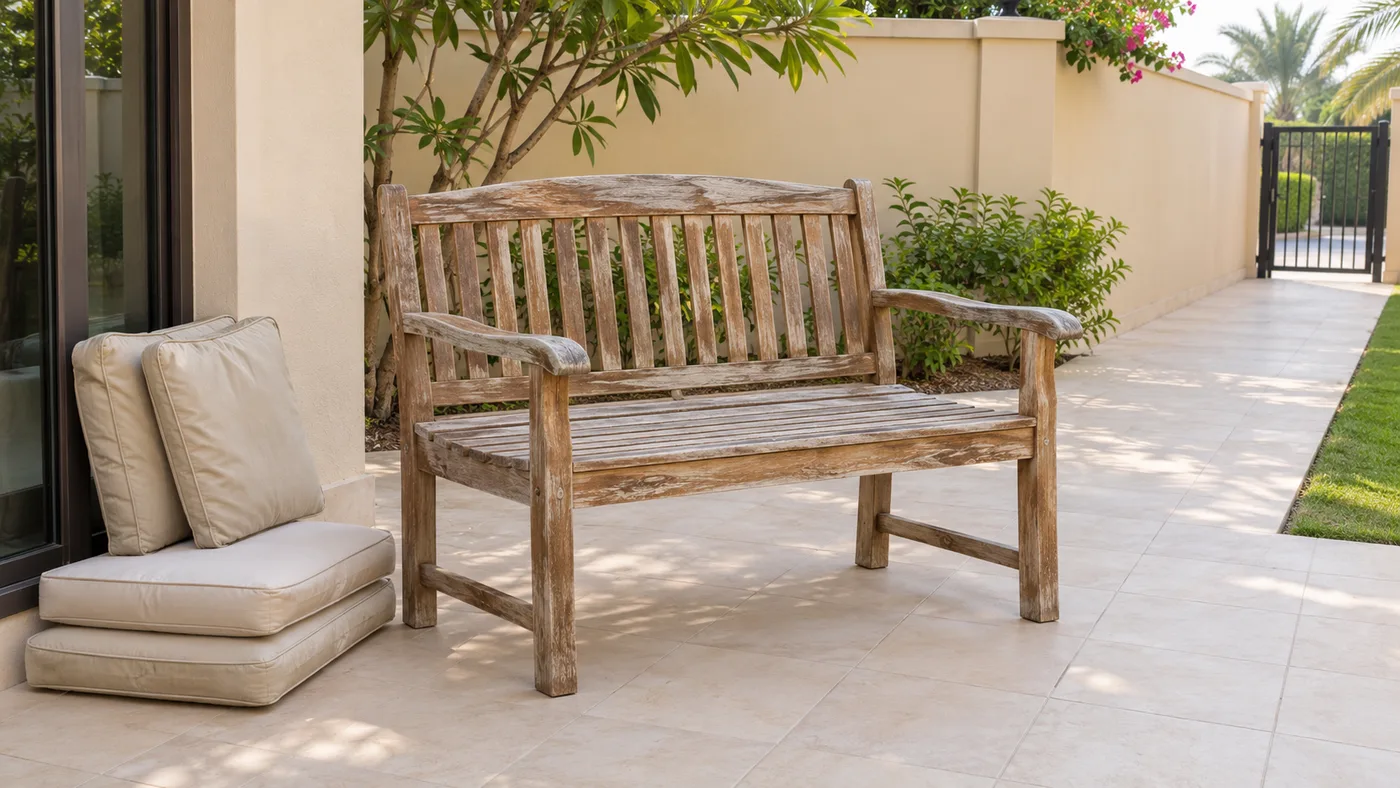
An old garden bench is often heavier and less stable than it looks after years of Dubai sun, irrigation and humidity. Safe removal starts by proving the seat is freestanding, checking weak joints and planning a route that keeps rust, splinters and loose slats away from floors and walls. This guide covers the bench from first inspection to collection.
A removable garden bench rests on its own feet and can leave without cutting paving, walls or concrete. Look beneath every leg for anchor plates, screws, grout or brackets. A bench attached to a planter, deck, wall or poured base is part of the property and falls outside a normal furniture collection.
Do not judge from the seat alone. Sand can hide foot plates, climbing plants can cover wall ties and paint can conceal old fixings. If the attachment is unclear, send close photographs before booking rather than testing it with force.
Bench type
Likely handling issue
Preparation
Teak or hardwood
Dense frame and loose joints
Remove cushions and flag splits
Cast iron and timber
Heavy ends and rusted bolts
Photograph feet and slats
Steel tube
Sharp corrosion and trapped water
Let it drain and cover edges
Resin bench
Sun-brittle back and arms
Carry from the base
Storage bench
Hidden contents and hinged lid
Empty it and secure the lid
Material and condition matter more than the number of seats.
Inspect Heat, Water and Corrosion Damage
Dubai heat can dry timber until slats split around their screws, while irrigation and washing water can corrode metal feet from below. Resin may turn brittle even when its colour still looks sound. Press lightly at structural joints, not decorative rails, and stop if the frame moves independently from the seat.
Wood: Report rot, long splits, projecting screws and any slat that lifts from the frame.
Metal: Flag rust holes, flaking edges, seized bolts and hollow sections that may hold water.
Resin: Mark chalky, cracked or sun-brittle areas so nobody grips them during the lift.
Mixed frame: Describe both materials because the ends may carry far more weight than the seat.
How to Prepare a Garden Bench for Collection
1Remove cushions, covers and anything stored beneath the seat.
2Check all feet and the rear rail for anchors or property attachments.
3Brush away dry leaves, sand and loose dirt without soaking the frame.
4Measure the full length, depth and height, including curved arms.
5Photograph the bench, weak joints, feet and the complete carrying route.
6Secure a hinged lid or loose slat with a removable strap.
7Keep pets and irrigation switched away from the collection path.
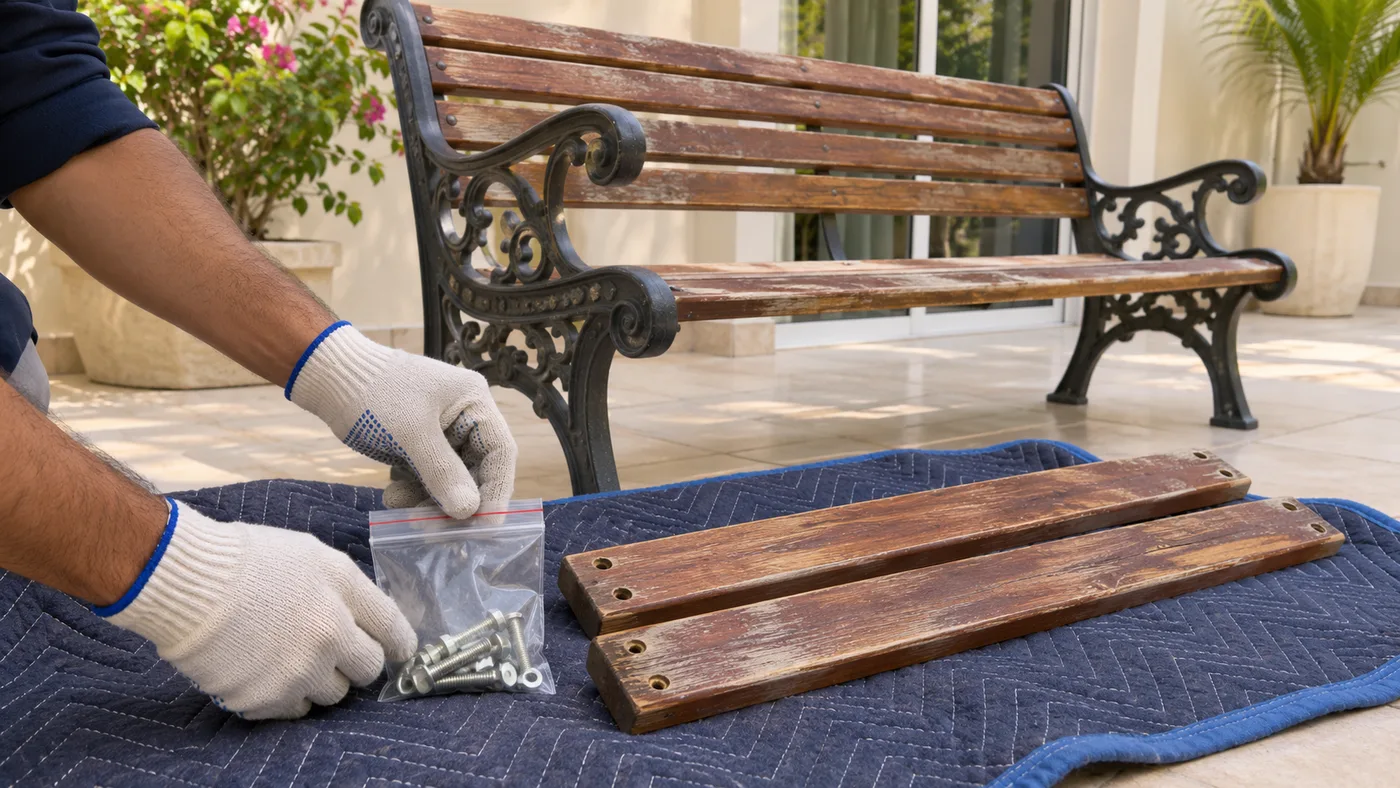
Bag reusable bolts and small fittings so dismantled bench sections stay identifiable and safe to carry.
Should the Bench Be Dismantled?
Leave a sound bench assembled when it fits the gate, corridor and vehicle. Its complete frame often carries more safely than separate weathered pieces. Dismantling helps only when the route is narrow and the bench has clear, accessible bolts that release without tearing weakened material.
Do not use an angle grinder, cut corroded legs or strike seized cast-iron parts before collection. Sharp fragments create a different handling risk. Share the obstruction and let the removal plan account for a two-person lift or controlled separation.
Plan the Route From Garden to Vehicle
Villa side passages often narrow around outdoor AC units, planters and hose points. Measure the bench against the tightest gate, then clear toys, pots and loose irrigation lines. A long bench needs turning space at both ends, not just a doorway wider than its seat.
Protect polished thresholds from metal feet and trapped grit.
Prop self-closing gates only while the carry is in progress.
Keep lift walls protected if the bench leaves an apartment terrace.
Tell the crew about steps, gravel, soft lawn or a long carry from the rear garden.
Arrange building access before arrival in communities that control service entry.
Reuse, Repair or Furniture Collection
A dry, stable bench with intact joints may suit reuse after cleaning. Repair can make sense when hardwood remains sound and only replaceable slats or fittings have failed. A frame with deep rot, perforated metal or widespread brittle resin is better declared as damaged outdoor furniture before collection.
Keep cushions separate because clean textile covers, foam and the rigid bench frame follow different decisions. For a wider patio clear-out, combine the bench with a planned outdoor furniture removal instead of mixing loose parts into garden cuttings.
What to Send Before Booking
Send one full view, close views of the feet and damage, the bench dimensions and a route photo. State the material, floor level, lift availability and whether the seat is loose. Accurate details let a furniture removal team plan people, protection and vehicle space before reaching the property.
Key Takeaways
Confirm the bench is loose furniture, not fixed to paving, a wall or a planter.
Remove cushions and flag sun damage, corrosion, loose slats and trapped water.
Measure the tightest gate and allow turning room for the full bench length.
Keep a sound bench assembled unless accessible bolts and a narrow route justify separation.
Why Choose Junk Service in Dubai
As a local, fully insured team, Junk Services Dubai makes clearing your space simple — fast pickups, fair upfront pricing and responsible disposal across every Dubai community.
Same-Day Availability
Book today and, where crews are free, we clear it today — with no rush surcharge.
Fair, Upfront Pricing
A flat price agreed before we arrive, based on volume, items and access. No surprises.
Insured, Uniformed Crews
Background-checked teams who do all the lifting and protect your floors, lifts and walls.
Responsible Disposal
We sort for reuse, donation and recycling in line with Dubai Municipality guidance.
Our editorial team is made up of the crews and coordinators who clear homes, villas and offices across Dubai every day. We share practical, first-hand guidance on decluttering, disposal and responsible waste removal in the UAE.
FAQ
Frequently Asked Questions
Yes. A loose freestanding garden bench can be collected when its size, material, condition and access route are declared in advance.
Not as ordinary furniture. A bench fixed to paving, concrete, decking, a wall or a planter needs to be professionally detached before a removal crew assesses the loose item.
No. Leave it assembled when it fits the route and remains stable. Separate only accessible bolted sections when this is safe and needed for access.
Remove and declare cushions separately. Dry reusable covers may have another use, while wet, mouldy or torn foam should not be hidden inside the bench frame.
Yes, if its condition is disclosed. Cover projecting edges, avoid cutting it yourself and send close photos so safe handling can be planned.
Yes. A dry bench with a stable frame and repairable surface may suit reuse, but deep rot, structural cracks or perforated metal can make it unsafe.
Final Thoughts
A bench is ready to leave when its ownership, fixings, condition and route are known. A five-minute inspection prevents loose slats, hidden anchors and tight garden gates from turning a routine furniture carry into a risky one.
Arrange Collection
WhatsApp Us clear photos of the bench, its feet, any damage and the route, plus the full dimensions, to plan removal.
Sun-bleached rattan, rusted frames and cracked sun loungers. Here's how outdoor furniture removal works in Dubai, why the climate shortens its life, and what happens to it after collection.
Professional sun lounger removal in Dubai. We clear brittle plastic pool beds, weathered rattan daybeds, and heavy parasol bases across villas and towers.

 Guides