 Furniture Removal
4 min read
Children's Playhouse Removal Dubai: Outdoor Toy Collection
How to empty, check and prepare a plastic children's playhouse for removal from a Dubai villa without losing fittings or damaging the garden route.
Read Article
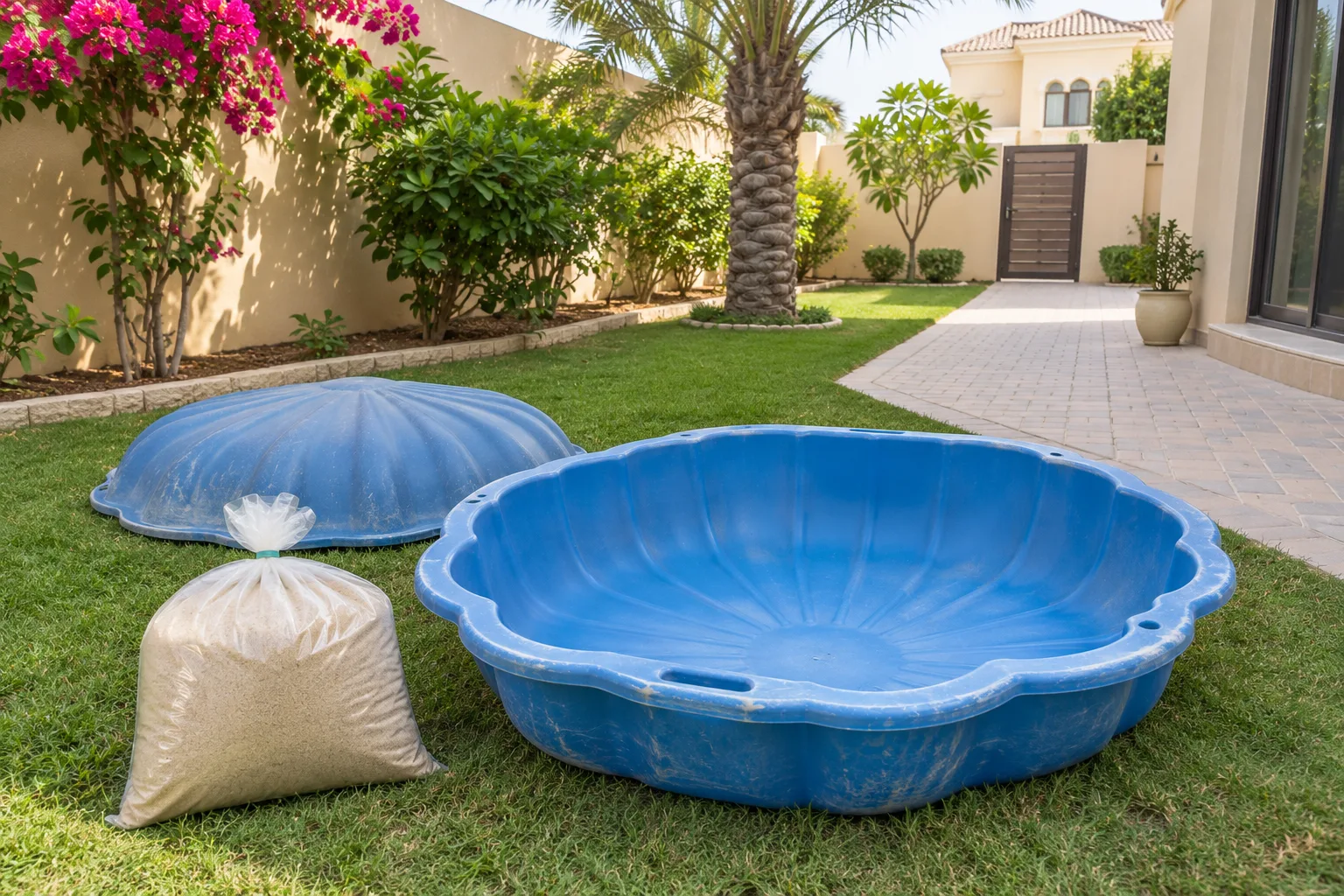
A portable sandpit becomes an unexpectedly heavy garden item when the shell is still full. Rain, irrigation, insects and animal waste can also change clean play sand into material that should not be reused. This guide explains how to assess the contents, empty the shell in controlled batches and prepare both parts for collection from a Dubai villa.
Treat the sand and the container as two different materials. The shell may be a light moulded plastic item, but its contents can weigh far more than handlers expect. Remove buckets, broken toys, stones, leaves and any hidden sharp object before deciding what can be reused.
Never drag a filled sandpit across grass, tile or artificial turf. The base can split, release the entire load and damage irrigation below. Emptying first also reveals cracks, drain holes and fixings that were hidden beneath the sand.
| Sand condition | Likely decision | Preparation |
|---|---|---|
| Dry, clean and known play sand | Reuse in another sandpit | Sieve and store in sound sealed bags |
| Wet from clean rainwater | Dry and reassess | Spread only in a controlled approved area |
| Mixed with soil or leaves | No longer suitable for play | Contain separately for an accepted route |
| Animal waste or strong odour | Do not reuse | Avoid dust and arrange controlled disposal |
| Unknown sharp debris | Stop and assess | Do not reach through it by hand |
Do not mix contaminated play sand into planting soil or spread it across a communal verge. The correct route depends on what contaminated it and what the property or receiving facility accepts. Keep the material contained and describe its condition honestly when arranging disposal.
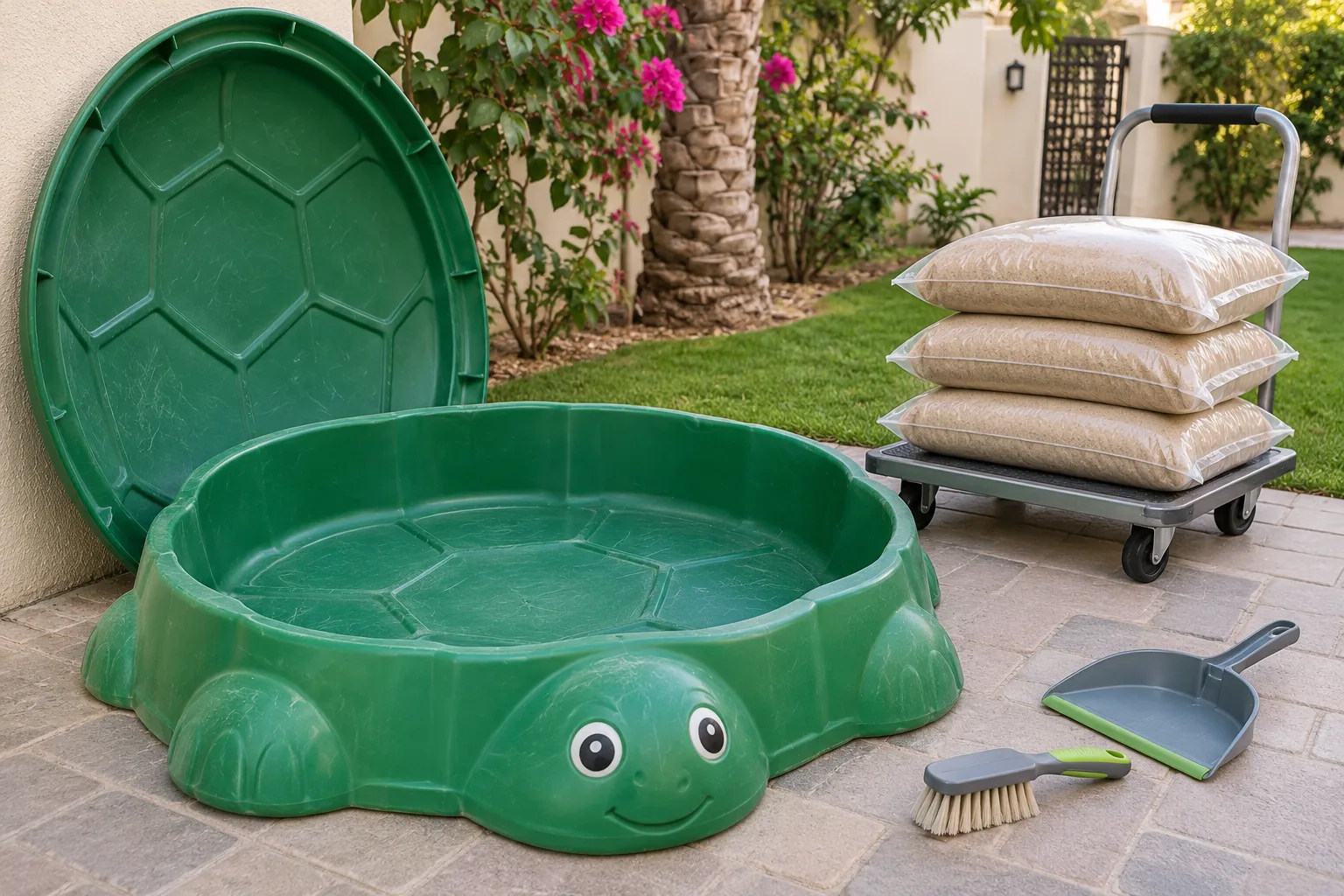
Do not use thin household bags for dense material. They split when lifted and allow fine sand to escape into a vehicle. Double containment may be useful, but it does not make an overloaded bag safe; smaller units are the better control.
Once empty, turn the shell only if it can be handled safely and check the underside for insects, standing water and damaged ribs. Rinse loose residue only where the water can follow the property's normal approved drainage route, then dry both sides before stacking the lid.
A plastic resin mark can help identify the material, but age, ultraviolet damage and embedded dirt affect acceptance. Do not cut a large shell into pieces merely to make it fit a bin. Cutting creates sharp edges and makes the item harder to handle safely.
Send photos of the full sandpit before emptying, the dry shell, every sealed sand container and the route through the garden. State whether the path crosses lawn, steps, a pool gate or a narrow side passage. Keep the prepared shell under cover so irrigation does not refill it before pickup.
A portable sandpit can join a planned garden item collection with a playhouse, garden chairs or a folded inflatable pool. Fixed timber borders, built-in landscape features and any excavation remain outside ordinary loose-item collection.
As a local, fully insured team, Junk Services Dubai makes clearing your space simple — fast pickups, fair upfront pricing and responsible disposal across every Dubai community.
Book today and, where crews are free, we clear it today — with no rush surcharge.
A flat price agreed before we arrive, based on volume, items and access. No surprises.
Background-checked teams who do all the lifting and protect your floors, lifts and walls.
We sort for reuse, donation and recycling in line with Dubai Municipality guidance.
Written by
The Junk Services Dubai Team
Junk Removal Specialists
Our editorial team is made up of the crews and coordinators who clear homes, villas and offices across Dubai every day. We share practical, first-hand guidance on decluttering, disposal and responsible waste removal in the UAE.
Yes. The shell must be empty, clean and dry, while any bagged sand must be declared separately by quantity, condition and approximate handling weight.
No. A loaded shell can be too heavy to handle safely and may split during lifting. Remove all sand and retained water before collection.
Dry known play sand may be reusable when it has no animal waste, odour, sharp debris, soil or other contamination. Sieve it and store it in sound sealed bags.
Use strong bags or lidded containers in small manageable units. Seal them, count them and disclose whether the material is dry, wet or contaminated.
Avoid cutting it. New sharp edges make handling harder. Keep the empty shell intact, contain an existing cracked edge and show the damage in booking photos.
No. Fixed borders, ground anchors and excavation require a separate property-work assessment. Ordinary collection covers loose prepared shells and declared contents.
The shell is easy to move only after the dense contents have been controlled. Assess the sand, use small secure containers, dry the empty plastic and keep the garden route clear for a predictable collection.
WhatsApp Us photos of the sandpit before emptying, the dry shell, sealed sand containers and garden access to schedule collection.
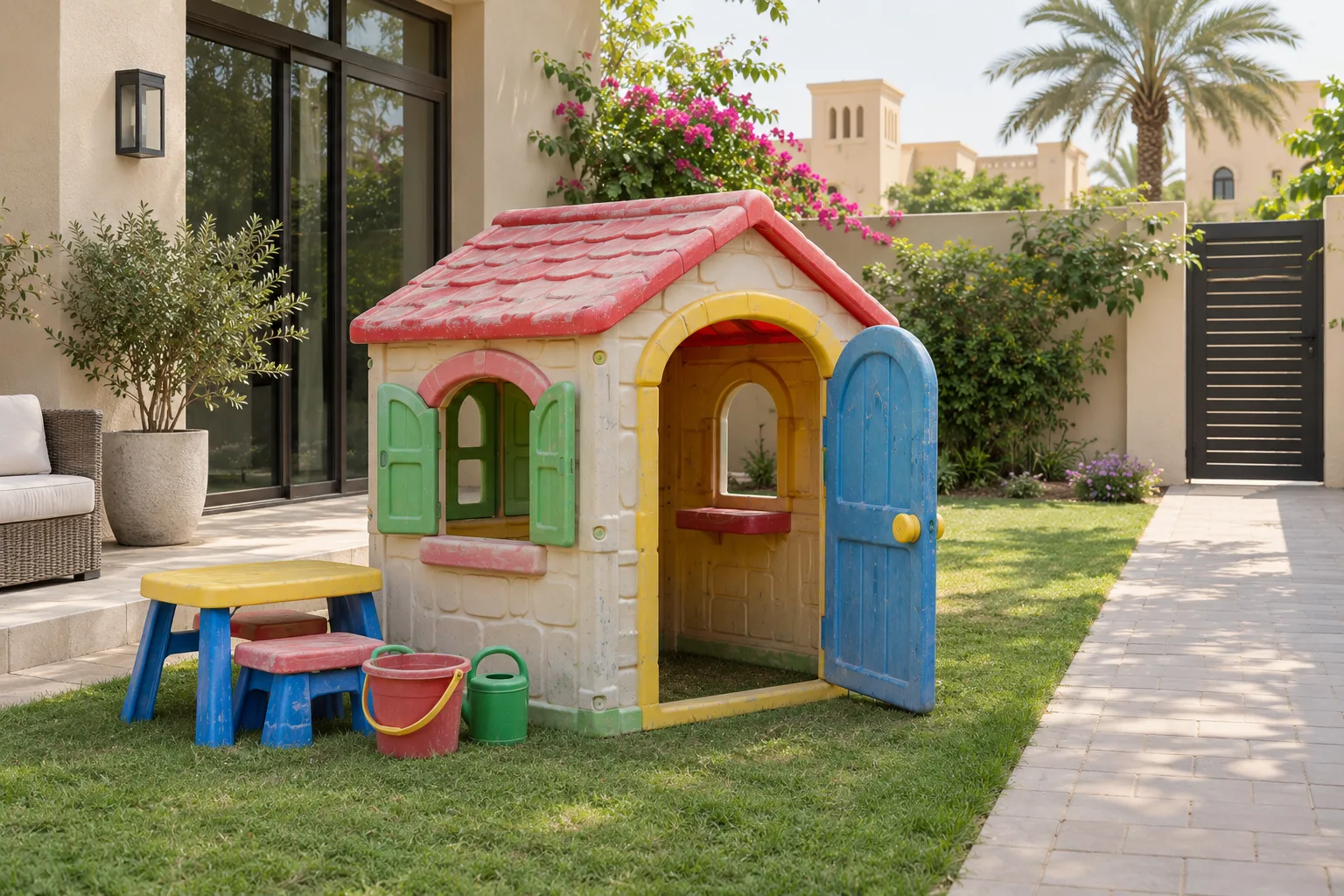
Furniture RemovalHow to empty, check and prepare a plastic children's playhouse for removal from a Dubai villa without losing fittings or damaging the garden route.
Read Article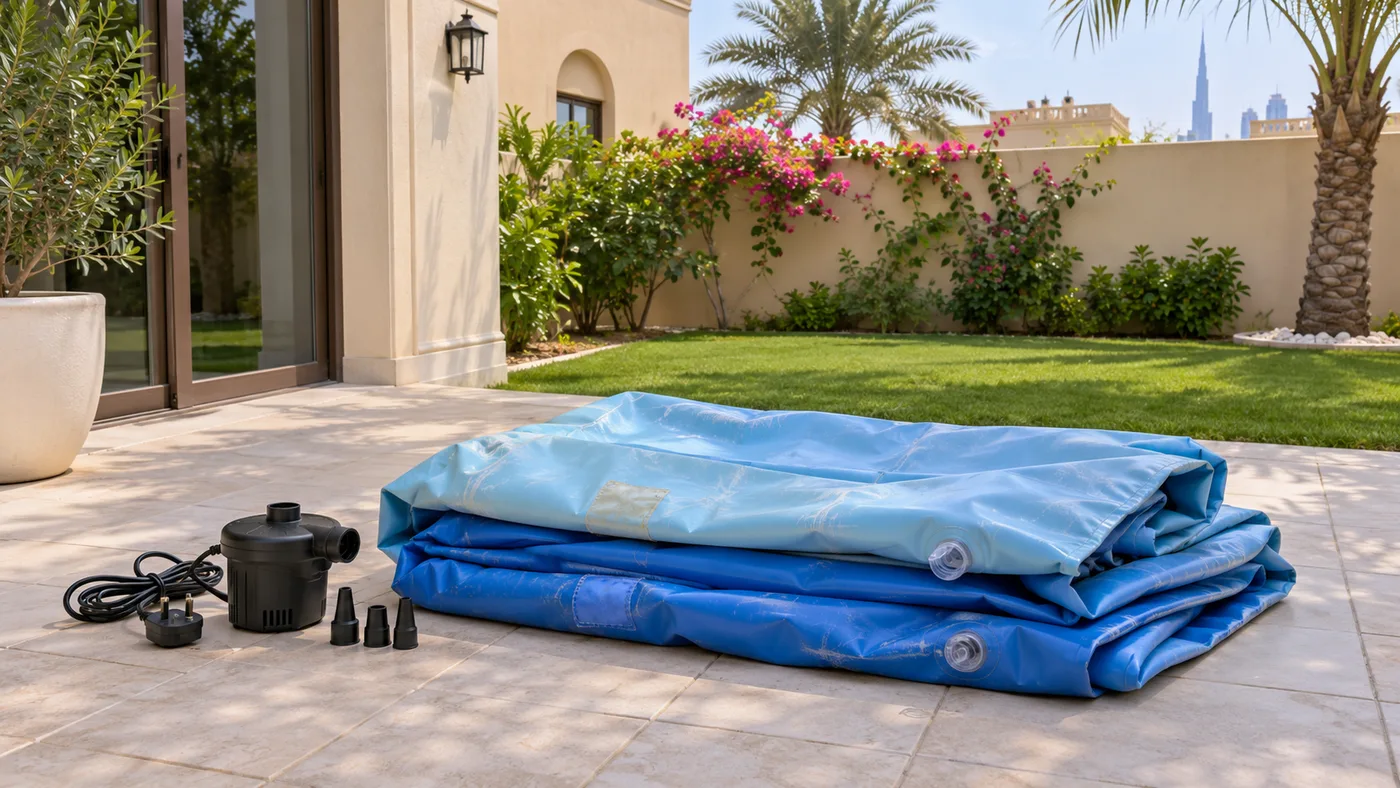 Waste Disposal
How to drain, clean, dry and prepare an old inflatable or frame pool for collection from a Dubai villa without leaving trapped water or loose parts.
Read Article Guides
How trampolines, swing sets, slides, playhouses and basketball hoops are dismantled and removed from Dubai villa gardens, what the sun does to them, and where the parts go afterwards.
Read Article