Warehouses generate a very particular kind of clutter. Broken pallets pile up by the loading dock, shrink-wrap and packaging waste spill out of every aisle, redundant racking takes up space that could hold stock, and obsolete machinery or dead inventory sits gathering dust for months because nobody has the crew or the time to move it. In Dubai's industrial heartlands — Al Quoz, Jebel Ali, Dubai Investment Park and Dubai Industrial City — that build-up costs real money in wasted floor space, failed inspections and lease penalties. Warehouse junk removal is the answer: a commercial service that clears an industrial unit safely, efficiently and in one coordinated push, whether you are relocating, handing back a leased unit, or simply reclaiming space in a working facility. This guide explains exactly how warehouse junk removal in Dubai works — what gets cleared, how safe loading and heavy handling are managed, how scrap and recyclables are dealt with responsibly, and how a professional cleanout keeps you compliant with Dubai Municipality rules from the first pallet to the final sweep.
Warehouse junk removal is a high-volume commercial cleanout service built for industrial spaces. An insured crew clears everything from accumulated pallets and packaging to redundant racking, obsolete stock, machinery and scrap metal, then loads it out and sends it for recycling or responsible disposal. It differs from a standard office or home pickup in scale and logistics: the volumes are far larger, the items are heavier, forklift and loading-dock access come into play, and the work often has to be scheduled around a live operation. In short, industrial junk removal in Dubai is its own discipline, not a bigger version of a house clearance.
For most operators the trigger is a change — a relocation, an end-of-lease handover, a decommissioning, or simply the point where wasted floor space finally costs more than the clearance would. Whatever the reason, the goal is the same: a safe, efficient warehouse cleanout that empties the unit on schedule, keeps recoverable materials out of landfill, and leaves the space inspection-ready.
When Does a Warehouse Need a Cleanout?
Warehouse junk accumulates slowly and then has to be dealt with all at once. The most common reasons Dubai businesses book a commercial warehouse cleanout are:
Warehouse relocation — emptying the old unit of everything that is not moving to the new facility.
End-of-lease handover — returning an industrial unit clean and empty to meet the landlord's condition and protect the deposit.
Decommissioning or closure — clearing a full unit when an operation winds down or consolidates.
Stock write-offs and dead inventory — removing obsolete, damaged or expired goods that are tying up racking.
Racking reconfiguration or fit-out — stripping out old shelving before a new layout or a new tenant moves in.
Seasonal and periodic resets — clearing the packaging, pallets and waste that build up over a busy trading period.
Health, safety and fire-compliance — removing clutter and blocked aisles flagged in an audit or inspection.
The common thread is a deadline and a volume too large to handle with in-house staff. That is exactly where a dedicated warehouse waste removal crew earns its place — turning a daunting, time-pressured job into a single scheduled clearance.
What Gets Cleared in a Warehouse Cleanout?
A warehouse holds a wider mix of junk than most commercial spaces. A professional cleanout handles all of it, sorted into the right streams as it goes.
Pallets and Packaging Waste
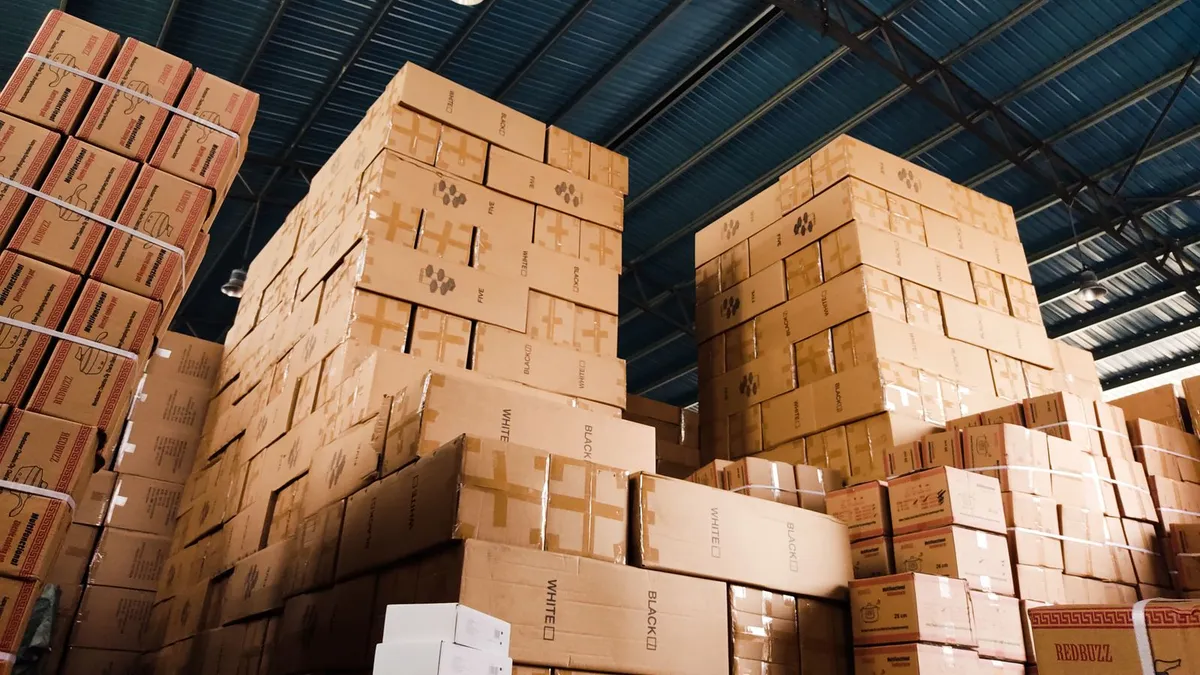
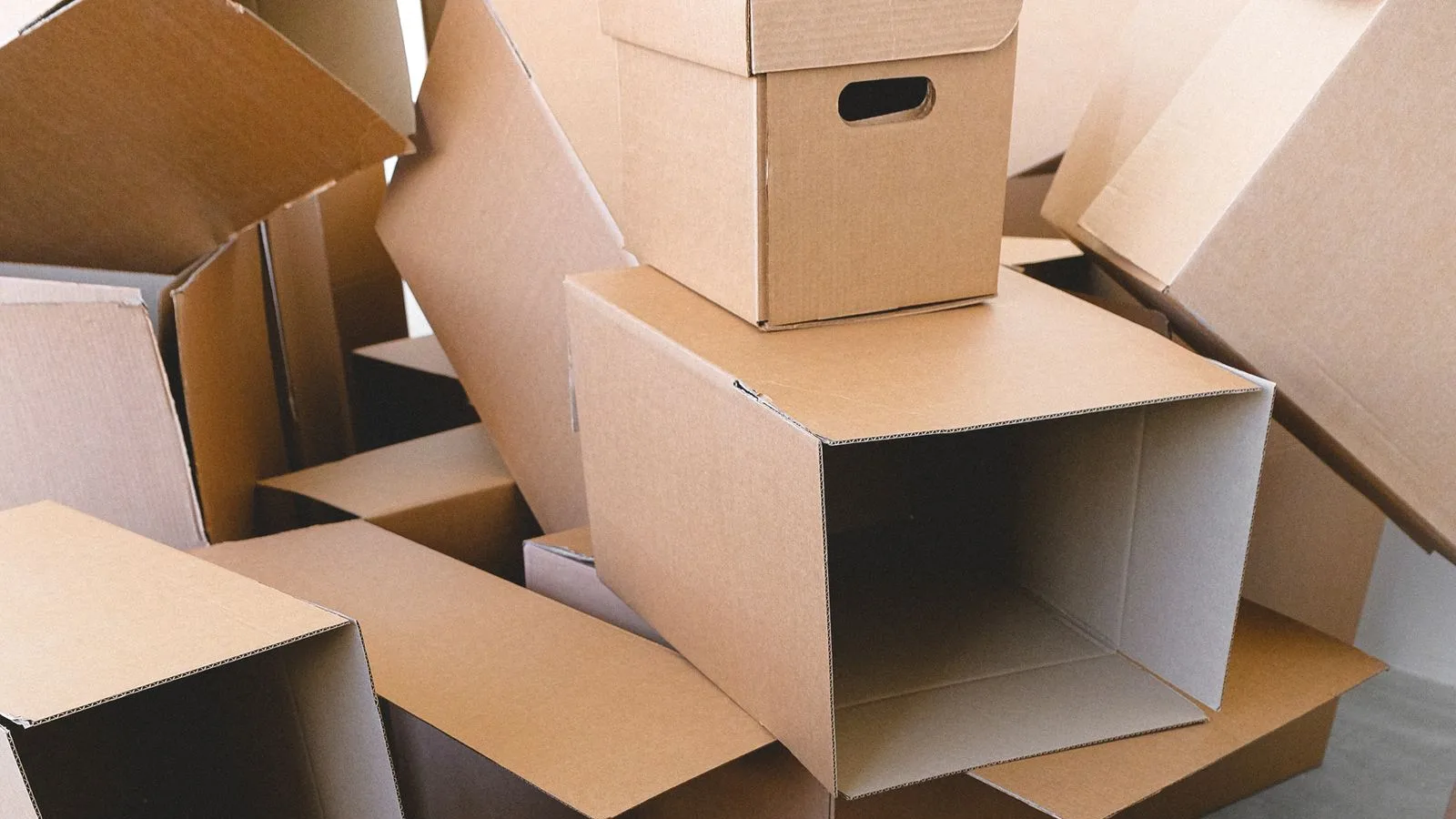
Broken and surplus wooden pallets, shrink-wrap, strapping, foam, void fill and mountains of flattened and unflattened cardboard are the single biggest volume in most warehouses. Wooden pallets and cardboard are highly recyclable, so a good crew separates them rather than tipping everything into one skip — cutting both landfill and, often, the disposal cost. Intact pallets can frequently be resold or reused rather than scrapped, so it is always worth setting the good ones aside before the rest are baled for recycling.
Pallets, cardboard and packaging are the biggest volume in most warehouses — and among the most recyclable when sorted properly.
Shelving and Racking Removal
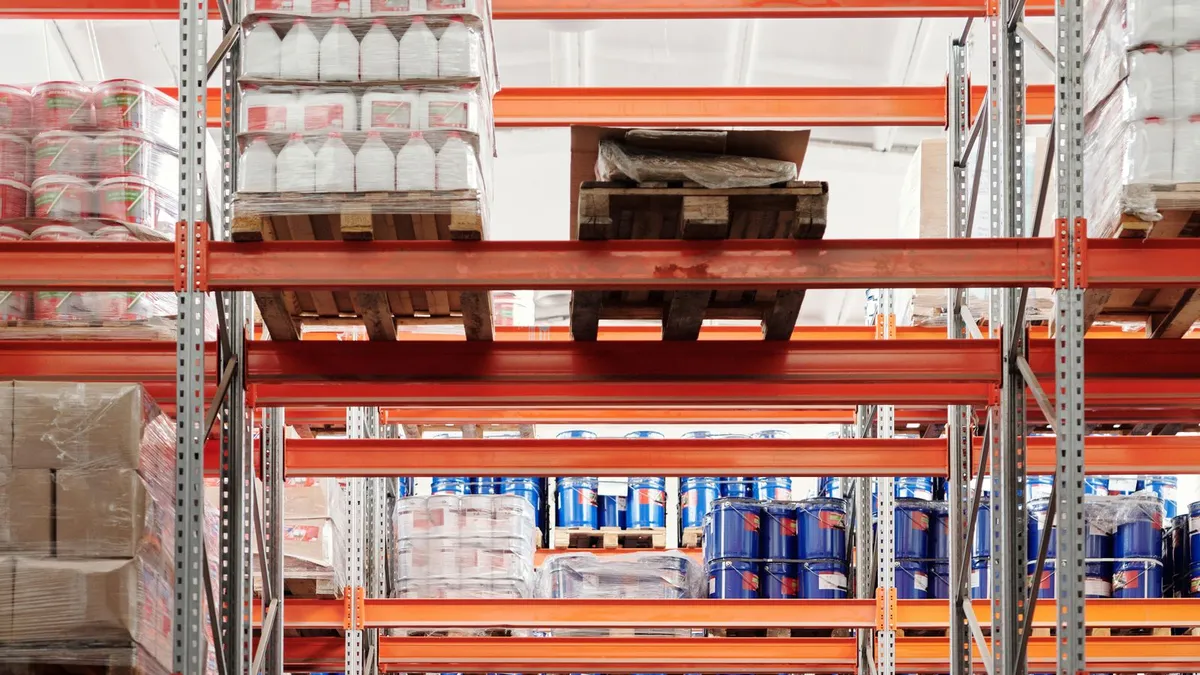
Pallet racking, mezzanine shelving, wire decking and industrial storage systems are heavy, bolted-together and often several metres tall. Removing them safely means methodical dismantling from the top down, not brute force — and the steel that comes out is valuable scrap. Racking removal is one of the most technical parts of any cleanout, which is why it should be handled by a crew that does it regularly.
Pallet racking is dismantled from the top down for safety — and the steel is sent for scrap recycling rather than landfill.
Obsolete Stock and Machinery Disposal
Dead inventory, damaged goods, and redundant equipment — from conveyor sections and workbenches to old compressors, pumps and production machinery — all need clearing. Machinery disposal takes planning: heavy units may need to be broken down, and any equipment that once held oil, coolant or other fluids must be drained and handled correctly before it leaves the site. A crew experienced with industrial units will scope this in advance rather than being caught out on the day.
Scrap Removal and Metal Recycling
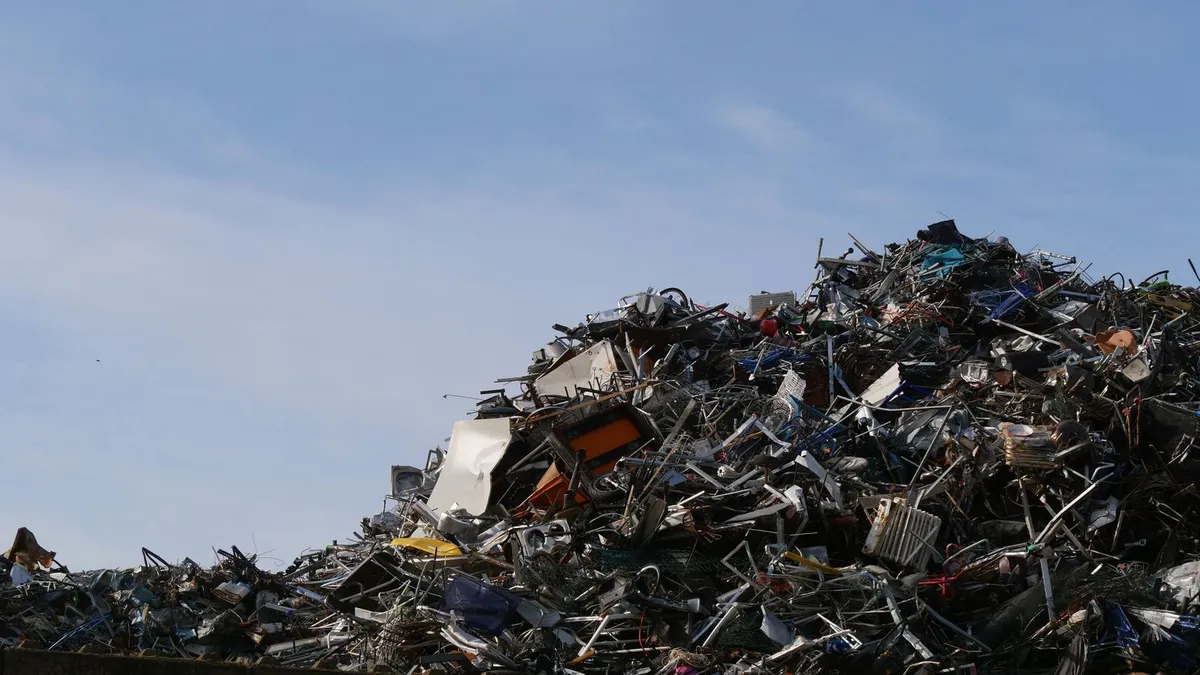
Warehouses generate a lot of metal — from dismantled racking and old machinery to steel offcuts, cable and general scrap. Rather than being dumped, this is exactly the material that should be recovered. Responsible scrap removal separates ferrous and non-ferrous metals for recycling, keeping valuable resources in circulation and reducing what goes to landfill. Because metal holds genuine value, a transparent operator will factor recoverable scrap into the overall picture rather than quietly profiting from it while still charging you full disposal rates — another reason to ask how a company handles what it takes away.
Scrap from racking and machinery is separated into ferrous and non-ferrous metal for recycling — not tipped into general waste.
Office Area Cleanouts
Most warehouses have an attached office, mezzanine or staff area, and these need clearing too. Desks, chairs, filing cabinets, pantry appliances and general clutter come out alongside the industrial junk, so the whole unit — floor and office — is emptied in one visit. Where the office holds usable furniture, we set it aside for reuse or donation rather than sending it to waste.
Warehouse Relocation and End-of-Lease Cleaning
The two moments that most often drive a full cleanout are a relocation and a lease handover. When you move to a new facility, your movers take the racking and stock that are coming with you — but everything you are leaving behind, from broken pallets to obsolete machinery, still has to go. Running the junk removal crew alongside the move empties the old unit in one coordinated push instead of dragging on for weeks.
End-of-lease is even less forgiving. Industrial leases in Dubai typically require the unit to be handed back clear, swept and in its original condition, and any surplus left behind — or racking not removed — can trigger charges against your deposit or a dilapidations claim. A warehouse clearance timed to your handover date takes that risk off the table: the space is emptied, the floor is swept, and the unit is ready for the final inspection before the keys go back.
Safe Loading and Handling
In an industrial setting, safety is not a nice-to-have — it is the difference between a clean job and an accident. Warehouse junk is heavy, tall and awkward, and moving it near live operations, forklifts and loading docks demands proper method. A professional cleanout follows the same principles every time:
Trained crews using the right manual-handling techniques and team lifts for heavy or awkward loads.
Racking and mezzanines dismantled in the correct sequence, top-down, to keep structures stable.
Clear separation of the work area from any live operation, forklift routes and pedestrian walkways.
The right equipment for the load — trolleys, pallet trucks and appropriately sized vehicles at the dock.
Full insurance cover, so your business is protected if anything goes wrong on site.
Work scheduled outside peak hours or overnight where it keeps people and operations safe.
Done properly, safe loading protects your staff, your building and your stock — and keeps the clearance moving quickly rather than grinding to a halt over a near-miss.
Warehouse Junk Removal Across Dubai's Industrial Zones
Dubai's industrial activity is concentrated in a handful of well-known zones, and a local crew knows the access rules and demands of each. Warehouses in Al Quoz — the city's dense mixed industrial-and-showroom belt — often sit in tight compounds where vehicle access and timing matter. The free-zone units around Jebel Ali (JAFZA) come with their own gate-pass, permit and security requirements that have to be arranged before a crew arrives. Purpose-built logistics and manufacturing hubs like Dubai Industrial City are built for large-volume clearances, with the space and dock access to match.
We clear warehouses and industrial units across all of these areas and beyond — from Dubai Investment Park and the logistics districts of Dubai South to Dubai Production City. Commercial premises are not only in the industrial belts either: businesses in Business Bay and DIFC with basement storage, stockrooms or back-of-house units need the same efficient clearance. Knowing each area's access constraints is part of what keeps a job on schedule rather than stalled at the gate.
Responsible Recycling and Dubai Municipality Compliance
A warehouse cleanout is measured as much by where the material ends up as by how fast the unit is emptied. Loads are sorted rather than dumped: wood and cardboard are baled for recycling, scrap metal is separated into its streams, plastics and packaging are recovered where possible, and usable equipment or furniture is set aside for reuse. For businesses with sustainability or ESG commitments, diverting this volume of material from landfill is increasingly part of the brief.
Compliance is not optional either. Dubai Municipality regulates how commercial and industrial waste is stored, transported and disposed of, and it must be handled by licensed operators and taken to approved facilities — never fly-tipped on an empty plot or in the desert, which carries significant fines. As the business that generated the waste, you have a real interest in knowing it was dealt with correctly. A reputable warehouse rubbish removal company operates transparently, uses proper vehicles, and can provide a record of collection and recycling for your audit trail or handover documentation when you need it.
Key Takeaways
Warehouse junk removal in Dubai is a high-volume commercial cleanout for pallets, packaging, racking, machinery and scrap — handled safely and in bulk.
It is usually triggered by relocation, end-of-lease handover, decommissioning, stock write-offs or a failed safety inspection.
Pallets and cardboard are the biggest volume and highly recyclable; racking and machinery need careful, top-down dismantling.
Safe loading — trained crews, correct sequencing, separation from live operations and full insurance — is central to an industrial cleanout.
A clearance timed to your handover date protects your deposit and leaves the unit swept and inspection-ready.
A reputable company sorts loads for recycling, separates scrap metal, and disposes of commercial waste in line with Dubai Municipality rules — with documentation on request.
Why Choose Junk Service in Dubai for Your Warehouse Cleanout
Clearing an industrial unit is a different job to clearing an office. It needs a crew that understands heavy loads, site safety and free-zone access — and disposes of everything responsibly.
Built for High-Volume Industrial Jobs
From a single container of pallets to a full warehouse strip-out, we scope the volume, plan the dock access and bring the right crew and vehicles — coordinating gate passes and permits in zones like Jebel Ali and DIP.
Safe, Insured Handling
Our insured crews dismantle racking top-down, use proper manual-handling and lifting method, and keep the work area clear of live forklift and pedestrian routes, so the job is efficient and incident-free.
Maximum Recycling, Minimum Landfill
Wood, cardboard, plastics and scrap metal are separated for recycling, and usable equipment is set aside for reuse — diverting as much as possible from landfill and supporting your sustainability goals.
Compliant and Documented
We dispose of commercial and industrial waste at approved facilities in line with Dubai Municipality rules, and can provide collection and recycling records for your audit trail or lease handover.
Our editorial team is made up of the crews and coordinators who clear homes, villas and offices across Dubai every day. We share practical, first-hand guidance on decluttering, disposal and responsible waste removal in the UAE.
FAQ
Frequently Asked Questions
There is no fixed rate. Industrial cleanouts are priced on the volume of waste, the item types, how much dismantling is involved and the site access — a container of pallets costs far less than a full racking strip-out. Share the scope or a walkthrough and we confirm a flat, upfront price before work begins.
Yes. We dismantle pallet racking, mezzanine shelving and storage systems safely, working from the top down to keep the structure stable, then remove the components. The steel is separated as scrap for recycling. Just tell us the racking type and height so we bring the right crew and equipment.
Yes. Free zones such as JAFZA require gate passes, permits and security clearance for contractors. We are insured and arrange the necessary access and paperwork with zone and facility management in advance, so the clearance runs on schedule without being held up at the gate.
It can. Warehouse clearances are routinely scheduled for evenings, nights or weekends so the work does not interrupt dispatch, production or live operations. For a working facility, this is often the safest option too, keeping the crew clear of forklift traffic and busy loading docks.
It is recovered, not dumped. Scrap metal from racking and machinery is separated into ferrous and non-ferrous streams for recycling, while wood, cardboard and plastics are baled for recovery. Only genuine waste goes for disposal at approved facilities, in line with Dubai Municipality guidance.
Yes, though machinery needs planning. Heavy units may be broken down on site, and any equipment that held oil, coolant or other fluids is drained and handled correctly first. Tell us what the equipment is when you book so we can scope the safe removal and disposal route in advance.
We can. For end-of-lease handovers, ESG reporting or internal audits, we are able to provide a record of what was collected and where recyclable and waste streams were sent. Let us know what documentation you need when you book so we can prepare it alongside the clearance.
A full unit is usually a planned job sized to your handover date, often running across one or more shifts. Give us the deadline and a walkthrough or photos, and we will schedule enough crew, equipment and vehicles to have the warehouse emptied, swept and inspection-ready before the keys go back.
Final Thoughts
A cluttered warehouse quietly costs a business more than it realises — in wasted floor space, failed inspections and lease penalties. Warehouse junk removal turns all of that back into usable, compliant space. Handled properly, even a full industrial strip-out is simply a well-planned job: a crew that understands heavy loads and site safety, works around your operation, and recovers everything that can be recycled.
When your unit needs clearing, our junk removal Dubai team manages the labour, the safe loading and the responsible recycling from first pallet to final sweep — and when a deadline is tight, our same-day junk removal Dubai crews can move fast to keep your handover on track.
Need a warehouse cleared safely and on schedule?
Send us the scope or a short walkthrough of your unit, along with your location and access details, and our insured Dubai crew will confirm a flat, upfront price and a slot that works around your operation — including evenings and weekends. Book a Pickup or WhatsApp us and we handle the pallets, racking, machinery, scrap and responsible recycling for you.
A complete guide to office junk removal in Dubai — cleanouts, relocation waste, old furniture, e-waste and IT equipment, filing cabinets, after-hours collection and Dubai Municipality-compliant recycling.
How fast same day junk removal in Dubai really works — the booking process, what can be collected today, urgent situations, and what shapes how quickly a crew reaches you.
 Guides