What Is Bulky Waste? Identification, Categories & Disposal
The Junk Services Dubai Team 6 min read
Every home occasionally produces discarded items that refuse to fit inside standard trash bags, apartment garbage chutes, or curbside wheelie bins. From sagging three-seater sofas and sagging king mattresses to broken washing machines and heavy dining tables, these oversized discards form a distinct category called bulky waste. Unlike routine food scraps or packaging that standard collection trucks crush daily, bulky items require specialized manual loading, dedicated flatbed transport, and responsible recycling streams. Dumping large furniture beside communal residential bins creates fire hazards, blocks pedestrian corridors, and violates local environmental codes. Learning what qualifies as bulky waste helps residents manage seasonal clearouts safely without facing building penalties or community disputes.
Defining Bulky Waste: Size, Weight, and Physical Thresholds
In urban waste management, bulky waste describes solid discards whose physical volume, rigid dimensions, or sheer weight prevent safe handling by standard automated compaction vehicles. Standard residential waste bins across Dubai communities hold either one hundred and twenty or two hundred and forty liters, designed strictly for bagged domestic trash.
When an item cannot settle comfortably inside a bin with its lid shut flat, or when its bulk threatens to jam vertical apartment trash chutes, it officially crosses into the bulky waste tier. Physical criteria generally include items heavier than fifteen kilograms or having any dimension exceeding one hundred centimeters, requiring two-person lifting protocols. Stiff wooden corner posts, wide upholstered arms, and metal framework pieces cannot be compressed by domestic bin lids.
Upholstered Furniture: Sofas, armchairs, sectionals, futons, and thickly padded headboards that resist compression.
Major Household Appliances: Refrigerators, washing machines, dishwashers, and ovens containing metals, compressors, and refrigerants.
Case Goods and Cabinetry: Wooden dining tables, wardrobes, bookcases, bed frames, and study desks requiring disassembly.
Bedding and Mattresses: Innerspring, memory foam, and latex mattresses that create mechanical jams in compactor trucks.
Why Standard Waste Trucks and Chutes Reject Bulky Loads
High-rise towers in districts like Dubai Marina apartment clearance rely on gravity-fed vertical chutes leading to basement compactors. Forcing an office chair, flat-pack headboard, or floor rug down a chute inevitably wedges the object midway between floors, trapping decomposing rubbish bags behind it and causing severe odor contamination throughout the tower.
On suburban streets, routine rear-loading compactor trucks employ hydraulic compaction blades calibrated for soft organic waste and light cardboard. Stiff timber bed slats or steel appliance casings can crack hydraulic pistons, puncture containment shields, and ignite battery fires inside the truck hopper. Dedicated open-bed trucks and flatbed clearance crews handle bulky loads independently to keep daily collection routes operating without mechanical breakdowns.
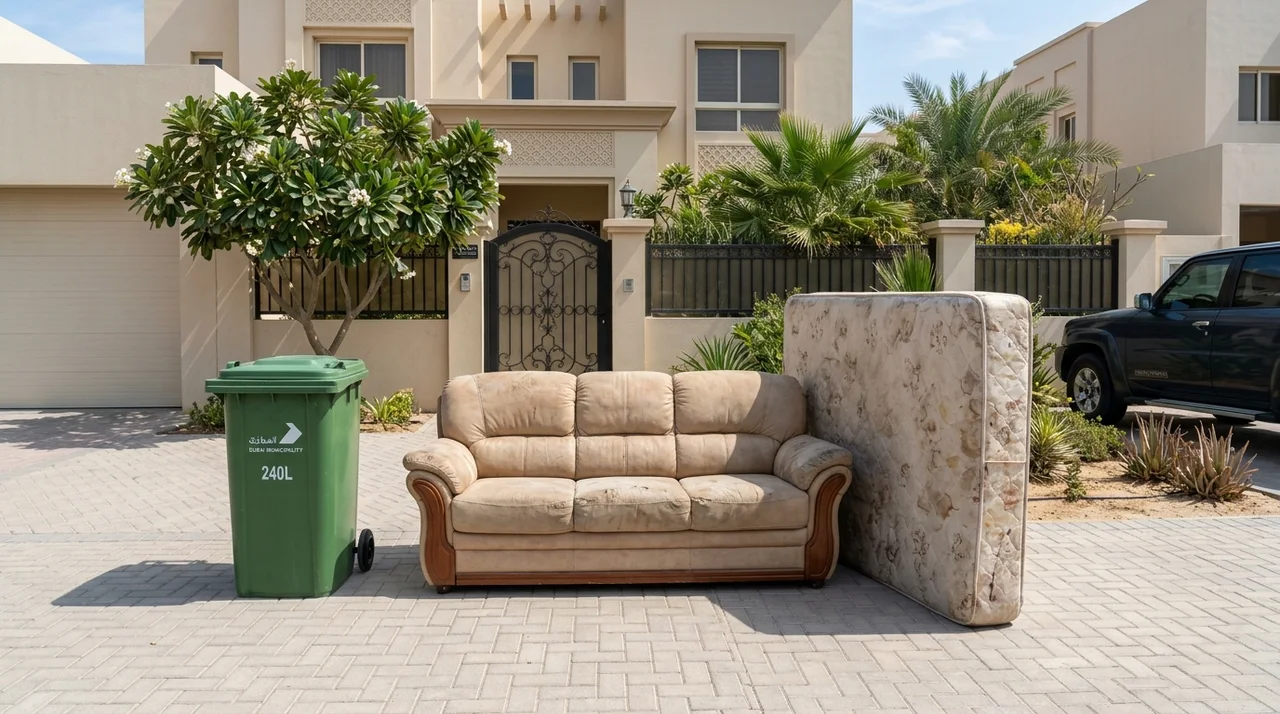
A standard 240-liter wheelie bin cannot accommodate large domestic furnishings, demonstrating the physical boundary between routine trash and bulky waste.
Primary Categories of Household Bulky Waste Explained
Recognizing the diverse classes of bulky items helps property owners arrange proper segregation and schedule appropriate transport. Household bulky discards typically group into four recognizable operational streams, each with distinct loading and handling considerations across residential premises:
Bulky Category
Common Examples
Handling Challenge
Primary Recovery Path
Oversized Soft Furnishings
Couches, recliners, mattresses
Heavy fabric absorbs moisture and dust
Foam shredding, steel spring salvage
Large Domestic White Goods
Fridges, freezers, cookers, dryers
Refrigerant gases, heavy capacitors
E-waste degassing and scrap smelting
Rigid Timber Furniture
Dressers, dining sets, credenzas
Awkward bulk, needs dismantling
Wood chip conversion or charitable reuse
Outdoor & Leisure Equipment
Trampolines, patio sets, bicycles
Weathered metal frames, awkward poles
Ferrous scrap yards and metal recycling
Major categories of residential bulky waste and their downstream industrial recovery pathways.
Scheduling specialized furniture removal services Dubai ensures heavy wooden frames and upholstered seating are stripped down into clean timber, foam, and textile streams rather than dumped into mixed landfills. Experienced handlers disassemble bulky modular sectionals into individual pieces before loading, preserving building paintwork and door frames.
What Is NOT Bulky Waste: Prohibited Materials and Exclusions
While bulky waste covers almost every oversized piece of home decor, several heavy household items are strictly excluded due to contamination, safety risks, or regulatory boundaries. Understanding these exclusions prevents wasted clearance callouts and avoids disputes with transport contractors.
1Demolition and masonry rubble: Broken tiles, concrete blocks, plasterboard, and bags of cement dust belong to construction waste, requiring commercial skip permits.
2Hazardous chemical drums: Car engine oil, paint buckets, pesticide cans, and industrial solvents require specialized chemical treatment rather than bulky item collection.
3Medical sharps and biological waste: Hypodermic needles, clinical dressings, and medical apparatus follow strict clinical bio-hazard protocols.
4Commercial factory machinery: Heavy three-phase manufacturing lathes, warehouse racking, and industrial presses exceed domestic bulky classification limits.
5Vehicle parts and intact tyres: Motor engine blocks, gearboxes, and passenger car tyres must be returned to automotive salvage dismantlers.
Residential Staging and Building Etiquette Across Dubai
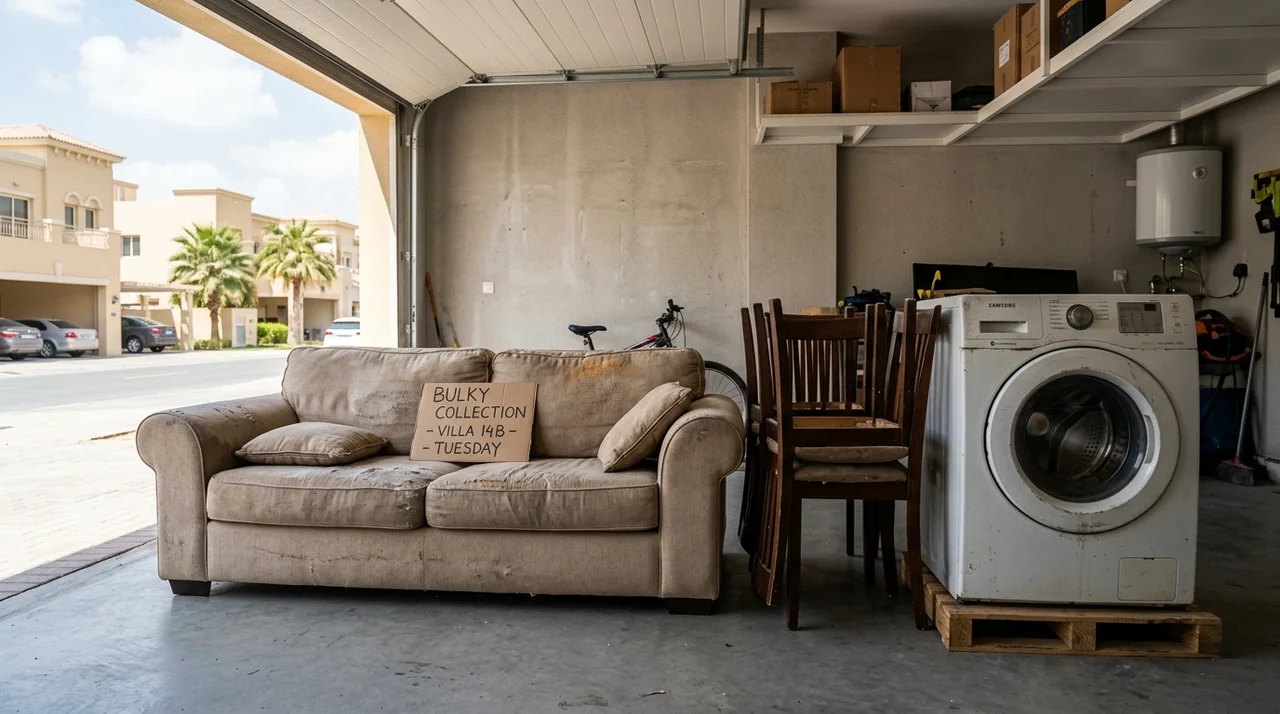
Keep bulky items staged neatly inside your garage, covered porch, or private backyard until the agreed collection hour. In apartment towers, never drag large furnishings into elevator lobbies or fire escape stairwells without booking the service elevator with building security. Following these common-sense rules keeps hallways clear, prevents emergency route obstructions, and protects your tenant security deposit upon move-out.
Downstream Journey: How Collected Bulky Items Get Processed
Once loaded onto collection flatbeds, bulky goods do not disappear into a single undifferentiated pit. Licensed Dubai clearance operators transport loads to sorting yards where items undergo manual separation into specialized recovery streams.
Serviceable furniture pieces are isolated for local charitable redistribution or secondhand thrift markets. Broken items are dismantled: timber boards are chipped for agricultural landscaping mulch, metal brackets and springs head to scrap metal foundries, and electronic white goods go to certified e-waste processors for refrigerant recovery and copper wire stripping. Diverting these heavy items saves valuable landfill space and supports local manufacturing circularity.
Preparation Checklist Before Scheduling Bulky Item Removal
Preparing large items properly speeds up loading, protects your home interior, and prevents accidental damage to villa doorways or apartment corridor walls. Complete these practical steps before your crew arrives:
Empty all internal contents: Check drawers, cabinets, and wardrobe pockets for personal documents, cables, and lost valuables.
Defrost and disconnect appliances: Unplug refrigerators at least twelve hours in advance and tape down interior glass shelves.
Dismantle large frames if possible: Unscrew bed posts, table legs, and modular sofa connectors to ease doorway transit.
Tape cabinet doors closed: Secure swinging wardrobe doors and dresser drawers with painter tape so they do not open during carrying.
Measure narrow hallways and turns: Verify that bulky frames have adequate clearance along entry vestibules and staircase landings.
Book insured clearance crews: Partner with professional house clearance Dubai specialists who provide proper moving dollies and lifting straps.
Key Takeaways
Bulky waste covers oversized domestic items that exceed standard 240-liter bins or apartment chutes.
Major categories include large upholstered seating, bedding mattresses, timber cabinetry, and white goods.
Construction rubble, hazardous paints, car tyres, and clinical waste are excluded from bulky waste.
Stage items inside private garages or homes until pickup to avoid neighborhood penalties and corridor blockage.
Licensed collection crews dismantle and sort bulky goods to maximize timber, metal, and plastic recycling.
Why Choose Junk Service in Dubai
As a local, fully insured team, Junk Services Dubai makes clearing your space simple — fast pickups, fair upfront pricing and responsible disposal across every Dubai community.
Same-Day Availability
Book today and, where crews are free, we clear it today — with no rush surcharge.
Fair, Upfront Pricing
A flat price agreed before we arrive, based on volume, items and access. No surprises.
Insured, Uniformed Crews
Background-checked teams who do all the lifting and protect your floors, lifts and walls.
Responsible Disposal
We sort for reuse, donation and recycling in line with Dubai Municipality guidance.
Our editorial team is made up of the crews and coordinators who clear homes, villas and offices across Dubai every day. We share practical, first-hand guidance on decluttering, disposal and responsible waste removal in the UAE.
FAQ
Frequently Asked Questions
While exact limits vary by residential community, any item heavier than fifteen kilograms or with dimensions exceeding one hundred centimeters that cannot sit flat inside a standard 240-liter bin with the lid shut is considered bulky waste.
No, abandoning bulky furniture on pavements or beside communal waste bins is forbidden across Dubai communities. It obstructs pedestrian paths, damages neighborhood appearance, and can result in administrative fines from community management.
Yes, major kitchen appliances such as full-sized refrigerators, washing machines, dishwashers, and ovens are classified as bulky waste and e-waste, requiring specialized lifting and transport by licensed removal teams.
Standalone ceramic basins, toilets, and acrylic bathtubs removed during modest home upgrades can be collected as bulky waste, provided they are unbolted, cleaned, and kept free of jagged tile rubble or cement debris.
Bulky waste consists of manufactured household furnishings and consumer goods, whereas construction debris consists of raw structural materials such as brick, concrete, drywall, sand, and ceiling plaster that require specialized heavy skips.
Yes, solid wood and composite furniture collected by responsible clearance teams is dismantled at sorting facilities. Usable timber is salvaged for carpentry or chipped into wood mulch, while metal hinges and screws are sorted for foundry recycling.
While professional collection crews can dismantle large wardrobes on site, disassembling large wardrobes into flat panels beforehand speeds up the process, protects narrow apartment doorways, and prevents wall scrapes during carrying.
Final Thoughts
Understanding what constitutes bulky waste empowers Dubai households to keep living spaces clear, prevent corridor bottlenecks, and maintain neighborhood cleanliness. By distinguishing between routine garbage, bulky furnishings, and hazardous substances, homeowners ensure their unwanted belongings follow ethical recycling channels. When you are faced with oversized clutter, junk removal services Dubai teams handle the heavy lifting safely.
Whether you are swapping out an old bedroom suite or clearing an entire villa garage, our experienced crews arrive equipped to load, transport, and responsibly divert your bulky items. Contact us today for reliable house clearance Dubai assistance.
Clear Oversized Bulky Items Without the Hassle
Do not struggle with heavy sofas, cumbersome mattresses, or outdated appliances. Our insured Dubai collection teams arrive on time with moving dollies and spacious trucks to clear your bulky items promptly. Message us on WhatsApp today to arrange quick, compliant pickup.
Bulky waste is anything too big for your building's bins or chute. Here's what counts in Dubai, why it needs its own collection, and how a pickup is arranged.
A practical guide for Dubai residents on how to dispose of old furniture — donate, resell, recycle, use municipal bulky-waste collection, or book professional removal responsibly.
The easy way to handle mattress removal in Dubai — why old mattresses can't be dumped, how responsible disposal and recycling work, apartment, villa and hotel collection, same-day pickup, hygiene, and Dubai Municipality compliance.

 Guides