Book Recycling and Donation in Dubai: A Condition Guide
The Junk Services Dubai Team 6 min read
Books resist quick decisions because they carry memories, knowledge and the feeling that somebody must want them. Some do have a useful second life. Others are too damaged, outdated or specialised to place, even when their paper can still be recovered. A responsible clear-out begins by separating sentimental value from present condition, then matching readable books to donation and end-of-life paper to recycling. Dubai's heat, humidity and moving deadlines make that early sort important.
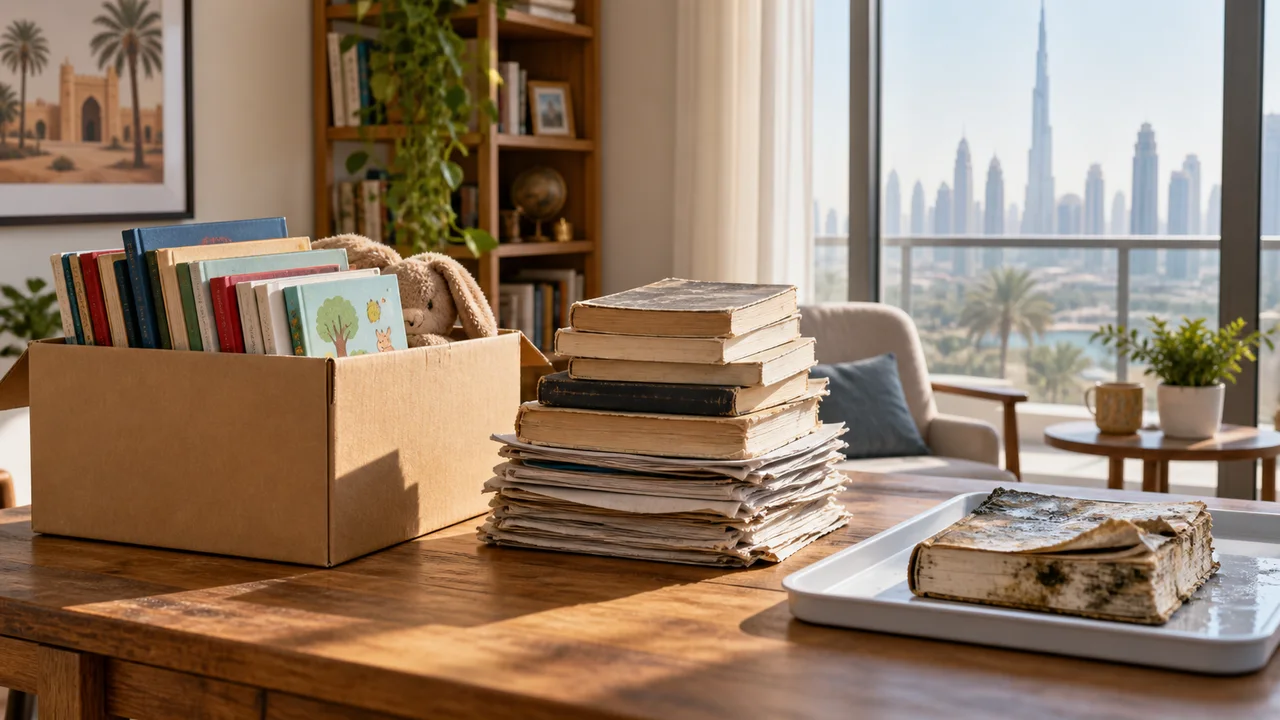
A book is suitable for donation when another person can open it and use it immediately. A creased cover, a name written inside or light pencil notes do not end that usefulness. Missing pages, a broken binding, heavy annotation across the text or a persistent damp smell do. The test is not whether you once valued the book; it is whether its next reader can use the copy as it stands.
Donate: Clean, complete novels, children's books, reference titles and recent textbooks with sound bindings and readable pages.
Sell or gift directly: Collectible editions, current course books, specialist professional titles and complete series with a known audience.
Recycle: Ordinary paperbacks and hardbacks that are torn, incomplete or too heavily marked for reuse but remain dry and free from contamination.
Dispose separately: Mouldy, oily, pest-damaged or chemically contaminated books that could compromise clean donations and paper fibres.
This item-level decision is separate from removing the furniture that holds the library. If the shelves are also leaving, the bookshelf removal guide covers box weight, dismantling and service-lift access.
Books That Usually Make Good Donations
Useful donations tend to be easy to understand and easy to place. Popular fiction, children's picture books, complete language-learning sets, cookbooks in clean condition and recent general reference books have a clearer audience than incomplete encyclopaedias or highly specialised manuals from an older edition.
Open several pages and check for water rippling, spotting, odour and insect damage rather than judging only the cover.
Confirm that workbooks are unused or only lightly completed and that puzzle or activity books still have usable content.
Keep multi-volume sets together and mark the box so one volume is not separated during handling.
Match books with removable companion items, such as flashcards, maps or audio material, where they remain relevant.
Set aside valuable or signed editions for appraisal rather than putting them into a general donation carton.
Do not assume age creates value. A recent, clean paperback may be more useful than an ornate reference volume whose information has been superseded. When sorting a whole home, the wider guide to donating decluttered items helps keep books aligned with clothing, kitchenware and other reusable goods.
When Recycling Is More Honest Than Donation
Recycling is appropriate when the paper remains clean but the book no longer works as a book. A paperback with a detached cover, an incomplete duplicate volume or a heavily highlighted old study guide may have no realistic reader. Sending those copies as donations forces somebody else to inspect and reject them.
Condition
Recommended route
Reason
Clean and complete
Donation or direct gifting
It can be used without repair
Light notes or worn cover
Donation if the text stays readable
Cosmetic wear does not remove function
Missing pages or failed binding
Paper recycling where accepted
The copy no longer performs its job
Plastic-heavy novelty book
Separate parts where practical
Mixed materials reduce paper quality
Mould, oil or pest residue
Isolate for disposal
Contamination threatens other books and clean fibre
A donation should save the recipient work; a recycling load should protect clean paper from contaminants.
Paper recovery depends on dry, reasonably clean fibre. The detailed paper recycling guide explains how moisture, food residue and waxed or laminated surfaces affect that stream.
Remove Non-Paper Parts Without Destroying the Sort
Ordinary glued paperback bindings need no home disassembly unless the receiving route says otherwise. Concentrate on obvious removable material: plastic dust jackets, shrink wrap, loose CDs, batteries in sound books, spiral metal and large ring-binder mechanisms. Do not spend an hour stripping a small stack if your collector accepts bound books intact.
Check the pages first, then remove obvious non-paper accessories only where the receiving route requires it.
1Create a clean donation box and a separate dry-paper container before opening the first shelf.
2Inspect the page edges and centre of each book for moisture, insects and missing sections.
3Remove loose plastic sleeves, discs, electronic sound modules and bulky metal binders where practical.
4Keep contaminated books away from both groups and clean the shelf before placing sorted copies nearby.
5Label each closed box by route and approximate weight so it is not mistaken for a light household carton.
Pack Books for Dubai Heat, Humidity and Weight
Paper is dense. A large moving carton filled to the top with hardbacks becomes unsafe for one person and can split at the base. Use small strong boxes, part-fill larger cartons and keep each load dry. Line a box only if there is a moisture risk, then remove that plastic before the paper reaches recycling.
Never stage books on an open balcony, in a humid service yard or beside a leaking air-conditioning drain. Residents in Dubai Marina and JVC often need several service-lift trips for a library, so book a sufficient window. Villa households in The Springs should move cartons from an air-conditioned room to the vehicle rather than storing them in a garage for days.
Pack books flat or spine-down so page blocks do not pull away from their bindings.
Fill empty space with clean paper so stacks do not slide and crush their corners.
Keep children's sets and multi-volume works together in the same small carton.
Close the top against dust but do not seal even slightly damp books into plastic.
Write heavy on the box for the crew, even when the carton looks small.
Confirm Demand Before a Moving Deadline
A donation route is not confirmed until the recipient accepts the category, quantity and handover method. Send a broad photograph of the spines without listing every title, describe the condition honestly and ask whether delivery or collection is expected. A hundred books are different from one carrier bag, especially when lift access is involved.
Give direct donation a deadline several days before tenancy handover. If the group remains unplaced, separate clean recyclable paper from contaminated residue and include it in the final clearance. This protects the move date without leaving cartons in a lobby or beside a shared bin room.
Clear a Home Library in the Right Order
Begin with duplicates, outdated reference material and books no household member wants. Leave active study material, sentimental copies and potential collectibles until the quick decisions have created space. Photograph the full quantity before booking because boxes of books affect vehicle weight and carrying time more than their floor area suggests.
1Choose the small group that stays, including active reference and sentimental titles.
2Offer current, clean books through a confirmed donation or direct-gifting route.
3Place dry end-of-life paper books into the accepted recycling stream.
4Isolate mouldy or contaminated copies so they cannot damage either clean group.
5Book the remaining cartons and shelving together, with floor and service-lift details included.
For several shelves or a whole study, a house clearance service can remove the cartons and unwanted furniture in one planned visit. Keep your chosen donation boxes marked and apart so they are not loaded with the residual group by mistake.
Key Takeaways
Donate books only when the copy is clean, dry, complete and useful to a present-day reader.
Dry but damaged ordinary books may suit paper recycling after obvious non-paper parts are removed.
Mould, oil and pest residue require isolation because they can spoil clean books and recovered fibre.
Use small strong cartons and mark them as heavy; paper weighs more than its volume suggests.
Confirm acceptance and set a deadline before a move so unplaced donations do not obstruct handover.
Why Choose Junk Service in Dubai
As a local, fully insured team, Junk Services Dubai makes clearing your space simple — fast pickups, fair upfront pricing and responsible disposal across every Dubai community.
Same-Day Availability
Book today and, where crews are free, we clear it today — with no rush surcharge.
Fair, Upfront Pricing
A flat price agreed before we arrive, based on volume, items and access. No surprises.
Insured, Uniformed Crews
Background-checked teams who do all the lifting and protect your floors, lifts and walls.
Responsible Disposal
We sort for reuse, donation and recycling in line with Dubai Municipality guidance.
Our editorial team is made up of the crews and coordinators who clear homes, villas and offices across Dubai every day. We share practical, first-hand guidance on decluttering, disposal and responsible waste removal in the UAE.
FAQ
Frequently Asked Questions
Dry ordinary paper books may be accepted by a paper-recycling route, especially when obvious plastic, discs or large metal mechanisms are removed. Check the receiving route because bound-book requirements differ.
They should be clean, dry, complete and readable, with a binding that survives normal use. Light wear or a name inside is acceptable; missing pages, mould and persistent odour are not.
Recent complete textbooks can be useful when there is demand for the edition. Outdated syllabuses, heavily completed workbooks and copies missing access material may be better suited to paper recovery.
Only when the receiving route requires it. Many processors can handle ordinary bindings, while plastic-heavy, fabric-covered or reinforced covers may need separation. Ask before spending time dismantling every book.
Look for spotting along page edges and inside the spine, a musty smell, rippled paper or powdery growth. Isolate suspect books immediately and do not place them with donations or clean recycling.
Use a small carton and stop while one person can lift it safely. If only large boxes are available, part-fill them with books and use light clean packing material above.
Yes. Send photographs of both, estimate the number of cartons, and provide floor, lift and parking details. Mark any confirmed donation boxes so the groups remain separate during loading.
Final Thoughts
A responsible library clear-out does not force every copy into the same hopeful box. It protects useful books, recovers clean paper where possible and isolates contamination before it spreads.
Sort early, pack lightly and confirm the destination before collection day. Those three steps do more for reuse than keeping unwanted books on a shelf until the final night of a move.
Arrange Collection for Books and Shelving
Send a photograph of the shelves and sorted cartons, your area, floor number and service-lift details. We will confirm the collection scope and one upfront price before the crew is scheduled.
Bookshelf removal in Dubai is two jobs in one: dense boxes of books and an awkward unit that may not survive dismantling. Here is how each half is handled and what it costs.
A practical guide to donating what you clear out in Dubai: what charities take, where to drop off or arrange pickup, how to prepare items so they're accepted, and what to do with the rest.
What qualifies as recyclable paper in Dubai, why heat and humidity make preparation matter more here than in cooler climates, and how to keep a paper stream clean enough to stay out of general waste.
 Guides