 Waste Disposal
4 min read
Cookware Disposal Dubai: Pots, Pans and Lids
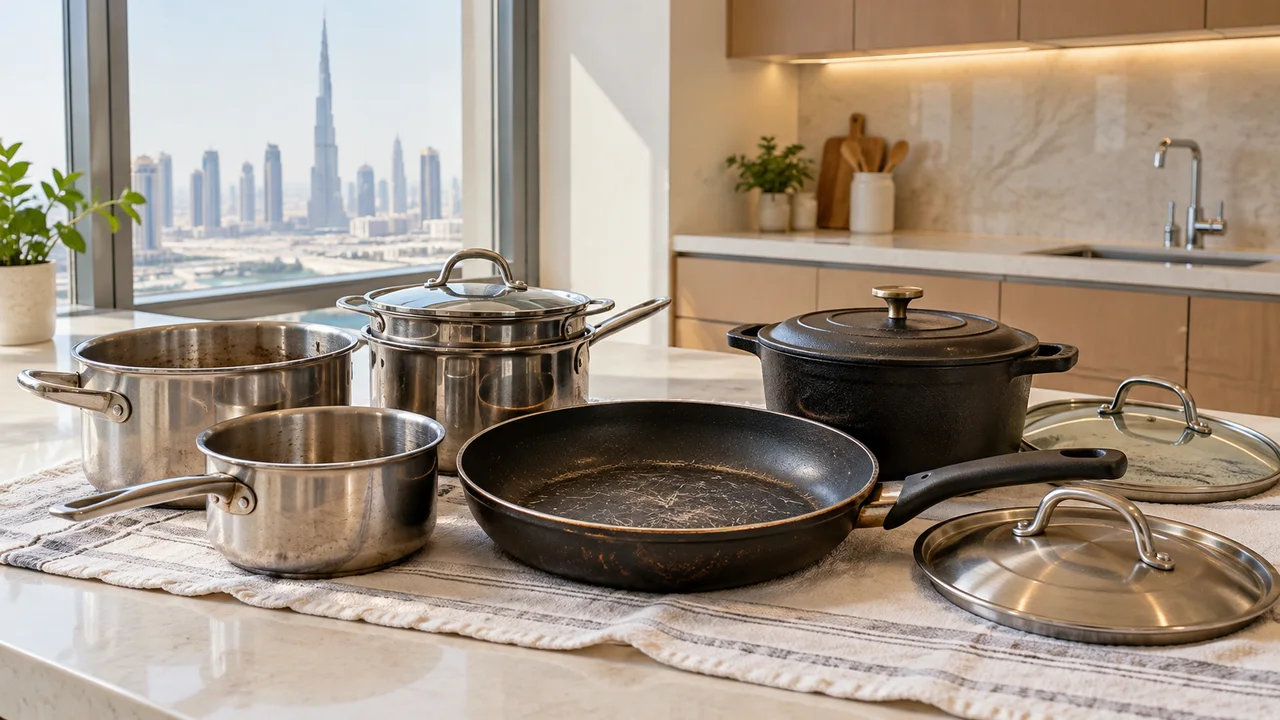
How to sort unwanted pots, pans and lids in Dubai by material and condition, prepare reusable cookware and contain damaged non-stick or glass pieces.
Read Article
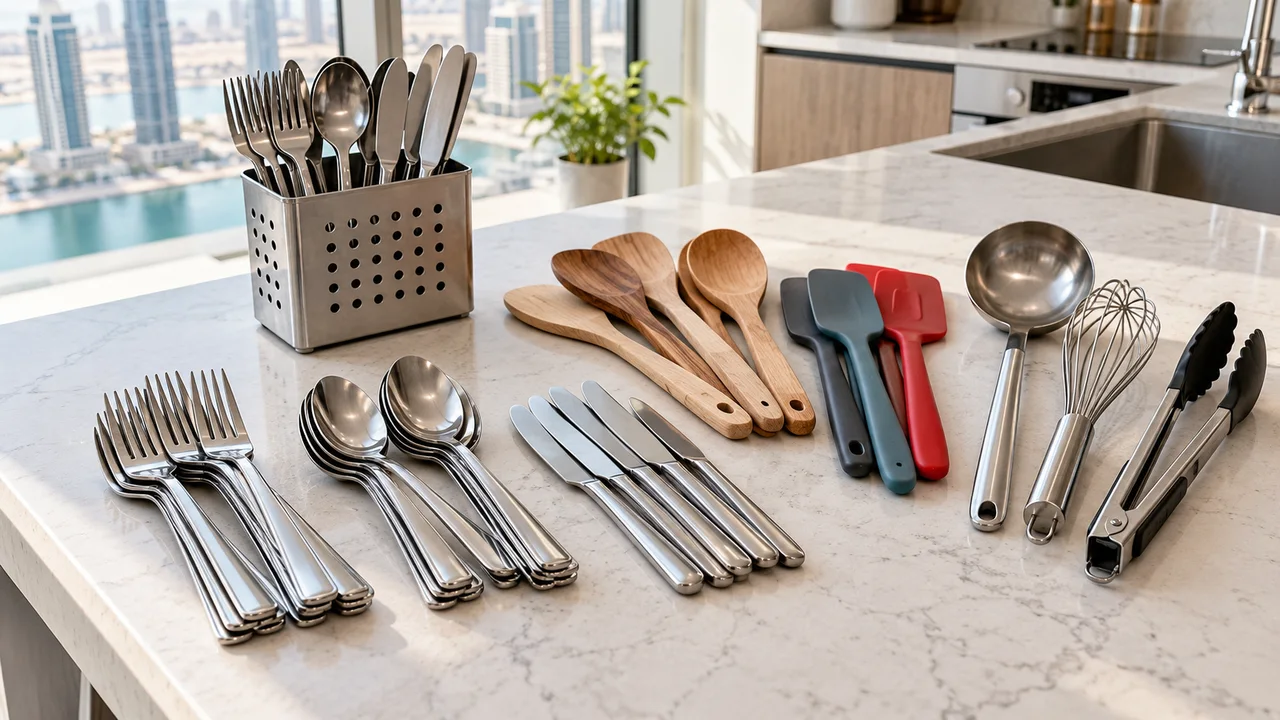
Cutlery drawers hide mixed materials, loose blades and tools that no longer work as a set. This guide explains how to sort unwanted forks, spoons, table knives, serving pieces and cooking utensils in a Dubai kitchen, protect damaged edges and keep useful sets together for reuse or collection.
A kitchen drawer can contain stainless-steel cutlery, plated serving pieces, wooden spoons, silicone spatulas, plastic measures and metal tools with rubber handles. Treat the drawer as a mixed load, not a bag of scrap. Pots, pans and glass lids belong in the separate cookware disposal guide.
A complete steel set with light surface marks may remain useful, while one cracked plastic handle can make an otherwise sound tool unsafe. Check every joint, rivet, tine and edge. Food residue and oil should be removed before a reuse or recovery decision is made.
Do not test a loose handle by twisting it hard. A corroded rivet or split moulded grip can fail without warning. Photograph uncertain pieces on the counter and state whether the group includes pointed skewers, graters or cutting tools.
| Material or tool | Common issue | Preparation |
|---|---|---|
| Stainless-steel cutlery | Mixed patterns or bent tines | Group sound sets; contain bent pieces |
| Plated serving pieces | Flaking finish or uncertain value | Keep separate and inspect marks |
| Wood or bamboo | Cracks, scorching or odour | Keep dry; do not mix with metal |
| Silicone tool | Torn edge or loose core | Keep intact for assessment |
| Grater or peeler | Exposed cutting edge | Use a rigid divided container |
| Whisk or tongs | Projecting wire or failed spring | Close or wrap the working end |
Metal recovery may be possible for a larger clean batch, but coated handles, adhesives and mixed heads complicate sorting. Do not burn handles off or cut tools apart at home. Small loose metal can also disappear during mechanical sorting, so a receiver may set different rules from those used for larger scrap pieces.
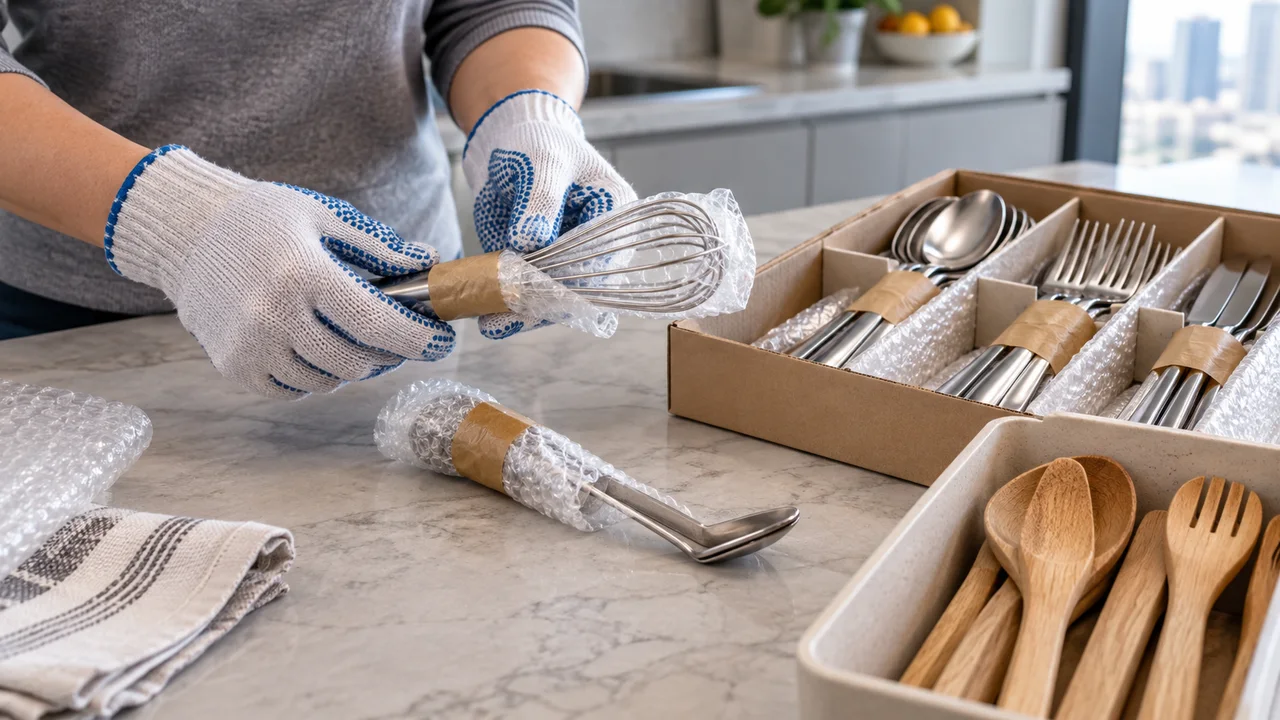
Do not put loose utensils in a thin shopping bag. A fork, skewer or broken whisk wire can pierce it during the walk to a service lift. Keep the box light enough for one person to hold level, with the risky pieces unable to shift toward the sides.
Reuse suits clean, complete tools that perform their original job safely. Count matching place settings and secure them together so a useful set does not arrive as loose singles. Disclose plating wear, stains or missing pieces instead of hiding them at the bottom of a box.
Bent steel and damaged all-metal tools may have a recovery route when kept apart from wood, silicone and plastic. A planned scrap metal collection can assess them as part of a larger declared household metal group. A few mixed utensils should not be presented as clean scrap without checking the receiver's acceptance rules.
Sort drawers before the final day of a Dubai Marina or Business Bay move-out. Keep one working place setting and the tools needed for the last meal, then pack the rest. That avoids boxing wet cutlery straight from the dishwasher or leaving a sharp mixed drawer for the handover morning.
Cutlery can join a wider junk removal collection with cookware, crockery and small household goods when each box is declared. Send photos, the box count, floor level and lift details, and identify any knives or broken metal separately even when they are fully wrapped.
As a local, fully insured team, Junk Services Dubai makes clearing your space simple — fast pickups, fair upfront pricing and responsible disposal across every Dubai community.
Book today and, where crews are free, we clear it today — with no rush surcharge.
A flat price agreed before we arrive, based on volume, items and access. No surprises.
Background-checked teams who do all the lifting and protect your floors, lifts and walls.
We sort for reuse, donation and recycling in line with Dubai Municipality guidance.
Written by
The Junk Services Dubai Team
Junk Removal Specialists
Our editorial team is made up of the crews and coordinators who clear homes, villas and offices across Dubai every day. We share practical, first-hand guidance on decluttering, disposal and responsible waste removal in the UAE.
Some clean all-metal cutlery may suit material recovery, but small pieces and mixed handles affect acceptance. Keep it separate and confirm the receiving route.
No. Wrap each blade, use a rigid container and declare knives separately so nobody reaches into a mixed box without warning.
Only if they are clean, odour-free and free from deep cracks, scorching or splinters. Worn porous tools should not be passed to another kitchen.
Yes. Share a photo, the box size, whether it contains sharp pieces and the property access so the pickup can be planned.
Close or wrap the wire end and place the whisk in a rigid box. A projecting wire can pierce a bag or injure someone handling a mixed load.
Yes, when the groups are packed separately and declared. Dense metal, fragile glass or ceramic and sharp tools should not move loose in one carton.
A kitchen drawer becomes manageable once reusable sets, mixed-material tools and sharp pieces take separate routes. Clean the items, contain every risky edge and describe the box accurately before it joins the wider household collection.
WhatsApp Us photos of the utensil groups, packed boxes, sharp items and building access to schedule a Dubai household pickup.
Waste DisposalHow to sort unwanted pots, pans and lids in Dubai by material and condition, prepare reusable cookware and contain damaged non-stick or glass pieces.
Read Article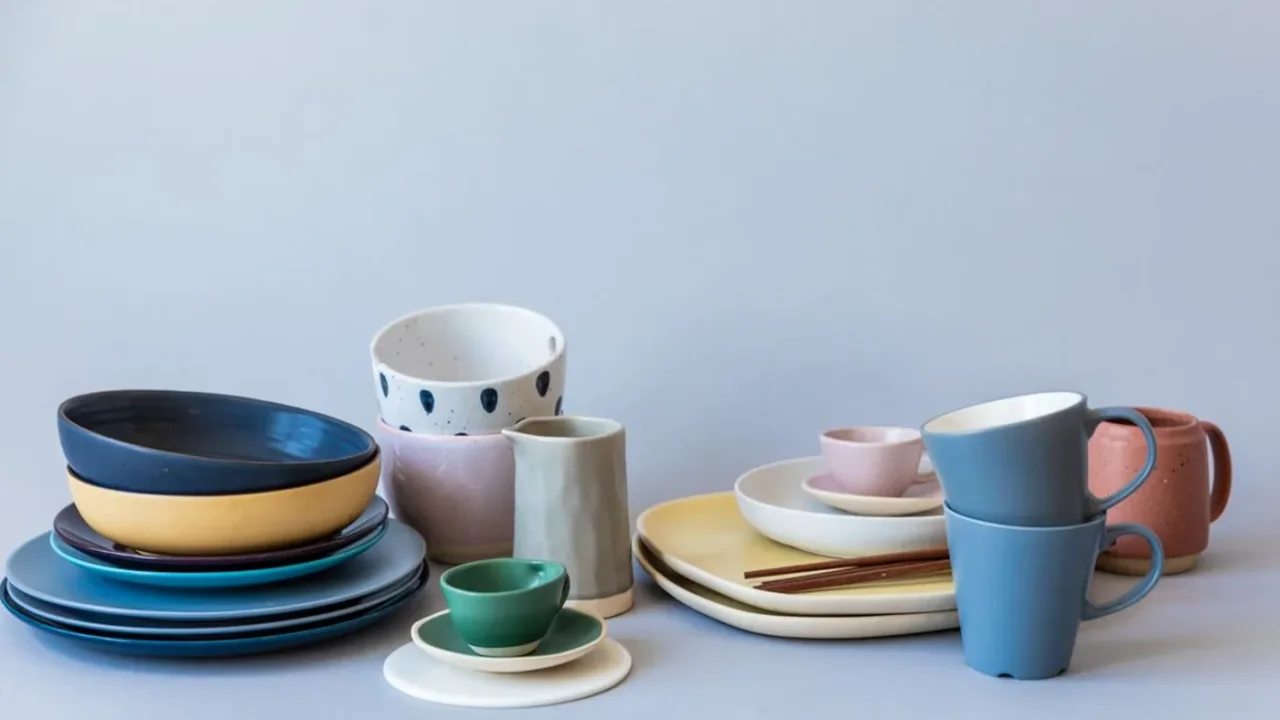 Waste Disposal
How to sort old plates, mugs and drinking glasses by condition, pack sound sets for reuse and contain chipped or broken pieces before collection in Dubai.
Read Article Guides
A kitchen sorts best by task rather than by cupboard. How to audit the worktop, thin duplicate cookware, protect dry goods from Dubai humidity, and route what leaves to the right place.
Read Article