Decluttering a Kitchen in Dubai: Worktops, Cupboards and Dry Goods
The Junk Services Dubai Team 7 min read
A kitchen fills up faster than any other room because almost everything in it was useful once. This guide sorts a Dubai kitchen by the task each item serves rather than by the cupboard it happens to sit in, and covers the worktop audit, dry goods in a humid climate, duplicate cookware, and what cannot be passed on when it leaves.
A kitchen works as a set of tasks: preparing, cooking, serving, storing and washing. Sorting cupboard by cupboard preserves the existing layout, including whatever went wrong with it, so items stay where they were first put down rather than where they are used.
Working by task changes the question from what is in this cupboard to what does this job need within reach. Knives, boards and bowls belong near the preparation space; pans and oils near the hob; storage boxes near where food is packed away. Whatever is left over once the zones are supplied is what the kitchen carries without a reason.
Dubai kitchens vary more than most. A Marina one-bedroom might have a galley with four cupboards, while a villa in Dubai Hills Estate has a main kitchen plus a back preparation kitchen. Zones matter most in a small galley, where one misplaced appliance costs a third of the worktop.
Audit the Worktop Before You Open a Single Cupboard
Worktop space is the most valuable surface in the kitchen and the first thing appliances take. Before sorting anything inside a cupboard, take everything off the counters and put each item back only when you can place it in one of the first two groups below.
Daily: Used most days by someone in the household: kettle, toaster, coffee machine, a knife block. These keep their place on the counter.
Weekly: Used often enough to justify easy reach, such as a blender or rice cooker. Store these in a low cupboard near the hob rather than on the worktop.
Occasional: Genuine but infrequent use: an ice cream maker, a large roasting tray, a stand mixer. High shelves and the backs of cupboards are the right home.
Dormant: Not used in a full year, or kept because it was a gift or a purchase that did not work out. These are the items the declutter exists for.
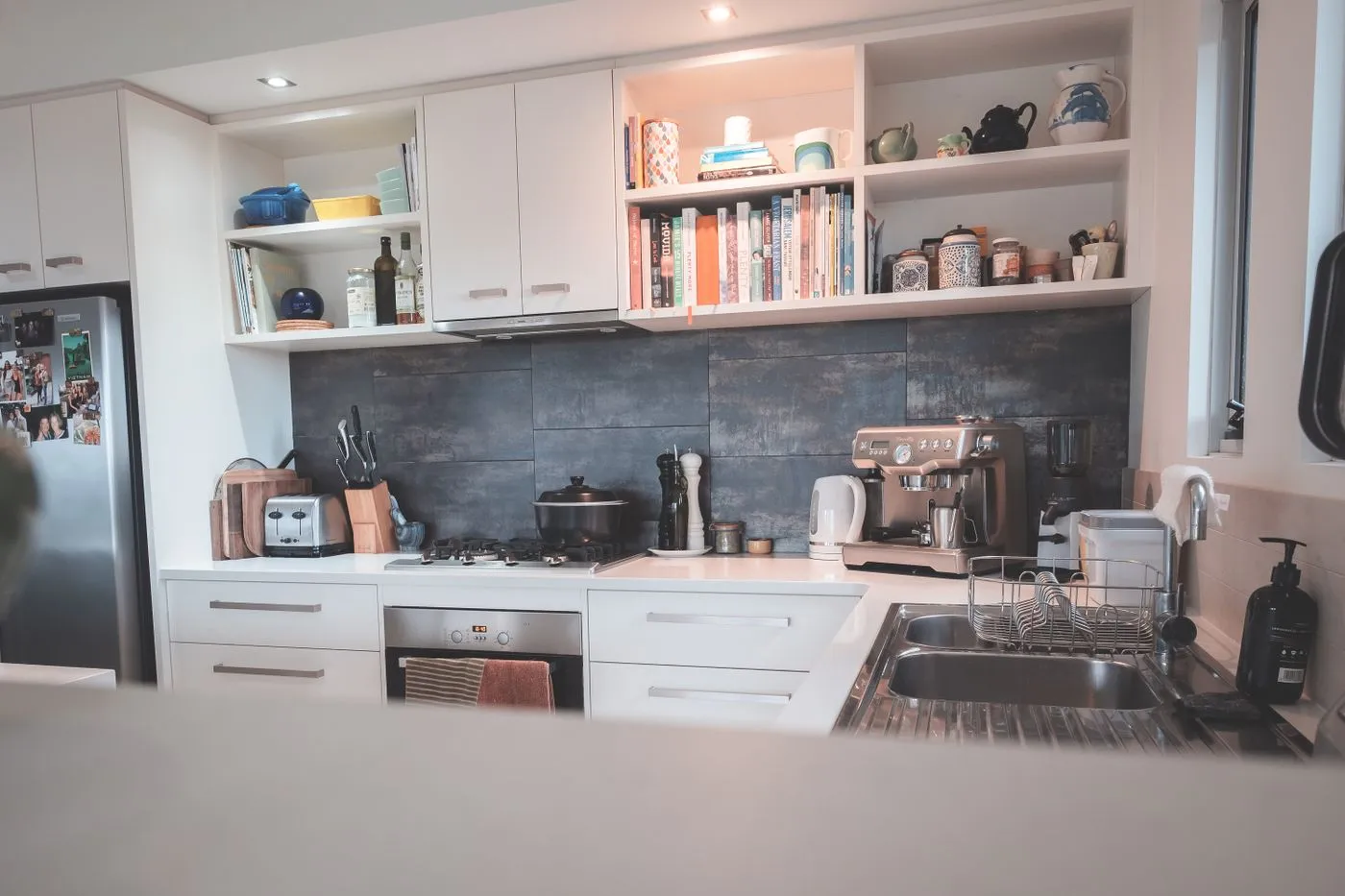
A working kitchen before the audit: four appliances on the counter and shelves carrying more than they are used for.
Small appliances that no longer work are a separate decision from ones that work and sit unused. Broken units carry electrical components and should leave as electronic waste rather than in a donation bag, which the kitchen gadget disposal guide covers by appliance type.
Working appliances in good condition are worth passing on rather than discarding. Test each one, include the power cable and any detachable parts, and see the guide to donating working appliances for what receiving organisations will and will not take.
Dry Goods, Heat and Humidity in a Dubai Kitchen
Dry goods behave differently here than in a temperate climate. Coastal humidity, kitchens that sit warm when the air conditioning is off during the day, and long gaps while a household travels in summer all shorten the practical life of an opened packet.
Decant opened flour, rice, sugar and pulses into airtight containers rather than resealing the original bag with a clip.
Keep spices out of the cupboard directly above the hob, where steam and heat dull them within a season.
Check anything opened before a long summer absence, since a half-used bag left through August rarely survives well.
Group by how the household cooks, not by packet size, so the items used together sit together.
Keep one shelf for what needs using soon, and check it before the weekly shop rather than after.
Opened food that has gone past use is household waste, not a donation. Unopened items well within date are a different matter and are worth offering on before the cupboard is restocked. Vegetable trimmings and similar scraps have their own route, set out in the home composting guide.
Cookware and Crockery: The Duplicate Test
Pans, plates and utensils survive in a kitchen long past the point of being used, because none of them fail all at once. The useful test is a count: how many of each does this household need on its busiest normal day, plus a reasonable margin for guests.
Item group
What the count should reflect
Retire it when
Where it goes next
Dinner plates and bowls
Household size plus a guest margin
Chipped at the rim, crazed glaze, part of a set nobody uses
Donation if sound, general disposal if chipped
Non-stick pans
One or two sizes in regular use
Coating scratched, flaking or worn through to the metal
General disposal, not donation
Stainless and cast pans
The sizes that match your hob
Warped base that rocks on the hob, loose handle
Scrap metal recovery
Storage containers
Pairs with matching lids only
No lid, warped, stained or cracked
Plastic recycling where the type is accepted
Mugs and glassware
A working number plus spares for visitors
Cracked, chipped, or a promotional item nobody reaches for
Donation if intact, otherwise separate disposal
Utensils and gadgets
One good example per job
Duplicate of something better, melted, bent or unused for a year
Donation or disposal by material
Counts vary by household, so treat the middle column as the question rather than the answer.
Matching lids to containers is the fastest single win in most kitchens. Empty the whole cupboard onto a table, pair every box with its lid, and the orphans on both sides leave. Plastics differ in what collection points accept, which the plastic recycling guide sets out by resin type.
What Cannot Go Into a Donation Box
Kitchens produce more items that cannot be passed on than any other room, and mixing them into a donation bag creates work for the receiving organisation. Keep these separate from the outset.
Opened food, and anything unopened but past its date.
Used cooking oil, which must never go down a sink or into a bin bag.
Non-stick pans with damaged coating, and any pan with a loose handle.
Chipped or cracked crockery and broken glass, which need wrapping before disposal.
Small appliances that no longer power on, which belong in the electronic waste stream.
Cleaning chemicals, oven cleaners and drain products, which count as household hazardous waste.
Used cooking oil is the item households most often get wrong. It sets in drainage and causes blockages that become the building's problem rather than yours, and the cooking oil disposal guide explains how to contain and hand it over. Broken glass should be wrapped and labelled, with intact glass kept for the glass recycling stream.
Chemicals under the sink are worth a separate ten minutes. Oven cleaner, drain unblocker and bleach-based products should not travel in a bag with crockery, and the household hazardous waste guide covers how each category is handled.
Running the Kitchen Session End to End
A kitchen cannot be left half sorted, because the household needs to cook that evening. Run it in a fixed order with the outgoing streams set up before you start.
1Set out five receptacles: donate, sell or offer on, recycle by material, hazardous, and general disposal.
2Clear the worktop completely and sort every appliance into the four use groups.
3Empty one zone at a time, wiping the shelf before anything goes back.
4Pair every container with its lid and release the orphans.
5Work through the dry goods, decanting what stays and separating what has gone.
6Take the hazardous and oil streams out of the kitchen the same day, and bag the rest for their routes.
Large items are the part to plan rather than improvise. A chest freezer, a second fridge in a utility room or a stack of surplus cabinets left by a previous tenant need a booked collection, and appliance disposal should be arranged with the appliance type, its location in the home and the lift or stair access stated up front.
Key Takeaways
Sort by the task each item serves, not by the cupboard it sits in.
Clear the worktop first and let only daily-use appliances return to it.
Humidity and long summer absences shorten the life of opened dry goods.
Count cookware and crockery against a busy normal day plus a guest margin.
Keep opened food, used oil, chemicals and broken glass out of donation bags.
Why Choose Junk Service in Dubai
As a local, fully insured team, Junk Services Dubai makes clearing your space simple — fast pickups, fair upfront pricing and responsible disposal across every Dubai community.
Same-Day Availability
Book today and, where crews are free, we clear it today — with no rush surcharge.
Fair, Upfront Pricing
A flat price agreed before we arrive, based on volume, items and access. No surprises.
Insured, Uniformed Crews
Background-checked teams who do all the lifting and protect your floors, lifts and walls.
Responsible Disposal
We sort for reuse, donation and recycling in line with Dubai Municipality guidance.
Our editorial team is made up of the crews and coordinators who clear homes, villas and offices across Dubai every day. We share practical, first-hand guidance on decluttering, disposal and responsible waste removal in the UAE.
FAQ
Frequently Asked Questions
Start on the worktop. It delivers the most visible change per minute and forces a decision on the small appliances, which are usually the largest single source of lost space.
Most homes cook regularly with two or three: a small pan, a large pan and one deep pot or wok. Extra sizes earn their place only if they match how the household cooks, not because a set came with them.
No. Receiving organisations accept only sealed, in-date items, and opened packets are household waste. Offer unopened surplus on before it nears its date rather than after.
Discard it rather than donating it. A damaged coating is the point at which a pan stops being suitable to pass on, and the mixed materials keep it out of the clean metal recycling stream.
Move them away from the hob and out of direct sun, keep them in sealed containers rather than open racks, and buy smaller quantities more often. Heat and steam degrade ground spices faster than age alone.
Larger items with a recognisable brand, such as a stand mixer or a coffee machine in working order, often resell. Mixed crockery, utensils and small gadgets are usually faster to donate than to list.
Book it as a collection rather than moving it. Send the appliance type, its position in the home and the access route when you enquire, since cooling units need careful handling and a suitable disposal route.
Final Thoughts
A kitchen stays decluttered when each zone holds what its task needs and nothing borrowed from another job. That is a more durable outcome than an empty-looking cupboard, because it survives the next weekly shop.
The streams that leave the kitchen matter as much as what stays. Oil, chemicals, broken glass and dead appliances each have their own route, and separating them at the table is far easier than sorting a mixed bag afterward.
Arrange Collection
When the sorting is done, send photographs of the appliances, surplus cabinets or bulk items leaving the kitchen, with your area and the lift or stair access. Our team confirms what is accepted and the price before the visit.
Clearing accumulated culinary gadgets, broken blenders, or an old air fryer? Learn how small kitchen appliance disposal works in Dubai homes and offices.
Traditional charities rarely have the logistics to collect a fridge or washing machine. Here's how a working appliance finds its next owner in Dubai, and when to stop waiting.


 Guides