 Guides
 6 min read
Hoarding vs Clutter: The Difference and When to Get Help
Understand how ordinary clutter differs from hoarding disorder, which functional warning signs matter and how to offer help without forcing a clear-out.
Read Article

Decluttering can make a home easier to use, but it is not a treatment for anxiety, depression or any other mental-health condition. This guide shows Dubai residents how to reduce everyday household friction through small, low-pressure resets, clear stopping rules and practical removal plans. It also explains when to pause the sorting and seek support instead of pushing through distress.
Decluttering can reduce practical demands inside the home: fewer objects to move before cleaning, fewer duplicate items to search through and fewer unfinished piles competing for attention. That can make a morning or evening routine feel more manageable. It does not diagnose, prevent or cure a mental-health condition.
Treat the project as environmental support rather than a test of discipline. A resident in a compact JLT apartment may gain more from restoring one chair and the route to the balcony than from emptying every cupboard. A household in The Springs may need a functioning entry bench and dining table while the garage waits for another month.
The best starting point is small enough to finish before motivation changes. Choose one nightstand, one bathroom shelf or the patch of floor beside the front door. Avoid photographs, inherited items and children's keepsakes during the first sessions because each choice carries more emotional weight.

A rigid method fails when it asks for more decisions than you can make that day. Use an effort level you can repeat. Low-capacity days are for rubbish, laundry and returning known items; medium-capacity days can include duplicates; high-capacity days are the time for stored boxes or furniture decisions.
| Available capacity | Suitable task | Stopping point | Task to postpone |
|---|---|---|---|
| Low | Clear one route or collect laundry | One bag or ten minutes | Sentimental boxes |
| Moderate | Sort one drawer or product category | One completed container | Whole-room emptying |
| Higher | Review a cupboard or bulky item list | A planned collection load | Several rooms at once |
| Overwhelmed | Protect access and ask for help | Safety restored | Independent large-scale sorting |
This is different from postponing every decision. A small review tray needs a limit and a return date. If the tray is still untouched after a week, reduce the question to the next action: keep in a named place, pass on, or ask someone trusted to sit with you while you decide.
Stopping rules protect the rest of the day. Without them, a resident can empty a wardrobe onto the bed, lose energy halfway through and finish with a less usable room. The session should end with fewer open decisions than it started with.
For residents working through emotional possessions, the separate sentimental-item decluttering guide uses a slower curation process. Do not import those decisions into a quick reset merely because an old photograph appears in the wrong drawer.
The most useful result is often a shorter routine rather than a barer room. Put the keys where they are used, keep medication or work items in one consistent place, and remove duplicate objects that force a choice every morning. Good placement reduces searching and repeated setup.
Choose one anchor for each part of the day. The entry tray holds the keys and access card, the bedside surface holds only what is needed overnight, and the dining table returns to meal use after work ends. If an object has no home, ask whether it serves the routine before buying a container for it.
This approach also helps shared households. Agree on the function of common surfaces, then give each person a small private container for objects that need to remain nearby. The aim is not to control another person's belongings; it is to keep shared routes and shared tasks workable.
A finished decision can still create visual pressure if donation bags and broken furniture remain by the door. Choose the exit route before sorting. Small donations need a handover date, sale items need a listing deadline, and bulky discards need a collection appointment.
If several rooms produce a mixed load, a planned house clearance service can handle the physical removal after the keep-or-go decisions are complete. A removal crew should not make emotional decisions for the resident. The crew's role is to carry the agreed items, protect access and route the load appropriately.
Pause when discarding creates marked distress, conflict escalates, important rooms cannot be used, or pathways and exits are compromised. Those signs move the task beyond a lifestyle tidy-up. Do not force a surprise clear-out or remove another adult's possessions without their agreement.
Our guide to the difference between hoarding and clutter explains the functional warning signs and why diagnosis belongs to a qualified mental-health professional. If you are concerned about your own mental health, speak with a licensed healthcare professional; a tidy room is not a substitute for care.
As a local, fully insured team, Junk Services Dubai makes clearing your space simple — fast pickups, fair upfront pricing and responsible disposal across every Dubai community.
Book today and, where crews are free, we clear it today — with no rush surcharge.
A flat price agreed before we arrive, based on volume, items and access. No surprises.
Background-checked teams who do all the lifting and protect your floors, lifts and walls.
We sort for reuse, donation and recycling in line with Dubai Municipality guidance.
Written by
The Junk Services Dubai Team
Junk Removal Specialists
Our editorial team is made up of the crews and coordinators who clear homes, villas and offices across Dubai every day. We share practical, first-hand guidance on decluttering, disposal and responsible waste removal in the UAE.
Decluttering may make daily routines easier and reduce household friction, but it does not treat a mental-health condition. Seek professional care for persistent anxiety, low mood or other symptoms.
Choose one low-emotion surface tied to a daily task, set a ten-minute timer and handle only rubbish, items with known homes and one small review tray.
Stop opening new containers and restore function first. Return keep items, contain undecided objects in one tray and keep the bed, kitchen and walking routes usable.
Either can work. Ask a calm, trusted person to help when decisions stall, but keep ownership of your possessions and agree that nothing leaves without your consent.
Repeat one ten- to twenty-minute reset several times a week if that pace is sustainable. Consistency matters more than a long session that leaves the room unfinished.
Seek qualified support when possessions prevent rooms from being used, exits or appliances are blocked, discarding causes marked distress, or clutter is harming work, relationships or safety.
A gentle declutter succeeds when the home supports one daily task better than it did before. Work within today's capacity, finish each small loop and treat distress as a signal to pause, not a reason to push harder.
Once your keep-or-go decisions are finished, arrange collection for bulky furniture and boxed household items so the restored space remains usable.
GuidesUnderstand how ordinary clutter differs from hoarding disorder, which functional warning signs matter and how to offer help without forcing a clear-out.
Read Article Guides
How to declutter sentimental items without guilt in Dubai. Curate family keepsakes, digitize memorabilia, overcome emotional friction, and preserve memories.
Read Article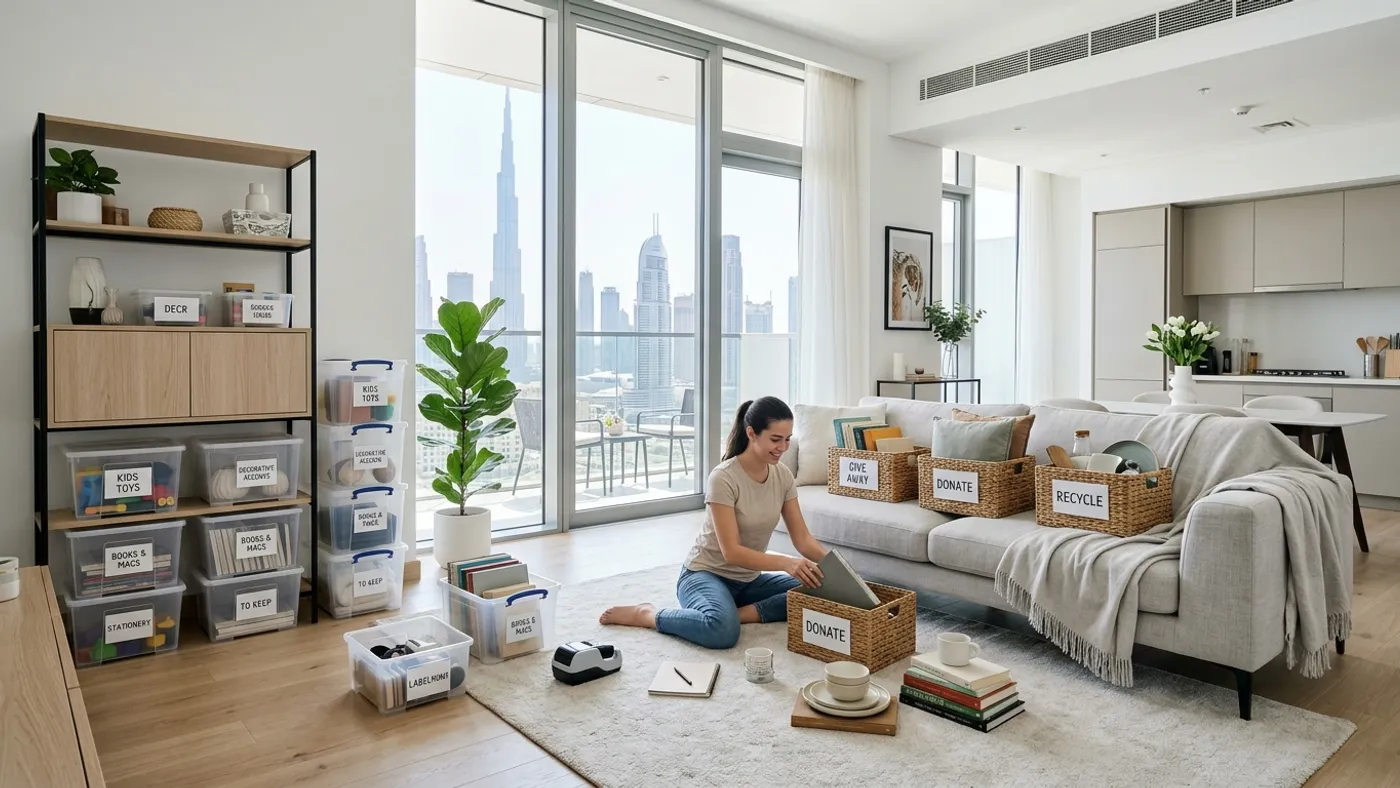 Guides
A practical guide to decluttering your Dubai home: sorting rules, managing expatriate accumulation, building momentum, and organizing discard removal.
Read Article