Hoarding vs Clutter: The Difference and When to Get Help
The Junk Services Dubai Team 6 min read
Ordinary clutter and hoarding disorder are not the same. The key differences are persistent difficulty discarding, distress linked to letting possessions go, and accumulation that prevents living spaces from being used as intended. This guide explains the functional warning signs, what a removal company can and cannot decide, and how to support someone without turning a difficult situation into a forced clear-out.
What Is the Difference Between Hoarding and Clutter?
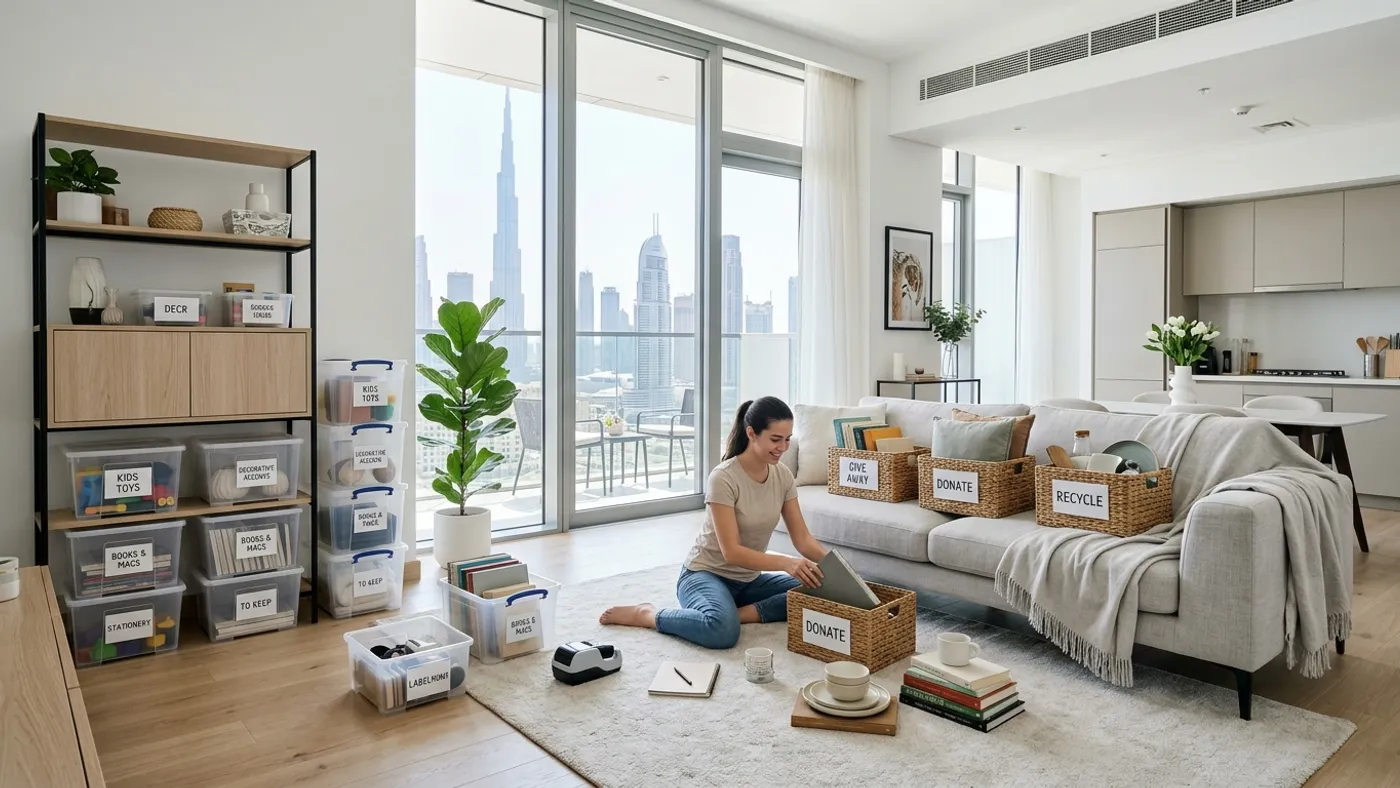
The difference is not the number of possessions alone. Ordinary clutter can follow a move, a busy work period, a new baby or delayed household decisions. The resident can usually sort it with manageable discomfort, and the bed, kitchen, bathroom, doors and main walking routes remain usable.
Hoarding disorder is a recognised mental-health condition. The American Psychiatric Association overview describes persistent difficulty parting with possessions because of a perceived need to save them, with resulting clutter that compromises living spaces and causes distress or impairment. A clinician considers the wider pattern, not a single messy room.
Question
Ordinary clutter
Possible hoarding-related impairment
Can rooms be used?
Beds, seating, appliances and doors still work
Possessions compromise their intended use
What happens when sorting starts?
Decisions may be annoying or tiring
Parting with items creates marked distress or repeated refusal
How broad is the effect?
Limited to one pile, room or busy period
Affects safety, relationships, work or access to the home
Does a tidy-up hold?
A routine reset restores the space
Accumulation and acquisition continue without deeper support
Function, distress and persistence matter more than a visual judgement about how full a room looks.
Look at Function, Distress and Persistence
Three questions are more useful than asking whether a home looks bad. Can each room perform its basic job? Does discarding cause distress far beyond ordinary indecision? Has the pattern persisted and spread across important parts of life? A yes to one question is not a diagnosis, but several concerns together justify professional assessment.
Function: Cooking, sleeping, bathing, entering and moving through the home are compromised by possessions.
Distress: Discussion of discarding creates intense fear, grief, anger or avoidance that stops the process.
Persistence: The difficulty continues over time and returns after other people remove items.
Wider impact: The pattern affects relationships, repairs, finances, work, social contact or household safety.
Dubai housing can hide or expose the pattern in different ways. A villa garage or unused maid's room may absorb possessions for years, while a one-bedroom tower apartment reaches functional limits sooner. Square metres change visibility, not the clinical definition.
Clutter, Collecting and Squalor Are Different Ideas
A collection is usually intentional, themed and organised for display or study. Clutter is disorganised material in a space intended for another purpose. Squalor refers to poor environmental conditions or neglect and does not, by itself, explain why possessions accumulated. These descriptions can overlap, but they are not interchangeable labels for a person.
A shelf of catalogued model cars is a collection when it remains organised and does not take over living functions.
Unopened moving cartons in a spare room are clutter when they are delayed decisions but can be reviewed without marked distress.
A blocked stove, unusable bed or obstructed exit is a functional warning sign regardless of the items' financial value.
Poor cleanliness may arise for many reasons and should not be used as a shortcut diagnosis of hoarding disorder.
Ordinary clutter can be disorganised and inconvenient while the room still performs its everyday function.
Why a Forced Clear-Out Can Make Things Worse
Removing possessions without consent may restore the room for a short time while increasing distress, conflict and secrecy. It also leaves the saving and acquisition pattern untouched. Except where immediate safety action is required by qualified professionals, support should be collaborative and paced.
Do not use a surprise truck booking as an intervention. Begin with the person's own goal, such as reaching the cooker, opening the front door fully or allowing an essential repair. The NHS guidance on hoarding disorder advises seeking professional help and identifies talking therapy as a main treatment route. Removal supports a plan; it does not replace treatment.
1Ask permission to discuss one functional problem rather than criticising the whole home.
2Agree on the smallest safety or access goal the resident accepts.
3Let the owner decide what leaves unless an appropriate professional directs an urgent safety response.
4Separate clinical support, decision support and physical removal into distinct roles.
5Review what changed before planning another zone or collection visit.
How to Speak About the Problem Without Labels
Use observations the other person can verify. Say that the cooker cannot be reached, the front door does not open fully or a repair visit cannot enter. Avoid calling the person lazy, dirty or a hoarder. Labels turn a shared access problem into a judgement about character and often end the conversation.
Ask what change would matter to them. One person may want a safe route to the bathroom; another may want a sofa seat available for a visitor. Start there, document the agreed boundary and keep the first action small enough that the resident can remain involved from beginning to end.
Family members living abroad may be tempted to manage a Dubai property through video calls and instructions to a crew. Remote coordination can handle access and transport, but it does not replace the resident's consent or a clinician's assessment. Separate urgent property access from longer-term decisions about possessions.
When to Seek Professional Help
Seek qualified mental-health support when the pattern causes marked distress, stops rooms being used, prevents repairs or visitors from entering, or creates ongoing conflict and isolation. A primary-care doctor or licensed mental-health professional can assess the full picture and rule out other causes. Do not diagnose a relative from an online checklist.
Immediate hazards need an appropriate local emergency or building response, especially when exits, essential appliances or vulnerable occupants are at risk. Keep the language factual: describe the blocked route or unusable facility rather than labelling the resident.
What a Removal Crew Can and Cannot Do
A removal crew can assess volume, plan access, carry agreed items and phase a large load across several visits. It cannot diagnose hoarding disorder, decide that another adult's possessions have no value or provide therapy. Those boundaries should be settled before the vehicle arrives.
When the owner or authorised decision-maker has completed the choices, a careful phased heavy-clutter clearance can restore access without forcing the entire property into one day. For an ordinary household reset without marked distress, the lighter home decluttering guide is the better starting point.
Key Takeaways
Hoarding disorder is defined by difficulty discarding, distress and functional impairment, not by possession count alone.
Ordinary clutter may be inconvenient while beds, appliances, doors and walking routes remain usable.
Collecting, clutter and squalor describe different patterns and should not be used as interchangeable labels.
A photograph or online checklist cannot diagnose a mental-health condition.
Forced clear-outs can increase distress and do not address the underlying saving pattern.
Removal crews can carry agreed items and phase a job, but clinical assessment and treatment belong to qualified professionals.
Why Choose Junk Service in Dubai
As a local, fully insured team, Junk Services Dubai makes clearing your space simple — fast pickups, fair upfront pricing and responsible disposal across every Dubai community.
Same-Day Availability
Book today and, where crews are free, we clear it today — with no rush surcharge.
Fair, Upfront Pricing
A flat price agreed before we arrive, based on volume, items and access. No surprises.
Insured, Uniformed Crews
Background-checked teams who do all the lifting and protect your floors, lifts and walls.
Responsible Disposal
We sort for reuse, donation and recycling in line with Dubai Municipality guidance.
Our editorial team is made up of the crews and coordinators who clear homes, villas and offices across Dubai every day. We share practical, first-hand guidance on decluttering, disposal and responsible waste removal in the UAE.
FAQ
Frequently Asked Questions
No. Clutter can follow a move, illness, a busy period or delayed decisions. Hoarding disorder involves persistent difficulty discarding, distress and accumulation that impairs normal use or wider functioning.
No. A photograph shows volume at one moment but not the person's distress, saving beliefs, acquisition pattern or wider functioning. Diagnosis requires assessment by a qualified professional.
Loss of function is a key warning sign. Seek help when possessions prevent sleeping, cooking, bathing, opening doors, completing repairs or moving safely through the home.
No. Collections are usually themed, intentional and organised for display, while hoarding-related accumulation is disorganised and compromises living space or daily functioning.
No, not as a routine response. Surprise removal can increase distress and conflict. Work with the resident and qualified professionals, except where an appropriate emergency response is needed for immediate danger.
No. A removal company can carry agreed items and phase a large clearance, but diagnosis and treatment belong to licensed mental-health professionals.
Start with one shared functional goal, such as opening a doorway or reaching the cooker. Ask permission, avoid labels and connect the person with qualified support before arranging large-scale removal.
Final Thoughts
The useful dividing line is not tidy versus untidy. It is whether persistent difficulty discarding and distress are compromising the home's function and the person's life. Describe what is happening, protect consent and bring the right kind of help to each part of the problem.
Plan a Phased Collection
When the resident or authorised decision-maker has agreed what will leave, speak with our team about a discreet collection plan paced to the property's access and volume.
How a hoarder house clearance in Dubai is handled differently from a standard clean-out, why the job is usually phased across several visits, how family members can arrange it, and what stays confidential throughout.
Use decluttering as a low-pressure way to reduce household friction in Dubai, with small zones, stopping rules and support when the task becomes distressing.



 Guides