Dehumidifier Disposal Dubai: Emptying and Safe Appliance Collection
The Junk Services Dubai Team 4 min read
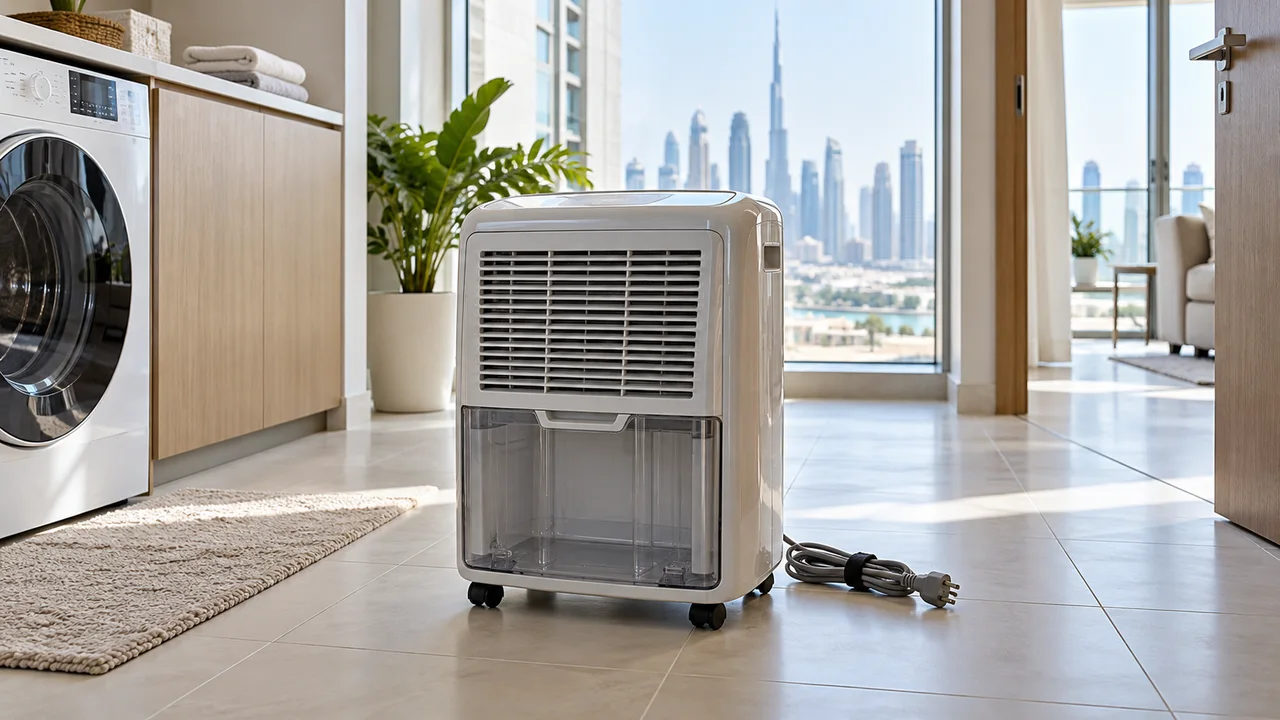
A portable dehumidifier contains more than a water tank and fan. Many household models use a compressor and sealed refrigerant circuit, which means the cabinet should remain intact during collection. This guide covers the drain-down, drying and handling steps that matter before an old unit leaves a Dubai home.
A common portable dehumidifier draws damp air across a cold coil, collects condensed water and returns drier air to the room. The process often uses a compressor, refrigerant, oil, copper tubing, a fan, electronics and a removable plastic reservoir. Those parts make the unit an appliance, not ordinary household rubbish.
Some compact units use a thermoelectric module instead of a compressor. They still contain electronics and mixed materials, but they do not have the same sealed refrigeration circuit. A model-label photograph helps the collector identify which design is leaving.
Check the Type, Drain Setup and Fault
Check
What to record
Why it matters
Model label
Model, rating and refrigerant marking
Identifies the appliance design
Water tank
Capacity, cracks and whether it is empty
Prevents spills during carrying
Drain hose
Attached, loose or missing
Stops trapped water reaching the floor
Fault
No power, no water collection, noise or leak
Guides handling and reuse decisions
Access
Stairs, lift, thresholds and carry distance
Sets the collection plan
Record the appliance and the route before it is moved from its operating position.
Water on the floor does not prove that refrigerant has escaped. The tank may be cracked, mis-seated or overflowing, and the drain hose may be loose. Unplug the unit, contain the water and describe what happened rather than opening the cabinet to investigate.
How to Empty and Dry a Dehumidifier
1Switch off the unit and unplug it with dry hands.
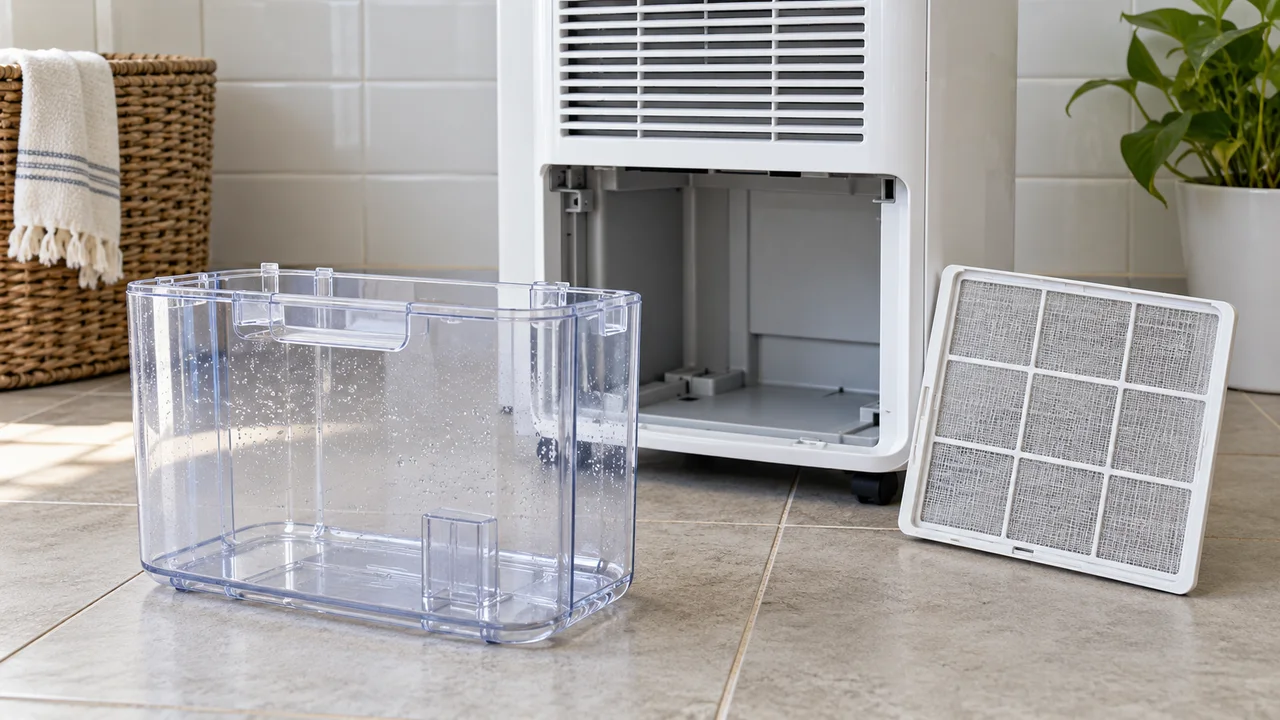
2Remove the tank and pour the water into a suitable drain.
3Detach the continuous-drain hose and let it empty fully.
4Rinse the tank only if safe to do so, then leave it open to dry.
5Remove the washable air filter, clean it as directed and dry it fully.
6Wipe the tank recess and exterior without opening the sealed cabinet.
7Refit dry loose parts, secure the cable and photograph the model label.
An empty tank, drained hose and dry filter prevent spills and odour during collection.
Do not load a tank that still sloshes or a hose that can drip through a service lift. In Dubai apartments, even a small spill on polished corridor or lift floors can interrupt the booked collection window. Let the parts drain and dry before the crew arrives.
Protect the Compressor and Sealed Circuit
Keep a compressor dehumidifier upright during storage and carrying. Do not drill the cabinet, cut copper tubes or remove the compressor at home. An impact can damage the cooling lines, and dismantling can release refrigerant and oil that a recovery route is meant to contain.
Keep upright: Use the wheels only on smooth floors, then move the unit on a stable trolley.
Keep intact: Leave panels, tubing and compressor inside the cabinet.
Declare faults: Report a burnt smell, damaged plug, oily mark or suspected cooling failure before loading.
The same sealed-circuit rule applies to refrigerators, freezers and wine coolers. The guide to hazardous components in old appliances explains why recovery begins before the metal shell is broken apart.
Reuse, Repair or Recover the Materials
A working unit may be reusable when the tank is sound, the humidistat responds, the filter is available and the cabinet shows no electrical or cooling-system damage. Record a short operating test before unplugging it. A poor fit for the room is different from a failed appliance, so size or noise alone may not justify scrapping a serviceable unit.
Reuse when the unit collects water, shuts off correctly and has complete parts.
Seek repair review for an identified fan, sensor, switch or tank-position fault.
Choose recovery when the compressor fails, wiring is unsafe, the cabinet is badly corroded or the sealed circuit is damaged.
Do not pass on a unit with an unexplained electrical smell or recurring leak.
Arrange Collection From a Dubai Property
Send a photograph of the front, model label, empty tank and route. State whether the unit is on castors, how many thresholds lie between it and the service lift, and whether other appliances are leaving. A prepared appliance disposal pickup can combine the dehumidifier with other declared units.
Keep the appliance inside until the collection window is confirmed. Do not leave it beside community bins, where the tank can refill with rain or cleaning water and the cabinet may be damaged before a proper route is arranged.
What Happens After Collection
A suitable processor manages the refrigerant and compressor oil before separating the steel, copper, wiring, electronics and plastics. Thermoelectric units follow an electrical-equipment route without the same refrigerant step. Keeping the model label readable and the cabinet intact supports that distinction.
Key Takeaways
Empty the tank and continuous-drain hose before pickup.
Dry removable parts and secure the power cable.
Keep compressor models upright and the sealed circuit intact.
Report leaks, burnt smells and electrical faults before collection.
Why Choose Junk Service in Dubai
As a local, fully insured team, Junk Services Dubai makes clearing your space simple — fast pickups, fair upfront pricing and responsible disposal across every Dubai community.
Same-Day Availability
Book today and, where crews are free, we clear it today — with no rush surcharge.
Fair, Upfront Pricing
A flat price agreed before we arrive, based on volume, items and access. No surprises.
Insured, Uniformed Crews
Background-checked teams who do all the lifting and protect your floors, lifts and walls.
Responsible Disposal
We sort for reuse, donation and recycling in line with Dubai Municipality guidance.
Our editorial team is made up of the crews and coordinators who clear homes, villas and offices across Dubai every day. We share practical, first-hand guidance on decluttering, disposal and responsible waste removal in the UAE.
FAQ
Frequently Asked Questions
No. A dehumidifier is electrical equipment, and many models contain refrigerant and compressor oil. Arrange an appliance collection route instead.
Many compressor models do, while some small thermoelectric models do not. Check the model label and keep the cabinet intact so the design can be identified safely.
Yes. Empty and dry the tank, drain any hose and secure all loose parts. This prevents water leaking across your home, corridor or service lift.
No. Do not open or cut a compressor model because its sealed system may contain refrigerant and oil. Leave material separation to a suitable processor.
Yes, if it collects water properly, shuts off as intended and has safe wiring, a sound tank and available filters. Record its operation and disclose any known fault.
Yes. Share the quantity, dimensions, condition and building route so all declared appliances can be planned in one collection.
Final Thoughts
The last water in the tank is the homeowner's job; the sealed cooling circuit is the processor's job. Empty and dry the removable parts, keep the cabinet upright and intact, then arrange an appliance route that can recover its materials safely.
Arrange Collection
WhatsApp Us photos of the dehumidifier, model label, empty tank and property access to arrange a prepared appliance pickup.
An old appliance is mostly steel with a few genuinely dangerous parts buried in it. What those parts are, which machines carry them, and why stripping one at home goes wrong.
How to empty, dry and arrange collection of a freestanding or under-counter wine cooler in Dubai without damaging its glass door or sealed cooling circuit.
The safe way to handle appliance removal in Dubai — fridge, washing machine, dryer, dishwasher, oven and AC disposal, why appliances can't go in general junk, electronics recycling, apartment and villa collection, same-day pickup and Dubai Municipality compliance.

 Guides