Hazardous Components in Old Appliances: What Is Inside One
The Junk Services Dubai Team 7 min read
A dead fridge or a retired microwave looks like a steel box on wheels, and most of it is exactly that. The reason neither can be treated as scrap metal is the small proportion that is not: sealed gas, stored electrical charge, and in older machines a few components that later designs removed. This guide covers what is inside each type of appliance, which parts matter, and what that means when you hand one over.
By weight, a washing machine or a fridge is overwhelmingly steel, aluminium, copper and plastic, all of which are straightforwardly recyclable. The handling rules exist for the remaining few percent, and that small fraction decides the route the whole machine takes.
The practical consequence for a household is simple. An appliance goes out whole, to somebody equipped to open it, rather than being taken apart at home for the copper inside it.
Refrigerant and Compressor Oil
Anything that cools has a sealed refrigerant circuit: fridges, freezers, wine coolers, water dispensers, ice makers, air conditioners, dehumidifiers and heat-pump tumble dryers. The gas sits under pressure in copper and aluminium pipework, and the compressor at the bottom holds oil that has been circulating with it for years.
Cutting, crushing or dropping that circuit releases both at once. This is why a cooling appliance is degassed by someone with recovery equipment before the shell goes anywhere near a shredder, and why a crew will not accept a fridge that has already had its pipework cut. The same applies to a wall unit taken off a bracket during an air conditioner removal, where the disconnection is a separate job from the collection.
Never cut, saw or pull the pipework at the back or underneath a cooling appliance.
Keep the unit upright in transit and while it waits, so oil stays in the compressor.
Do not remove the compressor for scrap value; it is the part that holds the oil.
Say so when booking if a unit has already been damaged or has visible oil around the base.
Capacitors: Charge That Outlives the Plug
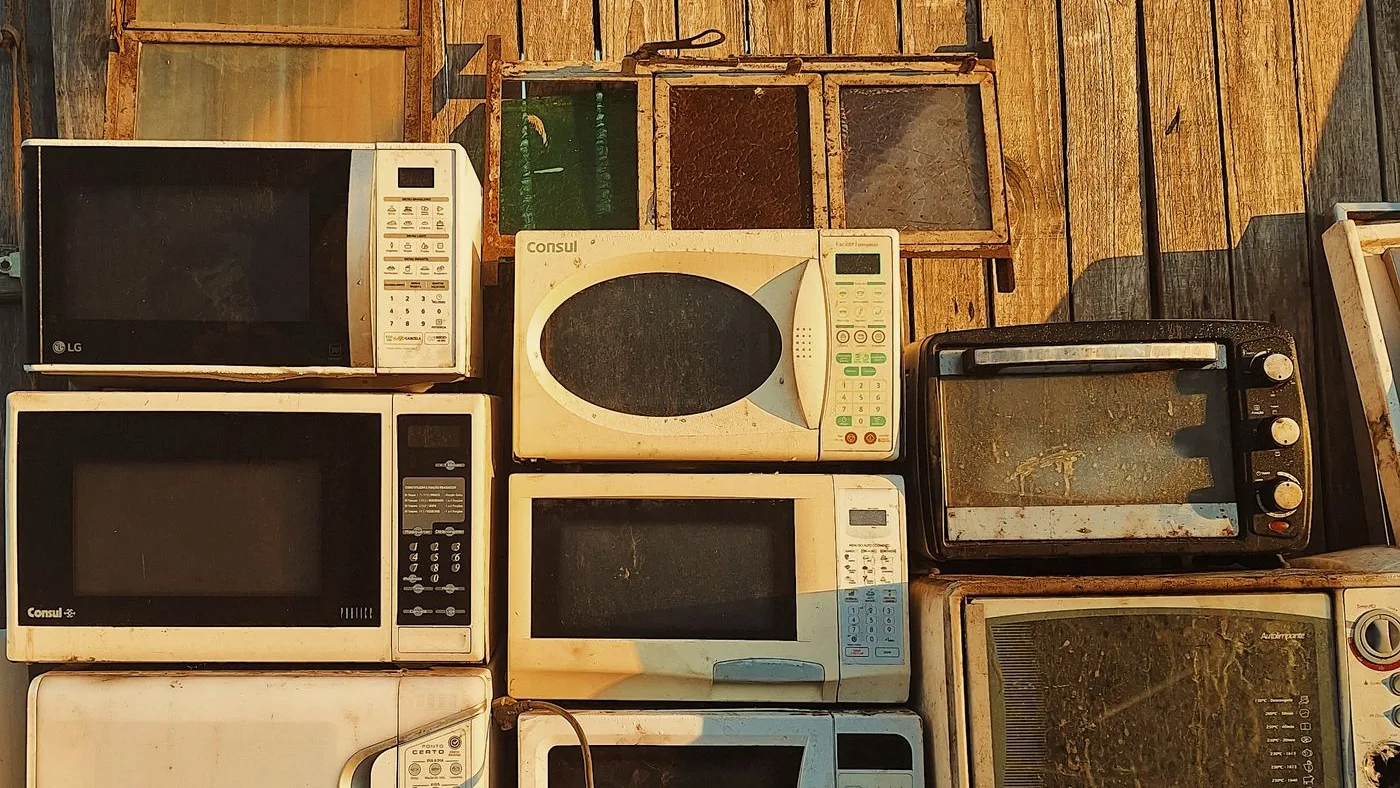
A capacitor stores electrical energy, and it does not stop storing it when the appliance is unplugged. The high-voltage capacitor inside a microwave is the example worth knowing: it can hold a dangerous charge with the machine switched off, unplugged and cold, which is why opening a microwave casing at home is one of the few genuinely serious risks in a household clear-out.
Smaller motor-run capacitors sit in washing machines, tumble dryers, air conditioners, pool pumps and extractor fans. They hold far less energy than a microwave's, and they are still not something to open a casing for. In older equipment they are also oil-filled, which is a second reason they are removed by hand at a processing facility rather than crushed with the shell.
Microwaves are the appliance people are most tempted to open and the one that most deserves being left sealed.
What Older Machines Carry That New Ones Do Not
Age is the strongest single predictor of what is inside an appliance. The older the machine, the more likely it contains a component that later designs replaced.
Mercury switches: Used as tilt and level switches in some older freezers, thermostats and appliance door mechanisms. The mercury sits in a sealed glass ampoule that has to be separated by hand rather than shredded.
Oil-filled components: Older capacitors and transformers were built around insulating oils that are handled as hazardous rather than tipped out with a wash-down.
Circuit boards: Almost every appliance built in the last thirty years has at least one board, carrying lead solder and a mix of recoverable metals. Boards are separated and routed to electrical waste processing.
Insulation foam: The foam sandwiched inside a fridge or freezer wall holds the agent used to blow it. That is one of the reasons the cabinet is processed in an enclosed facility rather than broken up in the open.
Lamp and display components: Older oven, fridge and extractor lighting, and the backlights in appliance displays, are separated from the metal along with the boards.
Batteries Inside Modern Appliances
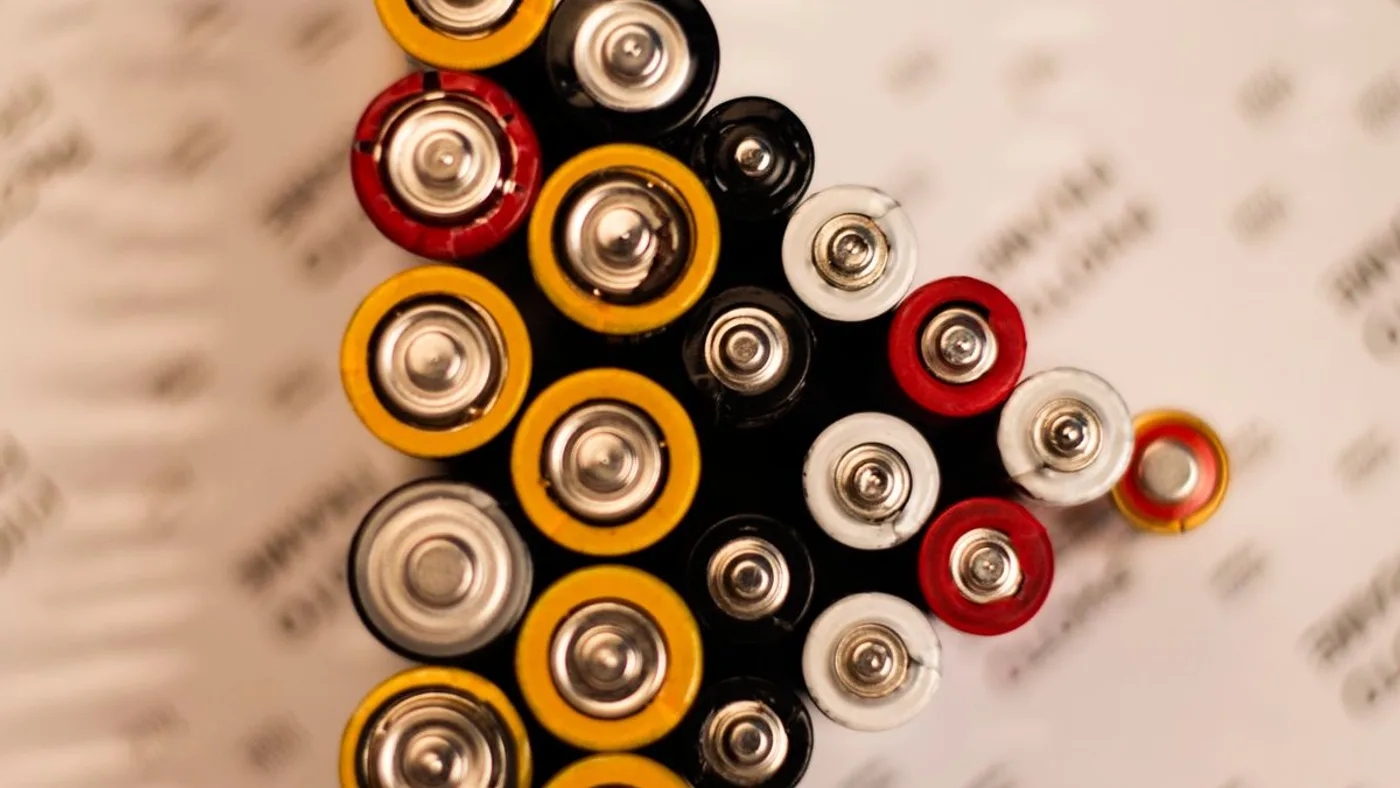
The newer failure mode is the opposite of the old one. Cordless vacuums, robot vacuums and mops, cordless garden tools, smart speakers, appliance control panels with backup cells and a growing list of kitchen gadgets all carry a lithium pack that has to come out before anything else happens to the machine.
A crushed or punctured lithium cell is a fire risk in a truck, a store room or a processing line, which is why a swollen pack is treated as a hazard in its own right. If a battery in an appliance has swollen, leaked or been damaged, say so at the point of booking and keep the item somewhere cool and clear of anything flammable until it is collected. The routes for the cells themselves are covered in the battery disposal guide.
What Is Inside What
Component
Found in
Why it matters
What happens to it
Refrigerant and compressor oil
Fridges, freezers, air conditioners, water coolers, dehumidifiers
Under pressure and released if the circuit is cut
Recovered before the cabinet is processed
High-voltage capacitor
Microwaves
Holds a dangerous charge after unplugging
Discharged by trained handlers, never at home
Motor-run capacitor
Washers, dryers, air conditioners, pumps, fans
Stored charge, and oil-filled in older units
Removed by hand at the processing stage
Mercury switch
Some older freezers and thermostats
Toxic if the glass ampoule is broken
Separated manually before shredding
Lithium cells
Cordless and robot vacuums, smart panels, gadgets
Fire risk if crushed, punctured or already swollen
Removed first and sent to battery recycling
Insulation foam
Fridges and freezers
Holds the agent used to blow the foam
Handled in an enclosed facility, not broken up outdoors
Circuit boards
Almost every powered appliance
Lead solder alongside recoverable metals
Routed to electrical waste processing
Seven components and where they turn up. Only the last two are present in nearly everything.
What This Means When You Hand One Over
One rule covers most of it: hand the appliance over whole. Stripping one for the copper inside releases the parts that make it hazardous and lowers what the machine is worth at a processing facility at the same time. Past that, the preparation runs in a short order.
1Unplug it at the wall and leave the cable attached rather than cutting it off.
2Empty it, wipe it out and let it dry, particularly a fridge that has been off for days in the heat.
3Stand it upright, and keep it upright from the moment it is moved until it is loaded.
4Take the door off a fridge or freezer, or tape it shut, if it will stand anywhere children can reach it.
5Move it into shade rather than direct summer sun while it waits for collection.
6Tell the crew at the booking stage about anything leaking, swollen or already damaged, rather than on the day.
Household chemicals are a separate question from the appliance itself, and the two often turn up in the same store room. Cleaning products, solvents and similar items follow the route in the hazardous household waste guide rather than travelling inside an appliance being collected.
For the collection itself, our appliance disposal Dubai crews take the unit as it stands and route it whole, which is the only handling most households ever need to think about.
Key Takeaways
Anything that cools carries pressurised refrigerant and compressor oil in a sealed circuit.
A microwave capacitor can hold a dangerous charge long after the appliance is unplugged.
Older machines are the ones most likely to contain mercury switches and oil-filled components.
Cordless and smart appliances carry lithium cells that must be removed before processing.
Hand appliances over whole; stripping one at home releases exactly what makes it hazardous.
Why Choose Junk Service in Dubai
As a local, fully insured team, Junk Services Dubai makes clearing your space simple — fast pickups, fair upfront pricing and responsible disposal across every Dubai community.
Same-Day Availability
Book today and, where crews are free, we clear it today — with no rush surcharge.
Fair, Upfront Pricing
A flat price agreed before we arrive, based on volume, items and access. No surprises.
Insured, Uniformed Crews
Background-checked teams who do all the lifting and protect your floors, lifts and walls.
Responsible Disposal
We sort for reuse, donation and recycling in line with Dubai Municipality guidance.
Our editorial team is made up of the crews and coordinators who clear homes, villas and offices across Dubai every day. We share practical, first-hand guidance on decluttering, disposal and responsible waste removal in the UAE.
FAQ
Frequently Asked Questions
Because of the sealed refrigerant circuit, the oil in the compressor and the blowing agent held in the insulation foam. All three have to be dealt with before the cabinet is shredded, so a fridge goes to an appliance route rather than straight to a metal yard.
Yes. The high-voltage capacitor inside can hold a dangerous charge with the appliance switched off, unplugged and cold. There is no safe reason for a household to open a microwave casing, whatever the age or condition of the unit.
No. Cutting into a cooling appliance releases refrigerant and compressor oil, and opening a casing exposes stored charge in the capacitors. Removing parts also lowers what the machine is worth at a processing facility, so there is nothing to gain.
Largely yes. A split or window unit has the same pressurised refrigerant circuit, compressor oil and capacitors, which is why disconnection is done by a technician and collection is a separate step from the disconnection itself.
Keep it somewhere cool, away from anything flammable, and do not attempt to remove or charge the pack. Mention the swollen battery when booking the collection so the item is handled separately from the rest of the load.
For collection, no. What changes is the destination: a working appliance may be reused, while a broken one goes for processing. Damage to a cooling circuit is the exception, because a cut or leaking pipe needs to be flagged before the unit is moved.
It is better kept indoors or in shade. Direct summer sun heats the cabinet and its sealed circuit unnecessarily, and a fridge left where children can reach it should have the door removed or taped shut regardless of where it is standing.
Final Thoughts
Almost everything inside an old appliance is ordinary material with an ordinary recycling route. The exceptions are few, specific and concentrated in the parts a household has no reason to reach: a sealed gas circuit, a charged capacitor, a hand-sized battery pack and a circuit board.
Knowing which machine carries which of those is enough. The handling itself belongs to whoever opens the casing, and for a household the safe version of this job is short: keep it whole, keep it upright, and say what is wrong with it when booking a junk removal Dubai collection.
Book a Pickup for an Old Appliance
Send a photo of the appliance and tell us where it stands, and we will confirm a flat price and a collection slot. Fridges, freezers, washers, microwaves and cordless machines are all collected whole and routed for proper processing. Call us or message on WhatsApp to book a pickup.
A practical guide to refrigerator removal in Dubai — safe fridge, freezer, side-by-side and mini-bar collection from apartments, villas and offices, why refrigerant gas must be handled correctly, how to prepare a fridge, and responsible recycling and Dubai Municipality-compliant disposal.
A drawer of dead batteries is harmless until it is tipped into a mixed load. Which household cells carry a real risk, why terminals get taped, and how a Dubai home collects and hands them on.
Paints, aerosols, batteries, lamps and pool chemicals are handled apart from a general clear-out. What counts as hazardous household waste in Dubai and what to do with each type.

 Guides