How to Declutter with Kids at Home: Practical Family Guide
The Junk Services Dubai Team 6 min read
Attempting to declutter a household while young children are at home often feels like shoveling sand in a desert windstorm. Every time you fill a donation box with outgrown toys or baby clothes, a toddler appears, discovers a forgotten plastic figurine at the bottom of the pile, and proclaims it their most beloved possession. Across Dubai family communities, where busy school calendars, birthday party favor bags, and indoor mall shopping combine to generate rapid toy accumulation, keeping a peaceful home requires deliberate strategy. Decluttering with children present does not require authoritarian purges while they sleep, nor does it mean accepting endless disorder until they leave for university. With age-tailored involvement, short time-boxed sorting sessions, clear toy rotation systems, and compassionate donation conversations, parents can reclaim living space while teaching children valuable life skills about generosity and healthy boundaries.
Before demanding that children purge their playrooms, parents must understand the psychological roots of toy attachment. For children under eight years old, toys represent security, comfort, and extensions of their personal identity. When a parent suddenly announces that half the toys must go, the child perceives a loss of control, prompting tears and tantrums.
In master communities like The Springs family communities and JVC residential neighborhoods, spacious family villas and townhouses easily swallow hundreds of toy pieces across living rooms and play zones. Framing decluttering as making room for better creative play rather than as a punishment helps children cooperate willingly.
Acknowledging their emotional perspective builds trust and turns tidying into an empowering shared family routine.
Toddlers (Ages 2 to 4): Focus on parent-led curation; involve them only by letting them choose between two specific toys.
Young Children (Ages 5 to 8): Engage in sorting games with distinct visual categories like keep, pass on, and broken.
Pre-Teens (Ages 9 to 12): Grant full ownership over room limits; guide them on selling or donating outgrown equipment.
Shared Living Spaces: Establish house rules that common living rooms must remain clear of personal toy sprawl.
The Fifteen-Minute Sprint Method
The most common tactical error parents make is attempting marathon weekend decluttering sessions with young children present. Expecting a four-year-old to remain patient while you spend four hours sorting bedroom closets is unrealistic. Children lose focus within twenty minutes, growing cranky and disruptive.
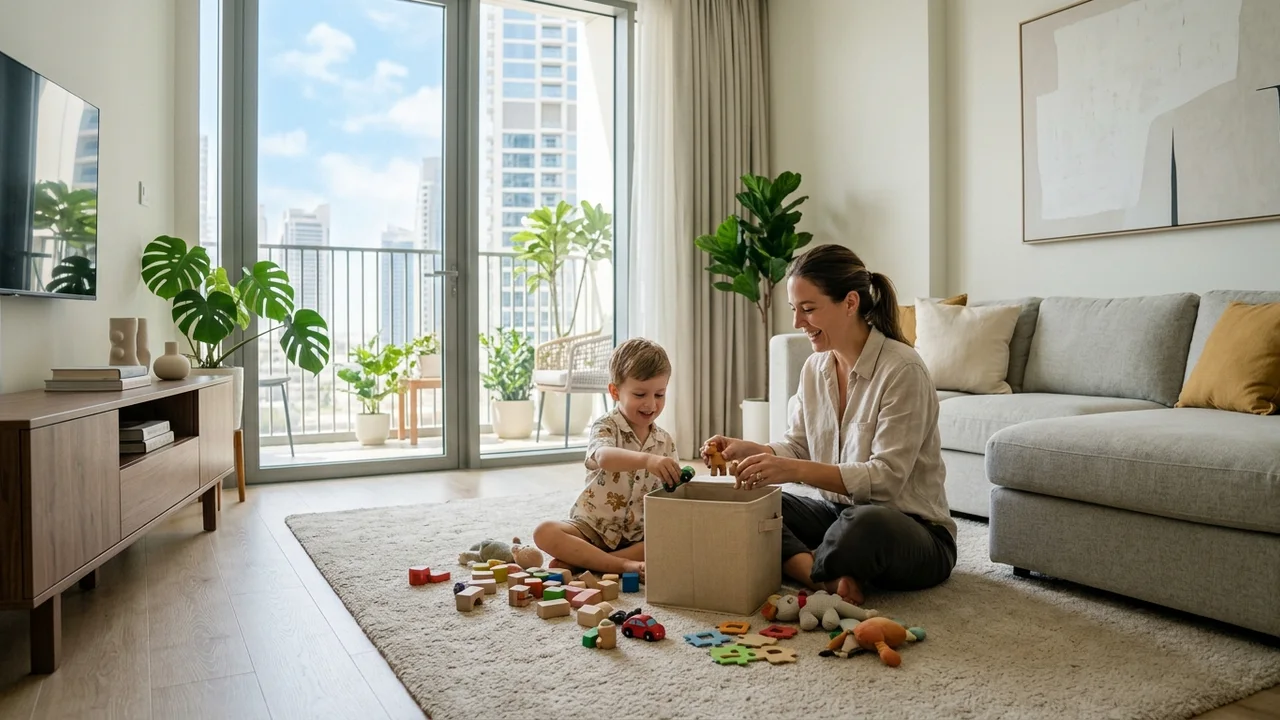
Switch to high-energy fifteen-minute decluttering sprints. Set a fun visual timer on your phone, play upbeat music, and focus on a single micro-zone: one toy basket, one book ledge, or one clothing drawer. When the timer chimes, celebrate the progress and stop. Three fifteen-minute sprints scattered through the week achieve sustainable decluttering without sparking family battles.
Set an audible countdown timer for fifteen minutes to create an engaging challenge.
Focus on one micro-category per sprint, such as puzzle pieces, soft animals, or art markers.
Stop immediately when the timer sounds to protect positive energy and enthusiasm.
Praise specific helpful actions rather than demanding perfection from little helpers.
The Out-of-Sight Staging Rule
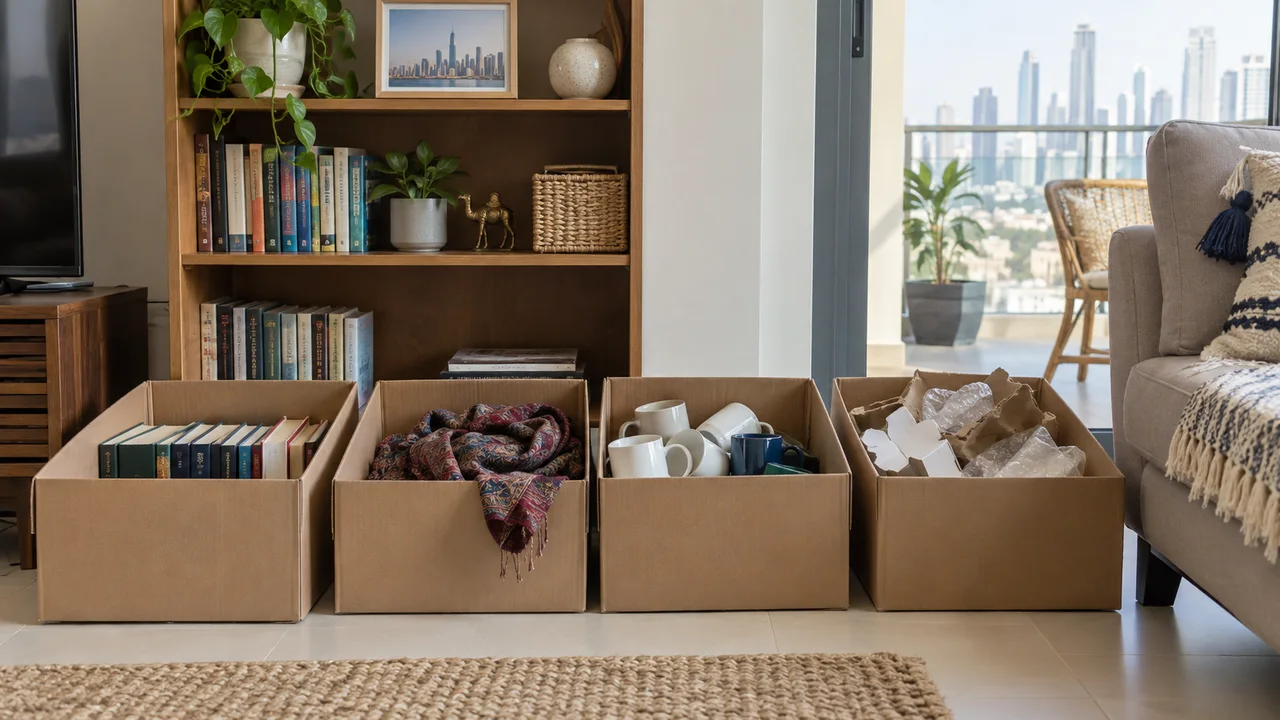
Never leave filled donation boxes or discard bags sitting in family living rooms or children bedrooms. If a toddler spots an open cardboard box containing items you sorted earlier that morning, they will inevitably unpack everything, scattering contents across the floor and reigniting attachment to discarded items.
Stage all purge boxes immediately inside opaque containers or heavy-duty dark storage bags. Place them in inaccessible zones, such as a high utility cupboard, the car boot, or an external garage nook. Once items leave active sightlines, children rarely ask about them.
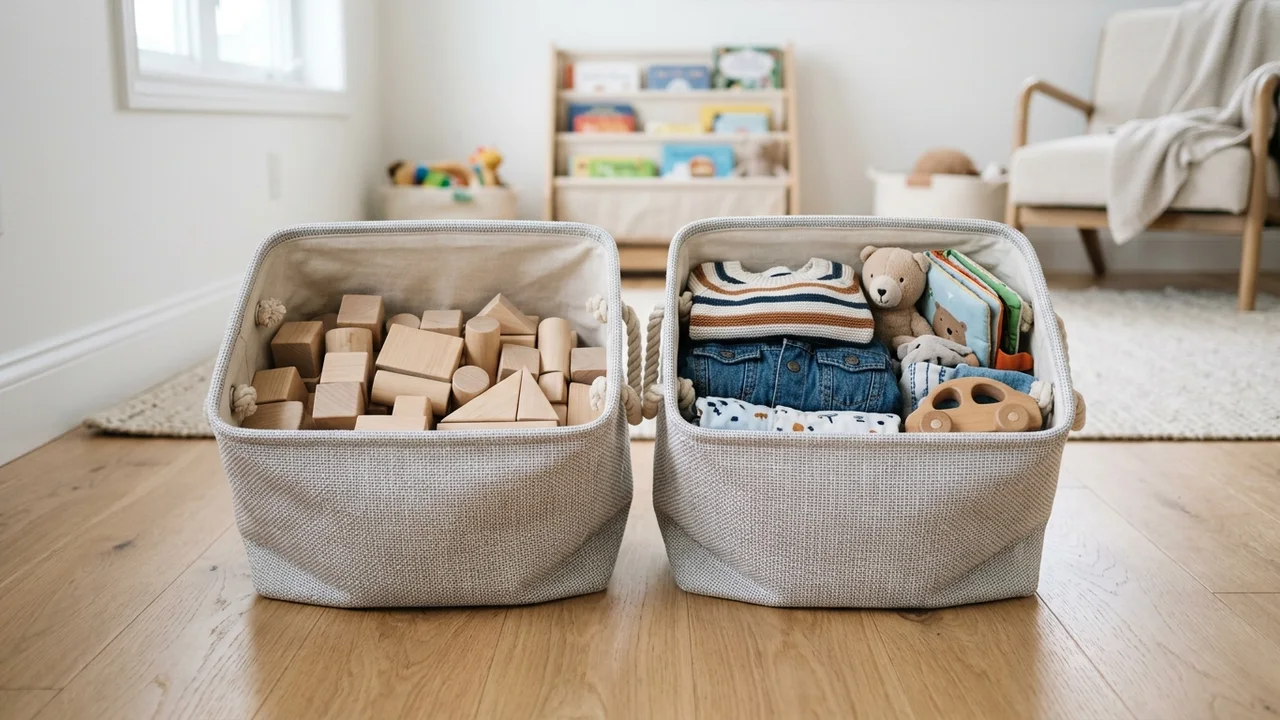
Using well-defined storage baskets establishes visual limits that children understand effortlessly.
Implementing a Closed Toy Rotation System
Excessive toy availability overwhelms children sensory focus, leading to scattered play where they jump between twenty toys in ten minutes without deep engagement. Research shows that children engage in longer, more imaginative play when presented with fewer toys at one time.
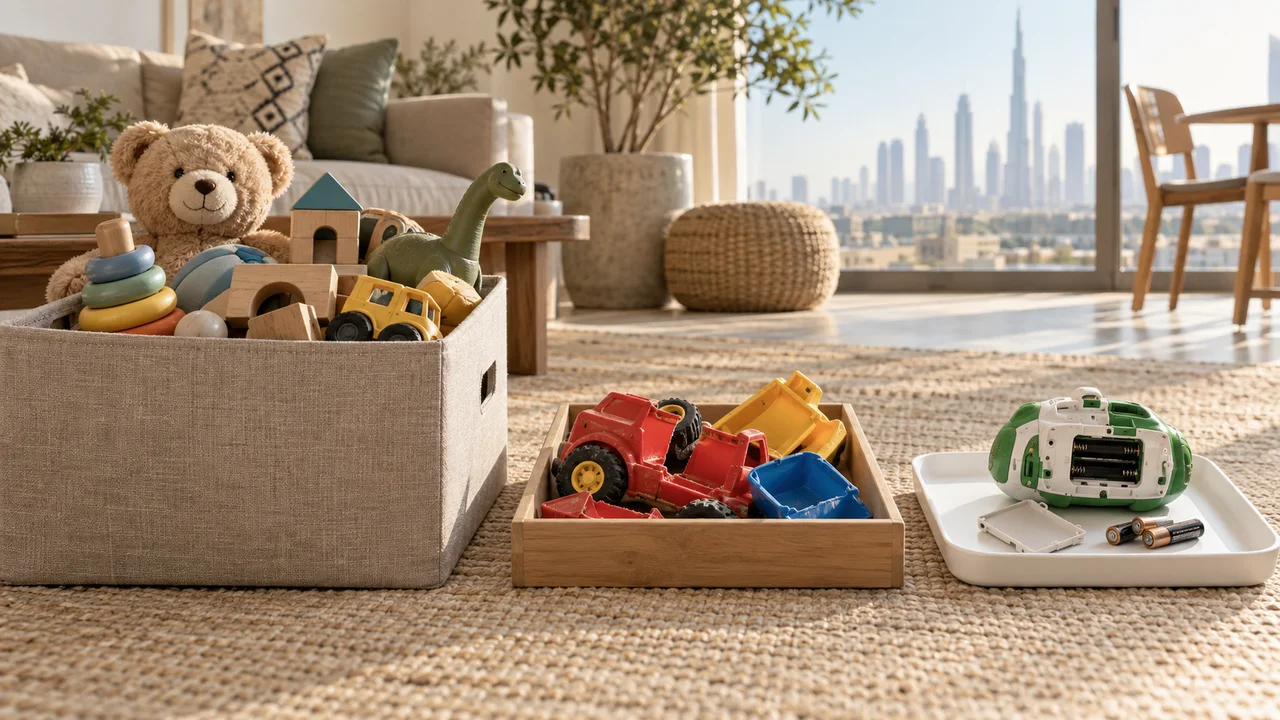
Divide your child active toy collection into three distinct batches. Keep one batch accessible on open low shelves in your Dubai Marina family apartment or Downtown Dubai home, while sealing the other two batches inside closed storage containers tucked into upper closets. Every six weeks, rotate the bins. Stored toys feel brand new to your children, reigniting creative curiosity without spending a single dirham at the toy store.
Toy Category
Active Display Capacity
Reserve Storage Volume
Rotation Frequency
Building Blocks / LEGO
One open low fabric bin
Two sealed closet bins
Every four to six weeks
Pretend Play / Figures
Six to eight favorite pieces
Consolidated reserve tote
Monthly themed swap
Picture Books / Novels
Ten displayed cover-forward
Archived bookshelf shelf
Every two to three weeks
Arts and Craft Kits
Two active mediums (crayons, clay)
Upper cabinet craft box
Rotated when materials finish
Large Ride-On Toys
One active vehicle on balcony
Excess donated or cleared
Evaluate every six months
Toy Rotation Structure, Container Capacities, and Rotation Schedules
Teaching Generosity Through Community Donation Lessons
Decluttering provides an unmatched opportunity to teach empathy and community awareness. Instead of framing donation as getting rid of old stuff, explain to children that they are passing beloved toys on to other children who will cherish them just as much.
Involve children in the donation process. Let them clean outgrown plastic toys with mild soap and water, inspect puzzle boxes to ensure all pieces are intact, and place items into the charity box themselves. Taking your child to drop off donations at licensed community boxes or donation centers builds proud, lasting habits of generosity.
1Explain that outgrown toys are going to new homes where other children will enjoy them.
2Have children test and wipe clean toys designated for donation to show respect.
3Take children along to community charity drop boxes so they witness the handoff.
4Praise their generous choices warmly, reinforcing their identity as giving individuals.
The One-In, One-Out Rule for Birthdays and Holidays
Birthdays, Eid celebrations, and festive holidays trigger sudden influxes of packaged toys, board games, and clothing. If parents do not manage these seasonal influxes, bedrooms quickly return to total chaos. Instituting a predictable holiday boundary keeps accumulation under control.
Before a major birthday party or holiday gathering, guide your child through a pre-celebration review. Agree together that to welcome three new birthday presents, three older toys they have outgrown will be passed on to charity. Preparing space beforehand eliminates post-celebration overwhelm.
Arranging Swift Hauling for Bulky Children Gear
Raising children produces substantial bulky waste: outgrown nursery cots, broken strollers, plastic play kitchens, scratched balance bikes, and deflated paddling pools. Storing these heavy plastic and wooden items in balcony corners or utility cupboards creates eye-sores and hazards.
Booking reliable same day junk removal in Dubai or professional furniture removal services resolves the buildup immediately. Trained crews collect oversized baby equipment directly from your rooms, transport functional items for community redistribution, and ensure damaged plastics reach certified recycling facilities.
Key Takeaways
Understand that young children experience emotional attachment to toys; guide them with patience.
Declutter in short fifteen-minute sprints with countdown timers to prevent child fatigue.
Stage all purge boxes in dark bags and hidden closets immediately to avoid unpacking tantrums.
Implement a closed toy rotation system to deepen engagement and reduce visual clutter.
Frame donation as sharing love with other children to cultivate lifelong empathy and generosity.
Practice pre-holiday toy reviews before birthdays and Eid to manage incoming gift surges.
Schedule professional removal for outgrown cots, strollers, and bulky outdoor play equipment.
Why Choose Junk Service in Dubai
As a local, fully insured team, Junk Services Dubai makes clearing your space simple — fast pickups, fair upfront pricing and responsible disposal across every Dubai community.
Same-Day Availability
Book today and, where crews are free, we clear it today — with no rush surcharge.
Fair, Upfront Pricing
A flat price agreed before we arrive, based on volume, items and access. No surprises.
Insured, Uniformed Crews
Background-checked teams who do all the lifting and protect your floors, lifts and walls.
Responsible Disposal
We sort for reuse, donation and recycling in line with Dubai Municipality guidance.
Our editorial team is made up of the crews and coordinators who clear homes, villas and offices across Dubai every day. We share practical, first-hand guidance on decluttering, disposal and responsible waste removal in the UAE.
FAQ
Frequently Asked Questions
Avoid whole-room cleanouts. Use fifteen-minute sprints, offer simple choices between two toys, and stage discard bags immediately inside closed closets out of sight.
Discarding broken hazards or trash secretly is fine, but avoid sneaky purges of favorite comfort toys, as this breeds distrust and increases attachment anxiety.
Divide toys into three batches. Display one batch on low open shelves and store the other two in closets. Swap bins every six weeks to keep play fresh and rooms clean.
Children thrive with ten to fifteen high-quality open-ended toys displayed at one time, such as building blocks, drawing tools, and simple figurines that encourage imagination.
Allow children to enjoy novel favors for forty-eight hours, then quietly recycle broken plastic pieces during evening cleanups before they scatter across the house.
Involve them in selecting donations and explain how their quality clothes help community families. Allow them to keep the proceeds from selling select high-value items.
Schedule an on-demand bulky junk removal team. Professional haulers collect heavy nursery furniture and plastic play structures directly from your home for recycling.
Final Thoughts
Decluttering with children at home is not about achieving museum perfection; it is about creating a peaceful, functional environment that supports creative play and family harmony. By establishing clear toy boundaries, adopting short sprints, and modeling generous donation habits, you give your children the gift of a calm home and thoughtful living. When outgrown nursery furniture or broken play sets require fast clearance, professional house clearance in Dubai takes care of the lifting responsibly.
Reclaim Your Family Living Space
Overwhelmed by outgrown strollers, playhouses, and boxes of children gear? Our friendly, experienced crew provides fast, respectful removal across all Dubai family neighborhoods. Contact our team today.
Sort a child's room around everyday play, clothes and bedtime. Use small sessions, complete toy sets and manageable storage before arranging collection of outgrown items.
How to declutter Dubai apartments with limited storage. Clear living spaces without external lockers, set container boundaries, and maximize vertical space.
Use four clear destinations to finish a small decluttering session: keep here, put elsewhere, pass on and dispose. Learn how to empty the boxes without creating new piles.

 Guides