Junk Removal Insurance and Liability in Dubai: What to Check
The Junk Services Dubai Team 7 min read
Insurance is the part of a junk removal booking nobody thinks about until a wardrobe meets a lift door. It carries more weight in Dubai than in most markets, because the route out of a property runs through marble lobbies, shared lifts and community gates that belong to somebody else. This guide covers what cover a crew should hold, what buildings ask to see, and the short list of checks worth doing before anything moves.
Insured is a word companies use loosely, so it helps to separate the three things it might refer to. Only two of them are usually covered, and knowing which is which changes what you do before the crew arrives.
Damage to the property
This is the cover most people mean: liability cover that responds when a crew damages something that is not theirs. A gouged lift panel, a cracked floor tile, a chipped door frame, a scratched marble threshold. In a Dubai tower the repair bill for a damaged lift interior can run well past the cost of the clearance itself, which is why building management asks about cover before the work rather than after.
The crew doing the work
Cover for the people lifting sits separately, and it is the reason a customer should never help carry a heavy item. A resident who joins in on a wardrobe and gets hurt sits outside everyone's cover. Let the crew work alone, at their own pace and in their own rhythm. That is what they are there for.
The items being taken
Once you have asked for something to be removed, it is on its way to disposal, and the value of a discarded item is not something any policy is built to address. That matters for the mistake case, where a box gets moved into the wrong pile. Marking what stays is worth more here than any document.
Why Dubai Buildings Ask Contractors for Documents
Most managed buildings treat a clearance as contractor work rather than a visit. Before a crew reaches your floor, management typically wants the collection logged, a service lift booked and the company's trade licence and insurance documents on file. Some communities keep an approved-contractor list and let nobody else through the barrier.
This is administration, not obstruction, and it works in your favour. A company that cannot produce documents when a security desk asks is a company that has never been asked. Raise it in your first message: how do you handle building approvals? The speed of the answer tells you how often they work in towers like Downtown Dubai and JLT.
Trade licence: Confirms the company is licensed for the work rather than a van and two phone numbers.
Insurance documents: Liability cover, checked because the building's own lifts and lobbies are what stand to be damaged.
Crew names and identification: Security logs who came in and who left, which matters most on unattended collections.
Service lift booking: Reserved for a window, often with padding fitted by the building rather than the crew.
Timing window: Many towers restrict heavy moves to working hours on weekdays, which shapes when a clearance can be booked at all.
Villa communities apply a lighter version of the same idea: visitor and vehicle registration at the gate, and sometimes a restricted window for commercial vehicles.
Where Damage Happens During a Collection
Damage on a clearance is rarely dramatic. It happens in the same handful of places, all of them pinch points where something bulky has to change direction.
Lift car walls and door frames, on the diagonal turn as a mattress or wardrobe goes in.
Corridor corners, where a long item pivots and the trailing end swings into the wall.
Polished lobby and hallway floors, from dragging instead of lifting, or a dropped fixing underfoot.
Door frames and skirting in older apartments, where the corridor is narrower than the sofa was on the way in.
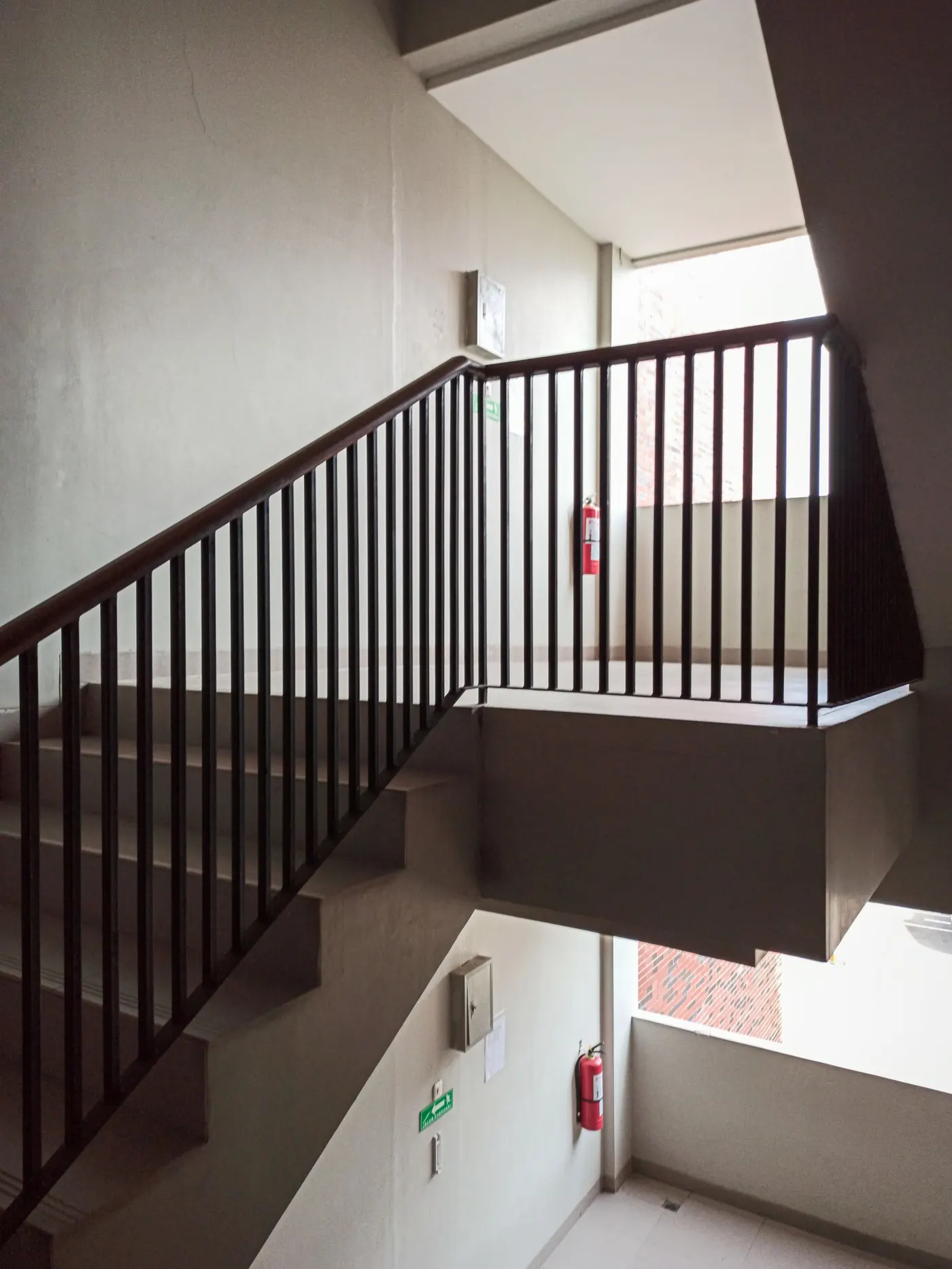
Stairwell handrails, in buildings where the service lift is out and the crew takes the stairs.
Villa gate posts and driveway kerbs, from a truck reversing to a door instead of a wide bay.
Lawns and irrigation lines at villas, when a heavy item is carried across planting rather than paving.
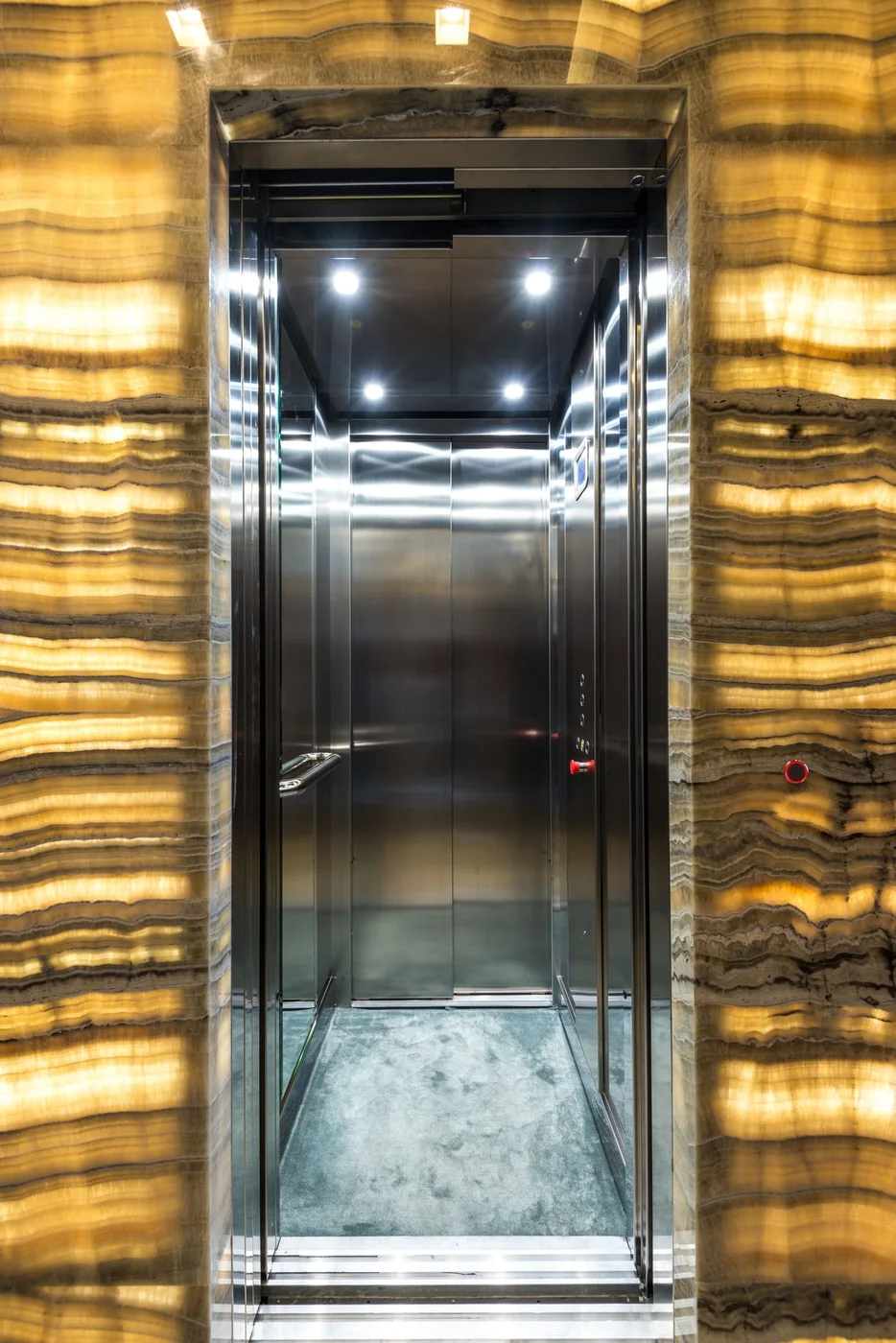
The lift is where most clearance damage happens and where it costs the most. Buildings that finish a lift lobby like this are the ones that ask for contractor documents first.
What to Confirm Before Work Starts
None of this takes long, and every item on the list has settled a real dispute for somebody.
1Ask directly whether the company carries liability cover and whether they can send the documents. The answer should take minutes, not days.
2Check who arranges the building approval and the service lift booking, and by when.
3Photograph the route before the crew arrives: lift interior, corridor, door frames, floor. Timestamped photos end most arguments before they start.
4Confirm that protective covering will be used where the building requires it, and who supplies it.
5Mark what stays. Separate it physically or label it, then point it out again when the crew walks in.
6Empty drawers, wardrobes and cabinets. Documents, jewellery and cash left inside furniture are the most common irreversible loss on a clearance, and no policy recovers them.
7Get the price in writing, including what happens if the load turns out larger than described.
If Something Does Get Damaged
Raise it while the crew is still on site if you possibly can. A scratch reported at the door is a conversation. The same scratch reported three days later becomes an argument about when it happened.
Photograph the damage in place, with something in the frame for scale and location, then put it in writing to the company the same day with your before photos attached. Most cases end here, because most damage is minor and a sensible operator would rather repair a door frame than lose the referrals that come with a building.
Where a building charges for damage to common areas, management usually bills the unit holder and expects them to recover it from the contractor. That sequence is exactly what the documents you asked for at the start are meant to shorten.
What Cover Will Not Stretch To
Situation
Why it falls outside
What prevents it
An item you asked to be taken, then wanted back
It was disposed of as instructed
Marking and separating anything that stays
Valuables left inside furniture
Nobody knew they were there
Emptying every drawer and cabinet first
Existing marks in a lift or corridor
No way to show when they appeared
Photographing the route beforehand
Injury to a resident who helped carry
The customer is not part of the crew
Letting the crew do the lifting alone
A fragile item nobody flagged
Handling depends on being told
Naming fragile or awkward items when booking
Five gaps that no amount of cover closes, and the preparation that closes each one instead.
Liability for the Load After It Leaves
Responsibility does not stop at the tailgate. A company that takes a load and tips it somewhere convenient creates a problem that traces back to the address it came from. That is the quiet reason to ask where items go: a sorted route through reuse, recyclers and licensed disposal is the version with a record behind it. Any established waste removal Dubai operator can describe that route without hesitating.
For offices, the same principle covers data. Computers, hard drives, printers with internal storage and paper files should never leave on a general load without an agreed method for wiping or destroying what is on them. Settle that in the booking rather than on the day.
Key Takeaways
Insured normally means two things: liability cover for the property and cover for the crew.
Dubai building management often wants contractor documents and a booked service lift before granting access.
Damage concentrates in lifts, corridor corners and polished floors, so photograph that route before the crew arrives.
Items being removed are not covered by value, which is why marking what stays and emptying drawers matter most.
Report any damage the same day, in writing, with before and after photos attached.
Why Choose Junk Service in Dubai
As a local, fully insured team, Junk Services Dubai makes clearing your space simple — fast pickups, fair upfront pricing and responsible disposal across every Dubai community.
Same-Day Availability
Book today and, where crews are free, we clear it today — with no rush surcharge.
Fair, Upfront Pricing
A flat price agreed before we arrive, based on volume, items and access. No surprises.
Insured, Uniformed Crews
Background-checked teams who do all the lifting and protect your floors, lifts and walls.
Responsible Disposal
We sort for reuse, donation and recycling in line with Dubai Municipality guidance.
Our editorial team is made up of the crews and coordinators who clear homes, villas and offices across Dubai every day. We share practical, first-hand guidance on decluttering, disposal and responsible waste removal in the UAE.
FAQ
Frequently Asked Questions
Yes. A crew carrying heavy items through shared lifts, lobbies and corridors should hold liability cover for damage to third-party property, plus cover for its own workers. Many buildings will not grant service lift access to a contractor that cannot produce documents.
Building management normally bills the unit holder for damage to common areas, and the unit holder recovers it from the contractor. That is why photographing the route beforehand and confirming the company's cover in advance both matter.
Generally no, and it rarely needs to be. Items being removed are on their way to reuse or disposal, so cover focuses on the property and the people rather than the value of what is leaving.
Recovery depends entirely on how fast you call. Once a load reaches the depot and is sorted, individual items are effectively unrecoverable, which is why every drawer and cabinet should be emptied before collection day.
Buildings usually require their own approval rather than a public permit: the collection logged with management, a service lift booked, and the contractor's documents on file. Requirements vary building to building, so ask management or let the company handle it.
Better not to. A resident injured while helping falls outside the crew's cover, and two people who have never lifted together are more likely to catch a door frame than one crew working to its own routine.
Final Thoughts
Insurance is worth about five minutes of your attention, spent before the crew arrives rather than after something is scratched. Ask for the documents, photograph the lift and corridor, mark what stays, and empty the drawers. Those four habits resolve nearly every clearance dispute that reaches a building manager.
They matter most on the big jobs, where a crew is in and out of a lift for hours. A whole-property house and villa clearance Dubai is exactly where the preparation pays for itself.
Speak With Our Team Before You Book
We work to building management requirements across Dubai's towers and gated communities, handle the approval and service lift booking, and protect lifts and corridors on the way out. Ask us anything about cover, documents or access before you commit to a date. Call us or message on WhatsApp to arrange collection.
A property manager is not booking one clearance, they are running a schedule. How between-tenancy clears are scoped, how building access is arranged once, and what changes when the same crew works across a portfolio.
No lift in the building, or a service lift that cannot take the item. What a stair carry involves, how to measure the route before you book, and which pieces have to come apart to leave at all.
What really drives junk removal cost in Dubai — volume, property type, access, urgency and disposal — plus local examples and how to get an accurate, flat, upfront price.

 Guides