Heavy Furniture Removal Without a Lift: Getting It Down the Stairs
The Junk Services Dubai Team 7 min read
A lift is not always part of the job. Some Dubai buildings have none at all, and in the towers that do, the service lift can be too small for the item, out of order, or closed to goods on the day you need it. When that happens the staircase becomes the route, and the shape of the whole collection changes with it. This guide covers what a stair carry involves, how to measure the route before booking, and what has to come apart to get out.
A stair carry is not always a question of the building having no lift. Four separate situations produce the same result, and only one of them is obvious when you book.
The building has no lift: Older low-rise blocks across Deira, Bur Dubai, Karama and Satwa are commonly ground plus three or four floors with a staircase and nothing else. The stairs were the plan from the start.
The service lift is too small: A tower has a lift, but the goods lift car is shorter than the item is long. Three-seater sofas, tall wardrobes and long dining tables are the usual casualties.
The lift is out of service: Maintenance, a fault, or a lift already booked to another unit for the same window. This one tends to surface on the morning itself.
Goods are not allowed in the passenger lift: Many buildings restrict furniture to the service lift only. If that lift is unavailable, the passenger lift is not a substitute, and the stairs are what is left.
The first situation can be planned around. The other three are worth asking about before collection day, because each one turns a straightforward booking into a longer job.
What a Stair Carry Changes
Stairs do not make an item heavier. They change how many people are needed to control it, how far it can travel between rests, and whether it fits through the turns at all.
Item
In a service lift
Down a staircase
Three-seater sofa
Two crew, one lift trip
Three to four crew, often dismantled or with the feet and back removed
Six-door wardrobe
Two crew once the doors are off
Dismantled to panels first; a built unit rarely clears a half-landing
American-style fridge
Two crew on a trolley
Three to four crew, strapped, one step at a time with a spotter below
Mattress, king size
Two crew, folded into the car
Two crew, usually the easiest large item on a stair route
Marble or glass dining table
Two crew, top carried flat
Top separated from the base and carried vertically by three crew
The pattern holds across item types: the crew grows, the item comes apart, or both.
Because labour and time are what a stair carry adds, it is the access rather than the volume that moves the price. The general pricing factors are covered in furniture removal cost, and floor level is one of the larger ones.
Measure the Narrowest Point Before You Book
The item does not have to fit down the staircase. It has to fit through the tightest point on the route, which is almost never the stairs themselves.
1Measure the item at its largest: height, width and depth, including feet, handles and any fixed back.
2Measure the doorway of the room it is in, then the apartment's own front door.
3Measure the width of the staircase between the wall and the handrail, not wall to wall.
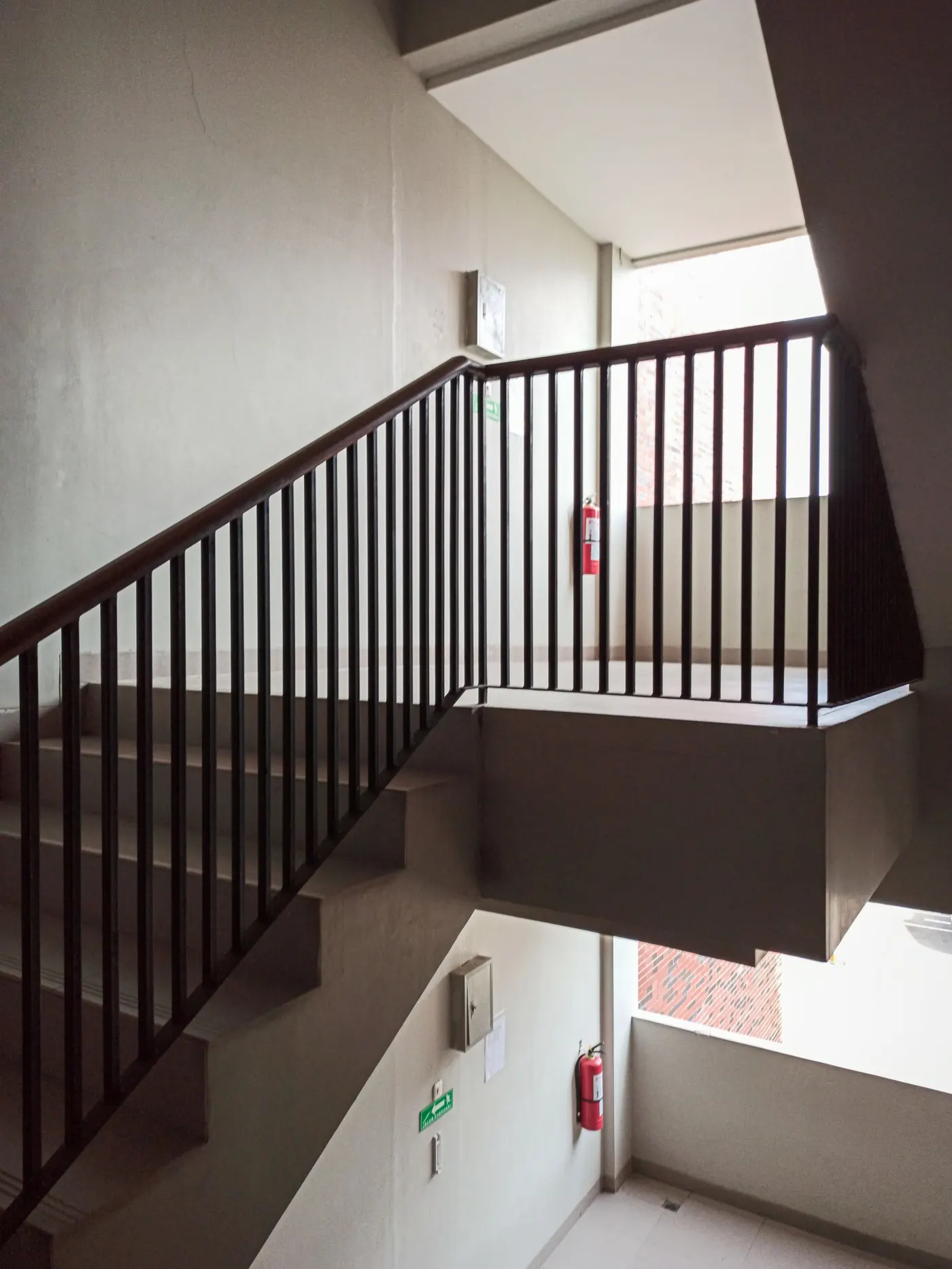
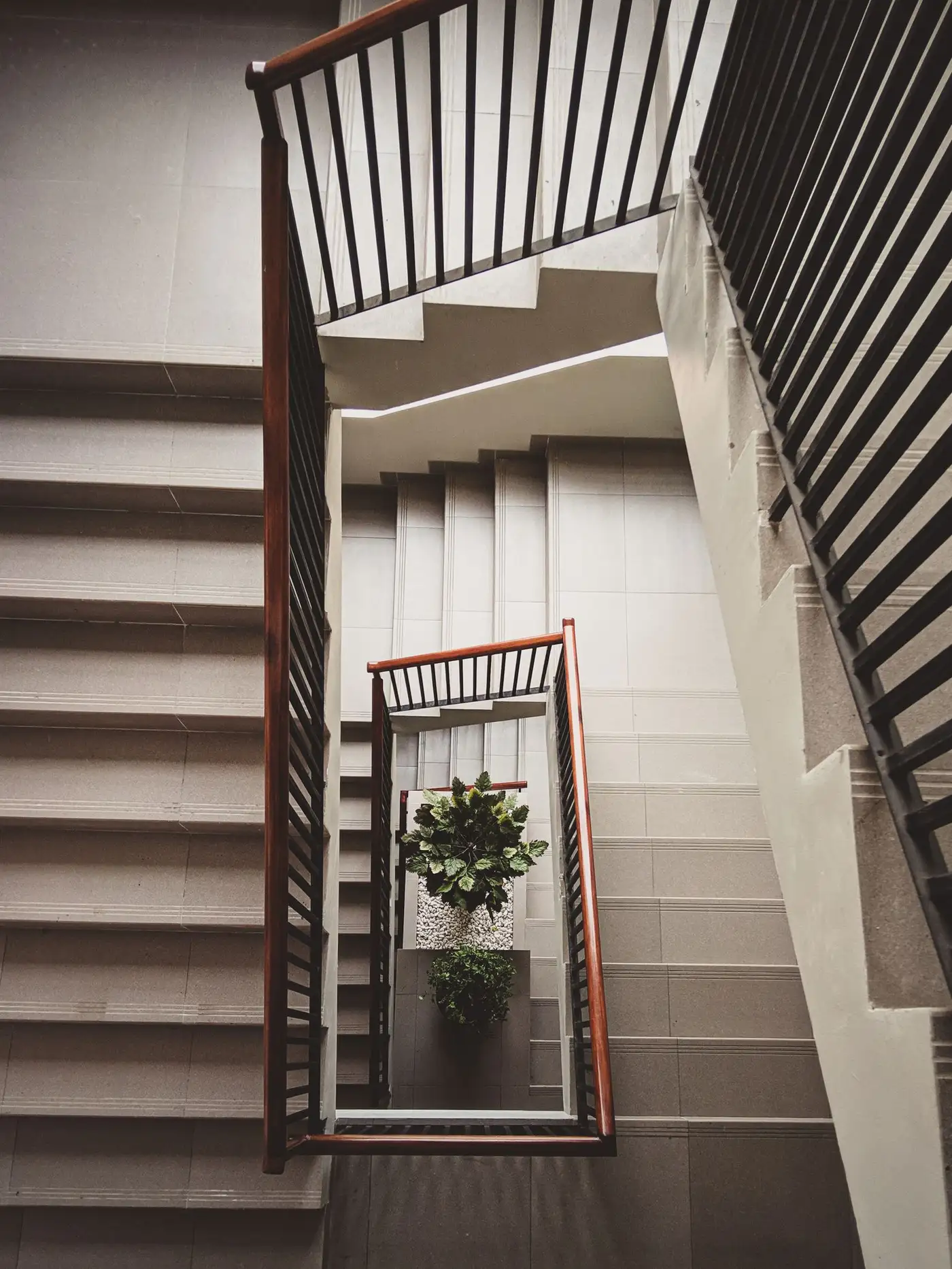
4Measure the half-landing where the stairs turn back on themselves, which is where long items get stuck.
5Check the headroom under the flight above, since a tall item carried upright can meet the underside of the next run.
6Note the floor number and whether there is a step or threshold at the building entrance.
Sending those measurements with the booking is what lets a crew arrive with the right number of people and the right tools. A photograph of the stairwell taken from the landing tells us more than a description does.
The half-landing, not the flight, is where a long item runs out of room. It is the first measurement worth taking.
What Comes Apart, and What Does Not
Dismantling is the usual answer to a narrow route. Most modern furniture is built to come apart, and a piece that separates into panels travels down a staircase in loads a person can hold safely.
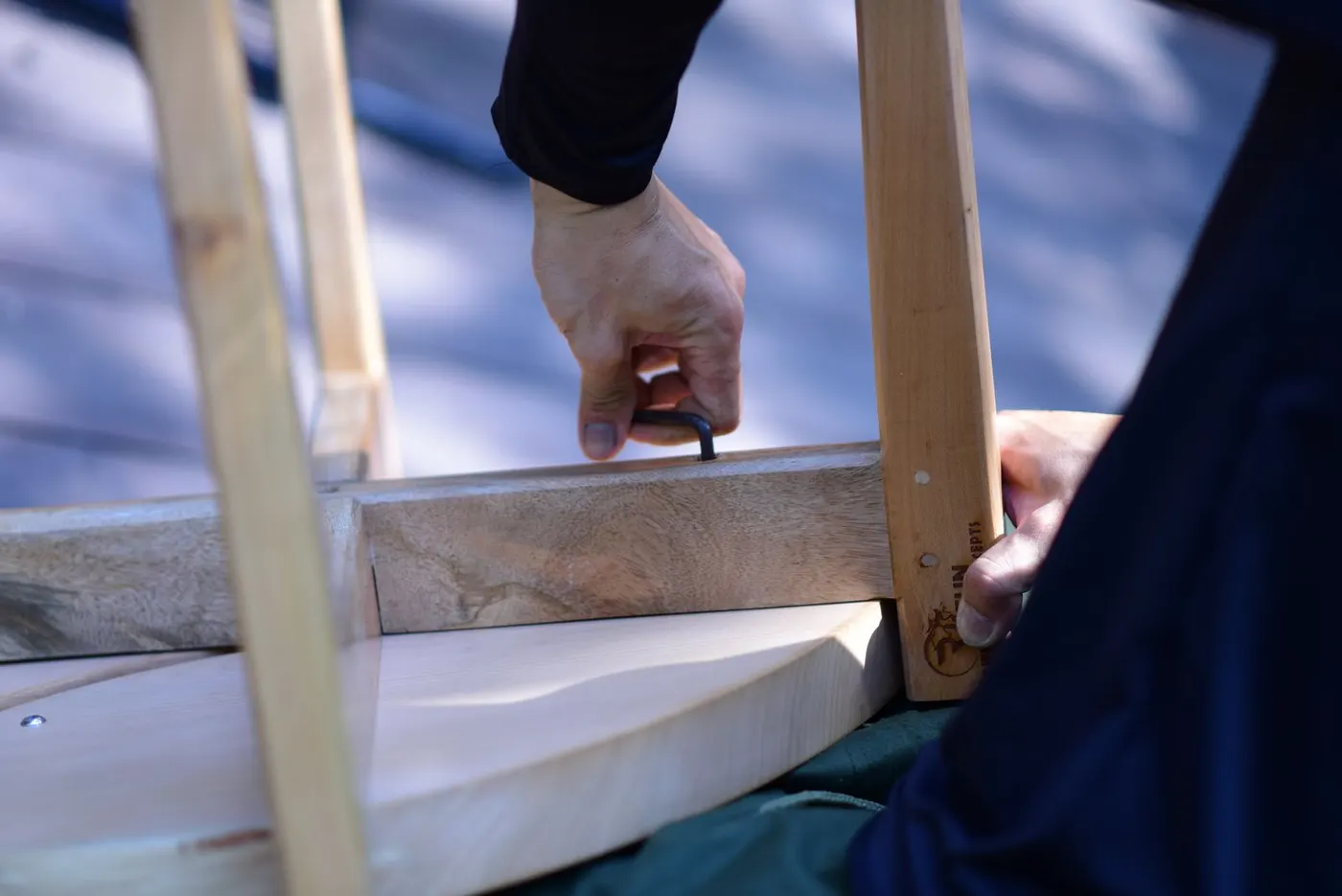
Flat-pack wardrobes, shelving and bed frames separate back to their panels with a hex key and a screwdriver.
Sofa feet unscrew, and many designs have a back that lifts off the seat frame once the retaining clips are released.
Dining tables separate into a top and a base, which halves both the length and the weight per person.
Bed slats and headboards detach from the frame and go down as flat bundles.
Solid hardwood furniture built with glued joints does not come apart, and has to fit as it is or leave through a window opening, which is a separate job.
Appliances stay whole. A washing machine or fridge is a sealed unit and is strapped to a trolley rather than opened up.
Older solid-timber pieces are the ones that cause real trouble, because the thing that makes them worth keeping is the same thing that stops them coming apart. It is worth establishing early whether a piece is jointed or fixed.
A hex key turns a piece that will not clear the landing into three or four loads that will.
Where This Comes Up in Dubai
Dubai's building stock splits into three patterns, and each produces a different version of the same problem.
The older low-rise neighbourhoods have genuine walk-ups where no lift was ever installed. Towers in Dubai Marina and Business Bay always have lifts, so the problem there is availability and car size rather than absence, and it comes with a booking window attached. How that side works is set out in apartment junk removal.
Villas and townhouses in communities such as JVC have internal staircases with a turn at the half-landing, and a first-floor bedroom set is the most common stair carry of all. There is no building management to ask and no lift to book, so the constraint is purely the staircase itself.
Working Safely on Stairs, and Working Around the Heat
A staircase carry has two rules that are not negotiable, and one scheduling habit worth adopting from May onwards.
Nothing is lowered over a stairwell or balcony railing at any height, whatever the drop looks like from above.
Nothing is staged on a landing or in a stairwell while the rest of the load comes down, because that is an escape route and it stays clear.
The heaviest person takes the lower end, so the weight is carried rather than pushed down onto whoever is below.
One item moves at a time, with the route walked and cleared first.
Between May and September a stair carry is booked for early morning, since a crew working a flight repeatedly in the afternoon heat slows down and makes mistakes.
The summer point is a real scheduling factor rather than a courtesy. A four-floor carry that takes an hour in February takes longer in August, and the difference is worth building into the booking.
Booking a Collection With No Lift
Tell us three things and the rest follows: the floor, whether a lift is available, and the largest item leaving. That is enough to size the crew before anyone arrives.
If the collection is part of a move rather than a one-off, the ownership question comes first, and that is covered in move-out furniture disposal. A stair carry is the method, not the reason, and it applies whichever situation brought you here.
Key Takeaways
A stair carry happens for four reasons, and only one of them is the building having no lift.
Stairs add crew and time rather than weight, which is why access moves the price more than volume.
The half-landing where the stairs turn is the measurement that decides whether an item fits.
Most modern furniture comes apart; solid glued hardwood does not, and needs planning.
Nothing is lowered over a railing and nothing is staged in a stairwell, at any height.
Why Choose Junk Service in Dubai
As a local, fully insured team, Junk Services Dubai makes clearing your space simple — fast pickups, fair upfront pricing and responsible disposal across every Dubai community.
Same-Day Availability
Book today and, where crews are free, we clear it today — with no rush surcharge.
Fair, Upfront Pricing
A flat price agreed before we arrive, based on volume, items and access. No surprises.
Insured, Uniformed Crews
Background-checked teams who do all the lifting and protect your floors, lifts and walls.
Responsible Disposal
We sort for reuse, donation and recycling in line with Dubai Municipality guidance.
Our editorial team is made up of the crews and coordinators who clear homes, villas and offices across Dubai every day. We share practical, first-hand guidance on decluttering, disposal and responsible waste removal in the UAE.
FAQ
Frequently Asked Questions
Three to four, against the two who would handle the same sofa in a service lift. One controls the lower end, one the upper, and the extra crew take the turns and hold doors on the route.
The job becomes a stair carry, which needs more crew than were booked. Telling us the floor and the largest item in advance means the crew is sized for that possibility rather than having to reschedule.
Sometimes, depending on the half-landing rather than the flight. Where it cannot, the feet come off and the back is separated from the seat frame, which is usually enough to clear the turn.
The half-landing where the staircase doubles back. A long item can clear every doorway and every flight and still fail at the turn, because that is the point where it has to pivot.
No, and it is not done at any height. The load cannot be controlled once it is past the rail, and anything below is in its path. The item comes down the steps or it comes apart.
Yes, and often more, because a villa staircase is narrower and turns more sharply than a building's common stair. A first-floor bedroom set is one of the most common stair carries in Dubai.
It costs more for the same items, because it needs a larger crew for longer. The item count is unchanged, so the difference sits entirely in labour and time rather than in volume.
Final Thoughts
Nothing about a stair carry is unusual once it is planned. What causes the trouble is discovering on the morning that the lift is unavailable, with a crew of two on site and a wardrobe that was never going to clear the landing in one piece.
Measure the turn, count the floors, and say so when you book. A furniture removal crew that knows it is walking down four flights arrives ready to do exactly that.
Book a Pickup for a Building With No Lift
Send us your floor number, whether a lift is available, and the largest piece leaving. We will size the crew to the staircase rather than to the item count.
WhatsApp Us a photo of the stairwell and the item, Book a Pickup for an early morning slot, or Speak With Our Team if you are not sure whether a piece will come apart.
How apartment junk removal works in Dubai's high-rise towers: service lift booking, building rules, loading bay access and how pricing compares to a villa.
Ending a Dubai tenancy means splitting the furniture three ways before anything is lifted. How to tell the landlord's pieces from your own, what to do with the rest, and when to book the collection.
Furniture removal in Dubai isn't sold off a rate card. Here's what genuinely moves the price of a piece, and why a wardrobe can cost more to clear than a sofa.

 Guides