Mattress Recycling Process Explained: What Happens After Pickup
The Junk Services Dubai Team 6 min read
A mattress cannot be dropped into a machine and turned into another mattress. It is a layered product made from steel, foam, woven and non-woven textiles, adhesives and sometimes timber. Recycling begins by opening that assembly and separating materials that need different processors. Condition, contamination and local receiving capacity decide how much can be recovered. This guide follows the professional sequence after pickup and explains why residents should arrange collection rather than dismantle a mattress at home.
Most mattresses combine a protective outer cover, comfort layers, support layers and edge reinforcement. A sprung model may contain a large steel unit, while an all-foam model replaces much of that metal with several foam densities. Divan bases can add timber, board, fabric and metal fasteners to the same collection.
Steel: Open-coil or pocket-spring units, edge wire and some fasteners form the most direct recoverable stream once fabric and foam are removed.
Foam: Comfort and support layers vary in chemistry, density, cleanliness and bonding, so they must be graded rather than treated as one uniform material.
Textiles and fibre: Outer ticking, felt, batting and mixed filling may be recoverable when clean enough and when a receiving outlet exists.
Timber and board: Divan frames and some mattress foundations add clean wood, composite board, staples and fabric that require further separation.
The existing mattress removal guide explains booking, lifting and property access. This article begins after the item reaches a processor or transfer point able to dismantle it.
Step 1: Intake, Inspection and Contamination Control
The first decision is whether the mattress can safely enter the dismantling line. Staff inspect for heavy moisture, mould, pest evidence, chemical contamination, fire damage and hidden objects. A suspect mattress is kept apart so dust, insects or liquid do not spread to clean material or expose workers.
Intake condition
Likely handling
Why it matters
Dry with ordinary wear
Accepted for dismantling assessment
Materials remain easier to separate and grade
Wet or deeply mouldy
Isolated from clean feedstock
Moisture and growth can affect foam, textile and timber
Pest evidence
Contained and handled under site procedure
Prevents spread through storage and work areas
Fire or chemical damage
Special assessment or rejection
Residues may make manual opening unsafe
Mixed bed base attached
Separated as its own component
Timber, board and hardware need different handling
Recycling begins with a safety and quality decision, not with cutting every mattress open.
Dubai heat makes outdoor staging risky even when a mattress began dry. Condensation beneath plastic and sudden water exposure can downgrade fibre quickly. Collection crews therefore need honest notice of dampness, pests or heavy soiling before arrival.
Step 2: Open the Cover and Separate the Layers
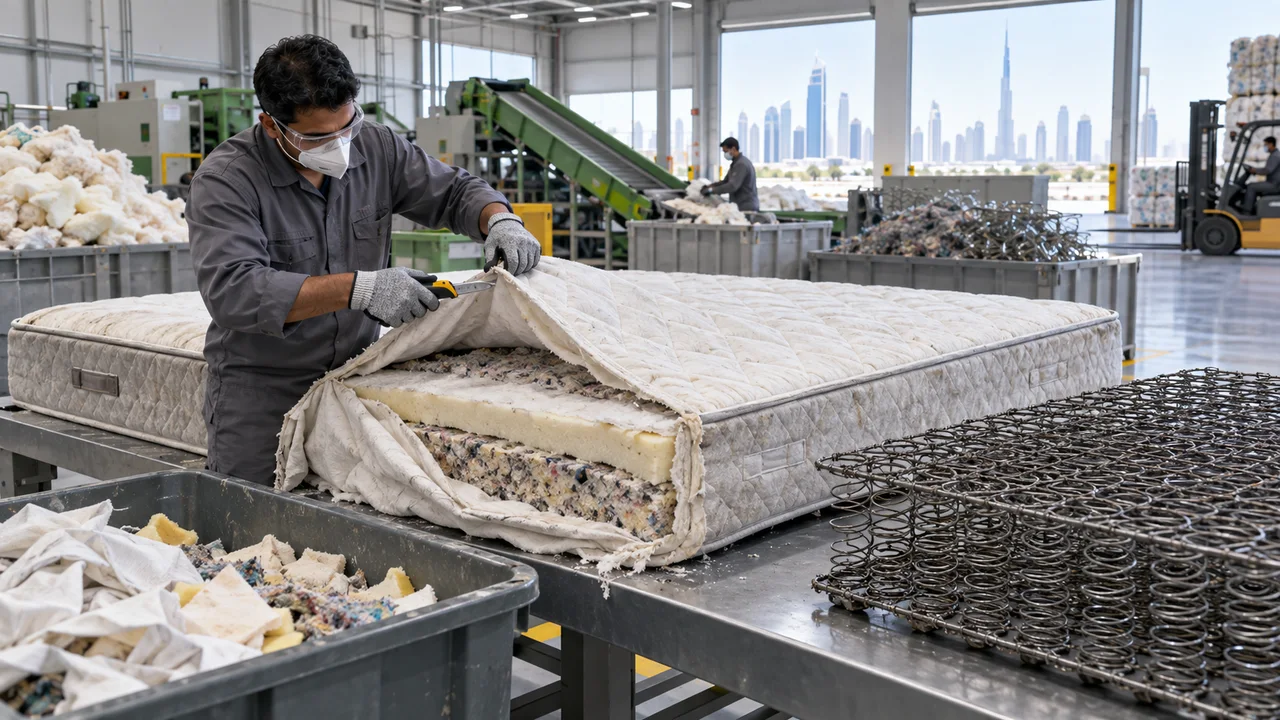
At a controlled station, trained workers use guarded cutting tools or specialist machinery to open the outer cover. The process works from the outside inward: ticking and comfort fibre come away first, foam layers are lifted or peeled apart, and the support core is exposed. Components are placed into separate containers as they leave the mattress.
1Confirm the mattress has passed intake and place it on a stable working surface.
2Open and remove the outer textile cover without scattering filling across other streams.
3Lift out fibre pads, felt and foam layers while keeping different grades apart where practical.
4Expose and remove the steel spring unit, edge wire and metal fasteners.
5Inspect each separated group for adhesive, moisture and mixed contamination before baling or onward transport.
This is industrial work, not a household preparation step. Springs store tension, cut wire is sharp and old filling releases dust. Residents should strip bedding and describe the condition, but should not cut a mattress apart in an apartment, corridor or villa driveway.
Step 3: Grade Steel, Foam, Fibre and Timber
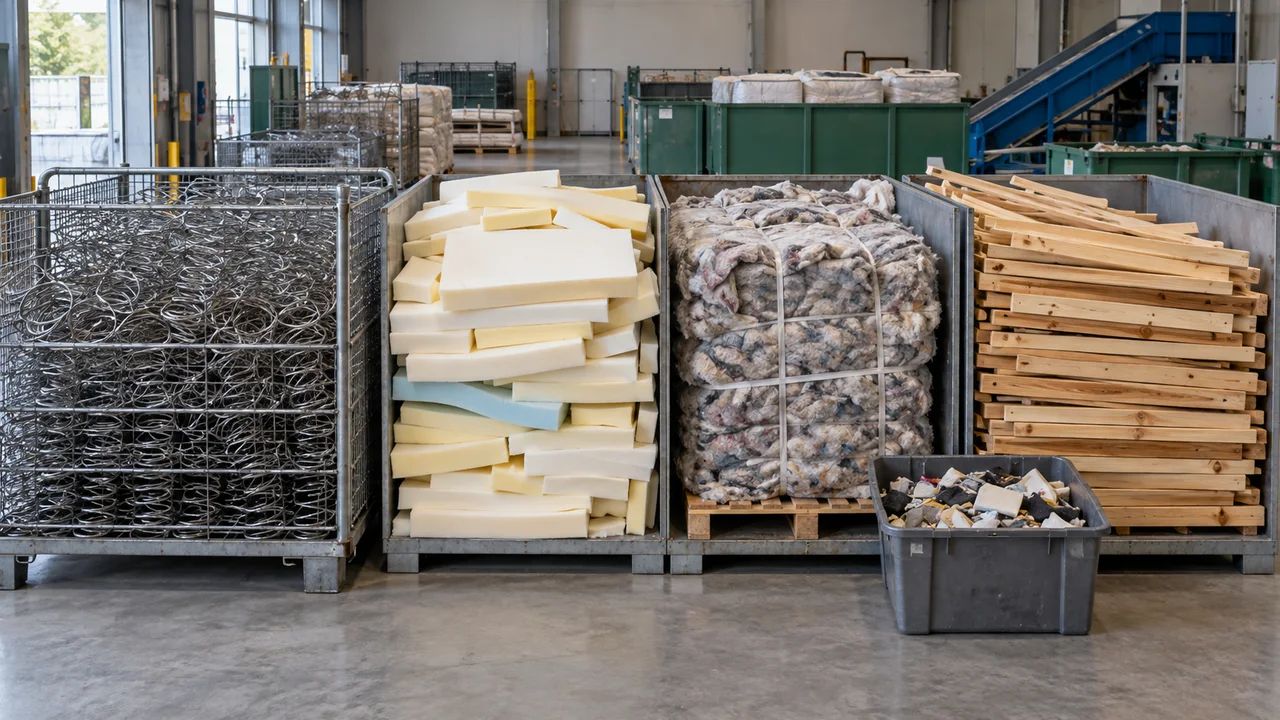
Separation produces potential feedstock, not finished recycled products. Each group still needs grading. Steel must be freed from large fabric and foam attachments; foam is checked by type and cleanliness; fibre is assessed for contamination; timber is separated from composite board, staples and cloth.
Professional dismantling creates several graded material groups and a smaller residual stream rather than one recycled product.
Steel spring units can be compacted and sent into the scrap-metal chain after non-metal attachments are removed.
Clean suitable foam may be cut or processed for secondary applications where a receiving market accepts the grade.
Textile and fibre outlets depend on composition, cleanliness and demand; mixed dirty filling may have no recovery route.
Plain clean timber from a base can be separated, while bonded composite board follows a more limited route.
Labels, adhesives, heavily bonded layers and contaminated fragments accumulate as residual material.
Step 4: Send Each Grade to Its Next Processor
A dismantling site usually prepares material for other processors. Metal travels into a scrap stream for further sizing and melting. Accepted foam and textile grades move to outlets equipped for those materials. Clean timber may enter an appropriate wood route, while residue travels to controlled disposal.
The destination is therefore a network rather than one mattress-recycling machine. The comparison of landfill, incineration and recycling explains why sorting quality determines whether material remains useful. A processor can only send a grade onward when contamination and economics allow it.
Why Every Mattress Is Not Fully Recyclable
Material lists make a mattress sound easy to recover, yet construction works against separation. Foam may be glued across its full surface. Pocket springs can be wrapped individually in fabric. Fire barriers, quilted covers and comfort layers may combine several fibres too closely to divide without producing low-quality fragments.
Moisture, mould, oil and pest treatment can contaminate otherwise useful fibre and foam.
Adhesive-covered foam may not meet the needs of an available secondary outlet.
Mixed textile filling can be difficult to identify or grade consistently.
Thin fabric and labels can be too small or dirty to justify separate transport.
A local outlet may accept steel while having no current route for a particular foam or composite board.
Responsible reporting should describe recovery as dependent on the mattress and the available processor, not promise that every layer becomes a new product. Steel is often the clearest stream; foam, fibre and board require more conditional language.
What the Owner Should Do Before Collection
Strip sheets, protectors and loose bedding, then photograph the bare mattress. State its size, type, condition and whether a divan base, frame or headboard is also leaving. Flag water damage, pest evidence or severe staining so the crew can plan containment rather than discovering it in a shared lift.
High-floor collections in Dubai Marina and JVC need a service-lift window. Villa pickups in Arabian Ranches avoid the lift but should keep the mattress indoors until loading. A booked mattress pickup covers the physical removal while this process explains the downstream work.
Ask Better Questions About the Downstream Route
Ask whether mattresses are kept separate from general mixed waste, whether the condition can lead to rejection and which material groups the receiving route can handle. A credible answer may be conditional. It is more useful than an absolute promise that ignores contamination and changing processor capacity.
1Describe the mattress honestly and send photographs before the collection is priced.
2Confirm that the crew knows it is a mattress rather than an unidentified bulky item.
3Ask whether clean mattresses are routed for dismantling assessment after pickup.
4Keep the item dry and accessible until the agreed collection window.
5Use a wider furniture collection when the base, frame and bedroom pieces are leaving together.
Where a full bed set is involved, a furniture removal service can collect the mattress, base and frame in one visit. Keeping those items identified helps the receiving site separate timber, metal and mattress components efficiently.
Key Takeaways
Mattress recycling is a dismantling and grading process, not a single whole-item transformation.
Inspection isolates wet, mouldy, pest-affected or chemically damaged mattresses before processing.
Steel, foam, textiles and timber require different outlets after the layers are separated.
Adhesives, contamination, mixed fibres and processor capacity limit how much material can be recovered.
Residents should strip bedding and report condition, but should not cut spring units apart at home.
Why Choose Junk Service in Dubai
As a local, fully insured team, Junk Services Dubai makes clearing your space simple — fast pickups, fair upfront pricing and responsible disposal across every Dubai community.
Same-Day Availability
Book today and, where crews are free, we clear it today — with no rush surcharge.
Fair, Upfront Pricing
A flat price agreed before we arrive, based on volume, items and access. No surprises.
Insured, Uniformed Crews
Background-checked teams who do all the lifting and protect your floors, lifts and walls.
Responsible Disposal
We sort for reuse, donation and recycling in line with Dubai Municipality guidance.
Our editorial team is made up of the crews and coordinators who clear homes, villas and offices across Dubai every day. We share practical, first-hand guidance on decluttering, disposal and responsible waste removal in the UAE.
FAQ
Frequently Asked Questions
It is inspected, opened at a controlled work station and separated into steel, foam, textile, timber and residue. Each clean grade then moves to a processor able to accept that material.
No. Adhesives, mixed fibres, dirty filling and composite materials can remain as residue. Recovery also depends on mattress condition and whether an outlet currently accepts each separated grade.
The spring unit and edge wire are separated from foam and fabric, compacted where appropriate and routed into the scrap-metal chain for further processing and melting.
No. Foam type, cleanliness, adhesive and available demand all matter. Clean accepted grades may have secondary uses, while contaminated or heavily bonded foam can become residual waste.
No. Springs hold tension, cut wire is sharp and old filling releases dust. Strip loose bedding, report contamination and let a trained crew and receiving facility handle opening and separation.
It must first be isolated and assessed. Mould and deep moisture can affect foam, textile and timber, reduce recovery options and create a handling risk for workers and other material.
They are collected together but separated as different products. Timber, composite board, fabric, fasteners and metal frames need their own grading rather than entering the mattress dismantling line unchanged.
Final Thoughts
The useful mental picture is not an old mattress becoming a new one. It is one difficult object becoming several cleaner material groups, each with its own next destination.
Good recovery begins before pickup with honest condition details and dry storage. It continues at a controlled dismantling site where safety and material quality decide what can move onward.
Arrange Collection for an Old Mattress
Send a photograph, mattress size, condition, area and access details. We will confirm the pickup scope and one upfront price before the crew is dispatched.
The easy way to handle mattress removal in Dubai — why old mattresses can't be dumped, how responsible disposal and recycling work, apartment, villa and hotel collection, same-day pickup, hygiene, and Dubai Municipality compliance.
A practical guide to mattress pickup in Dubai — booking a collection for old mattresses, bed bases and frames, how mattress sizes and access shape the job, apartment, villa and hotel pickups, hygienic handling, prep tips, and responsible recycling and donation.

 Guides