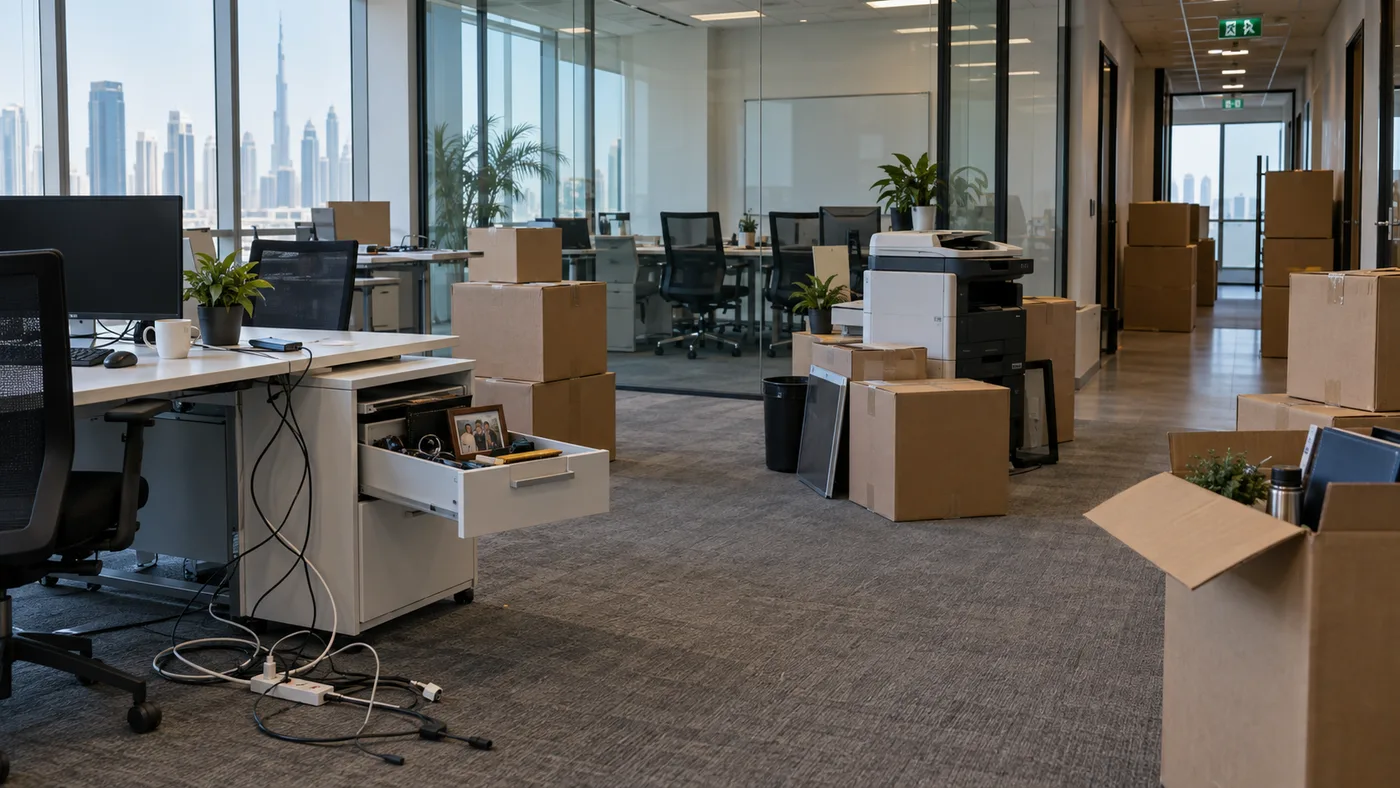
Phased Office Clearance in Dubai While the Business Stays Open
The Junk Services Dubai Team 5 min read
An office does not have to close for every clearance, but the live workplace must remain safe and usable. The job needs defined zones, a protected route, short collection windows and a sign-off after each stage. This guide explains how Dubai businesses can remove surplus furniture and equipment while staff, visitors and critical functions continue elsewhere on the floor.
Phasing works when active teams can be separated from the removal zone and the service route does not cut through critical operations. It is a poor fit when the only exit is shared with heavy dismantling, when confidential work cannot be screened or when building rules require the floor to close during contractor activity. The facilities lead and building team should agree the operating boundary before dates are announced.
Condition
Phased clearance
Single closed-window clearance
Separate service route
Good fit
Still useful
One narrow shared exit
Higher disruption
Usually safer
Several independent floor zones
Good fit
Optional
Large linked workstations across live aisles
Needs careful sequencing
Often faster
Sensitive visitor or client activity
Use after-hours phases
Consider a closed window
The route and floor layout determine whether phasing reduces disruption or only spreads it out.
Divide the Floor Into Independent Clearance Zones
Draw zones around rooms, workstation banks or departments that can be released as complete units. Each phase needs a named business owner, an approved asset list and a handover time. Avoid splitting a linked bench system between phases unless the furniture plan confirms where shared legs, cable trays and power modules separate.
Live zone: Staff, visitors and equipment remain in normal operation with no clearance traffic.
Transition zone: People and retained assets are moving out before the approved release time.
Clearance zone: Only authorised staff and the removal team enter during dismantling and loading.
Completed zone: Loading is finished, loose material is removed and the business owner has signed it off.
A general office-clearance plan builds the overall timeline. The phased version adds repeated release, collection and verification points so unfinished work never drifts into the next occupied area.
Move People, Records and Retained Assets First
A zone is not ready because staff have left their chairs. Personal belongings, active records, laptops, desk equipment and retained furniture must all reach a confirmed destination. Lock cabinets that stay, disconnect approved electronics through IT and mark anything that must not move with a label visible from the aisle.
Give each team a deadline for drawers, lockers and personal effects.
Move confidential records without staging them in public corridors.
Let IT disconnect devices before desk dismantling starts.
Keep supplier-owned equipment outside the removal scope.
Confirm temporary seating and network access for relocated staff.
Photograph the released zone at handover. If an item has no clear label or appears connected to a live system, stop and refer it to the named coordinator rather than moving it on assumption.
Protect the Route Through the Occupied Workplace
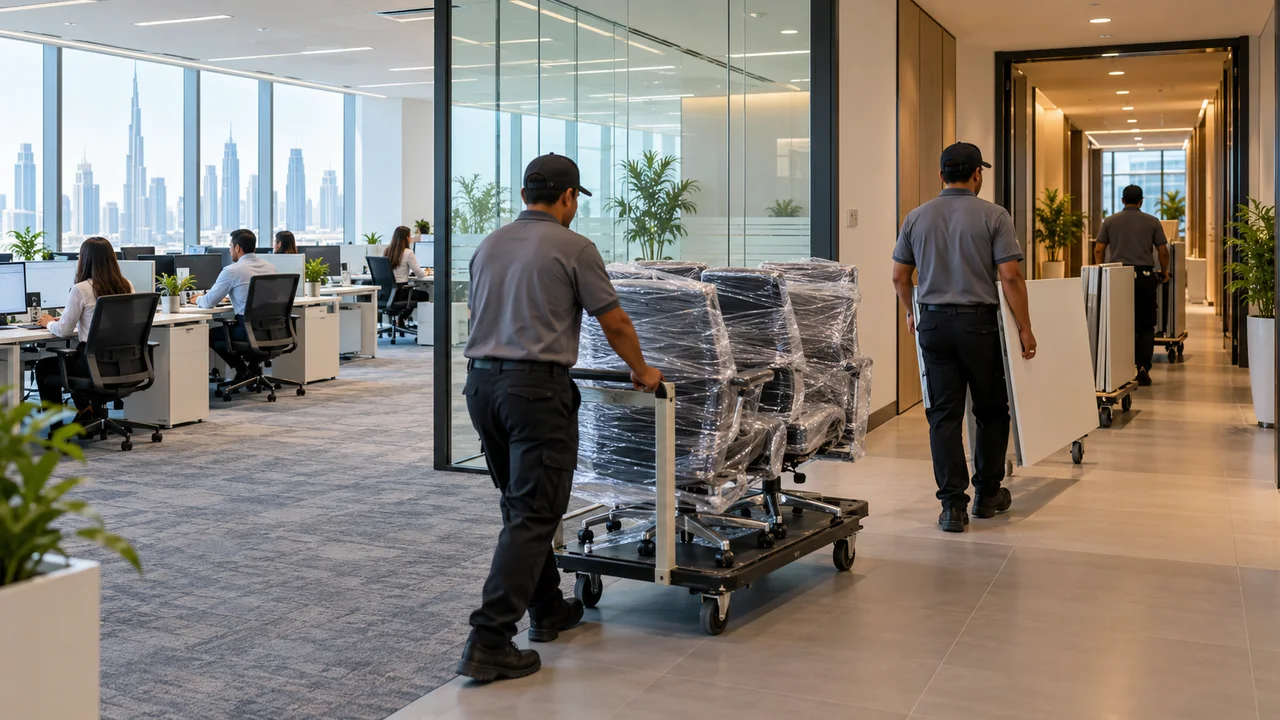
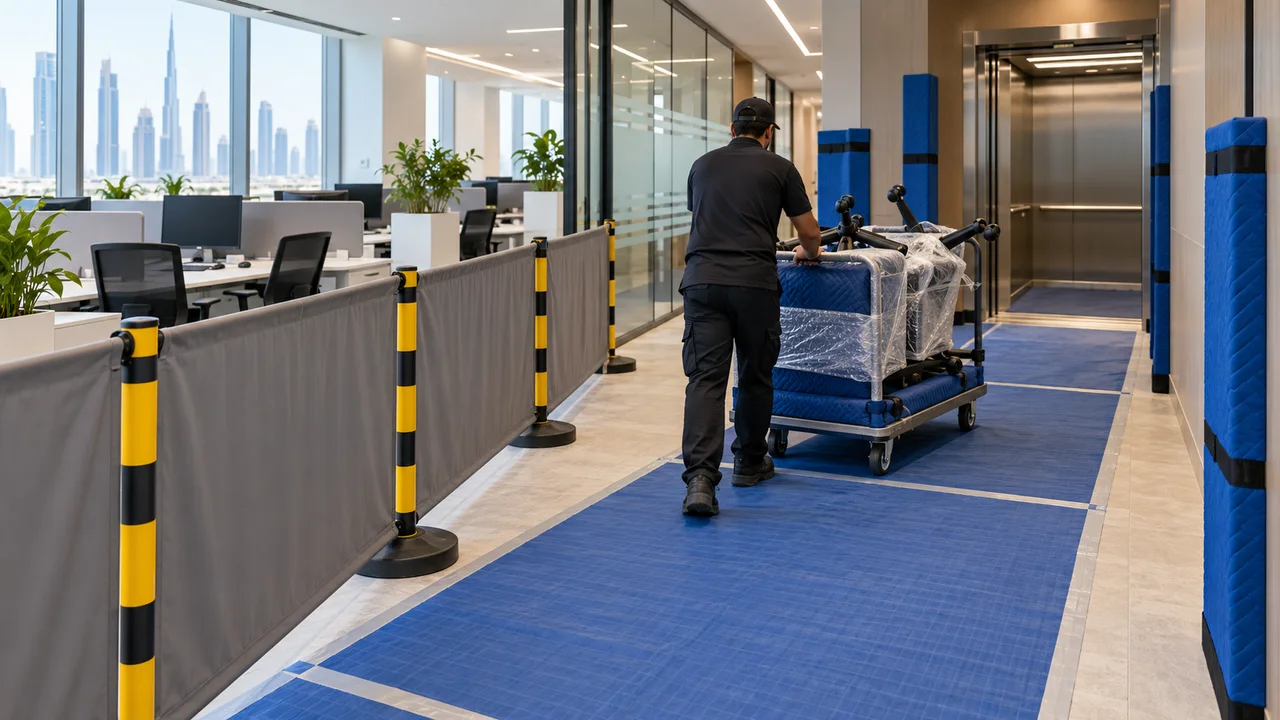
The route needs to handle wrapped panels, trolleys and repeated crew movement without exposing staff to sharp edges or narrowing an escape path. Use floor runners where the building requires them, protect corners and lift interiors, and place freestanding barriers where the clearance route passes an active area. Barriers guide movement but must never block safety equipment.
A protected route keeps trolley movement separate from active desks and directs the load to the service lift.
Reserve the service lift and loading bay for each phase rather than assuming one approval covers the whole programme. Business Bay, DIFC, JLT and Dubai Internet City buildings may set different work hours and contractor requirements. Keep a building contact available during every window.
Schedule Noise and Movement Around Business Activity
Unbolting workstations, rolling loaded trolleys and moving panels through fire doors creates noise even when the crew works carefully. Put dismantling, glass handling and the largest trolley movements into the quietest approved period. Small-item preparation can happen earlier inside the isolated zone if it does not affect calls, meetings or visitor routes.
1Release the zone after staff and retained assets have moved.
2Confirm the item list and isolate power or data connections through the right team.
3Dismantle large furniture inside the controlled area.
4Move the load through the protected route during the reserved window.
5Remove packing fragments and sweep the zone for loose hardware.
6Inspect and sign off the completed area before releasing the next phase.
After-hours work can reduce interruptions, but it still needs an authorised company contact and building security access. Our office clearance mistakes guide explains why missing approvals and late asset decisions cause more delay than the lifting itself.
Control Dust, Loose Parts and Daily Handover
Ordinary furniture dismantling should create little dust, but old cable trays, stored paper and neglected corners can release debris. Bag fixings, collect cable ties and remove packaging at the end of every shift. Do not leave panels leaning in a completed zone or tools in a corridor because the office will return to normal use before the next phase starts.
Count removed items against the phase list.
Check walls, glass and floors along the protected route.
Confirm fire doors, alarms and escape paths are unobstructed.
Record retained items or exceptions that remain in the zone.
Return access control to the business owner after sign-off.
Keep Changes From Crossing Into the Next Phase
A phased programme fails when managers add items from future zones to the trolley at the last minute. Changes affect vehicle volume, labour, building time and the retained inventory. Route every change through the coordinator, update the phase list and move it only if the crew and access window can absorb it safely.
Construction, renovation and demolition material remains outside ordinary office clearance even when refurbishment follows a completed zone. The removal team handles approved loose furniture and non-hazardous contents. Any building work and the debris it creates stay with the appointed fit-out contractor.
Close the Programme With a Floor-Wide Reconciliation
After the last phase, walk the full floor rather than reviewing only the final zone. Check store rooms, meeting spaces and shared cupboards for items deferred between phases. Compare removed, retained, returned and relocated assets with the master list, then photograph completed areas and release the final building protections.
Phasing is successful when normal work continues and each cleared area stays finished. A disciplined sign-off prevents the common outcome where small exceptions accumulate into an unplanned final collection.
Key Takeaways
Use phased clearance only where live work and the removal route can be separated.
Release complete zones with an approved list and named business owner.
Move staff, records and retained assets before furniture dismantling begins.
Sign off each completed zone and control changes before opening the next phase.
Why Choose Junk Service in Dubai
As a local, fully insured team, Junk Services Dubai makes clearing your space simple — fast pickups, fair upfront pricing and responsible disposal across every Dubai community.
Same-Day Availability
Book today and, where crews are free, we clear it today — with no rush surcharge.
Fair, Upfront Pricing
A flat price agreed before we arrive, based on volume, items and access. No surprises.
Insured, Uniformed Crews
Background-checked teams who do all the lifting and protect your floors, lifts and walls.
Responsible Disposal
We sort for reuse, donation and recycling in line with Dubai Municipality guidance.
Our editorial team is made up of the crews and coordinators who clear homes, villas and offices across Dubai every day. We share practical, first-hand guidance on decluttering, disposal and responsible waste removal in the UAE.
FAQ
Frequently Asked Questions
Yes, when active work can be separated from the clearance zone and protected route. Building approval, safe access and a named coordinator are still required.
No, but noisy dismantling and large trolley movements often suit quieter approved windows. The floor layout and business activity should determine the schedule.
Use the fewest phases that create complete, independent zones. Too many small phases repeat access setup and increase the chance of asset-list changes.
A named business or facilities representative should check the item list and physical area. The removal crew should not decide whether an unexplained item was meant to stay.
Yes, after IT has disconnected, inventoried and approved its route. Keep data-bearing equipment protected and separate from general furniture loading.
It can require more setup, access windows and visits than one closed-floor collection. Accurate zone lists let the provider plan labour and vehicle capacity before work begins.
Final Thoughts
A live-office clearance succeeds through boundaries, not speed. Release one complete zone, protect the shared route and close every stage before opening another so the business can keep working around a controlled operation.
Schedule a Phased Office Collection
WhatsApp Us the floor plan, phase list, operating hours and building access requirements. We can plan collection of approved office furniture and non-hazardous contents around active teams.
A planning guide for a Dubai office clearance: the eight-week timeline counted back from the handback date, the four internal owners, and the building rules that decide when work can start.
A practical guide to office furniture removal in Dubai — desk, chair, workstation, meeting-table and storage collection for relocations, fit-outs and downsizing, minimal-disruption scheduling, and responsible resale, donation and recycling.

 Guides