Office furniture is some of the most straightforward material a building produces to dispose of sustainably. A floor of desks and chairs is largely one design repeated dozens of times, built from the same handful of materials, which makes sorting it far simpler than a household's mixed pile of furniture. This guide covers what happens to a desk, a chair or a cabinet after it leaves an office, and how donation, resale and material recovery each fit into that.
What Sustainable Disposal Means for Office Furniture
Sustainable disposal is a sorting decision made before anything leaves the building, not a claim made afterwards. Furniture that still works is separated out for donation or resale first. Everything else is broken down by material rather than loaded as one mixed pile, because a mixed pile of furniture is difficult for any recycler to take.
Office furniture makes this easier than most categories of waste. A batch of thirty identical task chairs is one design repeated thirty times, built from the same steel frame, the same foam and the same fabric. That uniformity is what lets a crew sort a whole floor's furniture quickly instead of item by item.
Why Office Furniture Sorts More Easily Than Household Furniture
A household clearance mixes solid wood, laminate, upholstery, glass and the odd antique in one load, and each of those needs a different route. An office clearance rarely has that variety.
Task chairs are almost always steel or aluminium frame, foam padding and fabric or mesh upholstery, in batches of identical pieces rather than one-off designs.
Desks are laminate-faced particleboard on a metal leg frame, which separates cleanly into two material streams once the fixings are removed.
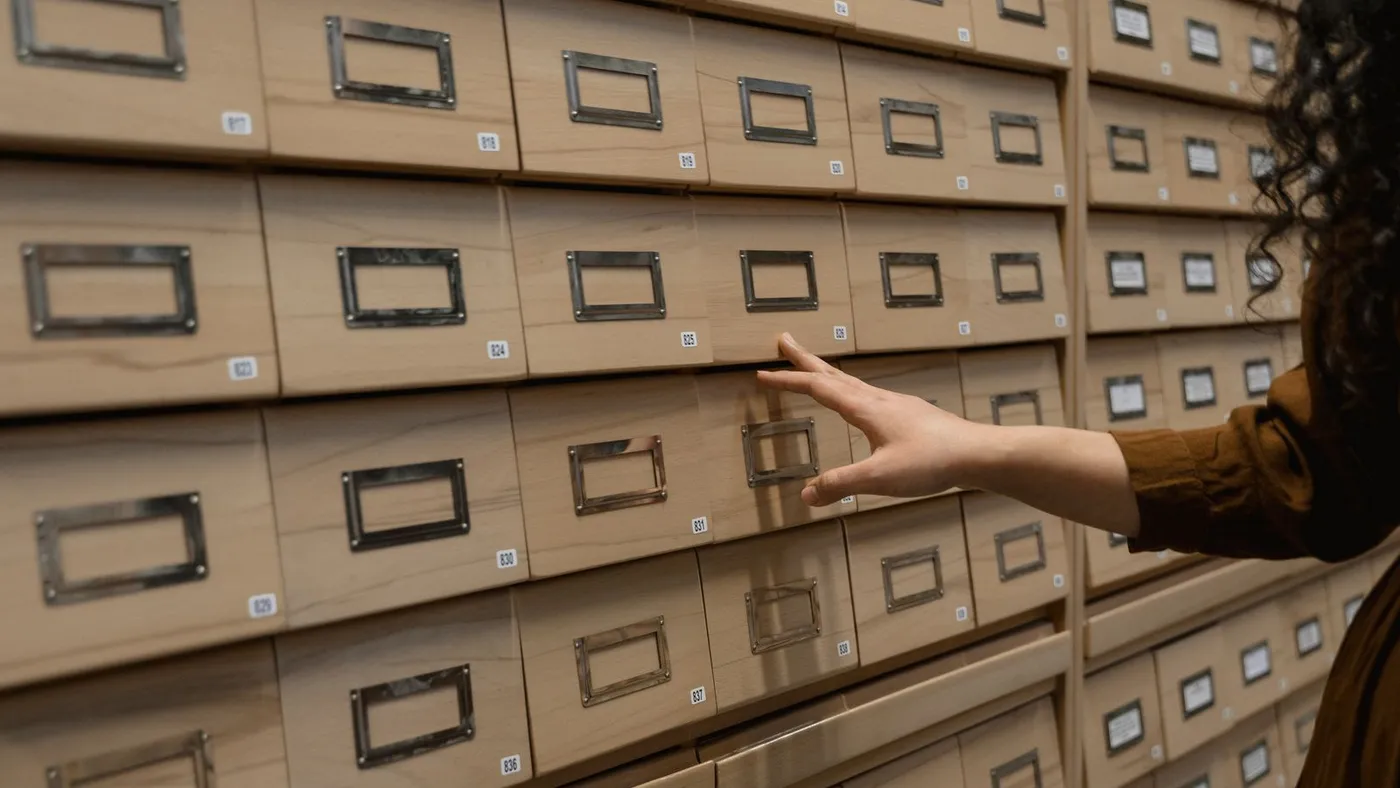
Filing cabinets and storage units are sheet steel with minimal other material, one of the simplest items in a building to recycle.
Meeting tables and reception furniture are the exception, since they are often solid wood or a mixed veneer construction that takes more sorting than a standard desk.
Where Each Material Goes
Material
Found in
Recovery route
Steel and aluminium frames
Chairs, desk legs, filing cabinets, shelving
Stripped and sent for metal recycling, the highest-value stream in an office clearance
Laminate-faced particleboard
Desks, cabinet carcasses, partition panels
Recycled where a facility accepts composite board, otherwise sent to general waste
Foam and fabric
Chair seats and backs, upholstered furniture
Difficult to recycle in most cases; kept out of the metal stream so it does not contaminate it
Solid wood
Meeting tables, reception furniture, some cabinetry
Genuinely recyclable, and often valuable enough to be resold rather than broken down at all
Metal and solid wood recover cleanly. Composite board and foam are the two materials where the honest answer is that recovery is limited, not guaranteed.
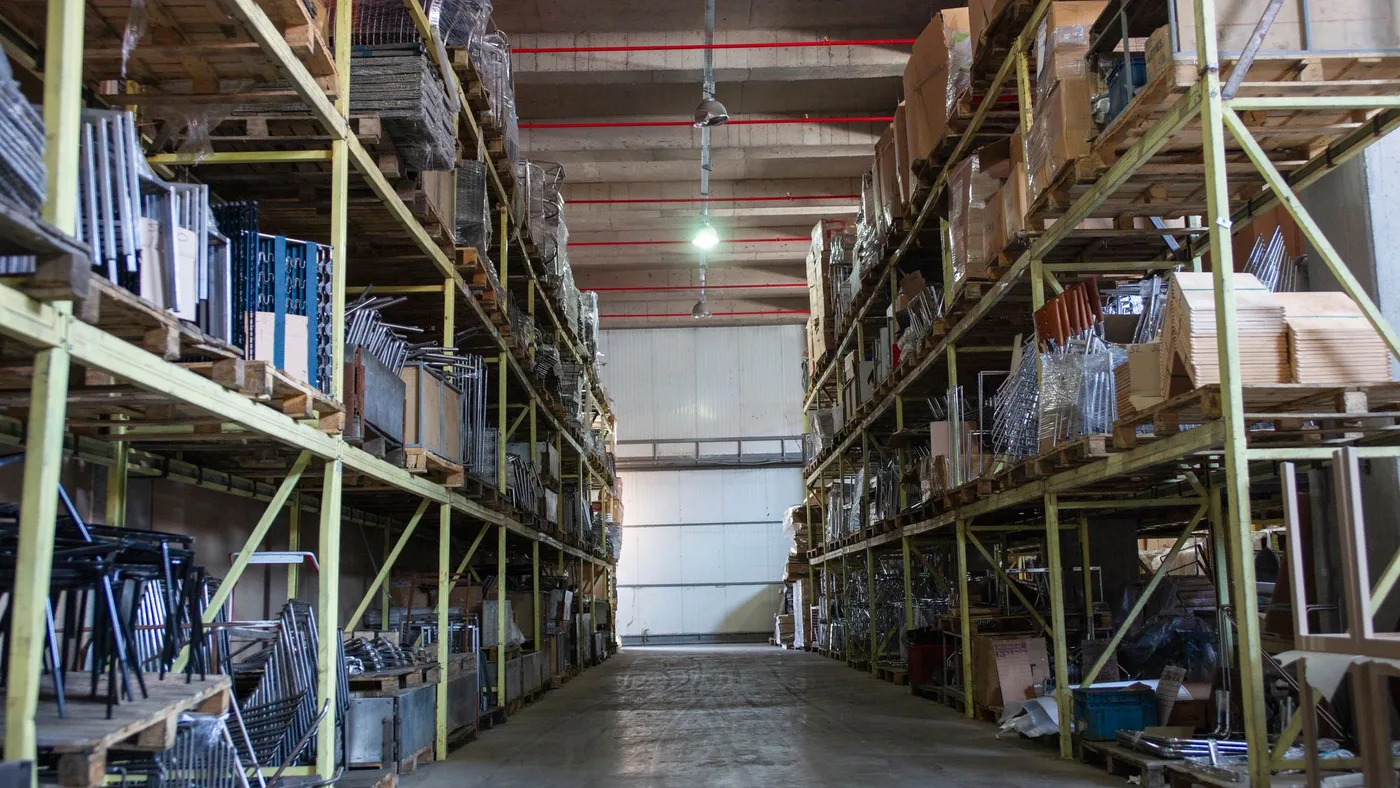
Sorted furniture waits by material, not by desk or department, before it moves on to recycling, resale or donation.
The Donation Route, When Furniture Still Works
Furniture in working, presentable condition is worth setting aside before anything else is decided. A batch of matching desks or chairs is exactly what smaller offices, schools and community organisations look for, and donating them keeps genuinely useful furniture out of the recycling stream entirely.
What donates well: Uniform batches of desks or chairs in good condition, filing cabinets with working locks, and meeting tables without significant damage.
What rarely gets accepted: Torn upholstery, chairs missing castors or gas lifts, and furniture with broken laminate edges, since most recipients want items ready to use immediately.
Lead time to plan for: Donation takes longer to arrange than removal, since a recipient has to confirm space and transport. Flag it early rather than at the last week of a clearance.
The Resale Route, When It Is Worth More Than Scrap
Some office furniture is worth more sold than recycled, and that value usually sits in a small share of a full clearance rather than all of it.
Ergonomic chairs from recognised brands hold resale value well into their working life.
Solid wood meeting tables and reception pieces are frequently worth more sold whole than broken down for material.
Standard laminate desks rarely sell for a meaningful amount once depreciated, and are usually better routed straight to recycling.
Anything with visible wear, mismatched sets or missing parts is faster and cheaper to recycle than to list for resale.
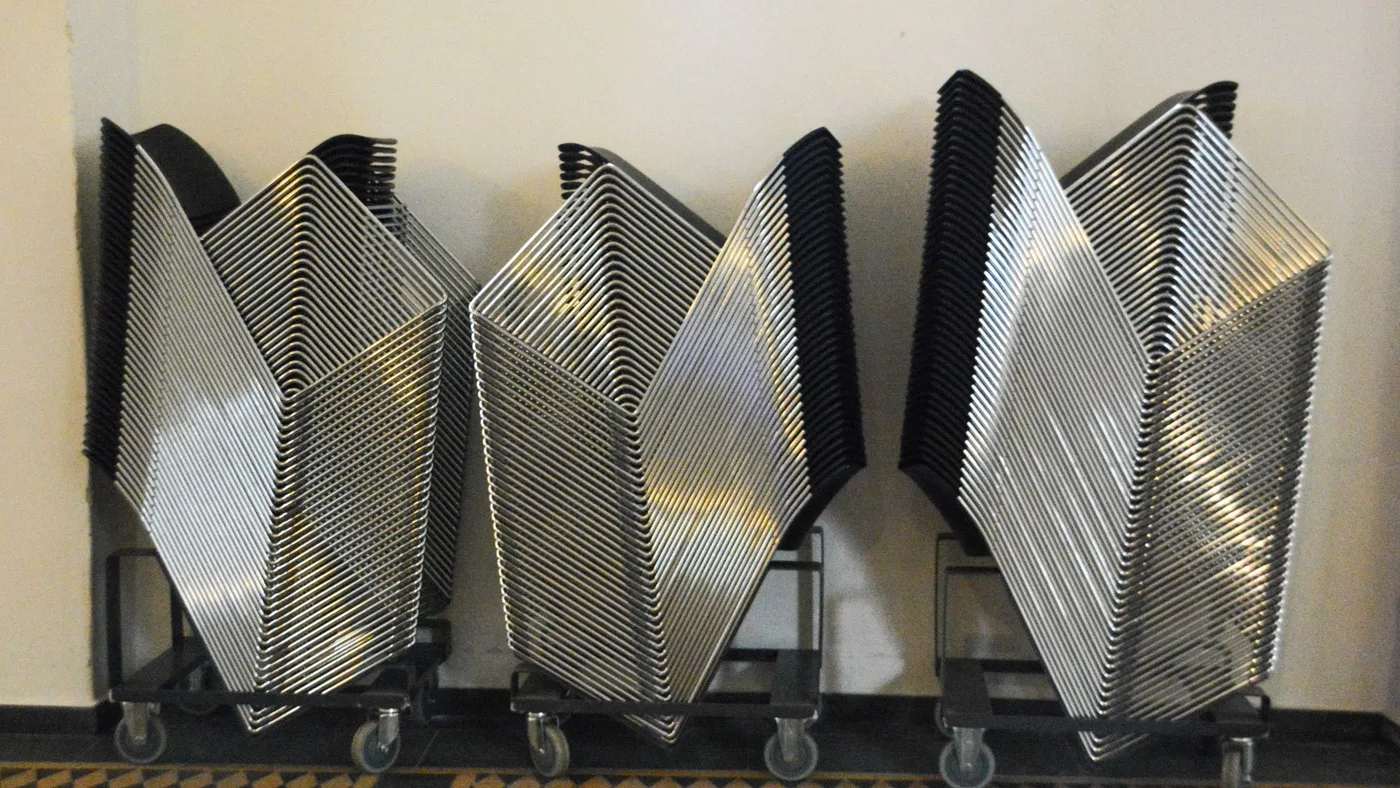
A chair frame like this strips down into one clean metal stream once the fabric and foam are separated from it.
Booking a Sorted Collection Instead of a Straight Clear-Out
A sustainable disposal takes slightly more coordination than a straight clearance, mostly because sorting decisions need to happen before the crew starts loading rather than after.
1Walk the space and flag anything in good enough condition to donate or sell before the collection date.
2Confirm whether a buyer or recipient is already arranged, or whether the crew should handle sorting directly.
3Group furniture by type where possible: chairs together, desks together, cabinets together, which speeds up material sorting on collection day.
4Book the collection with enough lead time for donation recipients to confirm space, typically longer than a standard removal booking needs.
5Confirm what happens to anything left over once donation and resale options are exhausted, so nothing sits unclaimed after the visit.
None of this changes how the physical removal runs. It changes what happens before the truck is loaded, which is where a sustainable disposal is decided. The mechanics of clearing a workspace itself are covered in how to plan an office clearance.
Key Takeaways
Sustainable disposal is a sorting decision made before collection: donate or resell what still works, recycle what does not.
Office furniture's uniform materials, steel frames, laminate board, foam and fabric, make it easier to sort than mixed household furniture.
Metal and solid wood recover cleanly; composite board and foam are the two materials with genuinely limited recovery options.
Donation takes longer to arrange than removal and should be flagged early in the clearance timeline, not at the last week.
A small share of a clearance, usually branded chairs and solid wood pieces, is often worth more resold than recycled.
Why Choose Junk Service in Dubai
As a local, fully insured team, Junk Services Dubai makes clearing your space simple — fast pickups, fair upfront pricing and responsible disposal across every Dubai community.
Same-Day Availability
Book today and, where crews are free, we clear it today — with no rush surcharge.
Fair, Upfront Pricing
A flat price agreed before we arrive, based on volume, items and access. No surprises.
Insured, Uniformed Crews
Background-checked teams who do all the lifting and protect your floors, lifts and walls.
Responsible Disposal
We sort for reuse, donation and recycling in line with Dubai Municipality guidance.
Our editorial team is made up of the crews and coordinators who clear homes, villas and offices across Dubai every day. We share practical, first-hand guidance on decluttering, disposal and responsible waste removal in the UAE.
FAQ
Frequently Asked Questions
Generally yes. An office produces large batches of identical pieces built from a small number of materials, mainly steel and laminate board, which sorts faster and cleaner than a household's mixed collection of wood, glass and upholstery.
The steel or aluminium frame is stripped out for metal recycling, which is the highest-value material in a chair. The foam and fabric are separated from the frame and kept out of the metal stream, since they are far harder to recycle.
Yes, and it is worth flagging before the collection date rather than after. Furniture in good working condition is set aside for donation first, and donation recipients typically need more lead time to confirm space than a standard removal booking.
Metal frames and solid wood recover well. Laminate-faced particleboard and foam upholstery have more limited recovery options, and the honest answer is that some of that material ends up in general waste rather than a recycling stream.
For branded ergonomic chairs and solid wood pieces, often yes. For standard laminate desks with visible wear, resale value is usually too low to be worth the extra time compared with recycling.
The physical removal is priced the same way as any office clearance, on volume and access. Sorting for donation or resale can extend the timeline rather than the price, since recipients need time to confirm before the collection date.
Final Thoughts
A sustainable office furniture disposal is not a different service from a standard clearance. It is the same removal with one extra step added at the start: deciding, piece by piece, what still has a working life left before any of it is broken down for material.
Flag donation candidates early, group furniture by type before collection day, and the rest of the process runs like any other clearance. For the wider planning timeline around clearing a workspace, see how to plan an office clearance.
Book a Sorted, Sustainable Office Clearance
Tell us what should be set aside for donation or resale and what should be recycled, and we will size the visit and confirm a flat price before the crew arrives.
WhatsApp Us photos of the space, Call Now to discuss a donation timeline, or Book a Pickup for the collection itself.
What office furniture liquidation covers when a business closes, relocates or downsizes, how sorting for resale and donation works alongside removal, and how timing runs against a lease deadline.
A planning guide for a Dubai office clearance: the eight-week timeline counted back from the handback date, the four internal owners, and the building rules that decide when work can start.
A filing cabinet is the one office item you decide to get rid of while it is still loaded. What to do with the paper, why the drawers come out first, and where the steel ends up.


 Guides