Toy Recycling and Donation in Dubai: A Parent's Sorting Guide
The Junk Services Dubai Team 5 min read
Toys are difficult to clear because one cupboard can contain washable plastic, fabric, timber, electronics, magnets and tiny loose parts. A single donation bag hides those differences. The useful approach is to check whether each toy is safe and complete first, then identify what it is made from. That separates genuine donations from material-recovery candidates and keeps batteries or damaged electronics out of ordinary household waste.
A toy can look clean and still be unsuitable to pass on. Check for cracked plastic, exposed wire, sharp edges, loose magnets, broken battery covers and parts that no longer lock into place. If normal play could release a hazardous piece or collapse a riding toy, donation is not the right route.
Donate: Clean, intact toys with all essential pieces, secure fasteners and no electrical or mechanical fault.
Recycle where accepted: Broken single-material plastic, plain metal or untreated timber toys after removable batteries and mixed parts are separated.
Electronics route: Powered toys, remote controls and learning devices that contain circuit boards, screens, speakers or sealed rechargeable cells.
Responsible disposal: Contaminated soft toys, brittle mixed-material toys and unsafe items whose materials cannot be separated into an accepting stream.
The condition-first principle is the same one used in the broader donation versus recycling guide. A hopeful label does not make an unsafe object useful to another household.
Use a Six-Point Toy Check
1Test the toy's normal movement without forcing a damaged joint or switch.
2Check every edge, wheel, hinge, cord and fastening for cracks or exposed hardware.
3Count the pieces that make the toy usable, including chargers, controllers and game parts.
4Open an accessible battery compartment and inspect for swelling, leakage or corrosion.
5Clean the toy using a method suited to its material and let it dry fully.
6Ask whether another family could use it immediately without buying replacement parts or arranging repair.
This check also prevents incomplete sets from becoming somebody else's clutter. Keep puzzle pieces, building blocks, doll accessories and game components together in a closed reusable pouch. Photograph a large set before packing so its contents remain clear without an inventory written on every item.
Match the Route to the Toy's Construction
Toy type
Reuse test
End-of-life route
Hard plastic toy
Intact, washable and complete
Material recovery only if the specific plastic is accepted
Wooden toy
Smooth, stable and free from splinters
Reuse first; untreated clean timber may have a recovery route
Soft toy
Washable, dry, unstained and seam-safe
Textile route where accepted; contaminated filling needs disposal
Metal toy
No sharp rust, failed welds or loose small parts
Separate recoverable metal from plastic or rubber where practical
Electronic toy
Working safely with a secure battery cover
Electronics and battery routes, not ordinary dry recycling
Material appearance is not enough; fasteners, coatings, electronics and internal parts often turn a toy into a mixed object.
A recycling symbol moulded into one plastic panel does not mean the whole toy can enter a packaging bin. Wheels, axles, circuit boards, fabric, adhesives and several plastic grades may be joined together. Confirm what the receiving route accepts rather than placing a bulky toy among bottles and containers.
Handle Batteries and Electronic Toys Separately
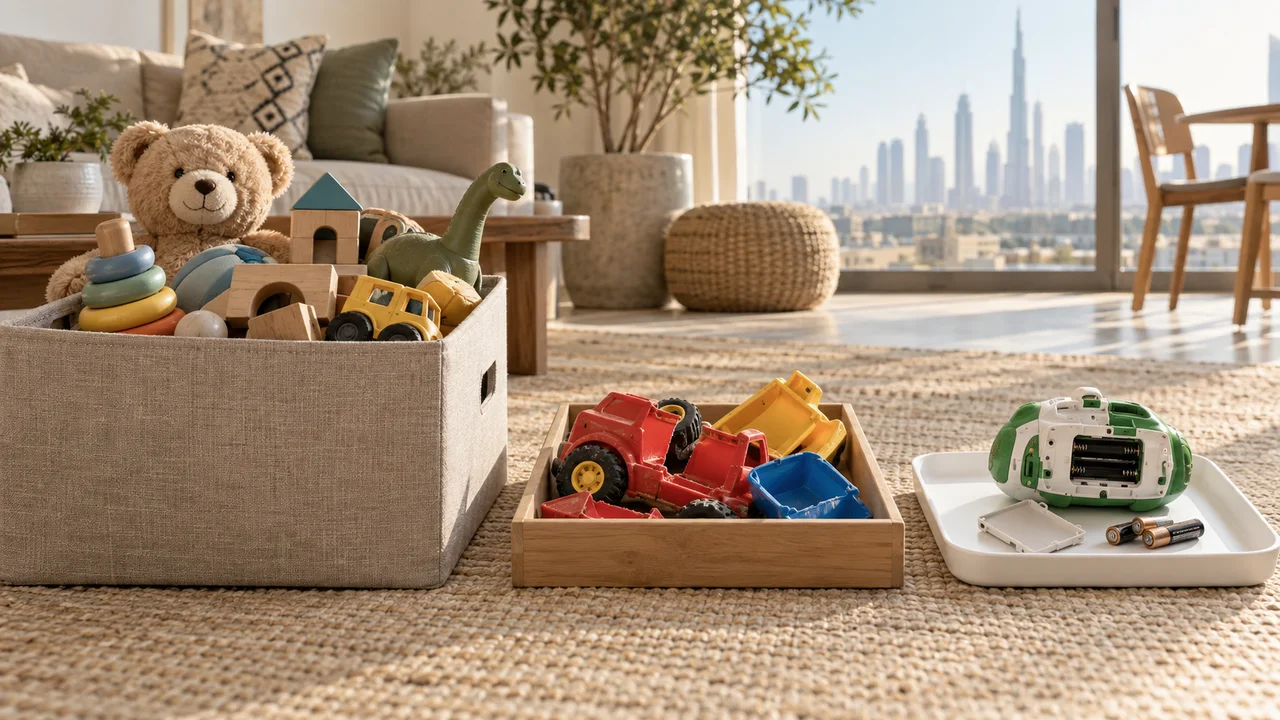
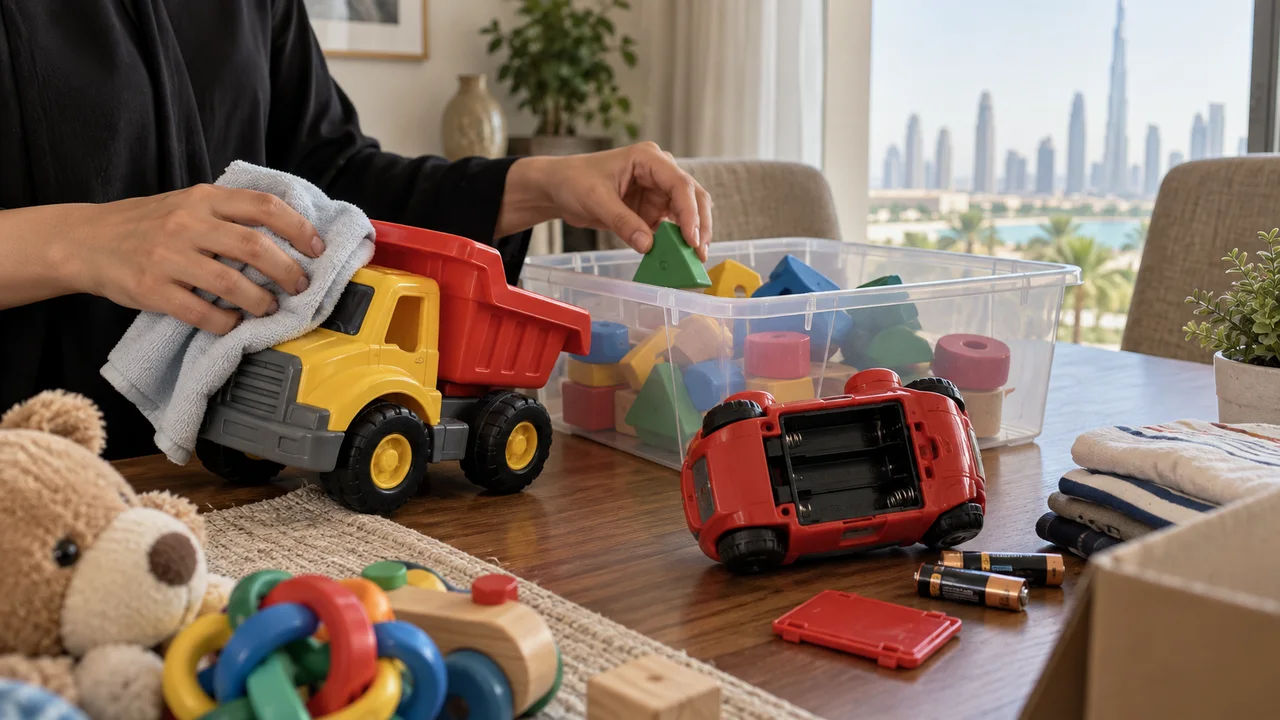
Remove accessible household batteries before donation or recycling, unless a confirmed recipient asks to test the toy with them installed. Keep battery terminals from touching other loose cells. If the compartment shows white crust, wet residue, heat damage or swelling, stop handling it as an ordinary donation item.
Clean reusable toys, reunite loose pieces and remove accessible batteries before the final route is chosen.
Loose cells should follow the household battery disposal guide, while circuit boards, screens and electronic sound modules belong with electronics disposal. Do not cut open a sealed rechargeable pack or pull wiring from a damaged toy at home.
Clean Toys Without Hiding Damage
Wipe hard plastic and sealed timber with a lightly damp cloth and a suitable mild cleaner, then dry every recess. Wash machine-safe soft toys according to their care instructions and allow the filling to dry throughout. A surface that feels dry can still hold moisture deep inside, especially during Dubai's humid months.
Do not soak battery toys, sound modules, wooden joints or toys with trapped cavities.
Do not cover cracks with tape or paint to make a toy look donation-ready.
Do not use a strong scent to mask mildew, smoke or persistent storage odour.
Do not pack a freshly washed soft toy until its centre is fully dry.
Do not donate recalled-looking, modified or homemade electrical toys without a sound safety basis.
Dubai balcony and garage storage can make plastic brittle and soften old adhesives. Flex a sun-exposed part gently and inspect seams before deciding it is fit for reuse. Faded colour is cosmetic; powdery, cracking plastic is a structural warning.
Pack Complete Donations for a Real Recipient
Confirm that the receiving organisation or family accepts toys, the age range, the quantity and the handover method. Keep sets together, bag small parts inside the main box and place heavy wooden toys below light soft toys. A clean transparent container helps the recipient inspect contents without opening every bag.
Residents in Dubai Marina and JLT should keep boxes away from refuse rooms while waiting for collection. Villa households in Arabian Ranches should stage donations indoors rather than in a hot garage. The guide to donating decluttered items covers acceptance and pickup planning across a wider household clear-out.
Clear the Remaining Toy Mix in One Plan
Set a deadline for direct donations before a move or room clear-out. After accepted toys leave, photograph the remaining electronic, recoverable and disposal groups separately. That gives a collection crew an honest view of volume and prevents batteries from disappearing inside a black bag.
1Remove the keep group so favourite toys cannot be loaded by mistake.
2Hand confirmed donations directly to their recipient before the clearance date.
3Protect loose batteries and electronic toys as separate categories.
4Keep accepted recyclable material clean and out of general refuse.
5Book the residual load with photographs, floor details and a realistic box count.
A planned house clearance collection can remove toys alongside unwanted furniture and household items after direct donations are settled. Separation at the property gives each group its best available route.
Key Takeaways
Safety, completeness and cleanliness decide whether a toy is suitable for donation.
Many toys combine plastic, metal, fabric and electronics, so they do not belong in a packaging bin by default.
Remove accessible batteries and isolate any compartment showing leakage, swelling or heat damage.
Keep sets together and confirm that a recipient accepts the category before arranging handover.
Separate donation, electronics, recoverable material and disposal groups before collection.
Why Choose Junk Service in Dubai
As a local, fully insured team, Junk Services Dubai makes clearing your space simple — fast pickups, fair upfront pricing and responsible disposal across every Dubai community.
Same-Day Availability
Book today and, where crews are free, we clear it today — with no rush surcharge.
Fair, Upfront Pricing
A flat price agreed before we arrive, based on volume, items and access. No surprises.
Insured, Uniformed Crews
Background-checked teams who do all the lifting and protect your floors, lifts and walls.
Responsible Disposal
We sort for reuse, donation and recycling in line with Dubai Municipality guidance.
Our editorial team is made up of the crews and coordinators who clear homes, villas and offices across Dubai every day. We share practical, first-hand guidance on decluttering, disposal and responsible waste removal in the UAE.
FAQ
Frequently Asked Questions
Only when the receiving route accepts that specific plastic and the toy can be separated from metal, rubber and electronics. A packaging recycling bin should not be assumed to accept bulky mixed toys.
They should be safe, clean, complete and ready for normal use. Reject toys with sharp cracks, loose magnets, exposed wires, failed fasteners, persistent odour or missing parts essential to play.
Usually no. Remove accessible cells unless the confirmed recipient requests them for testing. Check the compartment for corrosion or swelling and include the secure cover with the toy.
Yes, when the care method suits the toy and the filling dries fully. Do not donate soft toys with mould, smoke odour, pest damage, unsafe seams or electronic parts damaged by moisture.
They are an electronics item at end of life when they contain circuit boards, screens, speakers or sealed rechargeable cells. Keep them out of ordinary dry recycling and separate accessible batteries.
Count the essential pieces, place small parts in a closed reusable pouch and keep that pouch inside the main box. Mark incomplete sets honestly rather than presenting them as ready to use.
Yes. Photograph the separate groups and identify electronic toys or loose batteries before collection. Keep confirmed donations apart from the residual load so they are not loaded by mistake.
Final Thoughts
A responsible toy clear-out protects the next child as carefully as it protects the waste stream. That means passing on only safe, complete toys and being honest about everything else.
Sort before packing, isolate batteries and confirm the recipient. The remaining material can then leave as a planned collection instead of one mixed bag with no credible destination.
Arrange Collection After the Toy Sort
Send photographs of the separated boxes, your area, floor number and any furniture leaving with them. We will confirm the collection scope and one upfront price before dispatch.
Donation keeps a useful item in service, while recycling recovers material from one that has reached the end of its life. Use this condition-first guide to choose well.
A practical guide to donating what you clear out in Dubai: what charities take, where to drop off or arrange pickup, how to prepare items so they're accepted, and what to do with the rest.
A drawer of dead batteries is harmless until it is tipped into a mixed load. Which household cells carry a real risk, why terminals get taped, and how a Dubai home collects and hands them on.

 Guides