When a television is replaced or a living room is cleared, the screen usually leaves easily and the unit it sat on becomes the problem. This guide covers what a TV unit and media console disposal removes, why a low cabinet that two people slid into place can be hard to carry out whole, and how a wall-hung unit comes off without turning into a repair job.
This is the furniture, not the television. Low media benches, tall entertainment cabinets, corner units, floating wall-hung consoles and open glass-and-metal AV racks all count. The screen itself follows a separate route, covered in our guide to TV disposal in Dubai.
Built-in joinery is not furniture. A fitted media wall, or a niche with shelves formed as part of the room, stays with the property. Only free-standing or wall-hung units come out. If you are not sure which yours is, a free-standing unit can be pulled away from the wall and rocks slightly when you push it; a built-in one is fixed to the wall or floor along its whole length and lines up flush with the plaster.
Why the Unit Is Heavier and Bulkier Than It Looks
Most media units are long, low and made of thick MDF or particleboard with a veneer or foil wrap. The material is dense, the span is often 1.6 to 2.4 metres, and the carcass does not fold or collapse.
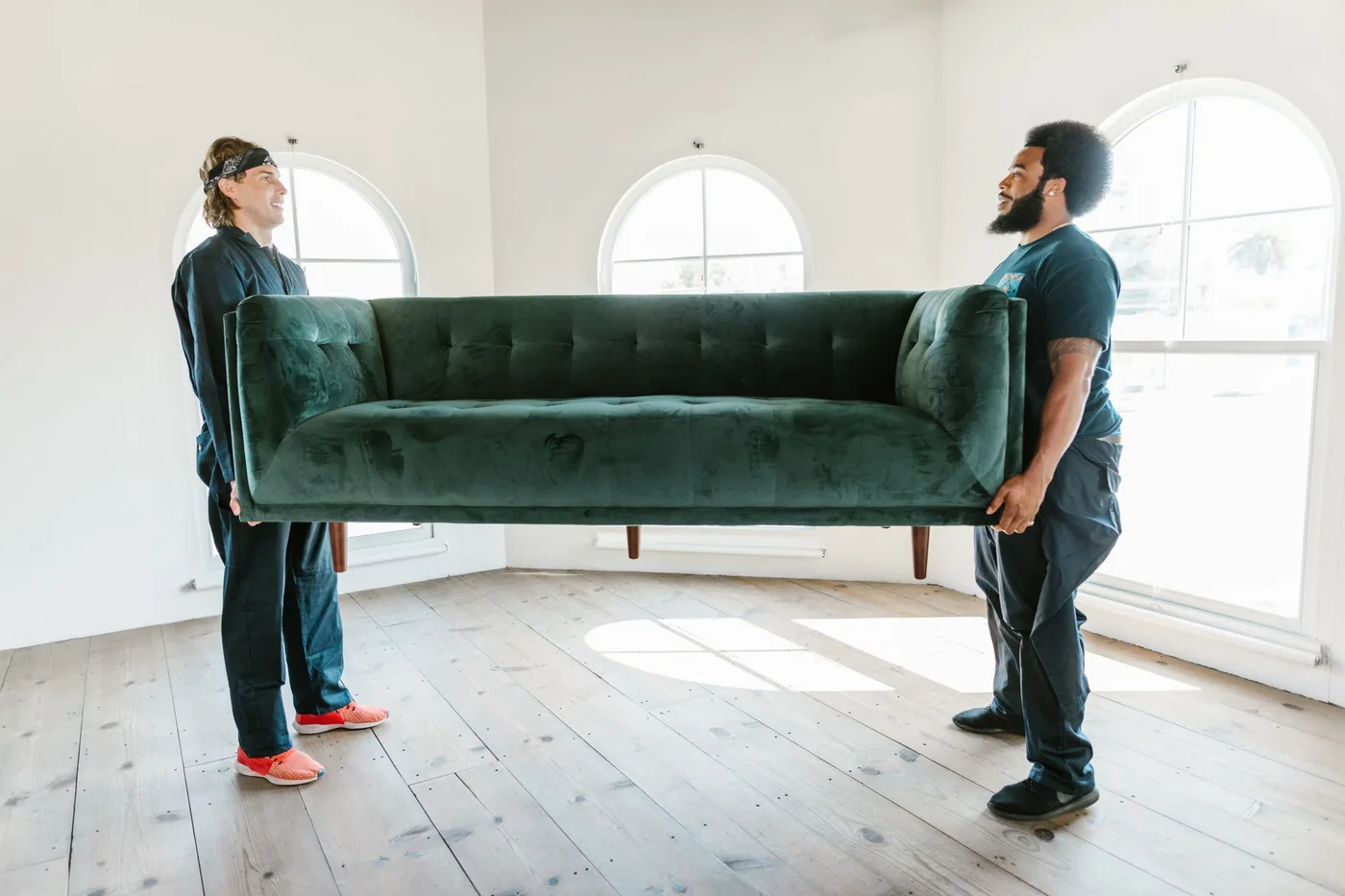
A two-metre unit will not turn on an apartment landing or fit a passenger lift, so it is carried down the stairs or taken apart first.
Particleboard is heavy for its size and offers no hand-holds, so it is a two-person lift even when half-empty.
The back panel is thin hardboard that flexes and cracks, which makes carrying the unit by its frame risky.
In a room that has been without air conditioning, the board swells at the joints and the unit weakens where it matters most.
Types and How Each Comes Out
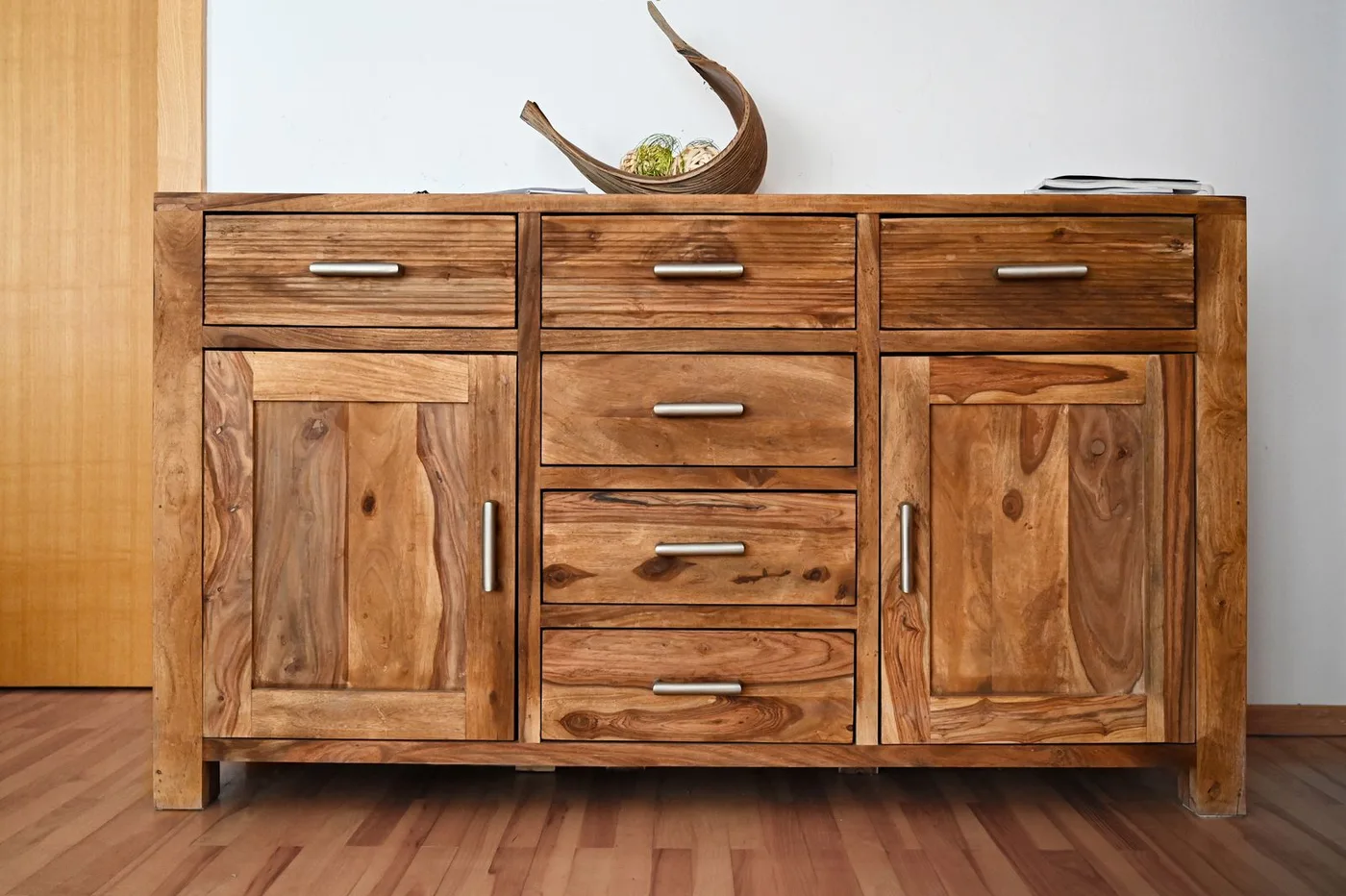
Low media bench: Long and shallow. Drawers and doors come off, then the top board if the run is too wide for the exit.
Tall entertainment cabinet: Top-heavy with glass doors. Doors and shelves out first, then the carcass, often carried on its side.
Floating wall-hung unit: Bolted to the wall on a rail or bracket. Emptied, unbolted, then lifted clear by two people.
Glass and metal AV rack: Toughened glass shelves on metal legs. Each shelf is wrapped and carried separately.
Flat-pack veneer unit: Held by cam locks that only bite once. It rarely survives a second dismantle, so it comes apart for disposal, not reuse.
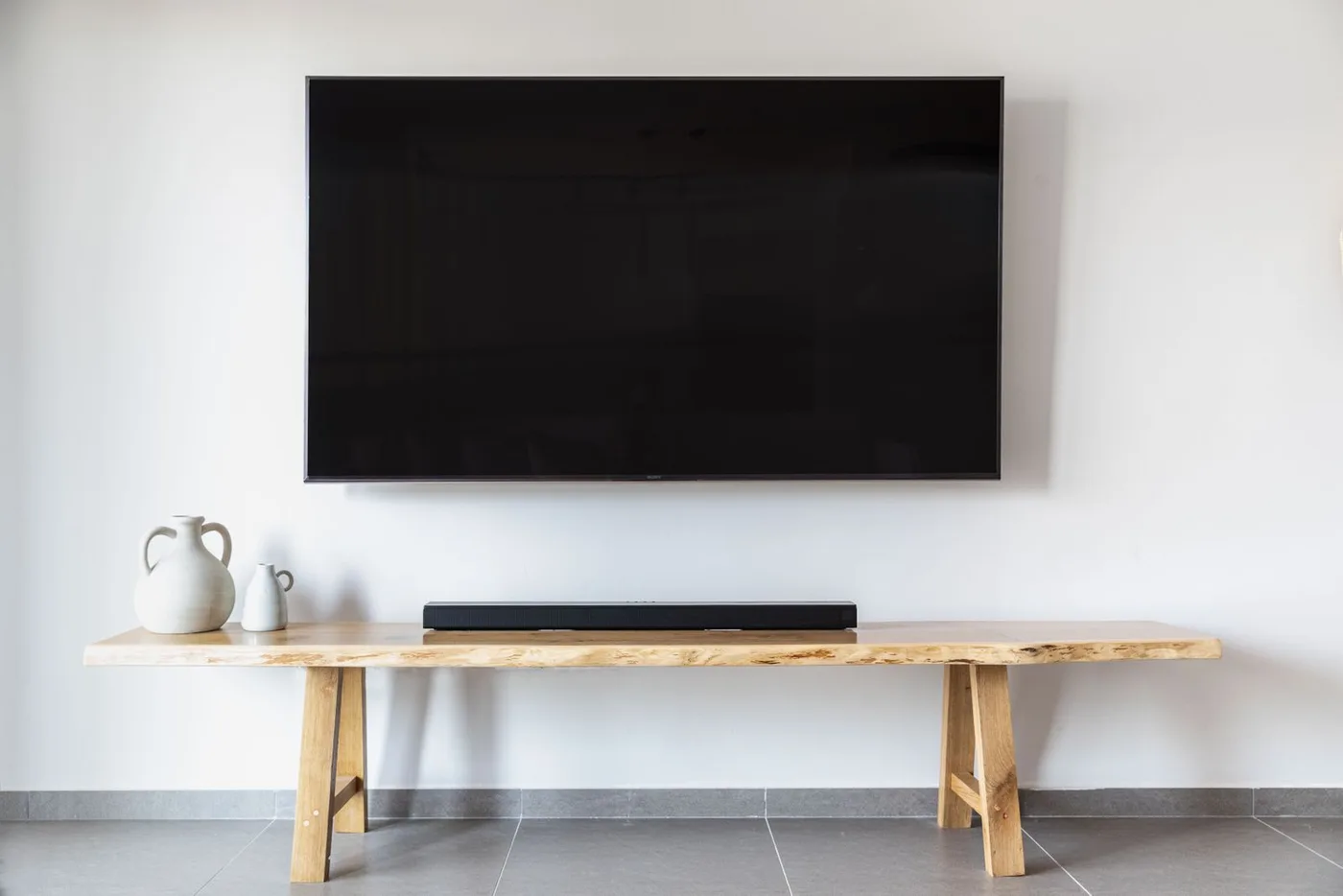
When the screen is on the wall, the console beneath it still has to be emptied, unfixed and carried out on its own.
Corner Units and Oversized Media Walls
Two shapes need more planning than a straight bench. A corner unit has an angled or boxed back that does not fold flat, so it is dismantled into its panels rather than carried as one wedge. An oversized media wall, the kind that runs three metres or more with a bridging section over a doorway, is built in modules and comes apart the way it went up.
A corner unit's back panels are cut on an angle and often glued as well as screwed, so the carcass comes apart in pieces rather than lifting away whole.
Bridging and tower sections of a wall system are separate carcasses bolted together, and each one is emptied and unbolted in turn.
Lighting strips and plug sockets built into a wall system are disconnected at the plug, not cut, and the wiring behind a hard-wired strip stays put.
Glass and mirror panels in a display section are removed and wrapped before any carcass is moved.
Wall-Hung Units: Unbolting and What Is Left Behind
A floating console hangs on a French cleat or a pair of heavy brackets screwed into the wall. The crew empties it, lifts it off the cleat or unbolts the brackets, and takes the unit and its fixings.
The wall plugs and screw holes stay in the wall. Filling and repainting is a decorating job the crew does not carry out, and no wall repair is part of a disposal. If the handover needs the wall made good, arrange that separately.
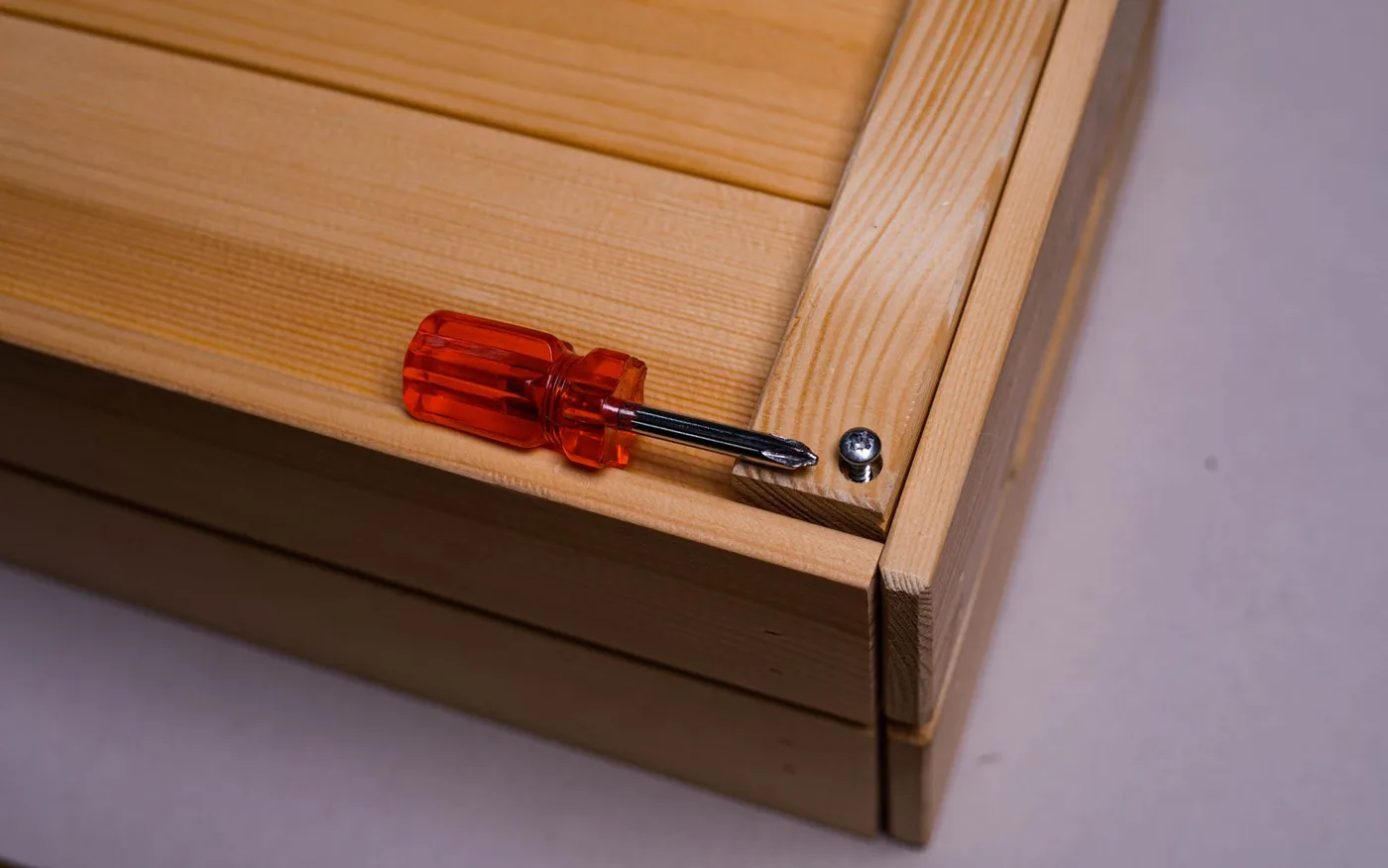
Cam locks and screws come out to break a long unit into panels small enough to clear an apartment door.
What Comes Out First
1Unplug and remove the media kit: the box, console, sound bar, router and speakers.
2Coil and bag the cables so nothing is dragged loose on the way out.
3Take out DVDs, games, books and the clutter that collects on the shelves.
4Lift out glass shelves and doors and wrap them before anything else moves.
5Remove drawers and detachable feet so the carcass is as light and short as it will go.
What Happens to the Unit
Material
Recoverable
Route
MDF and particleboard carcass
Little to no scrap value
General waste; the board is not recycled kerbside
Solid timber unit
Yes, if sound
Resale or donation before disposal
Glass shelves and doors
Yes
Separated and sent for glass recycling
Metal legs, brackets and fixings
Yes
Scrap metal recycling
Working unit in good order
Whole item
Offered for donation or resale first
A media unit is separated into glass, metal and board, and only the board has no onward route.
The unit usually leaves with the television, the old sofa or a full living-room refresh. One visit with a two-person crew covers the screen, the stand and whatever else is going, which is cheaper and quicker than booking a single-item collection for each piece a week apart. Send a photo of the wall it stands against and a rough length, and the crew arrives with wrap, tools and enough hands.
TV unit and media console disposal removes the free-standing or wall-hung furniture the television sits on, not the screen itself.
A long particleboard unit is dense, has no hand-holds and will not turn on a landing, so it is often dismantled before it leaves.
A floating unit is unbolted from its cleat or brackets; the screw holes stay in the wall and filling them is a separate decorating job.
Glass shelves and metal legs are separated for recycling; the board carcass has little scrap value and goes as general waste.
It is usually booked alongside the TV, the sofa or a full living-room clear-out.
Why Choose Junk Services Dubai for TV Unit and Media Console Disposal
As a local, fully insured team, Junk Services Dubai makes clearing your space simple — fast pickups, fair upfront pricing and responsible disposal across every Dubai community.
Measured Before the Day
We take the length and the exit width from your photos, so the crew arrives knowing whether the unit is carried whole or broken down.
Wall-Hung Units Unbolted Cleanly
Floating consoles are lifted off the cleat or unbolted at the brackets and taken with their fixings, with no wall repair promised or attempted.
Sorted Into Glass, Metal and Board
Glass shelves and metal legs are separated for recycling, and any sound solid-wood unit is held back for donation.
Our editorial team is made up of the crews and coordinators who clear homes, villas and offices across Dubai every day. We share practical, first-hand guidance on decluttering, disposal and responsible waste removal in the UAE.
FAQ
Frequently Asked Questions
It removes the stand or cabinet the television sits on, whether free-standing or wall-hung. The crew clears the shelves, takes out glass and drawers, unbolts wall-fixed units, dismantles anything too long to carry, and separates glass and metal from the board.
Yes, if you want both gone. The screen follows an electronics route and the unit is handled as furniture, but they leave in the same visit. Say so when you book so the crew brings screen wrap.
Yes. It is emptied, lifted off its cleat or unbolted from its brackets, and carried out with its fixings. Two people handle it because the unit is rigid and awkward rather than light.
Yes. The wall plugs and screw holes remain once the brackets are out. Filling and repainting is a decorating task the crew does not do, so arrange wall repair separately if the handover needs it.
A solid-timber or branded unit in sound condition is offered for reuse first. A flat-pack veneer unit that has already been built once rarely survives another dismantle, so it comes apart for disposal instead.
Yes. Doors, glass shelves and drawers come off first, then the carcass is taken apart or carried on its side. A run wider than about two metres almost always needs breaking down to clear an apartment exit.
The toughened glass shelves are wrapped and separated for glass recycling, and the metal frame goes for scrap. Little of a glass-and-metal rack ends up as waste.
Final Thoughts
The screen is the easy part of this job. The unit under it is the piece that needs a plan: how long it is, whether it comes off a wall, and how much of it has to be taken apart to reach the door.
Whether it stands on the floor or hangs on the wall, the unit can be cleared, dismantled and sorted for recycling in one visit, with or without the television. WhatsApp Us photos and measurements and we will arrange collection across Dubai.
A practical guide to TV disposal in Dubai — responsible collection and recycling of old LED, LCD, OLED, smart and CRT televisions from homes and offices, why screens are fragile and regulated e-waste, how to wipe a smart TV and prepare it, and Dubai Municipality-compliant recycling.
Furniture removal in Dubai isn't sold off a rate card. Here's what genuinely moves the price of a piece, and why a wardrobe can cost more to clear than a sofa.
A crew will come out for one item in Dubai. How a one-piece pickup is scheduled and priced, which single items get booked most, and when adding a second piece is the better call.

 Guides