Curtains and blinds are the last thing to come down when a room is redecorated or a lease ends, and they rarely go back up. This guide covers what a curtain and blind disposal removes, how the fabric and the hardware take different routes, and how to work out which fittings are yours to take when you hand a Dubai rental back.
The job covers everything at the window that is not the glass or the wall: curtains, sheers, linings, every kind of blind, and the rails, tracks, poles, brackets and finials behind them. A pelmet or window boxing built as fixed joinery stays, as does anything screwed in as part of the original fit-out.
Fabric and hardware are handled as two separate streams, which is what keeps the job tidy. It slots into a wider furniture disposal or room clear-out without adding much time.
The Two Streams: Fabric and Hardware
Curtains and drapes: Lined and unlined panels, eyelet and pinch-pleat headings. Heavy, dusty, and bulkier folded than they look on the rail.
Sheers and voiles: Light net curtains that yellow and thin in the sun. Rarely reusable once they have hung against a Dubai window for a season or two.
Blackout linings: Coated fabric that stiffens and flakes with heat. Bonded to the panel or hung separately, with no textile-recycling route once the coating breaks down.
Roller and roman blinds: Fabric on a tube or corded battens, with a metal or plastic headrail that unclips from wall or ceiling brackets.
Venetian and vertical blinds: Aluminium, PVC or timber slats on a headrail. The slats warp and the cords go brittle on the sun side first.
Rails, tracks and poles: Metal poles and curtain tracks, plastic gliders and finials, plus corded or wand-operated track sets.
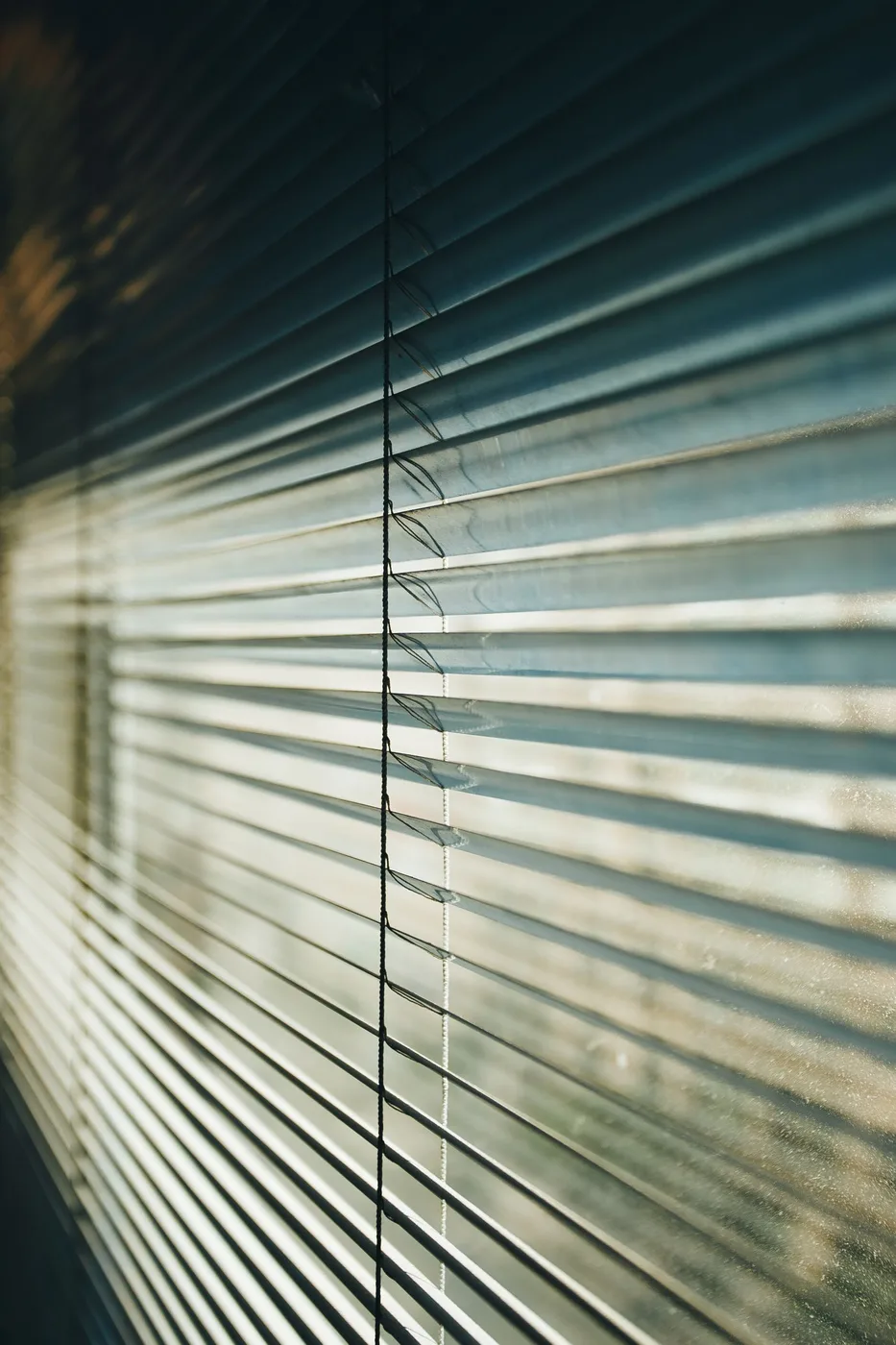
A venetian blind fails on the sun side first: the slats bow and the headrail goes brittle enough to snap on removal.
What Dubai Sun Does to Window Coverings
South and west-facing panels fade and rot along the leading edge while the rest of the curtain still looks fine.
PVC venetian slats bow and go wavy, and the headrail on the sunny side becomes brittle enough to crack on removal.
Cords and chains stiffen, fray and jam, so a blind that will not raise is usually at the end of its life.
Blackout coatings craze and shed a fine dust every time the curtain moves.
Metal poles and brackets are unaffected, which is why the hardware often outlasts several sets of fabric.
Because the fabric fails unevenly, a lot of what comes down is past donation even when part of the panel still looks sound.
Motorised, Corded and Smart Tracks
Newer Dubai apartments tend to come with motorised or wand-operated tracks rather than corded ones, in part because a looped cord near a window is a child-safety risk. That changes how the track comes out.
A motorised track has a drive motor at one end, a low-voltage cable and a plug-in transformer or a hard-wired spur. The crew unclips the track and takes the motor and transformer for electrical recycling.
A hard-wired unit is isolated at the switch first, and the wiring stays in the wall as part of the fit-out.
A smart track paired to a home hub still comes out as hardware. Unpair it from the app first so a new resident is not locked out of the channel.
Corded tracks and roman-blind cord cleats screw into the frame or wall, and those screw holes are treated like any other fixing hole.
What Can Be Donated or Recycled
Item
Condition it needs
Where it goes
Curtain panels and drapes
Clean, no rot or heavy fading, full set
Donation for reuse, or textile recycling if worn
Sheers and voiles
Rarely pass, usually thinned or yellowed
Textile recycling or general waste
Fabric blinds
Mechanism working, fabric unmarked
Donation if a standard size, otherwise disposal
Metal poles and tracks
Any condition
Scrap metal recycling
PVC and timber slats, plastic fittings
Any condition
General waste; no kerbside recycling route
Fabric and hardware leave a curtain and blind disposal on different routes.
1Unhook curtains from the gliders or slide them off the pole, and fold them into a bag rather than leaving them draped.
2Lower every blind fully, then unclip the headrail from its brackets. Keep the fixings with the blind if you want to reuse it.
3Coil the cords and tape them so nothing tangles in transit.
4Leave the brackets and the pole up if you are unsure whether they are yours; the crew can take them once that is settled.
5Stack fabric in one pile and hardware in another so the two streams are ready to load.
If the room is being redecorated, this ties into a wider job. Our guide to pre-renovation house clearance in Dubai covers how the soft furnishings come out ahead of the trades.
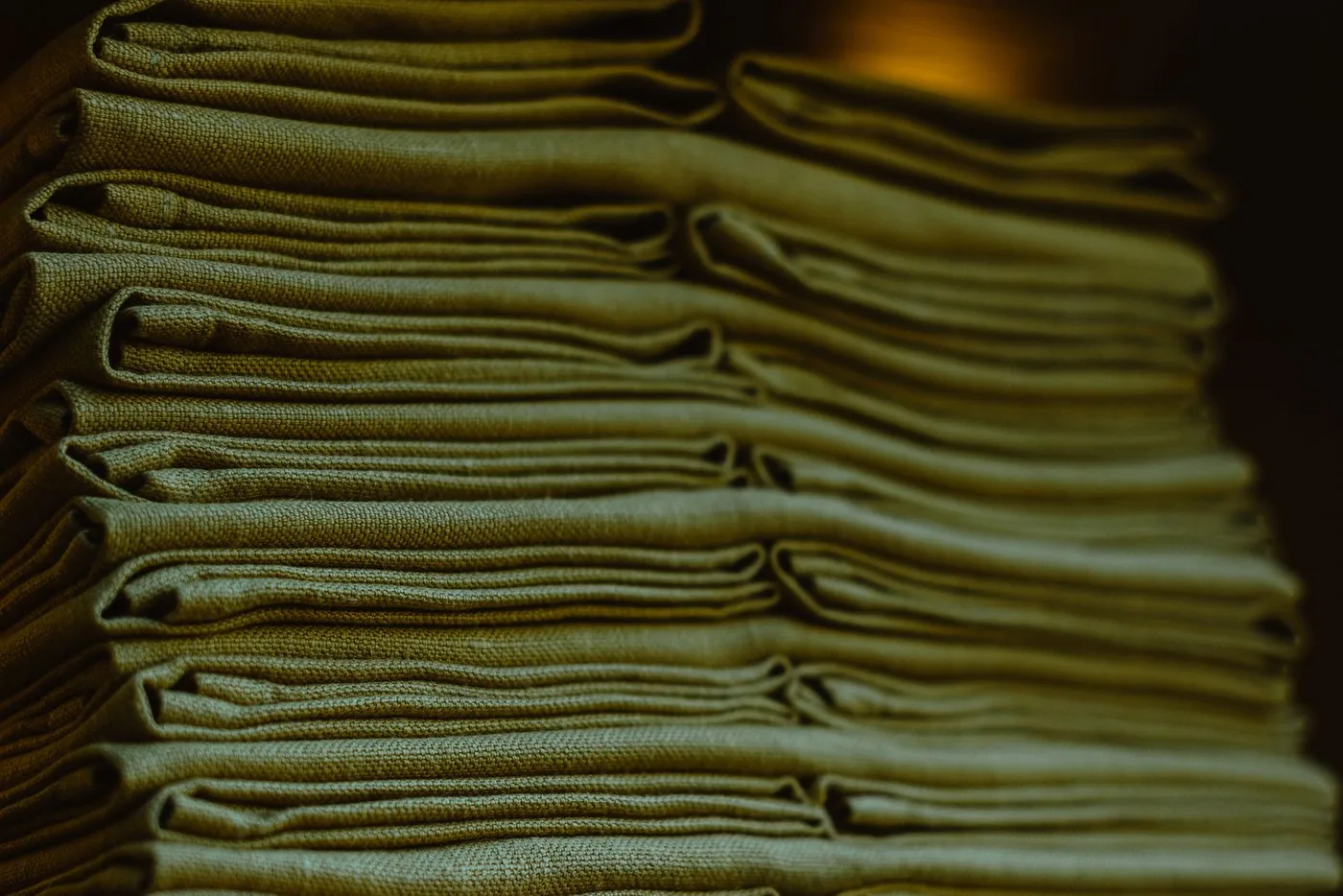
Curtain fabric is folded and bagged, then sorted: clean full sets for donation, worn panels for textile recycling.
End of Tenancy: Whose Curtains Are They?
In a Dubai rental the answer is on the check-in inventory. Curtains and blinds fitted by the landlord are listed there and must be left, usually cleaned, unless the report says otherwise. Anything you added is yours to take or dispose of.
Check the inventory and any move-in photos before you remove a single panel.
Curtains you installed yourself, and the tracks for them, come down and go with you or into the clear-out.
Landlord curtains that are stained or sun-rotted are often raised at the final inspection, and a curtain-cleaning charge is common.
If in doubt, photograph everything in place before it comes down.
Curtains and blinds rarely go on their own. They come down with the carpet, the light fittings and the furniture during a refresh or a move-out, so one visit covers the lot.
Curtain and blind disposal covers the fabric and the hardware: panels, linings, every kind of blind, and the rails, tracks and poles.
Fabric and hardware take different routes; sound fabric is donated or textile-recycled, metal poles go for scrap, PVC slats go as general waste.
Dubai sun rots and warps window coverings unevenly, so a set can be past reuse while part of it still looks fine.
In a rental, the check-in inventory decides which curtains and blinds are yours to remove.
It is usually done alongside carpet, lighting and furniture in a single room or whole-home clear-out.
Why Choose Junk Services Dubai for Curtain and Blind Disposal
As a local, fully insured team, Junk Services Dubai makes clearing your space simple — fast pickups, fair upfront pricing and responsible disposal across every Dubai community.
Fabric and Hardware Split on Site
Panels and linings are bagged for donation or textile recycling, and metal poles and tracks are set aside for scrap.
Taken Down for You
Curtains, blinds and headrails are unhooked and unclipped by the crew, so you do not have to touch a ladder.
One Visit With the Room
Booked alongside carpet, lighting and furniture during a refresh or a move-out, not as a separate trip.
Our editorial team is made up of the crews and coordinators who clear homes, villas and offices across Dubai every day. We share practical, first-hand guidance on decluttering, disposal and responsible waste removal in the UAE.
FAQ
Frequently Asked Questions
It removes curtains, sheers and linings, roller, roman, venetian and vertical blinds, and the rails, tracks, poles and brackets behind them. The crew takes everything down, separates fabric from hardware, and routes each to donation, recycling or disposal.
The crew can take them down as part of the collection. Doing the light unhooking yourself beforehand speeds the visit, but it is not required, and any blind screwed to a wall or ceiling is unclipped by the crew on the day.
Clean, unfaded full sets are offered for reuse. Panels that are worn, sun-rotted or incomplete go to textile recycling where the fabric type allows, and coated blackout linings that have started to flake are handled as general waste.
Yes. Metal poles and tracks come down and go for scrap metal recycling. Plastic tracks, gliders and finials have no recycling route and go as general waste. Tell the crew if you want the brackets left in the wall.
Yes. A motorised track is unclipped like any other, and the drive unit and transformer are separated for electrical recycling rather than going in with the general load. Point it out when you book so the crew brings the right tools.
No. Curtains and blinds listed on your check-in inventory belong to the property and stay, usually cleaned. Only the coverings and tracks you added yourself are yours to remove or dispose of.
PVC and timber slats and plastic headrails have no kerbside recycling route in Dubai, so they are handled as general waste. Only the metal parts, where a blind has them, are separated for scrap.
Final Thoughts
Window coverings are a small job that is easy to leave to the last minute, then awkward because the fabric and the fittings need splitting and half of it is dusty. Deciding early what is yours to take, and what the inventory says stays, removes most of the friction.
If the curtains are coming down as part of a bigger change, fold them into that booking. Our guide to end of tenancy junk removal in Dubai covers how the handback clear-out is timed.
Curtains and Blinds Coming Down?
Panels, linings, every kind of blind and the tracks behind them can go in one visit, with the fabric and metal sorted for recycling. WhatsApp Us photos of the windows and we will arrange collection across Dubai.
Donation takes the clothes someone else would wear. Textile recycling takes everything else, and the two are not the same stream. Here is which fabric has a recovery route in Dubai and how to prepare a load.
A practical move-out checklist for Dubai tenants: what to clear before handover, how to time it against your keys-back date, and how junk removal fits in.
A practical guide for Dubai residents on how to dispose of old furniture — donate, resell, recycle, use municipal bulky-waste collection, or book professional removal responsibly.


 Guides