A large household does not need a complicated waste system, but it does need one that matches the volume produced every day. This guide shows Dubai families how to control wet kitchen waste, separate bulky dry packaging, assign simple household roles, work within an apartment or villa collection setup, and arrange extra capacity before the bins overflow.
Count bags and note what fills them for seven normal days. Most family bin pressure comes from a few repeat sources: meal preparation, bottled drinks, deliveries, school lunches, nappies or pet care. The aim is not to weigh every item. It is to find the category that takes up space or starts to smell first.
What fills the bin
Why it becomes a problem
Best first change
Food scraps and leftovers
Moisture, odour and frequent bag changes
Use a small lidded kitchen bin and remove it daily
Drink bottles and cans
High volume despite low weight
Keep a separate dry container and crush only where accepted
Delivery cartons
Large boxes consume the main bin
Flatten immediately and keep dry
Nappies and hygiene waste
Needs secure containment
Use smaller tied bags inside the general-waste bag
Party or holiday waste
Short surge exceeds normal capacity
Plan an extra collection before the event
Fix the category that creates the first capacity or hygiene problem instead of adding bins without a plan.
A one-week check also shows whether the problem is excess waste or poor use of space. The guide to reducing household waste in Dubai covers shopping and refill habits; this guide focuses on managing the volume that still reaches the home.
Use a Three-Part Family Waste System
Three destinations cover most daily household waste: wet general waste, clean dry recycling and items that need a separate route. More labels can help, but too many containers often leave family members unsure where anything goes.
Wet general waste: Food scraps, used tissues, nappies and anything soiled. Keep the kitchen container small enough that it is emptied every day.
Clean dry recycling: Dry paper, cardboard, cans and accepted plastic containers. Rinse quickly, let them drain and keep the stream free of food.
Separate-route items: Batteries, lamps, paint, electronics and bulky goods. Store each safely and use the correct collection route rather than the family bin.
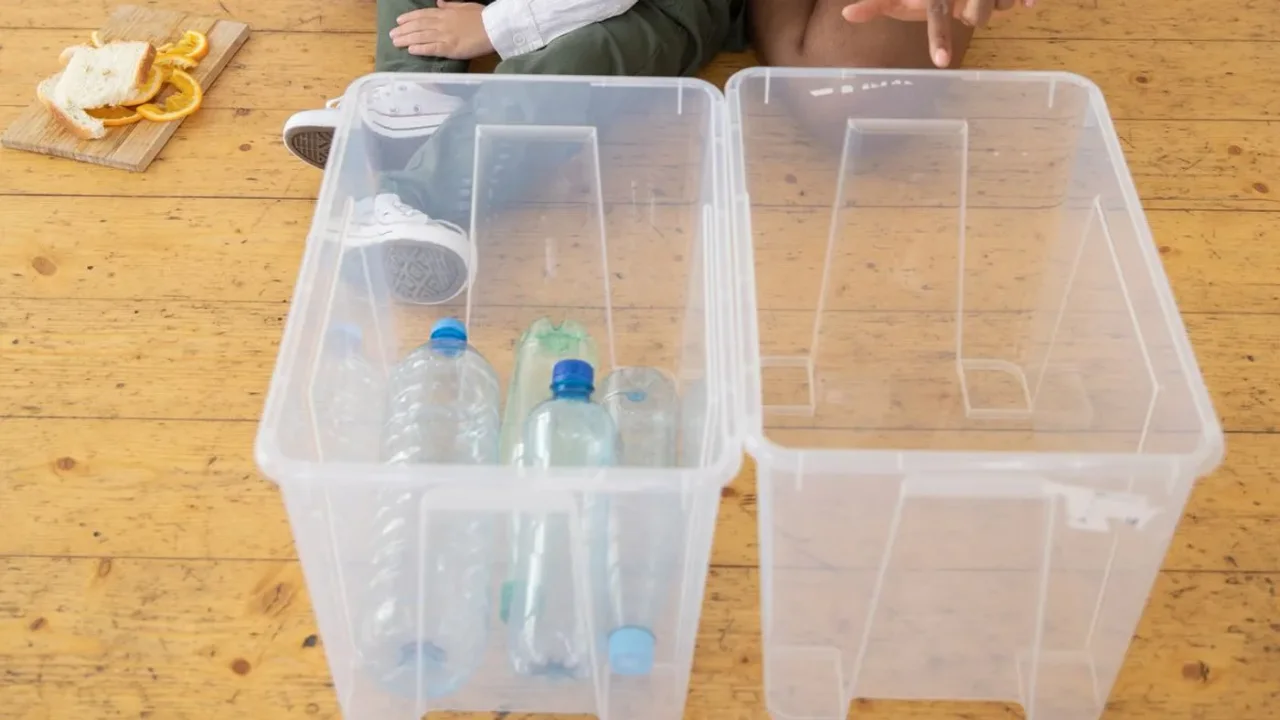
A simple dry-recycling station gives bottles and cartons somewhere to go before they crowd the general-waste bin.
Put each container where the waste appears. A dry-recycling tub near the kitchen or utility door works better than one hidden in a remote store room. The full guide to waste segregation at home explains how to keep the dry stream clean in Dubai's heat.
Set a Routine the Whole Household Can Follow
The best family waste routine uses fixed moments rather than reminders shouted when a bin is full. Tie the kitchen bag after the evening meal, flatten delivery boxes when parcels are opened and move dry recycling to the building or villa collection point on set days.
1Give every bin one clear purpose and use labels that younger family members can understand.
2Keep spare liners beside the bin so replacing a bag is part of emptying it.
3Assign one adult to check food waste each evening and another household member to flatten dry packaging.
4Empty small bedroom and bathroom bins into the main bag on the same two days each week.
5Check the main bin before weekends and gatherings rather than after the extra waste appears.
6Keep a note of missed or unusually heavy weeks so the routine can be adjusted instead of improvised.
Children can sort clean bottles, cans and cardboard, but adults should handle broken glass, batteries, chemicals and heavy bags. A family system should reduce decisions, not pass unsafe items to whoever happens to be nearest.
Apartment and Villa Families Need Different Setups
Apartment households are limited by the chute, bin room and the space available inside the home. Do not force large bags or cardboard through a chute. Flatten dry packaging, use the service route for larger bags and ask building management which streams the bin room accepts. Families in JVC or Dubai Marina should treat the building's setup as the final instruction for that address.
Villa households have more storage but should not use that space to postpone disposal. Keep wheelie bins in shade where possible, close every lid and separate garden cuttings or bulky items from everyday bags. In communities such as Arabian Ranches, check the collection arrangement for the specific cluster rather than assuming every street works the same way.
Plan for Weeks That Produce More Waste
Birthdays, visiting relatives, school holidays, Ramadan gatherings, new furniture deliveries and move-outs can double the usual packaging and food waste for a short period. The mistake is waiting for a full bin before deciding where the extra volume will go.
Clear routine waste before the high-volume day so every container starts empty.
Use reusable servingware and water dispensers where practical to reduce single-use packaging.
Flatten cartons and keep them dry from the moment deliveries arrive.
Cool and contain food waste promptly, then remove it on the next normal round.
Book a separate pickup for bulky packaging, old furniture or a move-related clear-out.
For a gathering with a known end time, the practical sequence is food first, then recyclables, then bulky material. The guide to event waste cleanup in Dubai covers the larger version of that job.
When the Normal Collection Is Not Enough
Extra capacity is needed when tied bags no longer fit with the lid closed, dry packaging fills a room, or bulky household items are being placed beside the normal waste. Do not leave overflow in a corridor, beside a chute or outside a villa boundary. Keep it contained on the property and arrange a separate collection.
A booked garbage removal service suits bagged overflow, while junk removal is the right route when the load includes furniture, appliances or the contents of a household clear-out. Send photos of the whole volume so the crew and vehicle match the actual job.
Key Takeaways
Track one normal week to find which waste stream fills the household bins first.
Use three clear destinations: wet general waste, clean dry recycling and separate-route items.
Empty food waste daily and flatten boxes as soon as deliveries are opened.
Build the routine around fixed times and simple household roles.
Follow the actual bin-room or community setup for your Dubai address.
Arrange extra capacity before gatherings, moves or delivery-heavy weeks create overflow.
Why Choose Junk Service in Dubai
As a local, fully insured team, Junk Services Dubai makes clearing your space simple — fast pickups, fair upfront pricing and responsible disposal across every Dubai community.
Same-Day Availability
Book today and, where crews are free, we clear it today — with no rush surcharge.
Fair, Upfront Pricing
A flat price agreed before we arrive, based on volume, items and access. No surprises.
Insured, Uniformed Crews
Background-checked teams who do all the lifting and protect your floors, lifts and walls.
Responsible Disposal
We sort for reuse, donation and recycling in line with Dubai Municipality guidance.
Our editorial team is made up of the crews and coordinators who clear homes, villas and offices across Dubai every day. We share practical, first-hand guidance on decluttering, disposal and responsible waste removal in the UAE.
FAQ
Frequently Asked Questions
Most families can start with three destinations rather than a fixed number of bins: wet general waste, clean dry recycling and a safe holding place for separate-route items. Container size should follow one week of real household volume and the building or community collection setup.
Use a small lidded container, drain wet food before bagging, tie the bag securely and remove it every day. A smaller bin emptied often is easier to keep clean than a large bin left until it is full.
Yes. Children can sort clean bottles, cans and cardboard into a simple dry-recycling container. Adults should handle glass, batteries, chemicals, electronics and any bag that is heavy or leaking.
Flatten boxes as soon as they are opened and keep them dry until the accepted recycling or collection day. Large cartons should not be forced into an apartment chute or used to block a shared bin room.
Empty routine bins first, set out separate containers for food waste and dry packaging, and arrange an extra pickup if the guest count will exceed normal capacity. Planning before the event prevents bags being left beside full bins afterwards.
Book private removal when normal bins cannot close, overflow is accumulating on the property, or the load contains bulky furniture and appliances. Share photos of the full volume so the right vehicle and crew are sent.
Final Thoughts
A large household stays ahead of waste through rhythm, not constant sorting. Keep wet waste moving daily, give dry packaging its own place and plan extra capacity before the exceptional week. That leaves the family's normal bins usable and the home free of overflow.
Schedule a Pickup for Household Overflow
Contact Us with photos of the tied bags, bulky items and access point. We will confirm whether garbage removal or a wider junk collection fits the load and arrange a suitable pickup.
A household guide to sorting waste in Dubai: the four streams worth separating, where the containers physically go in an apartment and a villa, and the rinse habit the summer heat makes essential.
Actionable guide on how to reduce household waste in Dubai. Practical habits for packaging, grocery audits, food waste, smart buying, and domestic sorting.
Nothing a party produces is difficult to dispose of. The problem is that fifty guests generate more in one evening than a building's waste point can absorb. How to plan the clear-up before the event.

 Guides