Balcony Junk Removal Dubai: Everything Leaves Through the Living Room
The Junk Services Dubai Team 6 min read
A balcony is the only part of a Dubai apartment where something can be put outside, which is why it ends up holding whatever will not fit anywhere else. Clearing one is less about the volume than the route, because every item has to come back in through the living space to leave. This guide covers what usually comes off a balcony here, what the climate has already done to it, and what your building will expect before a crew arrives.
Balcony junk removal clears everything standing on an apartment balcony or terrace: furniture, storage boxes, dead plants and their pots, drying racks, bicycles and whatever else has migrated outside over the years. A crew takes it in one visit and sorts it afterwards.
It is treated as its own job rather than as part of a room clearance because the constraints are different. The space is narrow, shaded on one side and baking on the other, and it has exactly one door.
Everything Comes Back Through the Apartment
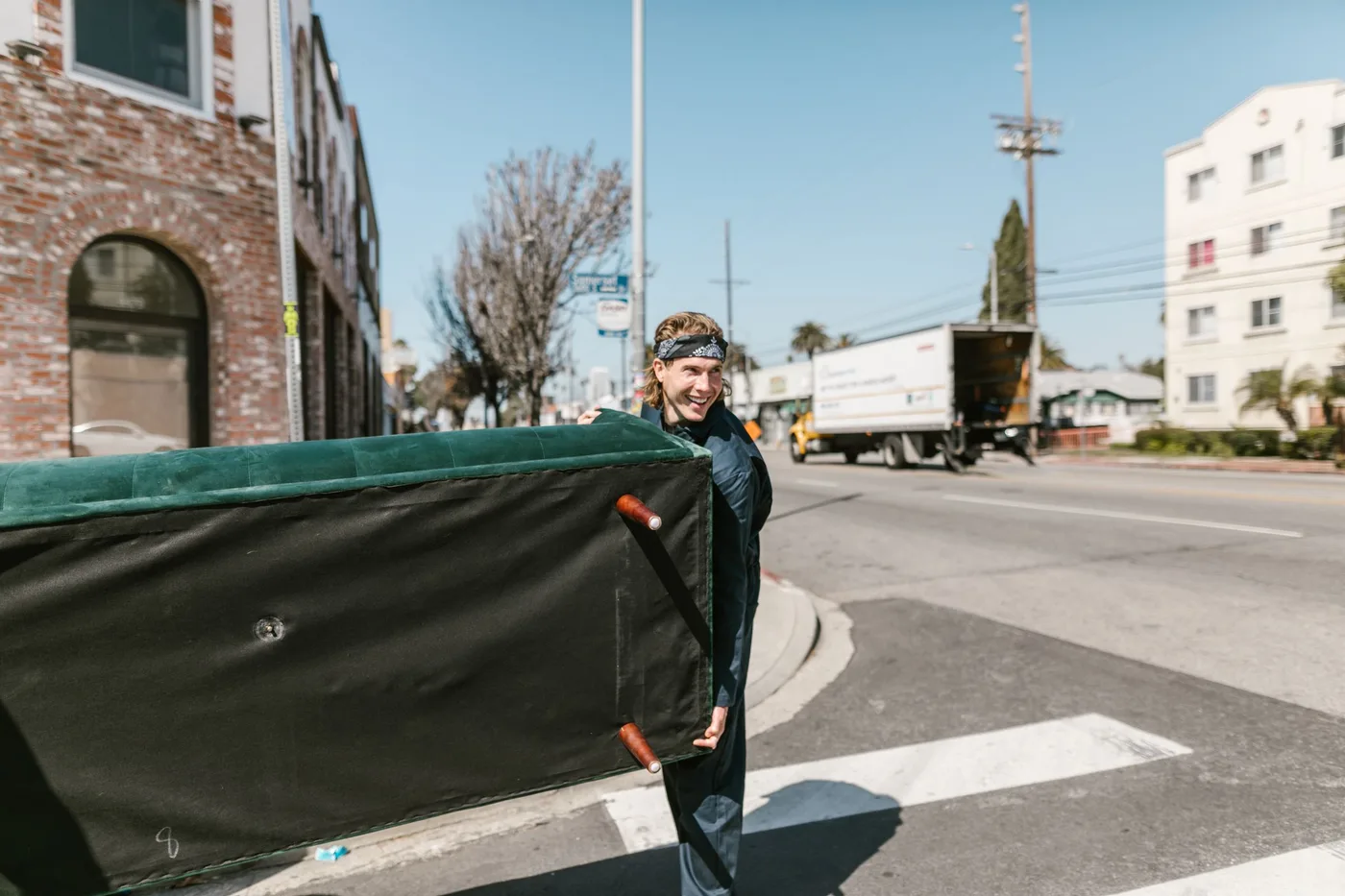
This is the mechanic that shapes the whole job. A balcony has no external access, so every item leaving it travels back through the living space, along the corridor, into the lift and down.
Two things follow. The first is protection: sun-perished plastic sheds fragments, corroded metal marks tiles and pots carry damp soil, so the route indoors is covered before anything moves. The second is sequencing, because a full balcony can only be emptied in the order that things can be lifted past each other through one doorway.
Nothing is lowered over the railing. Not a plant pot, not a bag, not a piece of furniture. It is unsafe at any height, and in a Dubai tower it is the quickest way to have a crew stopped by building security for the rest of the day.
What a Dubai Balcony Does to the Things Left on It
A balcony here is not sheltered outdoor space. It takes direct sun for part of the day, humidity year round and salt in the air anywhere near the coast, and that combination breaks things down faster than most people expect.
What is on the balcony
What the climate does to it
Where it usually ends up
Plastic chairs and tables
Sun turns them brittle, so they crack rather than bend
Disposal, since brittle plastic has no reuse route
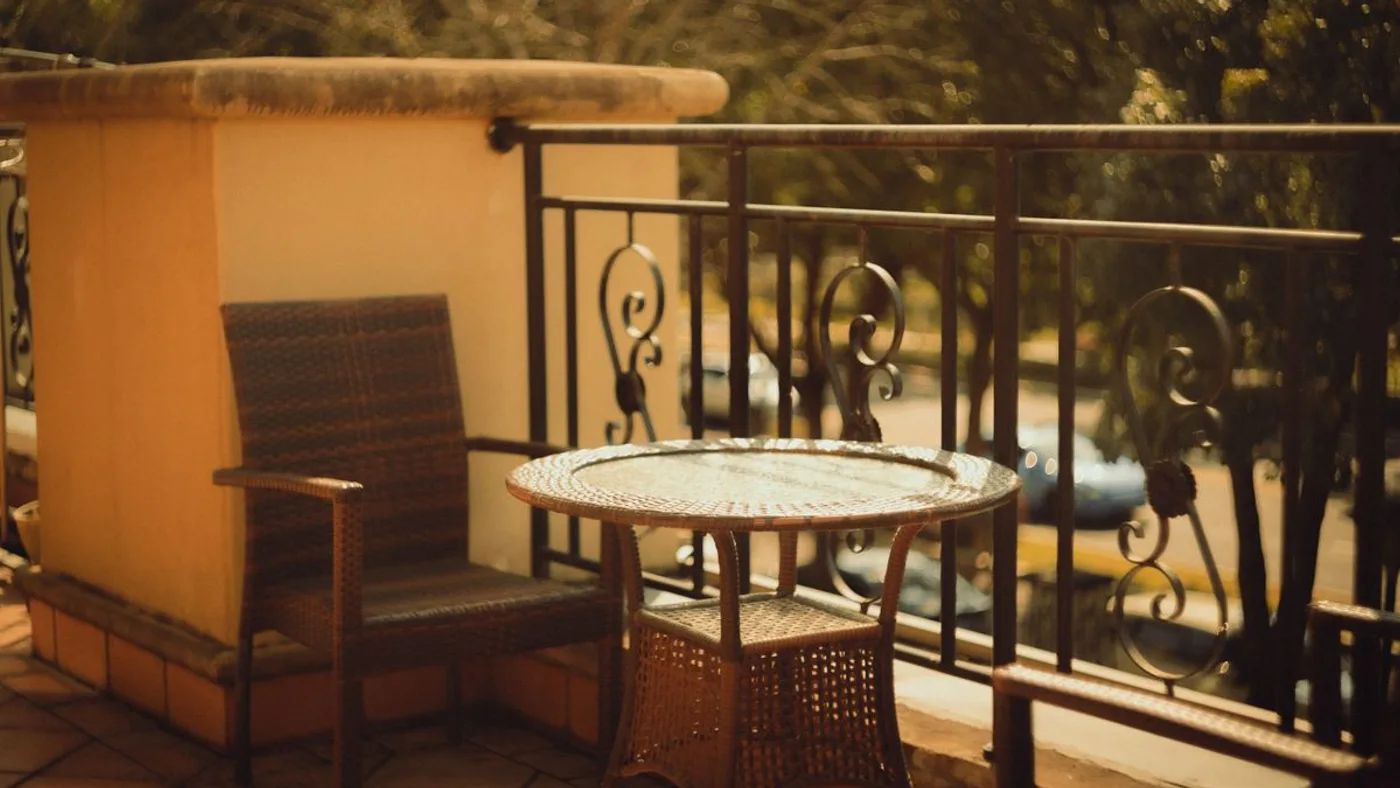
Rattan and woven furniture
Fibres dry out, split and shed
Disposal in most cases, reuse where it stayed covered
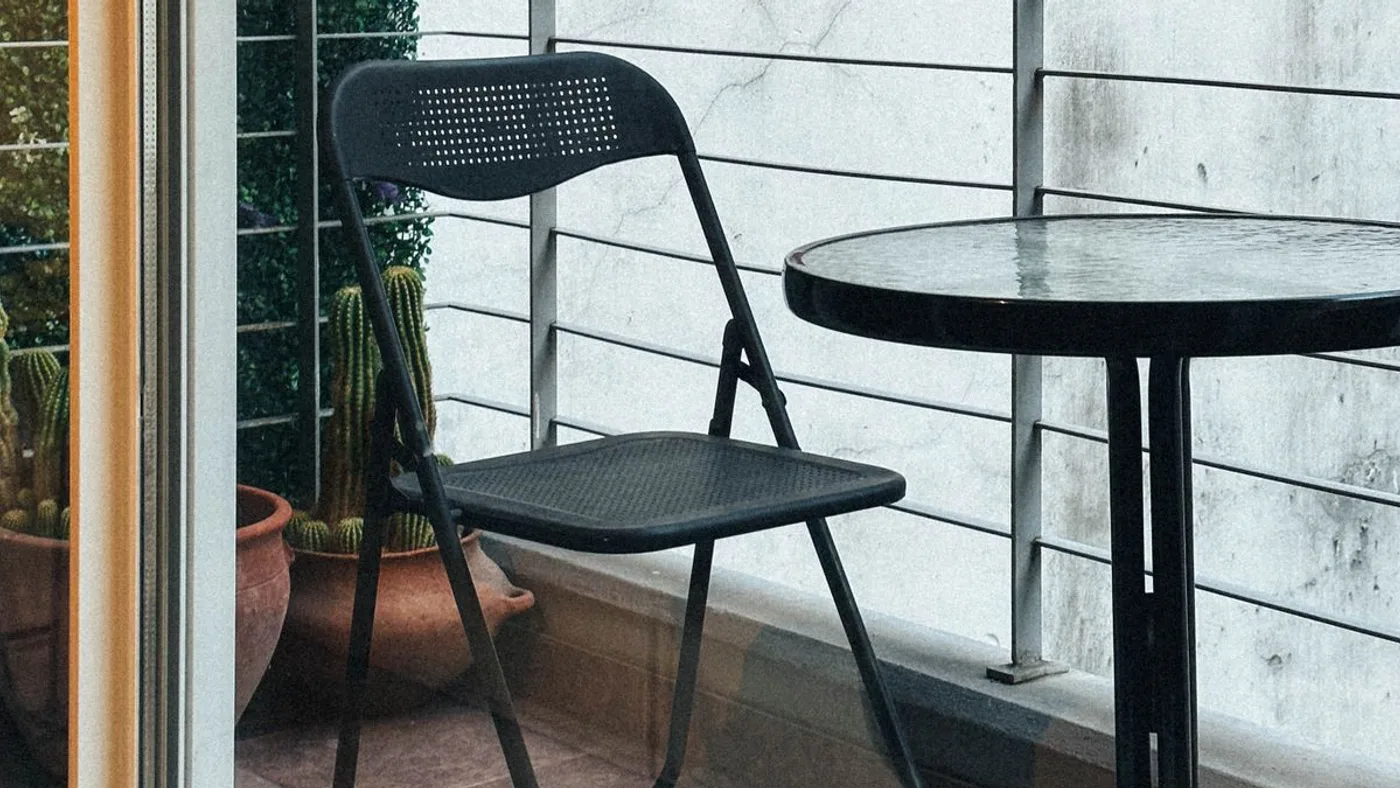
Metal frames and folding sets
Corrosion at the joints and fixings, faster near the coast
Metal recovery
Cushions, mats and fabric
Damp sits in the filling and mould follows
Disposal, kept apart from the rest of the load
Terracotta pots and soil
Pots crack and soil compacts and holds water
Separated out, as soil and broken pots travel differently
Boxes stored outside
Cardboard absorbs humidity and collapses
Recycling where dry, disposal where not
Anything left uncovered through a Dubai summer usually comes off the balcony as disposal rather than reuse.
Woven and rattan pieces split and shed once the fibres dry out, which happens within a season or two uncovered.
Furniture is the one category worth a proper look before you write it off. Covered or shaded pieces sometimes survive well enough to pass on, and our guide to outdoor furniture removal covers how garden and patio pieces are assessed, dismantled and routed.
What Usually Comes Off a Balcony
Furniture and seating: Chairs, small tables, loungers and folding sets, most of which have spent a few summers uncovered. These are the bulkiest items and the ones most likely to need dismantling to clear the doorway.
Plants, pots and soil: Dead or overgrown plants, cracked terracotta, and bags of compost and gravel. Soil is heavy out of all proportion to its size and is loaded separately from the dry material.
Overflow storage: Suitcases, boxes, tools, sports gear and drying racks moved outside when the flat ran out of room. This is the group most likely to still hold something worth keeping.
Appliances and awkward items: Small appliances, bicycles, aquariums and the occasional mattress propped against a wall. Anything holding fuel, paint or chemicals is handled apart from the rest.
That last point is worth stating plainly. Paint tins, solvents, garden chemicals and batteries stored outside do not go in with a general load, and our guide to hazardous household waste sets out what falls into that group.
What Your Building Will Expect
A balcony clearance touches the building more than a job inside the flat does, because the balcony is visible from outside and the route out runs through shared space.
A service lift booking, since the load leaves through the same lift every other resident uses.
Protection of shared corridors and the lift car, which most towers require for any furniture move.
Agreement on timing, as many buildings restrict removals to weekday working hours.
Attention to wind, which on a high floor will move anything light the moment it is lifted.
Nothing staged in the corridor, because a pile outside your door gets flagged quickly.
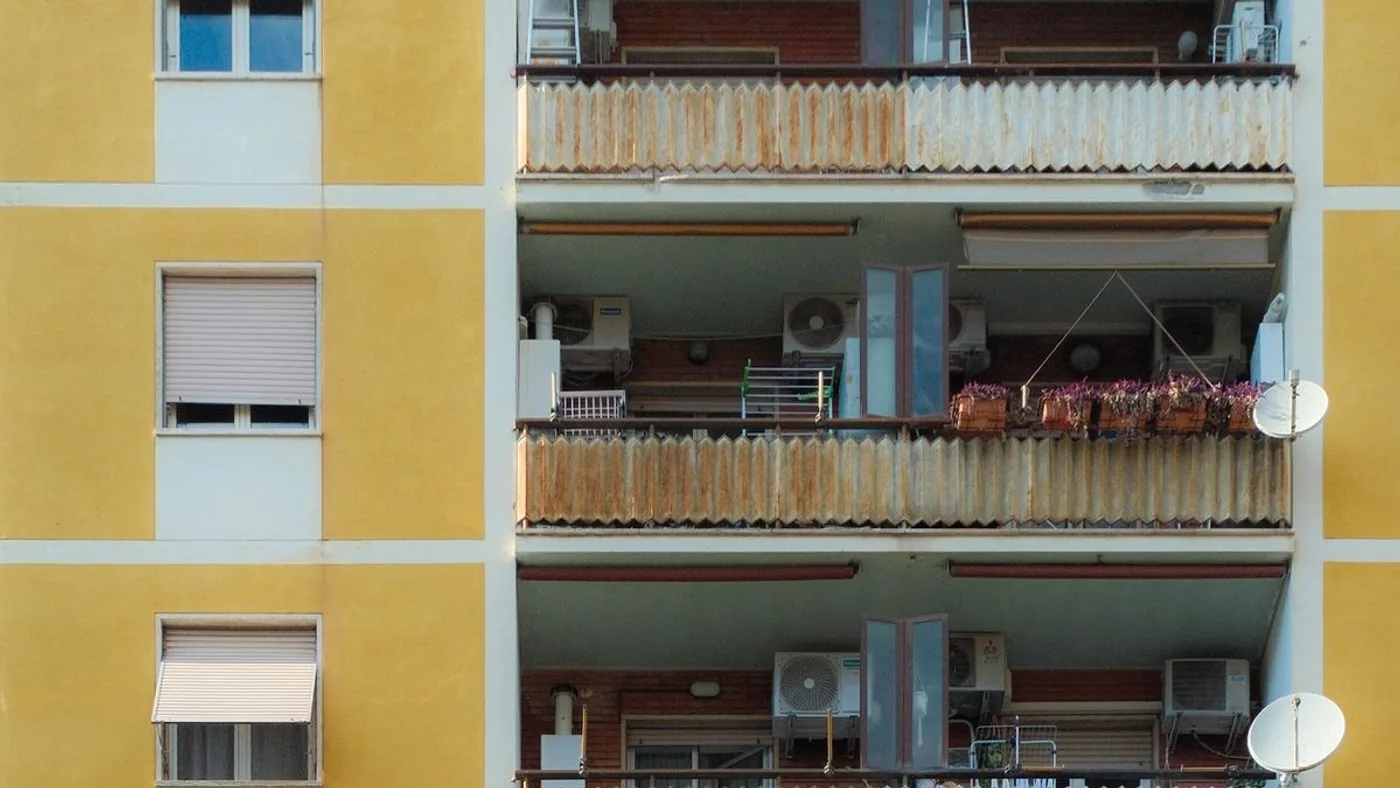
Balconies are visible from outside, which is why stored items on them tend to attract a building notice.
Buildings differ on what may be kept on a balcony at all, and a notice about visible storage is a common reason residents book a clearance in the first place. Your management office is the only reliable source for your own building's rules, so it is worth a call before you plan the work.
What Moves the Price
Volume comes first, and it is routinely understated because a balcony reads as a small space. A wall of stacked pots and a folded lounger set take up more of a vehicle than the floor area suggests.
The carry comes second: the distance from the balcony door to the lift, then from the lift to wherever the vehicle can park. In a tower with a long corridor and a distant loading bay, that is most of the labour on the job.
Dismantling comes third, wherever a lounger or table will not clear the balcony door in one piece. Our guide to apartment junk removal covers how building access shapes pricing across the whole flat.
Getting the Balcony Ready for Collection
1Photograph the balcony from inside the doorway, so the volume and the door width are both visible.
2Empty pots of soil where you can, since wet soil is heavy and slows the whole carry.
3Bring anything loose and light indoors the day before, because wind on a high floor will move it.
4Clear a path from the balcony door to the front door, as that is the route everything travels.
5Book the service lift, allowing a window rather than a single slot.
6Set aside anything holding paint, fuel or chemicals and tell the crew where it is.
7Decide in advance what is being kept, because a half-cleared balcony takes longer than a full one.
That last step catches people out at the end of a tenancy, when a balcony left half sorted still reads as uncleared at inspection. Our guide to getting your security deposit back covers what a handover inspection looks for.
Key Takeaways
Every item on a balcony leaves through the apartment, so the indoor route is protected and the order of removal is planned around one doorway.
Nothing is lowered over the railing at any height, and trying it is the fastest way to have a job stopped by building security.
Sun, humidity and salt air mean most uncovered balcony furniture comes off as disposal rather than reuse.
Balcony volume is routinely understated, because a small floor area can still fill a large part of a vehicle.
Book the service lift and check your building's rules on visible balcony storage before the crew arrives.
Why Choose Junk Service in Dubai
As a local, fully insured team, Junk Services Dubai makes clearing your space simple — fast pickups, fair upfront pricing and responsible disposal across every Dubai community.
Same-Day Availability
Book today and, where crews are free, we clear it today — with no rush surcharge.
Fair, Upfront Pricing
A flat price agreed before we arrive, based on volume, items and access. No surprises.
Insured, Uniformed Crews
Background-checked teams who do all the lifting and protect your floors, lifts and walls.
Responsible Disposal
We sort for reuse, donation and recycling in line with Dubai Municipality guidance.
Our editorial team is made up of the crews and coordinators who clear homes, villas and offices across Dubai every day. We share practical, first-hand guidance on decluttering, disposal and responsible waste removal in the UAE.
FAQ
Frequently Asked Questions
Yes, and they are loaded separately from the dry material. Soil is heavy for its size and holds water after rain or watering, so emptying pots beforehand where you can makes the carry noticeably faster.
No. Nothing is lowered over a balcony railing at any height, however awkward the carry looks. Every item travels back through the apartment and down in the lift.
Yes, the route from the balcony door to the lift is covered before anything moves. Perished plastic, corroded metal and damp soil are the three things most likely to mark a floor, and all three are common on a balcony.
Most uncovered pieces are disposal, because sun makes plastic brittle and splits woven fibres. Items that stayed shaded or covered sometimes pass on, and they are assessed on the day rather than written off in advance.
More than people expect. A balcony reads as a small space, but stacked pots, a folded lounger set and a few storage boxes can take up a large part of a small vehicle, so photographs give a better basis than floor area.
Where building access can be arranged in advance, yes. You would need to leave access with your management office or a keyholder and confirm beforehand which items are going, since nothing is decided on your behalf.
No. Condenser units mounted on a balcony are part of the building's fitted services rather than loose items, and they need a qualified engineer to disconnect. A crew clears everything standing on the balcony around them.
Final Thoughts
The balcony is the one space in an apartment where the climate does the deciding. What goes out there in good condition rarely comes back in that condition, and the longer a clearance waits the smaller the keep pile gets.
Photograph it from the doorway, book the lift, and clear the route through the flat first. Our junk removal crews handle the carry, the floor protection and the sorting in one visit.
Book a Pickup for Your Balcony Clearance
Send photographs taken from inside the balcony doorway, along with your area and floor number. We will confirm the crew size, whether anything needs dismantling and a flat price before anyone is dispatched.
WhatsApp Us the photographs, Book a Pickup for a slot inside your building's approved hours, or Arrange Collection alongside a wider apartment clearance if more than the balcony is going.
How apartment junk removal works in Dubai's high-rise towers: service lift booking, building rules, loading bay access and how pricing compares to a villa.
Sun-bleached rattan, rusted frames and cracked sun loungers. Here's how outdoor furniture removal works in Dubai, why the climate shortens its life, and what happens to it after collection.
Bulky waste is anything too big for your building's bins or chute. Here's what counts in Dubai, why it needs its own collection, and how a pickup is arranged.

 Guides