Circular Economy in the UAE: A Practical Household Guide
The Junk Services Dubai Team 5 min read
A circular economy keeps products and materials useful for longer instead of treating every purchase as a short trip from shop to bin. In the UAE, that idea becomes practical through durable buying, maintenance, rental, sharing, resale, donation, refurbishment and cleaner material separation. This guide focuses on decisions households and small businesses can make without claiming that every unwanted item has a guaranteed circular destination.
A linear pattern is simple: extract resources, manufacture a product, sell it, use it briefly and discard it. A circular pattern asks how the product can avoid becoming waste. That may mean using fewer materials at the design stage, keeping the item maintained, moving it to a second user, replacing one component, or recovering clean material when the object can no longer function.
Decision
Value kept
Household example
Prevent
All materials and energy not used
Borrow a tool needed for one afternoon
Maintain or repair
The existing product and most components
Replace a worn furniture fitting before the frame fails
Reuse or resell
The whole working item
Pass on a complete desk during a move
Refurbish
The core product plus selected new parts
Refresh a cabinet with safe cosmetic work
Recycle
Accepted material rather than the whole product
Separate clean metal when reuse is no longer realistic
Dispose
No circular value retained
Manage contaminated or unusable residue responsibly
The earlier a decision sits in the cycle, the more of the original product's value it usually preserves.
Why the UAE Context Changes the Practical Details
UAE households often manage apartment living, frequent moves, furnished rentals and limited storage. Those conditions can help circulation when usable goods move quickly to a new owner, but they can also create sudden clearance loads at the end of a tenancy. The best circular decision usually happens before the move-out week, while condition, accessories and proof of working order are still clear.
Heat and storage matter too. A good item left on a balcony, in a humid utility space or inside an unconditioned store can deteriorate before anyone assesses it. Adhesives release, fabrics develop odour, batteries degrade and paperwork disappears. Protected storage preserves reuse value; delay often converts a usable item into mixed waste.
List unwanted furniture and appliances early rather than after access deadlines begin.
Keep manuals, chargers, shelves, fixings and remote controls with the product.
Store goods indoors and dry while a reuse decision is pending.
Use realistic descriptions of condition so the next owner can decide quickly.
Separate failed batteries and electronics instead of hiding them in furniture or drawers.
Keep Furniture and Appliances at Their Highest Useful Value
A table is worth more as a safe working table than as timber and metal fragments. An appliance is worth more as a functioning appliance than as separated components. Start with cleaning, testing and minor maintenance. If it is complete and safe, consider continued use, transfer within the family, resale or donation before material recovery.
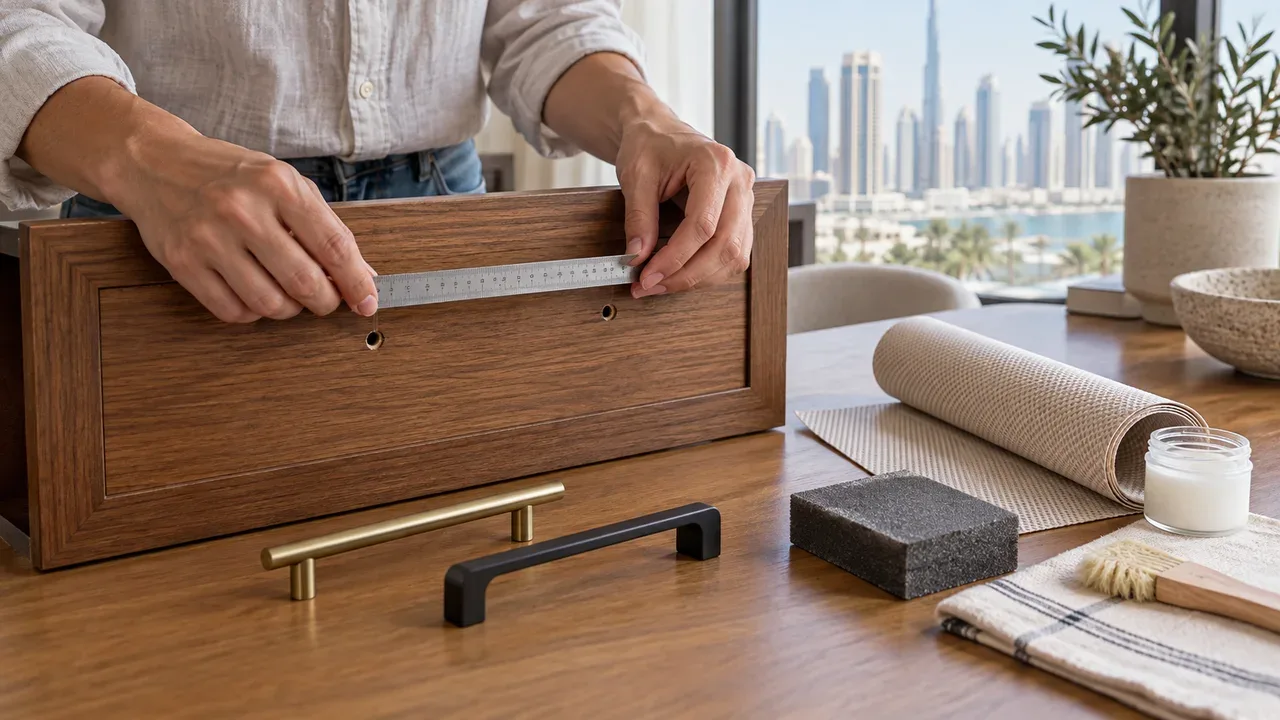
Small, safe maintenance and cosmetic changes can extend furniture life without breaking the item down into raw materials.
Not every object should be passed on. An unstable chair, badly swollen cabinet, pest-affected upholstery or appliance with an unresolved electrical fault needs an honest assessment. Circularity is not moving a problem to another home. Our donation-versus-recycling guide uses condition, completeness, safety and demand to choose between those routes.
Reduce Packaging Before Depending on Recycling
Recycling is part of a circular economy, but it sits below prevention and reuse because collection and processing still consume resources and lose some material. Households can reduce packaging through refillable water systems, durable shopping bags, returnable containers where available, larger sensible pack sizes and repeated use of sturdy storage containers.
For unavoidable packaging, keep accepted paper, metal, glass and plastic clean and dry. Do not assume every symbol guarantees local acceptance. Building and collector arrangements vary, so confirm the real stream and avoid wishcycling. Clean separation protects the value that remains in the material.
Apply Circular Thinking in a Small Business
A small office or shop can begin with purchasing and asset records rather than a public sustainability claim. Buy equipment with replaceable consumables, record warranties, maintain furniture, redeploy spare items between teams and set an approval step before anything enters a clearance pile. Supplier take-back or refill arrangements should be confirmed in writing instead of assumed.
Procurement: Choose durable, maintainable items and avoid unnecessary single-use supplies.
Use: Assign ownership for maintenance, parts, manuals and battery care.
Redeployment: Offer sound furniture and equipment internally before buying duplicates.
Exit: Record reuse, supplier return, material separation and residual disposal as different outcomes.
Measure Decisions, Not Just the Recycling Bin
A full recycling bin is not the strongest measure of circular progress. It may only show that a household bought more packaging. Better measures include avoided purchases, repaired items, months of extended use, goods transferred to another user, clean material separated and the size of the final residual load.
1Choose one category, such as bottled drinks, delivery packaging or small furniture.
2Record what entered the home and what route it took for four weeks.
3Identify the largest avoidable purchase or the item losing value through poor storage.
4Change one buying, maintenance or reuse habit for the next cycle.
5Compare the residual load, not only the quantity placed in recycling.
Know What a Removal Service Can Confirm
A removal crew can protect reusable items during handling, keep agreed materials separate and explain the routes available for the load. It cannot make an unsafe item suitable for donation or guarantee that a contaminated mixed product will become new material. Honest circular service starts with photographs, condition notes and separate loading instructions.
When a home or office has more material than its normal system can manage, professional waste removal in Dubai can provide the lifting and transport. The household or business still improves the result by acting early, preserving complete items and identifying special-route material before collection day.
Key Takeaways
Circular economy decisions keep products and materials useful instead of sending them directly from purchase to disposal.
Prevention, maintenance and whole-item reuse usually preserve more value than recycling the material later.
Early decisions matter in the UAE because moves, limited storage and heat can quickly reduce an item's reuse value.
A circular outcome must be realistic: unsafe, contaminated or incomplete goods should not be passed to another person as a problem.
Measure avoided purchases, repairs, extended use and residual waste, not only the volume placed in a recycling bin.
Why Choose Junk Service in Dubai
As a local, fully insured team, Junk Services Dubai makes clearing your space simple — fast pickups, fair upfront pricing and responsible disposal across every Dubai community.
Same-Day Availability
Book today and, where crews are free, we clear it today — with no rush surcharge.
Fair, Upfront Pricing
A flat price agreed before we arrive, based on volume, items and access. No surprises.
Insured, Uniformed Crews
Background-checked teams who do all the lifting and protect your floors, lifts and walls.
Responsible Disposal
We sort for reuse, donation and recycling in line with Dubai Municipality guidance.
Our editorial team is made up of the crews and coordinators who clear homes, villas and offices across Dubai every day. We share practical, first-hand guidance on decluttering, disposal and responsible waste removal in the UAE.
FAQ
Frequently Asked Questions
It is a system that prevents waste and keeps products or materials useful through maintenance, sharing, reuse, repair, refurbishment and recycling before final disposal.
No. Recycling is one part of the system. Prevention, durable use, repair and whole-item reuse usually preserve more of a product's original value.
Begin with one category, buy only what is needed, maintain it, keep parts together, pass usable goods on early and separate accepted materials cleanly.
Only when the item is safe, complete, clean and realistically useful to another person. Donation should not transfer repair costs, pests or unsafe faults.
Heat, humidity and exposed storage can damage batteries, adhesives, fabric and paperwork. Indoor dry storage preserves an item's condition while its next route is arranged.
Track avoided purchases, repaired assets, redeployed equipment, supplier returns, clean separated materials and the amount of genuine residual waste.
No responsible provider should guarantee that without knowing the items, condition, contamination and receiving routes. Ask what can remain separate and what can be documented.
Final Thoughts
Circularity is less about a perfect zero-waste claim and more about making the next useful decision early. Buy carefully, maintain what you own, preserve working items, separate recoverable material and describe the residue honestly when its useful life is over.
Arrange Collection for a Sorted Circular Clear-Out
Send photographs showing reusable items, separated materials and genuine residue. Speak With Our Team about the access plan and available handling routes, then Schedule a Pickup for the confirmed load.
Donation keeps a useful item in service, while recycling recovers material from one that has reached the end of its life. Use this condition-first guide to choose well.
Actionable guide on how to reduce household waste in Dubai. Practical habits for packaging, grocery audits, food waste, smart buying, and domestic sorting.
Give sound furniture a useful second life with small, reversible updates. These Dubai-friendly ideas focus on condition, heat exposure, renter needs and honest limits.

 Guides