 Guides
 6 min read
What Is Bulky Waste? Identification, Categories & Disposal
What is bulky waste: definitions, weight and size criteria, rejected items, civic limitations, and how to dispose of oversized household items in Dubai.
Read Article

Waste services use familiar words in surprisingly different ways. A resident may call an old sofa rubbish, a collector may call it bulky waste, and a building manager may describe the same job as a clearance. Those labels affect the container, vehicle, handling and destination. This plain-English glossary explains the terms Dubai households see most often and shows which details matter when arranging a pickup.
Waste is the broadest word. It covers any material or item a household or business no longer wants, including food scraps, packaging, furniture and broken equipment. Rubbish and garbage are everyday alternatives, although people often use garbage for routine bagged household refuse. Junk usually suggests unwanted possessions or mixed non-routine items rather than the contents of a kitchen bin.
| Term | Useful working meaning | Typical Dubai example |
|---|---|---|
| Waste | The complete umbrella category | Food, packaging, furniture, garden cuttings and broken goods |
| Rubbish or garbage | Routine household material, usually bagged | Kitchen refuse placed in the building's normal system |
| Junk | Unwanted objects, often mixed and non-routine | Boxes, a small table, old décor and a broken fan |
| Clearance | Removal of many items from a defined space | Emptying a bedroom, office or whole apartment |
None of these labels tells a crew enough on its own. Photographs, quantities, dimensions and condition are more useful than debating whether a load is junk or rubbish. The label starts the conversation; the inventory defines the job.
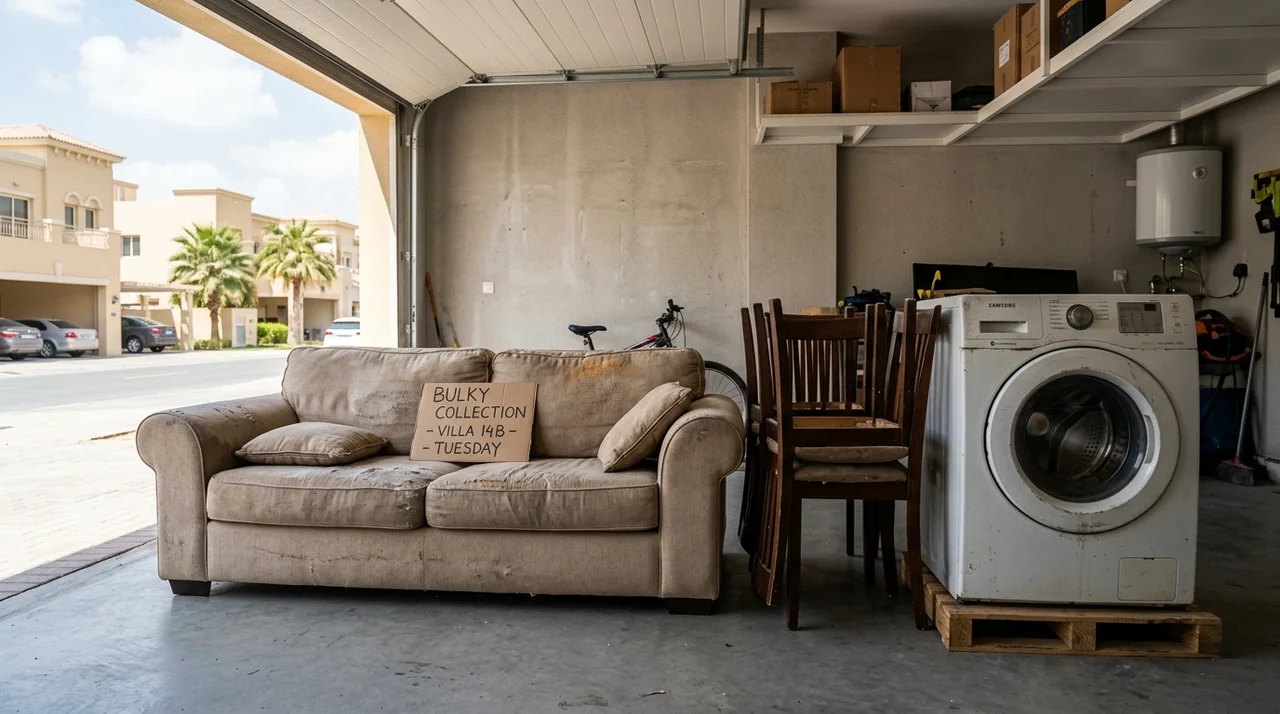
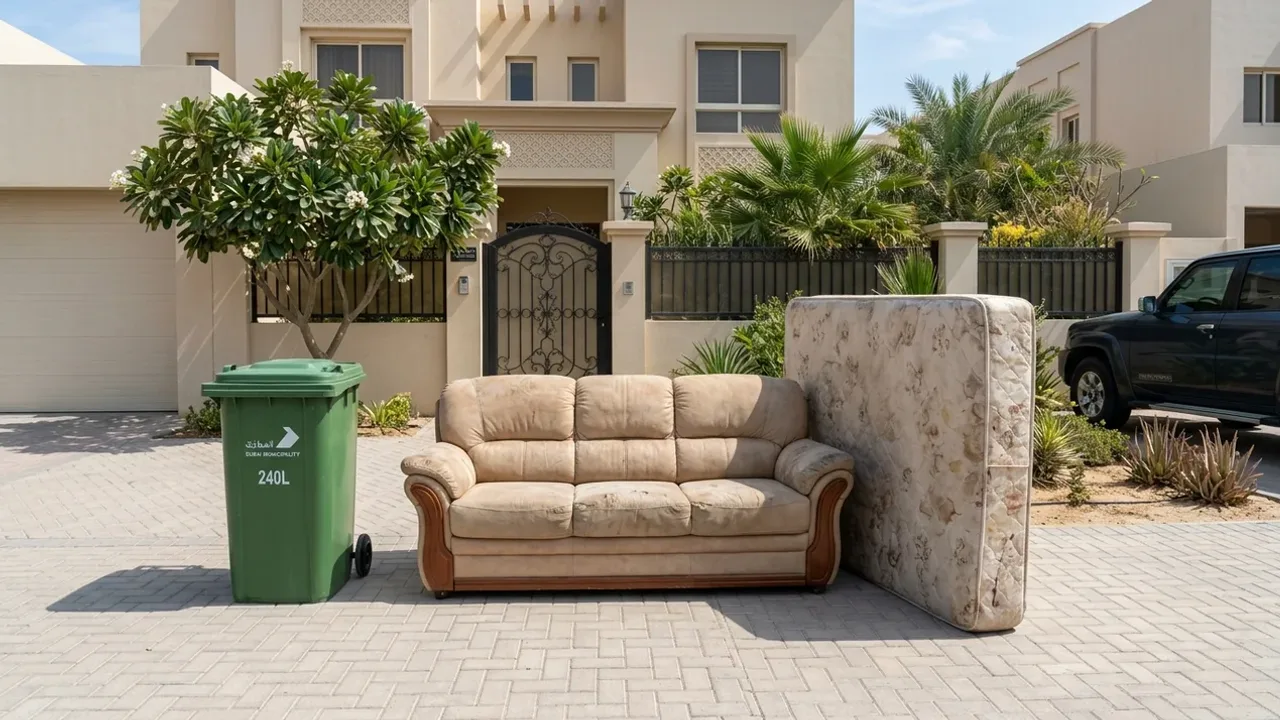
General waste is the ordinary residual material accepted by a property's routine system. Bulky waste is too large, heavy or awkward for that container or chute. A sofa may be harmless, yet it is still bulky because it blocks shared routes and needs manual loading. Our bulky-waste explainer covers that physical boundary in more detail.
Some items need a separate route for reasons other than size. Batteries, electronics, liquids, pressurised containers, lamps and household chemicals should not be hidden inside an ordinary bag or a mixed furniture load. Calling everything general waste can conceal the one item that changes the safe handling plan.
Reuse keeps the whole item in service. Resale and donation are reuse routes when the next owner can use the object safely and reasonably. Recycling is different: the item is processed so accepted material can become manufacturing feedstock. A damaged wooden chair may be unsuitable for donation but still contain separable wood and metal; a clean working chair preserves more value through reuse.
Recovery is a wider term for capturing useful value from waste. It can include material recovery and, in suitable treatment systems, energy recovery. Disposal is the final management of material that cannot take a realistic earlier route. The terms describe outcomes, so a pickup should not be called recycling merely because recyclable-looking objects were present.
Segregation means dividing waste into defined streams. Source separation means doing that where the waste first appears: putting a rinsed can in the correct home container instead of trying to pull it from a wet mixed bag later. The earlier separation happens, the easier it is to protect clean paper, metal, glass and eligible plastic.
Contamination is anything that reduces the quality or safety of a stream. Food liquid soaking paper is contamination. A battery hidden among cans is both contamination and a handling risk. A material can be recyclable in theory but rejected in practice when it is dirty, combined with incompatible layers or not accepted by the receiving route. Follow the property or collector's confirmed stream rather than guessing from colour or symbols.
Collection and pickup both describe taking material from a location. Removal adds the physical work of getting it out of the property, which may involve dismantling, lift bookings, stairs or a long carry. Clearance usually describes the scope: many contents removed from a particular room, home or workplace. Haulage describes transport, but it does not by itself explain sorting or destination.
These words describe stages, not proof of the final route. A collection receipt can confirm that a load left the property; it does not automatically prove every object was recycled. When destination matters, ask which broad streams will remain separate and what the provider can document without demanding an outcome that has not yet been confirmed.
A precise description prevents the wrong crew, vehicle or access plan. Start with the object, quantity and condition, then add the route and property details. Instead of saying ‘some junk’, say ‘one three-seat sofa, a dismantled bed frame, six sealed bags and two boxes of clean books on the eighth floor with a booked service lift’. That wording exposes every decision the provider needs to make.
As a local, fully insured team, Junk Services Dubai makes clearing your space simple — fast pickups, fair upfront pricing and responsible disposal across every Dubai community.
Book today and, where crews are free, we clear it today — with no rush surcharge.
A flat price agreed before we arrive, based on volume, items and access. No surprises.
Background-checked teams who do all the lifting and protect your floors, lifts and walls.
We sort for reuse, donation and recycling in line with Dubai Municipality guidance.
Written by
The Junk Services Dubai Team
Junk Removal Specialists
Our editorial team is made up of the crews and coordinators who clear homes, villas and offices across Dubai every day. We share practical, first-hand guidance on decluttering, disposal and responsible waste removal in the UAE.
Waste is the broad category for unwanted material. Junk usually means unwanted objects or a mixed non-routine load, such as furniture, boxes and household possessions.
No. Bulky describes size or handling. A sofa can be bulky without being hazardous, while a small battery can need a separate route despite fitting in your hand.
No. Reuse keeps the whole item in service. Recycling processes accepted material into feedstock after the item itself can no longer be used in its current form.
Residual waste is the material left after practical prevention, reuse and recovery options have been considered. It still needs a controlled disposal or treatment route.
Source separation means sorting material where it is created, such as keeping clean cans apart from wet kitchen waste inside the home or office.
No. Collection confirms pickup, not the final outcome. Ask which material streams will stay separate and what destination information the provider can genuinely document.
Share photographs, quantities, dimensions, condition, separate-route items and the property's access details. Those facts are more useful than a broad label such as junk.
Waste terminology becomes useful when it changes a practical decision. Name the item, its condition, the material stream and the access route precisely; then collection, reuse, recycling and disposal can be discussed without promising an outcome the load cannot support.
WhatsApp Us photographs and a short inventory of the load, including bulky and separate-route items. We will confirm the removal scope, access needs and available handling options before booking.
GuidesWhat is bulky waste: definitions, weight and size criteria, rejected items, civic limitations, and how to dispose of oversized household items in Dubai.
Read Article Guides
A household guide to sorting waste in Dubai: the four streams worth separating, where the containers physically go in an apartment and a villa, and the rinse habit the summer heat makes essential.
Read Article Guides
A plain-language comparison of landfill, waste-to-energy incineration and recycling, including what each route accepts, produces and cannot solve.
Read Article