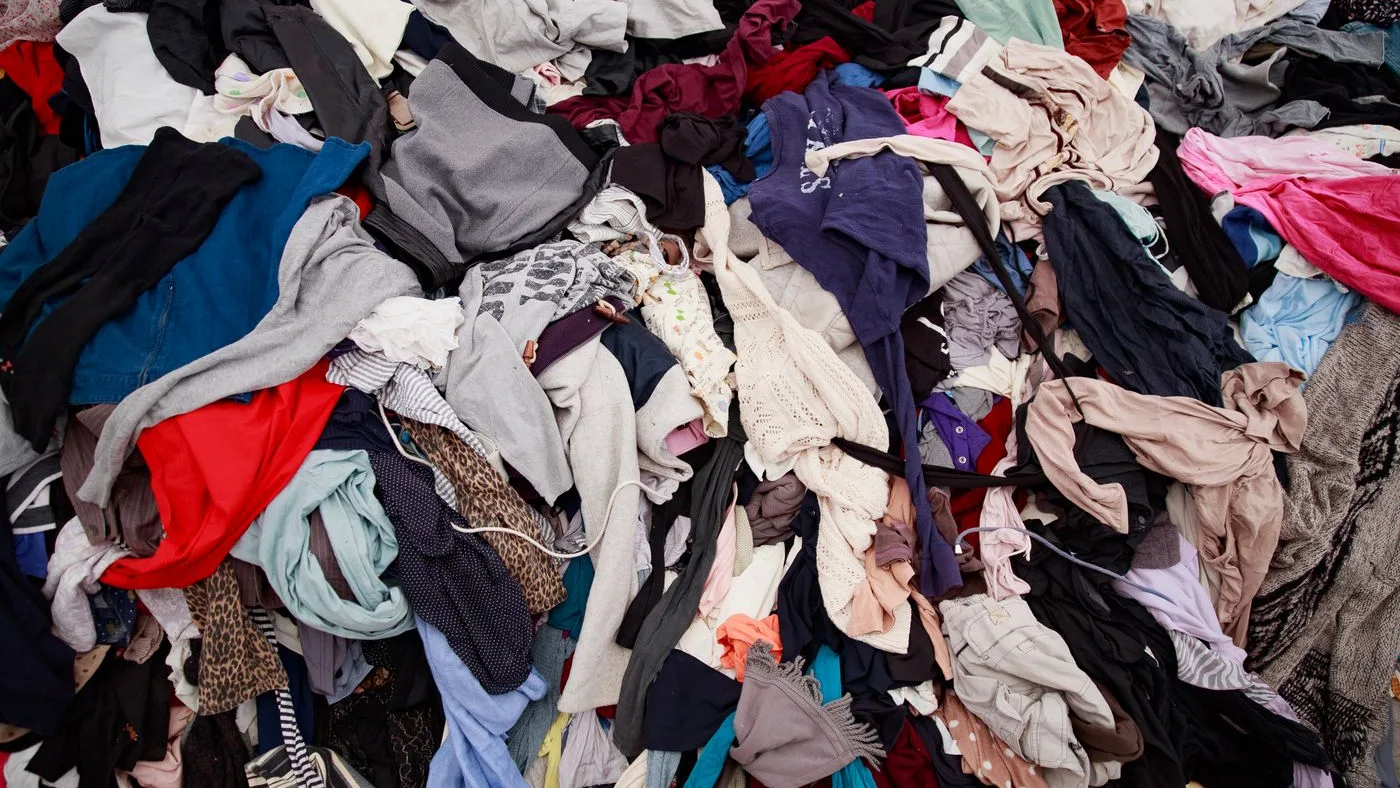
Wardrobe clear-outs in Dubai regularly produce large volumes of clothing, shoes, and household linens that are too worn, stained, or torn to pass on to charity. While pristine garments belong in humanitarian donation boxes, true textile waste requires dedicated sorting and recycling channels. Understanding how to manage unwearable fabrics prevents mountains of synthetic materials from ending up in regional landfills while keeping your home clutter-free.
The Boundary Between Charity Donations and Clothing Waste
A common misconception during home organizing is assuming every unwanted garment can be dropped into a community charity box. Humanitarian charities operating across the UAE incur significant sorting costs when inundated with non-wearable textiles. Sending heavily damaged clothing to donation centres forces charity volunteers to divert operational funds toward disposal haulage.
Wearable garments must be clean, structurally intact, and free from heavy stains, odours, or dry-rotted elastic. In contrast, clothing waste encompasses items with frayed hems, blown-out seams, grease marks, moth damage, or single shoes missing their partner. When items are suitable for donation, follow our dedicated donating decluttered items guide. For everything that falls below wearable condition, true textile waste recycling is required.
How Unwearable Textiles Are Recycled and Downcycled
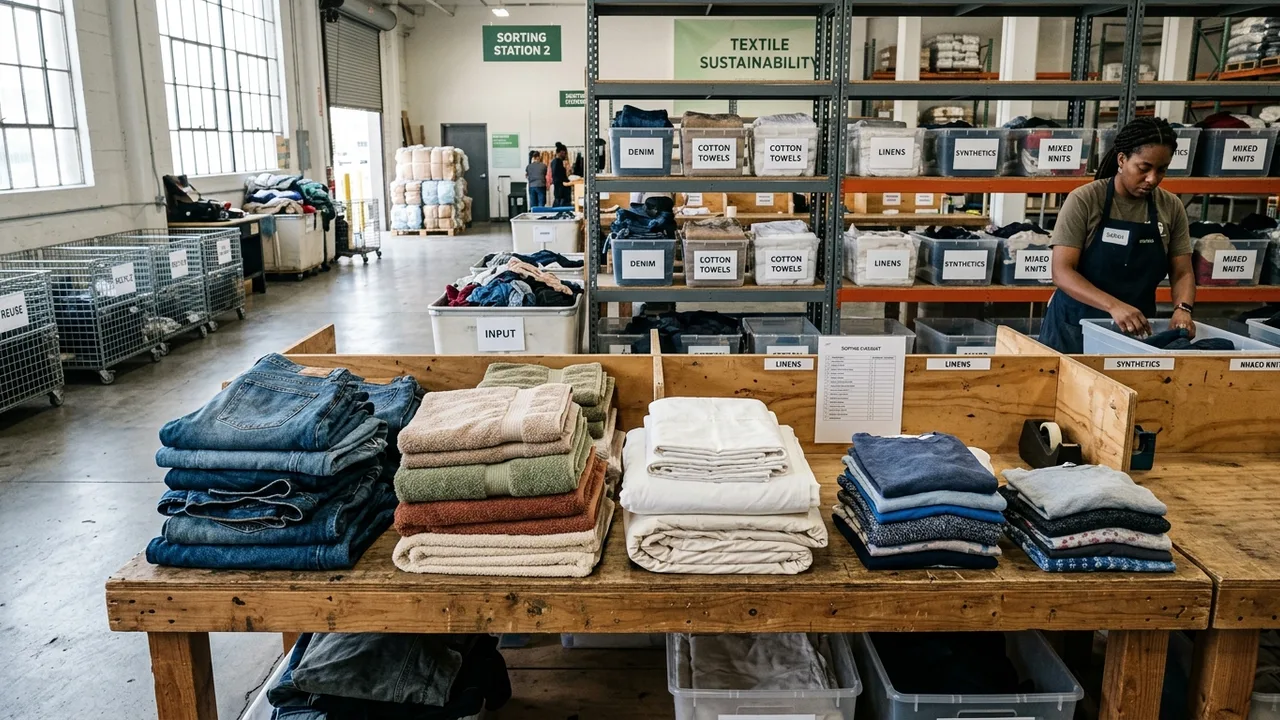
Discarded textiles that cannot be worn again enter secondary processing facilities rather than standard domestic waste compactors. Industrial fabric recyclers convert old clothing into valuable raw materials through specialised mechanical steps:
Textile Stream
Typical Items
Processing Method
End Product Outcome
Pure Cotton & Natural Fibres
Worn t-shirts, cotton bed sheets, denim jeans, towels
Sanitised, stripped of zips and buttons, cut into uniform squares
Absorbent industrial cleaning rags for maritime, aviation, and automotive workshops
Separation of upper fabrics from vulcanised rubber outsoles
Rubber granulated into athletic track surfacing and safety playground flooring
Downcycling and recovery channels for residential clothing waste and textiles in Dubai.
Mechanical Fibre Shredding: Synthetic garments pass through rotary cutting drums that pull woven threads back into loose staple fibers, ready for non-woven manufacturing.
Hardware De-Trimming: Zips, metal press studs, brass eyelets, and plastic buttons are removed mechanically before fabric shredding to prevent equipment damage.
Wiper Conversion: Absorbent natural cottons are washed and cut into lint-free workshop wipers, replacing single-use paper towels in industrial maintenance.
Shoe Reclamation: Ground rubber soles create impact-absorbent surfacing, preventing durable vulcanised rubber from lingering in desert landfills.
Sorting and Preparing Wardrobe Discards at Home
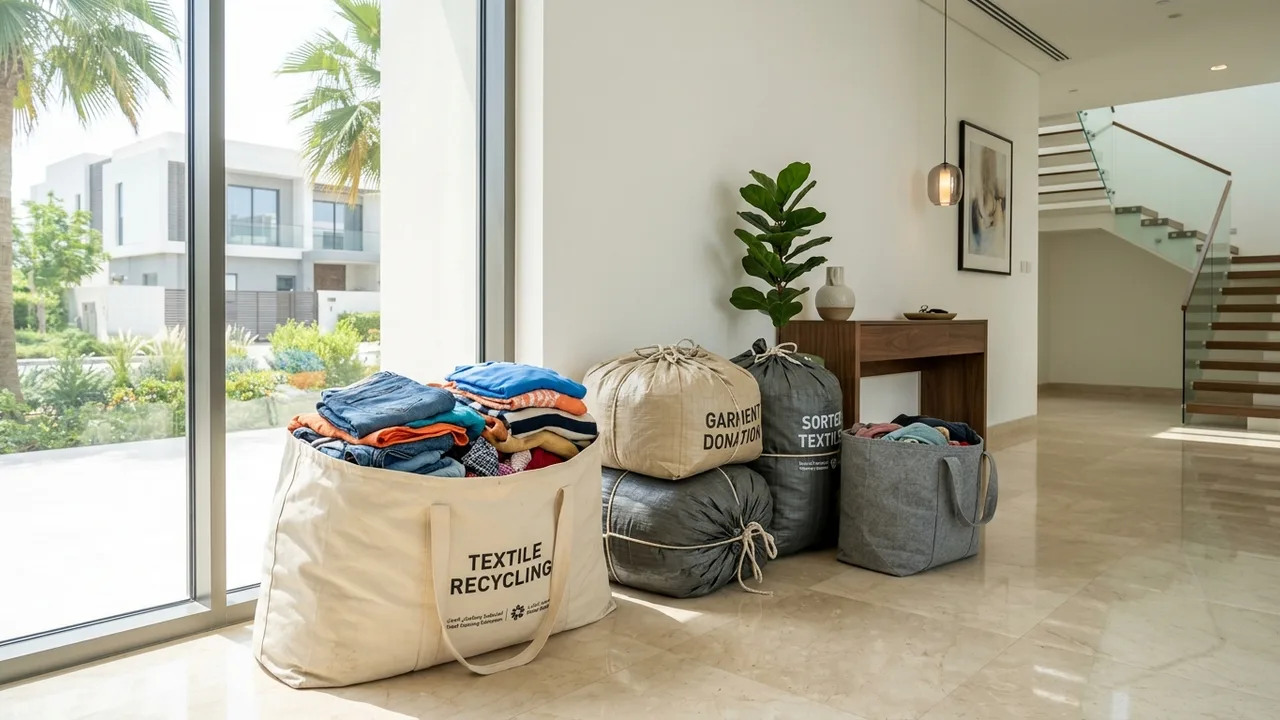
Preparing textile waste for collection requires simple organization to prevent contamination. Wet or mildewed clothing can ruin an entire bag of clean cottons during storage in Dubai's warm climate. Follow these core preparation rules before scheduling collection:
1Ensure all fabrics are completely dry before bagging; damp towels sealed in plastic sacks develop mildew within forty-eight hours.
2Separate wearable items destined for charity from damaged garments meant for textile downcycling into marked bags.
3Check all pockets thoroughly for coins, credit cards, keys, and personal jewellery before sealing collection sacks.
4Bundle heavy bedding, duvets, and pillows into sturdy, tear-resistant plastic bags to protect them from dust and moisture.
Segregating unwearable fabrics by material type streamlines industrial downcycling and keeps textiles out of landfills.
The climate across Dubai places unique strains on stored textiles. Leaving unwashed garments or sports apparel in dark wardrobe corners through long summer months accelerates the breakdown of elastane fibres and creates stubborn heat stains on light cottons. When reviewing stored wardrobes, test the stretch on swimwear, sports tights, and fitted sheets. Elastic that crumbles or sounds like snapping paper indicates dry rot, meaning the item belongs in the fabric downcycling stream rather than a second-hand donation box.
Bulky bedroom textiles like thick bedspreads, heavy winter quilts, and extra mattress covers take up substantial space in domestic closets. If these pieces have absorbed storage odours or show surface stains, laundering them before disposal is unnecessary when booking our bulk collection service, as our downstream processing partners route bulk bedding directly into shredding and sanitisation lines.
Integrating fabric sorting into your routine aligns with broader household recycling standards. For a complete look at material streams, explore our guide on textile recycling in Dubai and our overview of waste segregation at home.
Environmental Impact of Synthetic Textile Waste
Modern fast fashion relies heavily on synthetic polymers such as polyester, acrylic, and elastane. When synthetic clothing is thrown into general domestic waste bins, it behaves identically to plastic packaging. In a landfill environment, petroleum-derived fibres can take up to two centuries to decompose, releasing microfibres into surrounding soil and groundwater.
Diverting textile discards into secondary manufacturing loops conserves virgin crude oil, reduces industrial water consumption, and supports the UAE's circular economy targets. Even heavily torn or stained clothing carries measurable material value when directed into mechanical shredding streams.
Booking Bulk Pickup for Large Wardrobe Clearances
Major life transitions, such as moving out of a villa in Dubai Hills Estate, downsizing from Palm Jumeirah, or managing an abandoned tenancy closet in JBR, often generate ten to twenty large sacks of unwanted fabrics and shoes. Carrying these heavy loads down elevators and looking for collection points is inconvenient and time-consuming.
Our dedicated waste removal in Dubai collects bulk bags of clothing waste directly from your home. We combine textile pickups with general furniture, electronics, and household discards, loading everything into enclosed trucks for proper sorting.
No limit on volume; we collect single bags up to entire wardrobe cleanouts containing dozens of sacks.
Full collection from your front door, eliminating heavy lifting down building corridors and service elevators.
Transparent handling where wearable items are separated for charity and damaged fabrics head to downcycling processors.
Same-day or next-day collection slots available across all major Dubai communities.
Key Takeaways
Unwearable, stained, or torn clothing should not be sent to charities, which incur costs sorting non-donatable items.
Cotton fabrics are downcycled into industrial absorbent wipes, while synthetics become vehicle insulation and acoustic padding.
Always ensure textile discards are completely dry before bagging to prevent mildew in Dubai's warm climate.
Synthetic clothing behaves like single-use plastic in landfills, taking decades to decompose if not recycled.
Professional collection teams clear bulk closet cleanouts directly from your doorstep alongside general household junk.
Why Choose Junk Service in Dubai
As a local, fully insured team, Junk Services Dubai makes clearing your space simple — fast pickups, fair upfront pricing and responsible disposal across every Dubai community.
Same-Day Availability
Book today and, where crews are free, we clear it today — with no rush surcharge.
Fair, Upfront Pricing
A flat price agreed before we arrive, based on volume, items and access. No surprises.
Insured, Uniformed Crews
Background-checked teams who do all the lifting and protect your floors, lifts and walls.
Responsible Disposal
We sort for reuse, donation and recycling in line with Dubai Municipality guidance.
Our editorial team is made up of the crews and coordinators who clear homes, villas and offices across Dubai every day. We share practical, first-hand guidance on decluttering, disposal and responsible waste removal in the UAE.
FAQ
Frequently Asked Questions
No, green community recycling bins are designated for paper, cardboard, plastic bottles, and metal cans; textiles jam automated sorting machinery and should be collected separately.
Single shoes that cannot be worn are processed by rubber and leather recyclers, where outsoles are shredded into rubber crumb for playground surfacing and tracks.
Yes, clean but heavily stained or frayed towels and bed sheets are ideal for mechanical downcycling into industrial machinery wiping rags and acoustic insulation.
Fabrics should be completely dry and free of heavy mud or biological contamination, but they do not need to be freshly ironed or dry cleaned.
Pack textiles into heavy-duty plastic garbage bags or cardboard boxes and tie them securely to prevent loose garments from spilling during transport.
Yes, our collection vehicles handle mixed loads, collecting bagged clothing waste alongside old wardrobes, beds, appliances, and general household items.
Final Thoughts
Clearing out unwanted clothes creates instant breathing room in your bedrooms and wardrobes. By recognizing the difference between wearable charity donations and true clothing waste, you make responsible decisions that support humanitarian organizations and divert valuable fibres from landfills.
Whether you are dealing with a few sacks of worn-out linens or an entire villa wardrobe clearance, our collection team ensures every bag is loaded safely and transported to licensed sorting channels.
Ready to Clear Out Bags of Unwanted Clothes?
Clear out overflowing wardrobes, old bed linens, and piles of worn shoes without the hassle. Our friendly collection team collects bulk textile bags directly from your door across all Dubai communities.
Contact our team today to arrange collection, book a pickup for your clothing bags, or speak with our team about your clearance.
A practical guide to donating what you clear out in Dubai: what charities take, where to drop off or arrange pickup, how to prepare items so they're accepted, and what to do with the rest.
Donation takes the clothes someone else would wear. Textile recycling takes everything else, and the two are not the same stream. Here is which fabric has a recovery route in Dubai and how to prepare a load.
A household guide to sorting waste in Dubai: the four streams worth separating, where the containers physically go in an apartment and a villa, and the rinse habit the summer heat makes essential.

 Guides