Decluttering a Wardrobe in Dubai: The Clothes, Not the Cabinet
The Junk Services Dubai Team 6 min read
Decluttering a wardrobe means deciding about clothes, not about the cabinet they hang in. This guide works from the hanging and shelf space you have, covers how a Dubai wardrobe splits into two seasons rather than four, gives a way to settle the garments you keep putting back, and sets out where clothing, shoes and worn fabric go afterward.
The limit on a wardrobe is physical: a length of rail, a number of shelves and a drawer depth. Working to that limit gives every decision a reason, which a category sweep on its own does not. If the rail holds forty garments hung loosely, the keep pile has forty places.
Hung loosely matters. Clothes packed tight crease, lose shape at the shoulder and stop being worn because they need pressing before they leave the house. A rail at capacity is one you can run a hand along and still see each item.
Take one section at a time rather than the whole wardrobe. Emptying every rail at once produces a bed covered in clothing and a session that ends by putting most of it back untouched. One rail, one shelf or one drawer is a unit you can finish.
This is a different job from removing the wardrobe itself. If the cabinet is leaving as well, the wardrobe removal guide covers dismantling and access, and the rest of the room is handled in the bedroom decluttering guide.
The Dubai Wardrobe Has Two Seasons, Not Four
Most wardrobe advice assumes four seasons and a full rotation twice a year. Dubai works on a different split: a long hot period where outdoor clothing is minimal, and a shorter cooler window where a light jacket or a knit is genuinely worn.
A second split matters more here, and it is indoor against outdoor. Offices, malls and cars run cold, so cardigans, blazers and light layers stay in rotation through the hottest months even though nothing about the weather calls for them. A garment can be useless outdoors and worn four days a week at a desk in Downtown Dubai.
Heavy coats, thick knitwear and boots kept for annual travel are the genuine rotation candidates. Store them sealed and clean rather than on the rail, and keep the rail for what the next few months require. Clothing packed away damp in a humid month develops odour and mildew that outlast the storage.
Sort Into Piles You Can Finish Tonight
Four piles cover almost every garment, and each one has a different next action. Naming that action at the moment of the decision is what stops the piles sitting on the floor for a week.
Wear now: In rotation for the current months, fits, in good repair. Goes straight back on the rail at loose spacing.
Rotate out: Genuinely worn but not for months: heavy knits, travel coats, boots. Clean, dry and store sealed outside the main rail.
Repair or alter: Worth keeping but not wearable as it is. Give the pile a deadline and a named place, or it becomes storage under another label.
Release: Leaving the home by donation, resale or fabric recycling. Split it by route the same evening rather than bagging it all together.
Keep the repair pile small and honest. Six items with a tailor visit booked is a plan; thirty items is a decision that has been postponed. Anything still sitting in it after a month belongs in the release pile.
Questions That Settle a Difficult Garment
Every wardrobe has items that get picked up and put back three times. These questions work in order, and the first honest no is usually the answer.
1Does it fit the body you have now, without a change you are planning rather than making?
2Has it been worn in the last twelve months, or is there a specific dated occasion it is being held for?
3Would you buy it again today at full price, knowing what you already own?
4Does it work with at least two other things on the rail, or does it need an outfit you do not have?
5Is it wearable as it is, or does it need a repair you have not booked?
6If it left today, would you be able to describe it a month from now?
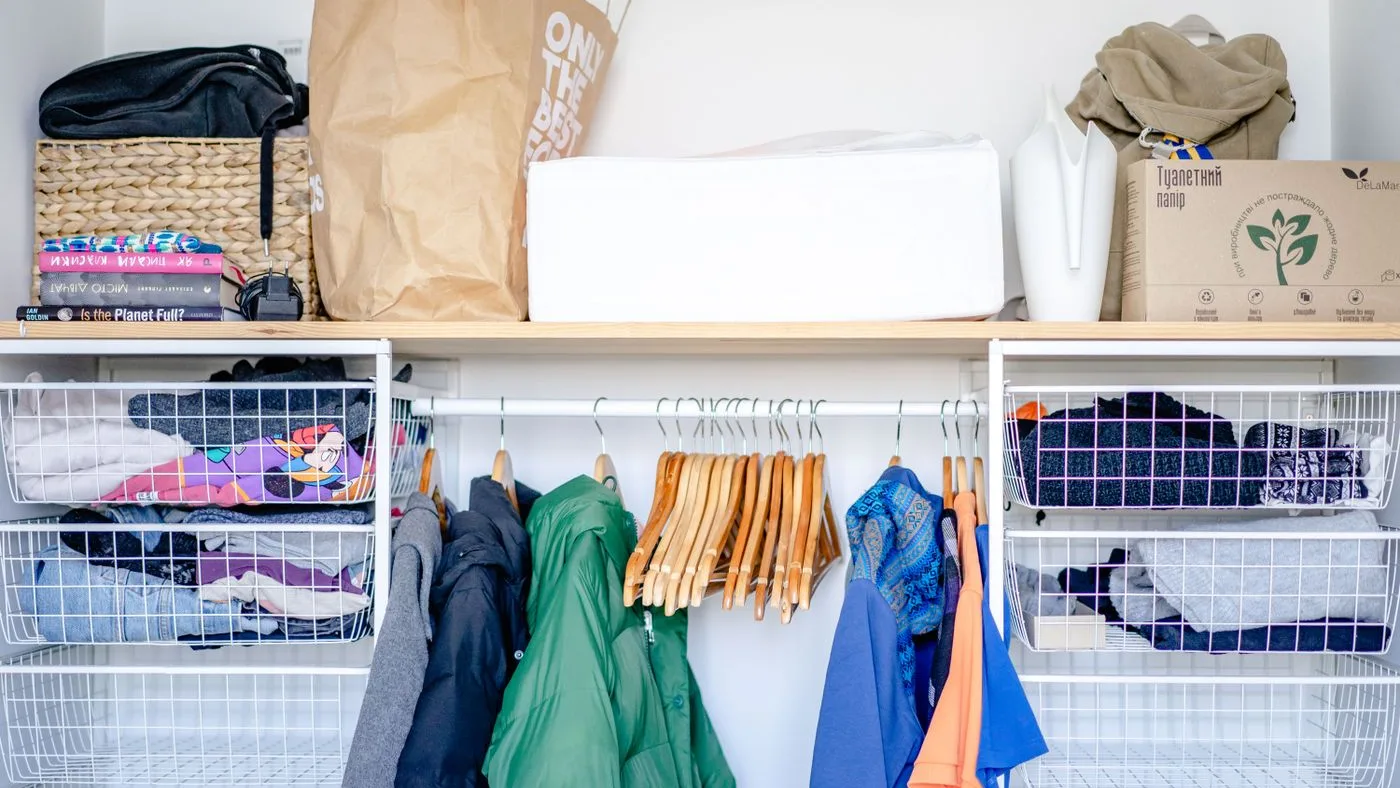
The empty-hanger cluster and the packed top shelf both show where a wardrobe has more capacity than it appears.
Sentimental pieces are a separate category and should not be forced through the same test. A wedding outfit or a garment with a personal history is kept for a reason other than wear, so store it properly and outside the working rail instead of letting it occupy hanging space.
Empty hangers are worth counting at this point. A dozen spares is normal; forty of them means the wardrobe was sized for a collection that no longer exists, and the shelf above is probably carrying the overflow.
Where Clothes, Shoes and Textiles Go Next
The release pile splits by condition rather than by garment type. Sorting it at the point of decision saves reopening the bags later, and it keeps unwearable fabric out of donation bins where it becomes somebody else's sorting job.
What is leaving
Condition
Route
Prepare it by
Everyday clothing
Clean, no damage, current sizing
Donation
Washing, folding and bagging by type
Designer or occasion wear
Excellent, with labels intact
Resale
Photographing, noting size and any flaw honestly
Work and formal wear
Wearable, lightly worn
Donation
Pressing and keeping on hangers where accepted
Worn-out clothing
Holes, stains, thinning fabric
Fabric recycling
Bagging separately and labelling as textiles
Shoes
Pairs only, soles intact
Donation or shoe recycling
Cleaning, pairing and tying them together
Underwear and socks
Any condition
Fabric recycling, not donation
Bagging with the textile stream
Condition decides the route, so split the release pile before anything is bagged.
Fabric that cannot be worn again still has value as material, and the textile recycling guide covers what collection points accept. Footwear follows its own stream, set out in the shoe recycling guide, and wearable clothing going to a charity is covered in the donation guide.
Resale earns the effort on a narrow set of items. If a piece is recognisable, in excellent condition and holds its value, listing it makes sense, and the resale guide covers pricing and when to stop relisting. Everything else moves faster as a donation.
Keeping the Rail From Filling Again
A wardrobe refills within months unless the capacity limit stays real. These habits hold the rail at the level the declutter reached, without turning into a tracking exercise nobody maintains.
Keep the rail at loose spacing as the visible signal, rather than counting garments.
Hang returning laundry at one end, so the least-worn items drift to the other and become obvious.
Hold one small bag in the wardrobe for release items, and take it out when it is full rather than when it is scheduled.
Deal with a new purchase's packaging and tags the day it arrives, so the item joins the rail properly or goes back to the shop.
Check the rotation boxes at the change of season rather than adding to them without opening them.
Book any repair at the point the garment leaves the rail, not when the pile is reviewed.
If the wardrobe itself is oversized for the room, or has been replaced by fitted storage, that is a furniture decision rather than a clothing one. Photograph the piece, note whether it is freestanding or fixed, and see furniture removal for how dismantling and access are handled.
Key Takeaways
Set the keep pile against the rail and shelf space, not against a category list.
Dubai clothing splits by indoor cooling and outdoor heat as much as by season.
Four piles with named next actions stop the sort stalling on the floor.
Condition decides the route: donation, resale or fabric recycling.
Loose spacing on the rail is the signal that keeps a wardrobe from refilling.
Why Choose Junk Service in Dubai
As a local, fully insured team, Junk Services Dubai makes clearing your space simple — fast pickups, fair upfront pricing and responsible disposal across every Dubai community.
Same-Day Availability
Book today and, where crews are free, we clear it today — with no rush surcharge.
Fair, Upfront Pricing
A flat price agreed before we arrive, based on volume, items and access. No surprises.
Insured, Uniformed Crews
Background-checked teams who do all the lifting and protect your floors, lifts and walls.
Responsible Disposal
We sort for reuse, donation and recycling in line with Dubai Municipality guidance.
Our editorial team is made up of the crews and coordinators who clear homes, villas and offices across Dubai every day. We share practical, first-hand guidance on decluttering, disposal and responsible waste removal in the UAE.
FAQ
Frequently Asked Questions
Use capacity rather than fit. Decide what the rail holds at loose spacing, rank garments by how often they are chosen, and release from the bottom of that ranking until the rail is at its limit.
Only partly. Heavy coats, thick knitwear and boots are worth storing away, but light layers stay in rotation year-round because offices, malls and cars run cold through the hottest months.
Clean and fully dry them first, then store them in sealed containers away from humidity and direct sun. Packing textiles away damp is what causes the musty smell that ruins a season's storage.
No. Damaged garments should go to fabric recycling rather than a donation bin, where they create sorting work and are usually rejected. Donation is for clean, wearable items only.
Keep them, but store them outside the working rail in a labelled box. They are held for a reason other than wear, so they should not take up the hanging space active clothing needs.
Keep a modest spare set and pass the rest on. Many dry cleaners and charity shops take clean hangers, and metal or plastic types that nobody wants can go into their matching recycling stream.
Yes. Clear every rail, shelf and drawer and check the top of the unit before the crew arrives, since loose items left inside cannot travel with the furniture and slow the collection down.
Final Thoughts
A wardrobe stays workable when the amount of clothing matches the space holding it. That is a plainer standard than any rule about numbers, and it is the one a rail enforces on its own every morning.
Split the release pile by condition before anything is bagged. Wearable clothing to donation, a narrow set of items to resale, and worn fabric to textile recycling, each handled once.
Schedule a Pickup
Once the clothing is sorted, send photographs of any wardrobe, chest or storage unit leaving the room, along with your area and the building access. Our team confirms the scope and collection price before the visit.
A bedroom has to stay usable while you sort it. Which surfaces to clear first, what under-bed storage should hold in a Dubai home, how much bedding to keep, and when the furniture itself is the problem.
Donation takes the clothes someone else would wear. Textile recycling takes everything else, and the two are not the same stream. Here is which fabric has a recovery route in Dubai and how to prepare a load.
A practical guide to donating what you clear out in Dubai: what charities take, where to drop off or arrange pickup, how to prepare items so they're accepted, and what to do with the rest.


 Guides