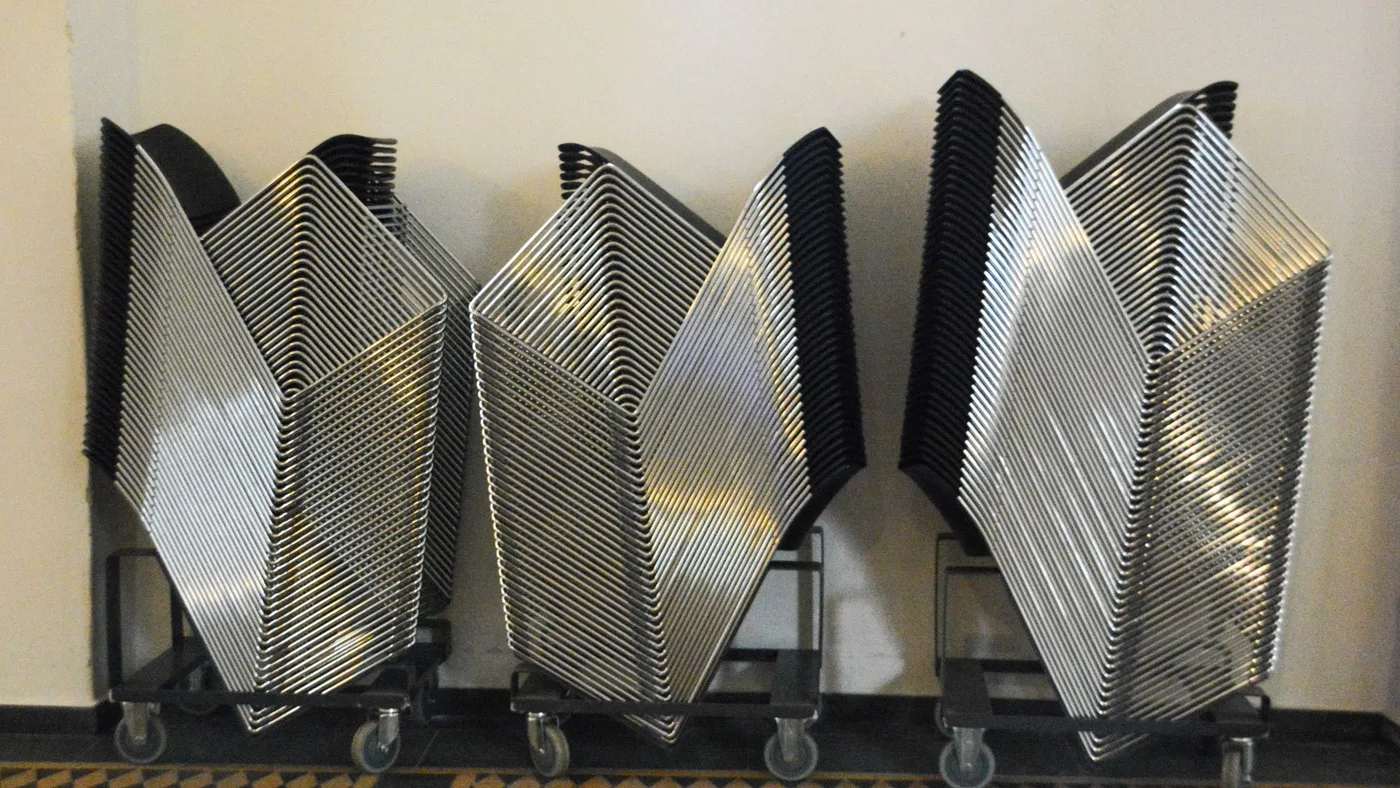
Office furniture in working condition is worth donating rather than clearing, and there is steady demand for it in Dubai from small businesses, training centres and community organisations. What decides whether a donation happens is rarely the furniture. It is whether the batch matches, whether the condition clears the bar a recipient applies, and who arranges the transport.
Donated office furniture goes to organisations that need working furniture now and have somewhere to put it. In Dubai that is a fairly specific group, and knowing which part of it fits your batch saves weeks of unanswered messages.
Small businesses and start-ups fitting out a first office, who want matching desks without waiting on a supplier lead time.
Training centres, nurseries and private schools, which absorb desks, stacking chairs and storage in larger numbers than most offices can supply.
Community and religious organisations running their own offices, classrooms and meeting spaces.
Charities and non-profits furnishing back-office space, where the furniture is for their own staff rather than for resale.
Site offices and staff accommodation, which take sturdy storage and seating and care far less about matching finishes.
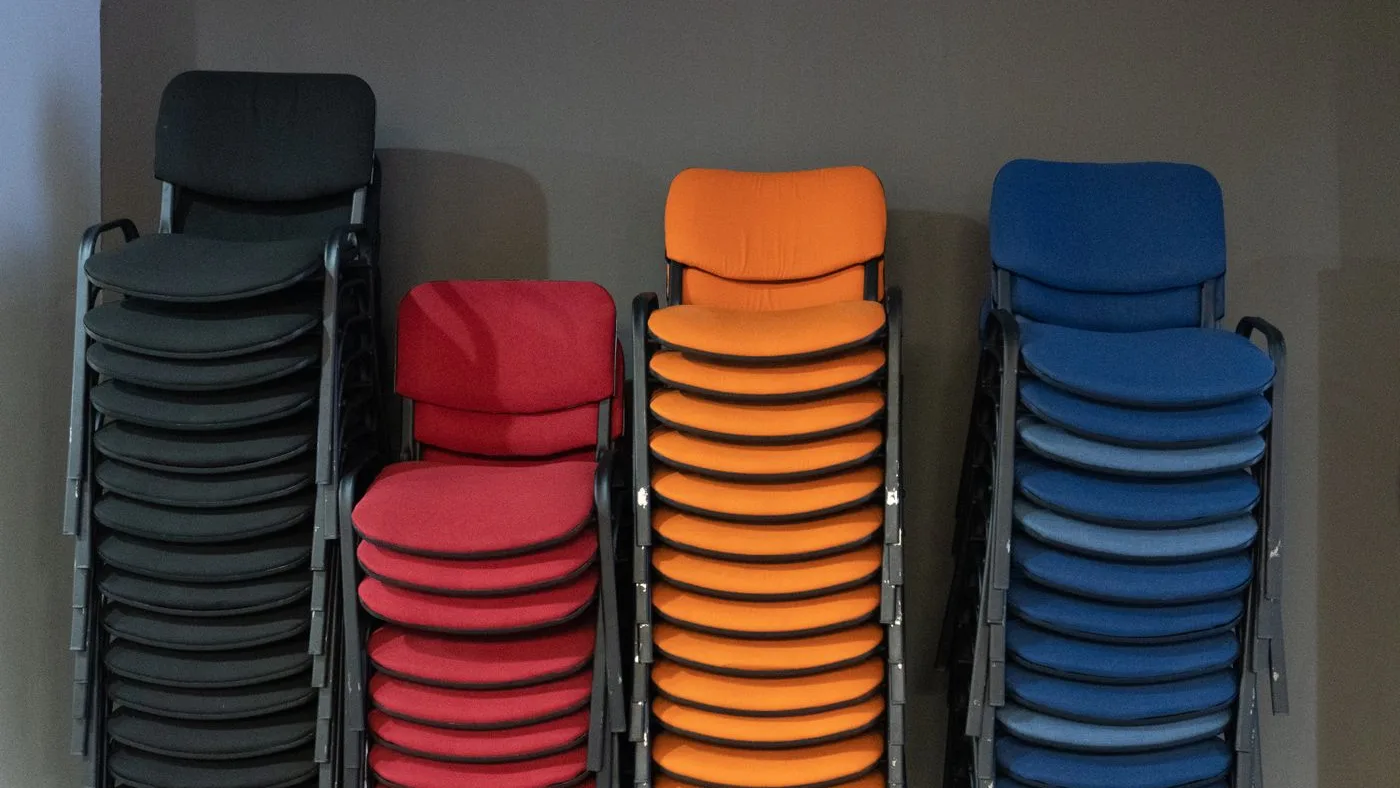
Training centres and schools take stacking chairs and plain desks in the numbers a single office clearance produces.
Notice what is missing from that list. Second-hand dealers are buyers rather than recipients, and they pick the pieces with resale value instead of taking a floor as it stands. Where recovering money matters more than placing everything, selling used office furniture is a different route with different mechanics.
The Condition Bar a Recipient Applies
Recipients take furniture they can put into service the same week they collect it. Anything needing a repair, a replacement part or a judgement call about whether it is safe tends to be declined, because the organisation taking it rarely has a workshop or a spare-parts budget.
Item
Usually accepted
Usually declined
Task chairs
Working gas lift, all five castors present, clean fabric or mesh
Collapsed seat foam, seized height adjustment, torn mesh backs
Desks
Intact laminate edges, all fixings present, legs sitting level
Lifted or swollen laminate, missing bolts, water-marked tops
Filing cabinets and pedestals
Drawers running smoothly, key present or lock barrel removed
Locked units with no key, dented runners, rusted bases
Meeting tables
Sound frame, surface free of deep scratches, legs that come off for transport
One-piece tops too large for a lift, cracked or lifting veneer
Soft seating and reception pieces
Firm cushions, clean upholstery, no odour
Flattened foam, staining, fabric softened by long storage
Recipients judge furniture on whether it can go straight into use, not on how much life is technically left in it.
Storage conditions matter more here than age does. A batch that spent a summer in an unconditioned store room or a warehouse unit often fails on foam and laminate edges even when it saw light use, so anything pulled out of storage is worth checking before it is offered to anyone.
Why Matching Batches Place Faster Than Mixed Ones
A recipient furnishing a room wants it to look furnished, not assembled from leftovers. Ten identical chairs place faster than thirty assorted ones, and that is the biggest single difference between donating office furniture and donating household furniture.
Places quickly: Ten or more matching task chairs, a run of identical desks, or a full set of meeting-room seating. One organisation can absorb the lot and use it in one room.
Places slowly: Two or three good pieces in different finishes. They need a recipient filling gaps rather than furnishing a space, which is a much smaller group.
Rarely places at all: Single reception counters, oversized executive desks and bespoke joinery. These were sized for the room they were built for and seldom fit anywhere else.
Splits well: A mixed floor divided into lots before it is offered: chairs as one batch, desks as another, storage as a third. Three recipients each taking one clean batch beats one recipient declining all three.
Sorting a floor into single-type lots before it is offered turns one awkward mixed clearance into several placeable batches.
Who Moves It, and Why That Question Decides Most Donations
Most office furniture donations fall through on transport rather than on the furniture itself. A small organisation that says yes to twenty desks often has no van, no lifting crew and no way to get them out of a tower on a working weekday.
Settle the question before you offer anything. Either the recipient collects, which means agreeing a slot and handing over the building's access rules in advance, or you deliver, which means booking a crew and treating the donation as a removal with a destination attached.
Confirm whether the recipient has transport at all, and what size of vehicle they can bring.
Give them the loading bay hours, the service lift booking process and any pass requirements before they commit to a date.
Agree who dismantles desks and takes legs or doors off the larger pieces, since a collecting recipient is seldom equipped for it.
Allow more notice than a standard removal needs. Confirming space, arranging people and finding a vehicle usually takes a recipient a couple of weeks rather than a couple of days.
Access is the part people underestimate. In most Dubai towers the service lift is booked ahead and released in fixed windows, and building management wants to know who is coming and when. A van arriving unannounced at a Business Bay loading bay is sent away, and the donation quietly dies there.
Preparing Office Furniture Before a Recipient Collects
1Empty every drawer, pedestal and cabinet, including the back of the bottom drawer where old files settle.
2Strip asset tags, inventory stickers and internal reference labels, and take company branding off reception pieces and screens.
3Find the keys for anything lockable, or have the lock barrel taken out. A locked cabinet with no key is a scrap item rather than a donation.
4Bag the fixings, allen keys and spare castors and tape the bag to the piece they belong to, so nothing arrives incomplete.
5Group the batch physically in one area, sorted by type, so collection day is a single load rather than a tour of the floor.
6Photograph each type against a plain wall with something in shot for scale, and send the photos with counts before anyone travels.
One category stays behind. Desk pedestals and cabinets often hold old drives, backup disks and memory sticks, and anything storing data needs its own handling before an office clearance rather than travelling out with a chair.
What Happens to the Part Nobody Takes
A donation almost never clears a whole floor. A recipient takes the best batch and leaves the worn chairs, the damaged desks and the odd pieces behind, and that remainder is a clearance job like any other.
Plan both halves into the same week instead of treating them as separate projects. Fix the collection date for what has been donated, then book a removal for what is left, so the floor is empty by the date you need it and nothing sits waiting on a recipient who is not coming. Where the remainder goes after that, and which materials genuinely recover, is covered in sustainable office furniture disposal.
Key Takeaways
Recipients in Dubai are mostly small businesses, training centres, schools, community organisations and site offices, not general charities.
Furniture has to be usable the week it arrives: working gas lifts, intact laminate, keys present, no repairs pending.
Matching batches place far faster than mixed pieces, so split a floor into chairs, desks and storage before offering it.
Transport is what kills most donations. Agree who collects, who dismantles and how building access works before offering anything.
A donation clears the best part of a floor, never all of it, so book a removal for the remainder in the same week.
Why Choose Junk Service in Dubai
As a local, fully insured team, Junk Services Dubai makes clearing your space simple — fast pickups, fair upfront pricing and responsible disposal across every Dubai community.
Same-Day Availability
Book today and, where crews are free, we clear it today — with no rush surcharge.
Fair, Upfront Pricing
A flat price agreed before we arrive, based on volume, items and access. No surprises.
Insured, Uniformed Crews
Background-checked teams who do all the lifting and protect your floors, lifts and walls.
Responsible Disposal
We sort for reuse, donation and recycling in line with Dubai Municipality guidance.
Our editorial team is made up of the crews and coordinators who clear homes, villas and offices across Dubai every day. We share practical, first-hand guidance on decluttering, disposal and responsible waste removal in the UAE.
FAQ
Frequently Asked Questions
Small businesses fitting out a first office, training centres, nurseries and private schools, community organisations, non-profits furnishing their own back office, and site offices or staff accommodation. Each wants a different part of a clearance, so it helps to match the batch to the recipient rather than offering everything to everyone.
Usually a couple of weeks, which is longer than a standard removal booking. The recipient has to confirm they have space, arrange people to receive the furniture and find a vehicle, and none of that happens at a day's notice.
Either works, but it has to be agreed before the offer is accepted. Smaller organisations often have no suitable vehicle and no lifting crew, in which case the practical route is to book a removal with the recipient's address as the destination.
Mixed batches place slowly. A recipient furnishing a room wants matching pieces, so a floor of assorted finishes is better split into single-type lots, chairs together and desks together, and offered separately. Three recipients each taking one clean batch is a far more likely outcome than one taking everything.
Good enough to use immediately without repair. Chairs need working gas lifts and all their castors, desks need intact laminate edges and all their fixings, and lockable cabinets need their keys. Anything requiring a part or a repair is normally declined.
Ask the recipient, because practice varies. Some organisations issue a written acknowledgement of what they received and others do not, so agree it before collection day rather than after. Keep your own dated list of what left the building either way.
Book a removal for the remainder in the same week as the donation collection. The leftover half of an office clearance is normally the worn seating, damaged desks and one-off pieces, and it is handled as a standard commercial clearance.
Final Thoughts
Donating office furniture is a logistics exercise dressed up as a generous one. The furniture is usually fine. What decides the outcome is whether the batch is consistent enough for one recipient to use, and whether someone has answered the transport question before the offer goes out.
Sort the floor by type, photograph each lot with counts, agree access and dismantling in writing, and give the recipient real notice. Then book a crew for the half that stays behind, which is covered in how to plan an office clearance.
Arrange Collection for What the Donation Leaves Behind
Tell us which lots are going to a recipient and which are staying, and we will size the visit, coordinate the service lift booking and confirm a flat price before the crew arrives.
WhatsApp Us photos of each batch with counts, Call Now to talk through timing around a donation collection, or Book a Pickup for the remainder.
Only part of an office clearance is worth selling, and the buyers who exist in Dubai want that part specifically. Here is where used office furniture sells, what holds value, and how to run a sale without holding up the clearance.
Office furniture is some of the easiest material in a building to keep out of landfill, because it is uniform: metal frames, laminate panels, foam and fabric, repeated across dozens of identical pieces. Here is what a sorted, sustainable disposal involves.
What office furniture liquidation covers when a business closes, relocates or downsizes, how sorting for resale and donation works alongside removal, and how timing runs against a lease deadline.



 Guides