Garden Sprayer Disposal Dubai: Empty Tank Safety Guide
The Junk Services Dubai Team 4 min read
A garden sprayer is not ready for general collection until its former contents are known and the tank is empty. Even a small pump unit can retain pressure or liquid inside the hose and wand. This guide shows Dubai residents how to separate the empty equipment from chemical residue and prepare it without unsafe pouring or mixing.
Do not open, rinse or combine an unknown sprayer just to make the container look empty. Check the original label, storage shelf and any written mixing record. Water-only misting equipment is a different item from a tank used for pesticides, herbicides, solvents or other garden chemicals.
Previous contents
Preparation position
Collection route
Clean water
Drain, release pressure and dry
Empty equipment collection may be suitable
Known garden product
Follow its label and retain identification
Confirm the correct residue route first
Unknown liquid
Keep closed and do not rinse
Specialist advice is required
Oil, solvent or fuel
Do not mix, pour or evaporate
Hazardous-material route is required
Empty dry tank with no residue
Secure all parts
Declare the equipment for collection
The empty sprayer and its leftover contents are separate disposal questions.
The hazardous household waste guide explains why chemicals stay out of a normal mixed junk load. Keep the product name available and use the disposal instructions supplied with that product rather than improvising a rinse or transfer.
Release Pressure Without Creating a Spill
Work outdoors in a ventilated area away from children, pets, drains and irrigation. Follow the sprayer maker's normal pressure-release method while the unit stands upright. Do not loosen the main lid against pressure or point the wand at your face to test whether the tank is empty.
1Confirm the previous contents and read the equipment instructions.
2Place the upright sprayer on a stable surface in a controlled area.
3Use the designed relief valve or normal release method.
4Check the hose and lance for trapped liquid without spraying it into the environment.
5Open the tank only after pressure is fully released.
6Keep any remaining liquid in its known approved container and route.
Heat can raise pressure inside a closed tank, so do not leave the sprayer in direct Dubai sun or a hot vehicle. A brittle hose may split as pressure changes. If the tank is swollen, leaking or strongly odorous, stop handling it and seek specialist advice.
Prepare a Confirmed Empty Sprayer
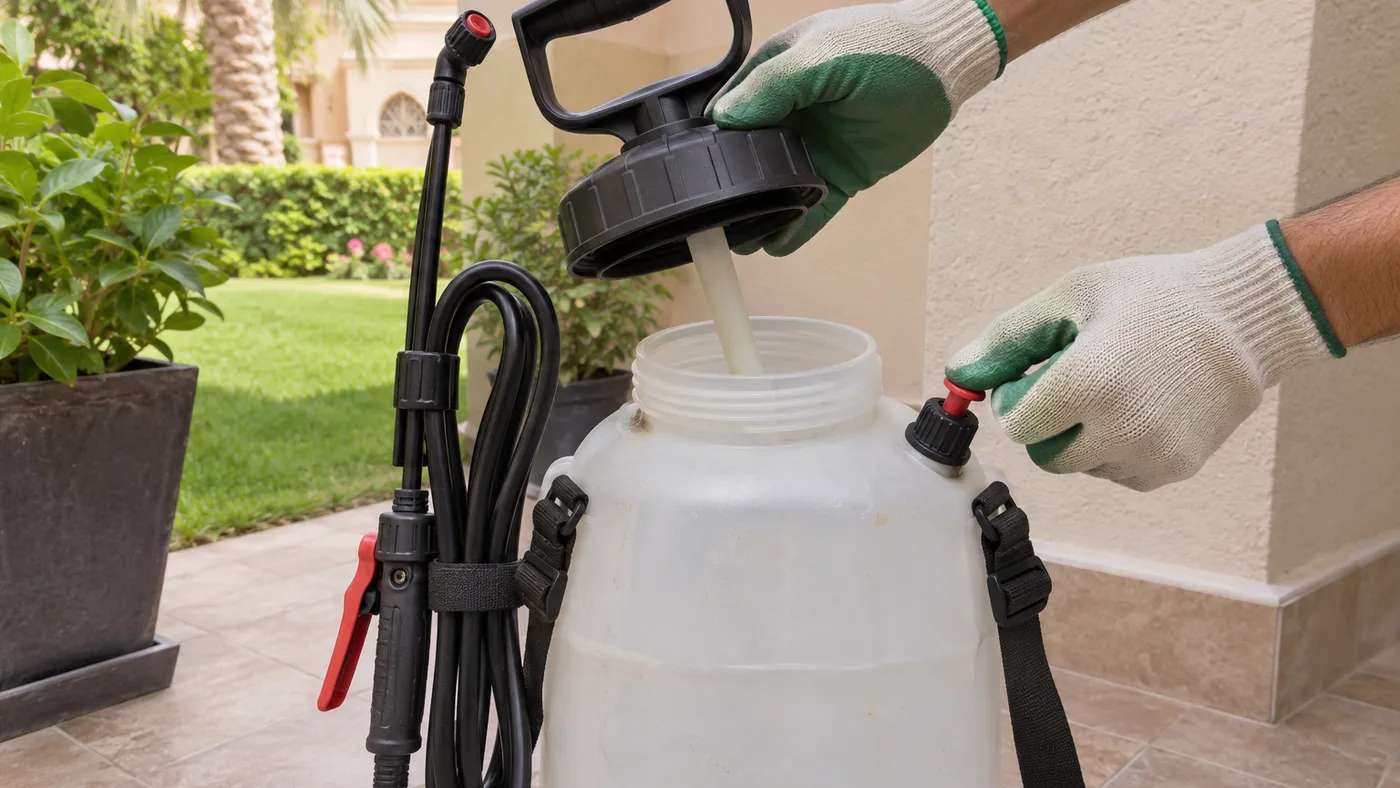
Open the tank only after the designed pressure valve has been released and the previous contents are known.
Once the contents are correctly dealt with, let the tank and hose dry according to the equipment instructions. Keep the lid loose during drying but refit it for transport. Fasten the wand to its holder or tie it alongside the tank with a removable strap so the nozzle cannot snag a gate, vehicle or another item.
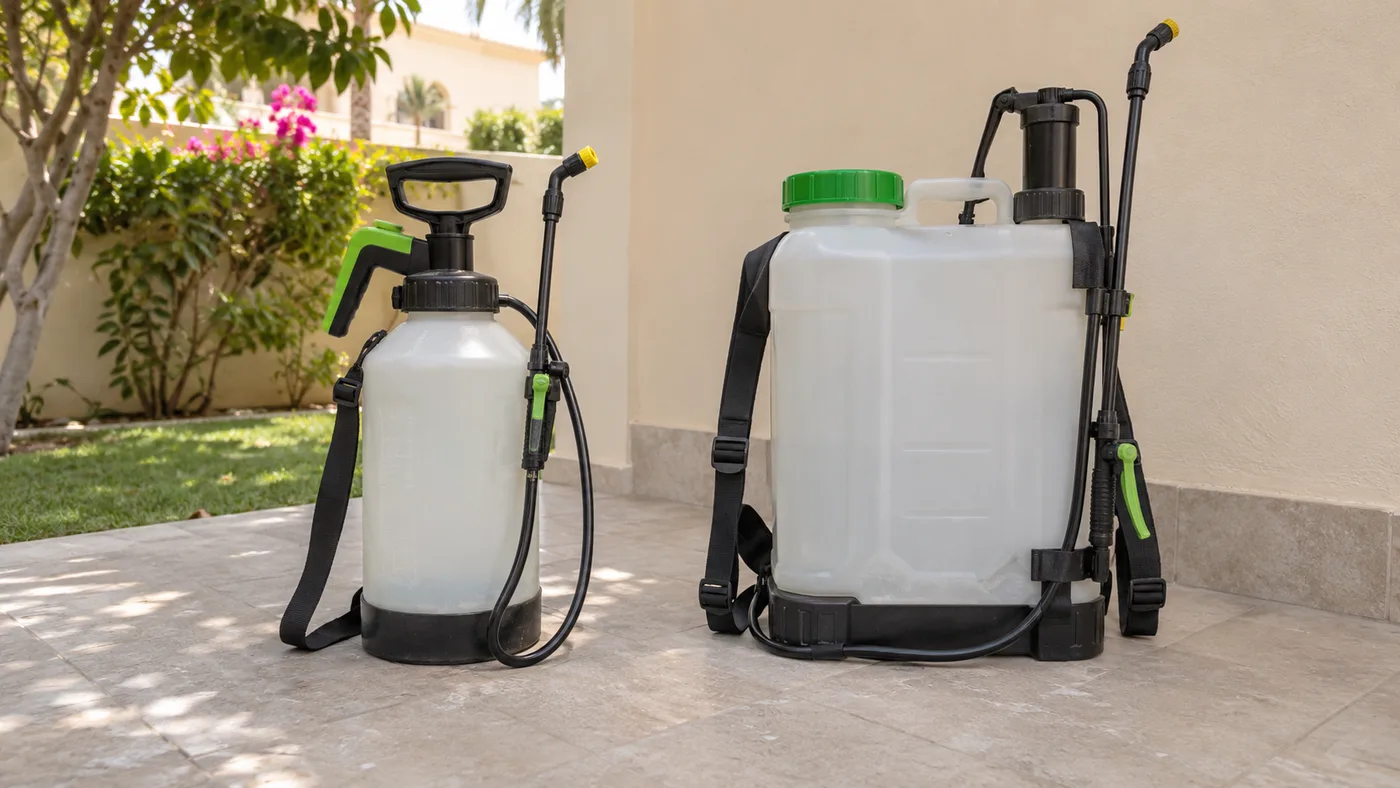
Hand sprayer: Release the small pump, dry the bottle and keep the trigger head attached or bagged with it.
Shoulder sprayer: Secure the strap, hose and lance against the tank and check the base for cracks.
Backpack sprayer: Fasten both straps, collapse the lance only as designed and declare the larger tank dimensions.
Battery sprayer: Switch it off, remove a detachable battery and keep the battery in its correct separate route.
Do not puncture or cut the tank to prove it is empty. A puncture creates sharp plastic and can release residue trapped around seams. A clear photo through the opening, along with the product history, gives the collection team better information without damaging the equipment.
Reuse and Material Recovery Decisions
A sprayer used only for water may be reusable if the seals, hose and pressure vessel remain sound. Do not pass on equipment that leaks, cannot hold pressure predictably or has an unknown chemical history. The new owner needs truthful information about what the tank held.
Keep pumps, caps, valves and wands with a reusable unit.
Separate a detachable battery without opening its casing.
Declare cracked plastic, corroded metal and damaged seals.
Do not put a chemical-stained tank into a clean plastic recycling batch.
Let the receiving route assess mixed plastic, rubber and metal parts.
Battery-powered units have both an equipment body and an electrical component. The battery disposal guide covers detachable household packs and damaged-battery warning signs. Keep any battery terminals protected during storage and transport.
Book Collection for Empty Equipment
Share photos of the open dry tank, label area, hose, wand and any detachable battery. State the previous contents in writing, even when the unit has been empty for months. This is more useful than describing it only as a plastic garden item.
An empty verified sprayer can join a planned waste removal collection with other declared loose equipment. Leftover chemicals, leaking tanks and unknown residue do not belong in that general load and must be resolved through a suitable specialist route first.
Confirm the tank is empty, dry and no longer pressurised.
Name the last product used or state that the history is unknown.
Secure the lid, hose, wand, straps and loose fittings.
List detachable batteries or chargers separately.
Keep the unit shaded until the collection window.
Key Takeaways
Identify the previous contents before opening or rinsing a sprayer.
Use only the designed pressure-release method.
General collection is for verified empty, dry equipment, not chemicals.
Secure the wand, hose, lid, straps and detachable battery separately.
Why Choose Junk Service in Dubai
As a local, fully insured team, Junk Services Dubai makes clearing your space simple — fast pickups, fair upfront pricing and responsible disposal across every Dubai community.
Same-Day Availability
Book today and, where crews are free, we clear it today — with no rush surcharge.
Fair, Upfront Pricing
A flat price agreed before we arrive, based on volume, items and access. No surprises.
Insured, Uniformed Crews
Background-checked teams who do all the lifting and protect your floors, lifts and walls.
Responsible Disposal
We sort for reuse, donation and recycling in line with Dubai Municipality guidance.
Our editorial team is made up of the crews and coordinators who clear homes, villas and offices across Dubai every day. We share practical, first-hand guidance on decluttering, disposal and responsible waste removal in the UAE.
FAQ
Frequently Asked Questions
Yes, when the sprayer is verified empty, dry, depressurised and free from leaking or unknown residue. Share its previous contents and clear photos before collection.
Keep it identified and follow the product label and an appropriate specialist disposal route. Do not pour it into a drain, soil, another bottle or a mixed junk load.
No. Keep an unknown liquid contained and seek specialist advice. Rinsing can spread the material, create more contaminated water and expose you to a substance you have not identified.
Use the manufacturer's designed relief method and instructions. Never judge pressure by loosening the main lid. If the valve is damaged or the tank is swollen, stop and seek specialist help.
The empty sprayer body may be collectable, but a detachable battery should be removed, terminals protected and declared separately for the correct electrical or battery route.
No. Cutting creates sharp edges and may release residue from seams or hoses. Keep the empty tank intact and provide dimensions so its collection can be planned safely.
Final Thoughts
The difficult part is not the plastic tank; it is the uncertainty around pressure and residue. Identify the contents, keep unsuitable liquid in its proper route and present only dry depressurised equipment for general collection.
Speak With Our Team
WhatsApp Us photos of the empty sprayer, tank opening, wand and label area, plus the previous contents, to discuss collection.
Paints, aerosols, batteries, lamps and pool chemicals are handled apart from a general clear-out. What counts as hazardous household waste in Dubai and what to do with each type.
A drawer of dead batteries is harmless until it is tipped into a mixed load. Which household cells carry a real risk, why terminals get taped, and how a Dubai home collects and hands them on.
 Guides