Repair, Replace or Dispose: Deciding on an Old Appliance
The Junk Services Dubai Team 6 min read
An appliance that has started to fail puts three options in front of you, and only one of them ends with a collection. Repair keeps it, replacement retires it early, and disposal is what happens once neither of the first two makes sense. This guide sets out how to tell those apart, what Dubai's climate and water quality do to the calculation, and what to do with the old unit once the decision is made.
The decision looks complicated because it mixes money, age and ownership. Taken one at a time it resolves quickly.
How old is it, against what it was built for?: Most large domestic appliances are designed for somewhere between seven and twelve years of normal use. A fault at year three is bad luck. The same fault at year eleven is the unit reaching the end of its life.
What is broken, and is it one part or the core?: A door seal, a pump, a thermostat or a heating element is a part. A failed compressor, a burnt-out motor or a cracked drum is the appliance itself, and those repairs approach the cost of a new unit.
Is it even yours to replace?: In a furnished or part-furnished rental, integrated appliances belong to the property. The decision, and the bill, sit with the landlord rather than the tenant.
If the answers point to repair, nothing else in this guide applies. If they point past it, the rest is about doing the replacement cleanly.
The Repair-or-Replace Rule of Thumb
A repair is generally worth paying for when it costs well under half the price of replacing the appliance, and the unit still has years of expected life left. As the repair cost climbs toward half, and the appliance climbs toward its service life, replacement takes over.
Appliance
Typical service life
Usually worth repairing
Usually replace
Fridge or freezer
10 to 12 years
Door seals, thermostat, fan, lighting
Compressor failure, or a gas leak in an older unit
Washing machine
7 to 10 years
Pump, inlet valve, door lock, belt
Failed drum bearings or a corroded outer drum
Dishwasher
8 to 10 years
Spray arms, filters, inlet valve
Motor failure or a leaking sump on an older machine
Electric oven or cooker
10 to 15 years
Elements, thermostat, door hinges and glass
Wiring loom faults, or a cracked cavity
Water heater
6 to 10 years
Element, thermostat, anode
A leaking tank, which is never a repair
Service life assumes normal domestic use. Heavy household loads shorten every figure in the middle column.
One exception overrides the table. A leaking sealed tank or a leaking refrigerant circuit is a replacement regardless of the appliance's age, because neither can be repaired to a state you would trust in an occupied flat.
Age alone does not decide it. A fifteen-year-old fridge that still holds temperature is not a disposal.
What Dubai's Heat, Dust and Hard Water Change
The service-life figures above are general. Three local conditions push appliances toward the lower end of every range, and knowing which one is at work often explains a fault.
Ambient heat makes a fridge or freezer compressor run far longer per day through the summer than the same unit would in a temperate climate, and that duty cycle is what wears it out.
Hard water leaves scale on heating elements, so kettles, washing machines, dishwashers and water heaters lose efficiency and then fail earlier than their rated life suggests.
Fine dust clogs condenser coils at the back of a fridge and the vents on a tumble dryer, which makes both work harder for the same result.
Long vacant periods in a summer-empty apartment leave a switched-off fridge to develop mould and odours that are a cleaning job rather than a fault.
Two of those are maintenance rather than failure. Vacuuming a condenser coil and descaling an element are the cheapest interventions available, and they are worth trying before a unit is written off.
When the Appliance Is Not Yours to Replace
In Dubai's rental market this is the question tenants get wrong most often, and it costs money in both directions.
Integrated ovens, hobs, extractor hoods, water heaters and wall-mounted air conditioning belong to the property, whoever paid for a repair during the tenancy. Freestanding appliances you bought yourself are yours to replace and yours to remove. The tenancy inventory is what settles any disagreement, and the same boundary is set out in move-out appliance disposal.
Check the inventory before arranging either a repair or a replacement. Replacing a landlord's appliance at your own cost is not usually recoverable, and removing one that was listed on the inventory affects the deposit.
A Working Appliance Has Better Routes Than Disposal
If the unit still runs, disposal is the last of four options rather than the default. Work down the list in order.
1Keep it as a second unit where there is space, which is common for a spare fridge or freezer in a villa utility room or garage.
2Sell it, which works best for units under five years old with the original documentation to hand.
3Donate it, since a working appliance with a cosmetic fault is still a functioning appliance to somebody setting up a home.
4Recycle it, where the metals and the motor are recovered even though the unit itself has no working life left.
5Dispose of it as general waste, which is the option that should never be reached with a large appliance.
A fault that stops an appliance being sold does not always stop it being used. Where the routes lead after collection is covered in electronics disposal.
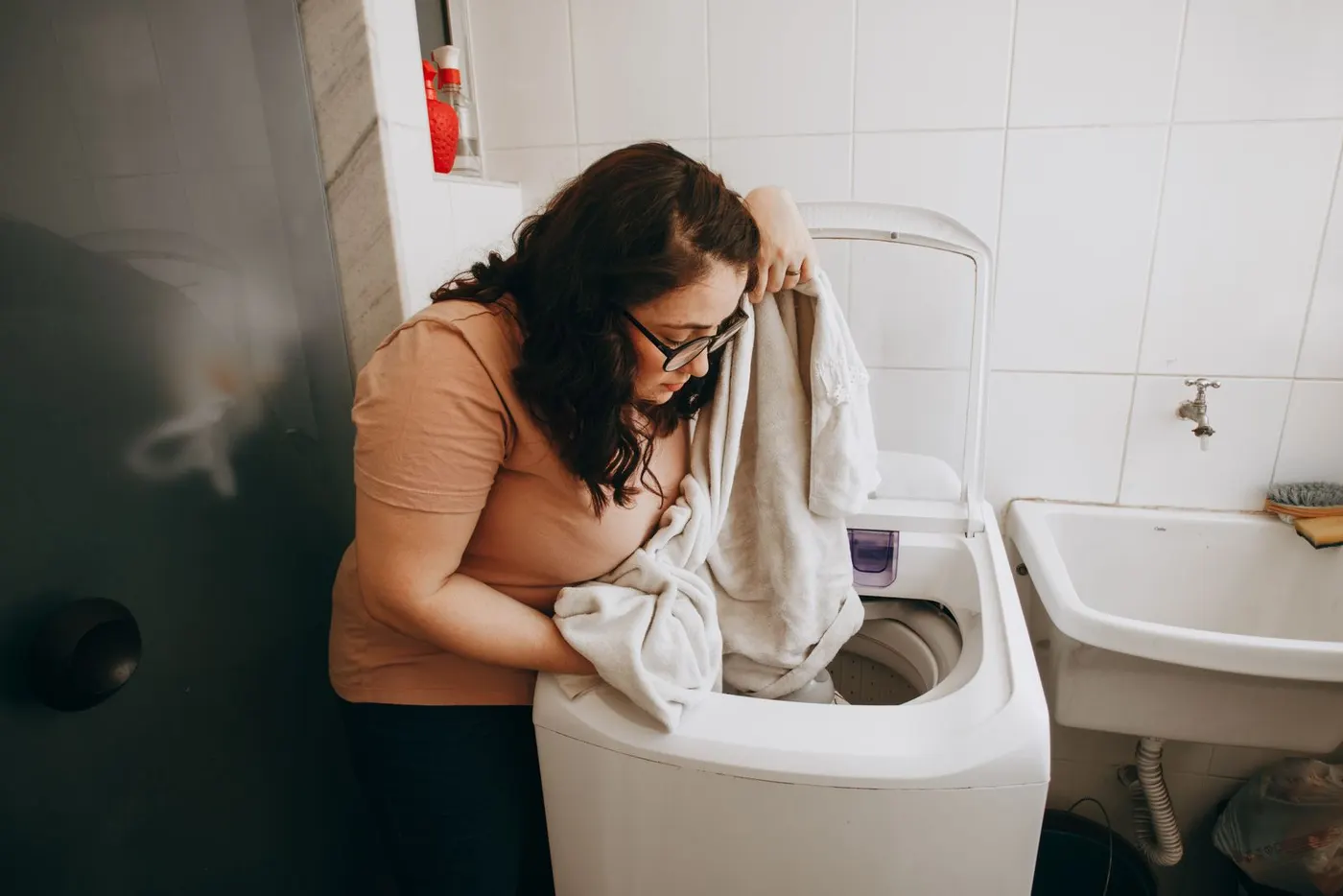
Top-loaders are common in villa utility rooms and maids' rooms, and scale on the element is their usual first fault.
Signs an Appliance Is Past Repair
Some symptoms end the conversation on their own, whatever the age of the unit.
Water on the floor that returns after a repair, which usually means the leak is the tank or the outer drum rather than a hose.
A fridge that runs constantly and still will not hold temperature, once the coils are clean and the seals are sound.
Burning smells, scorch marks around a plug or socket, or a unit that trips the circuit each time it runs.
Rust through the casing rather than on it, particularly at the base of a washing machine or water heater.
A second failure within months of a first repair on a unit already near its service life.
Anything on that list involving electrical faults or water leaks is a reason to stop using the appliance rather than to keep it running until a collection is arranged.
Booking the Collection Once You Have Decided
A replacement usually creates a timing problem rather than a disposal problem: the new unit arrives and the old one has to be gone. Booking the collection for the delivery day keeps both out of the hallway.
The old unit needs to be disconnected, drained and defrosted before it can travel, and the lead times on that are set out in household appliance pickup. A defrost in particular cannot be rushed on the morning itself.
Key Takeaways
Repair when the fault is one part and the unit is inside its expected service life.
Replace when the compressor, motor, drum or tank has gone, whatever the age.
A repair costing near half the price of a new unit rarely pays for itself.
Heat, dust and hard water push Dubai appliances toward the short end of every service-life range.
Integrated appliances belong to the property; check the inventory before deciding anything.
Why Choose Junk Service in Dubai
As a local, fully insured team, Junk Services Dubai makes clearing your space simple — fast pickups, fair upfront pricing and responsible disposal across every Dubai community.
Same-Day Availability
Book today and, where crews are free, we clear it today — with no rush surcharge.
Fair, Upfront Pricing
A flat price agreed before we arrive, based on volume, items and access. No surprises.
Insured, Uniformed Crews
Background-checked teams who do all the lifting and protect your floors, lifts and walls.
Responsible Disposal
We sort for reuse, donation and recycling in line with Dubai Municipality guidance.
Our editorial team is made up of the crews and coordinators who clear homes, villas and offices across Dubai every day. We share practical, first-hand guidance on decluttering, disposal and responsible waste removal in the UAE.
FAQ
Frequently Asked Questions
Only for small parts such as seals, a thermostat or a fan. A compressor failure at that age is a replacement, because the repair approaches the cost of a new unit that would come with a fresh service life.
As a rule of thumb, once a repair reaches around half the price of an equivalent new appliance, replacement is the better value, and that threshold drops the closer the unit is to its expected service life.
It shortens the life of the heating element rather than the machine. Scale builds on the element, efficiency drops, and the element eventually fails. Periodic descaling addresses it and is far cheaper than a repair.
Ambient heat keeps the compressor running for a much larger share of each summer day, so the unit accumulates running hours faster than the same model would in a temperate climate.
The landlord, because integrated and inventory-listed appliances belong to the property. Replacing one yourself is not usually recoverable, so raise the fault before arranging any work.
Yes. A dented door or a broken shelf does not stop an appliance functioning, and a working unit is worth far more to somebody setting up a home than it is as scrap.
No. A unit that trips the breaker each time it runs has an electrical fault, and it should be switched off at the socket and left unused until it is either repaired by a qualified technician or collected.
Final Thoughts
The decision is rarely about the appliance being old. It is about whether the thing that failed is a part or the machine, and whether the unit has enough life left for a repair to be worth buying. Answer those two and the third option settles itself.
Once the call is made, the old unit stops being a decision and becomes a collection. An appliance disposal crew takes it from wherever it stands, so there is no reason for it to sit in a hallway waiting.
Arrange Collection for the Old Unit
Tell us the appliance, the floor and when the replacement is arriving, and we will time the collection so the old one leaves as the new one lands.
WhatsApp Us a photo of the unit and its position, Book a Pickup for your delivery day, or Speak With Our Team about disconnection and defrost lead times.
A practical guide to household appliance pickup in Dubai — booking a safe collection for old fridges, washing machines, ovens and AC units, delivery-day swap-outs, apartment and villa pickups, same-day service, and responsible recycling and reuse.
The white goods you bought during a tenancy cannot be lifted straight onto a truck. What has to be disconnected and drained first, how long a fridge needs, and where the landlord's built-ins fit in.
Why a washing machine can cost more to take away than a sofa, and what genuinely moves the price of appliance removal in Dubai: weight, how the unit is connected, the route out, and how many go in one visit.

 Guides