House clearance mistakes in Dubai tend to cost time at the point when a property has none left. The common failures are making decisions while the crew waits, mixing keep items into the load, discovering access rules on arrival, and leaving the final sweep until after the vehicle has gone. This guide explains each failure, the consequence it creates, and the recovery step that protects the handover date.
The Seven Mistakes That Disrupt a Dubai House Clearance
A clearance can absorb a few extra bags. It cannot absorb an undecided room, a service lift that security will not release, or a wardrobe full of passports and jewellery. The table below separates the errors by the delay they cause rather than by the type of property.
Mistake
What it causes
Best fix
Booking before deciding the scope
The crew waits while keep-or-clear decisions are made
Define full property, selected rooms or named items before booking
Leaving personal items in storage furniture
Documents or valuables enter the working area
Empty drawers, bags, ottomans and suitcases into one hold-back room
Forgetting hidden spaces
The property still contains items after the vehicle leaves
List the store, balcony, maid's room, garage and high shelves separately
Assuming access will be available
Security stops the crew or the vehicle cannot reach the loading point
Confirm lift, loading bay, gate and permitted hours in writing
Waiting for unconfirmed buyers
Furniture remains after the booked clearance
Give every buyer a collection deadline and keep a removal fallback
Mixing destination streams
Donation, e-waste and general contents must be separated again
Use distinct zones rather than labels on individual pieces
Skipping the closing walkthrough
Missed cupboards create a second visit
Inspect every cleared room before loading is signed off
Most clearance failures begin before lifting starts and are fixed by moving one decision earlier.
Mistake 1: Making Decisions While the Crew Waits
A crew can sort material by destination, but it cannot decide whether a family sideboard stays, whether a landlord owns the dining table, or whether the boxes in the spare room travel to a new address. Those choices belong to the person authorising the property. If they start on clearance morning, every doorway becomes a meeting.
Use three physical zones before arrival: one closed room for everything staying, one grouped area for confirmed donation or collection by somebody else, and the rest as the clearance scope. The preparation stages in our house clearance checklist cover when to make each decision. This article focuses on what happens when those boundaries are missing.
Scope failure: Nobody has agreed which rooms or contents leave. Stop and define the job before lifting starts.
Ownership failure: Fitted pieces or landlord inventory are mixed with personal contents. Check the contract and inventory before authorising removal.
Destination failure: Donation, resale and recycling are expected but not confirmed. Assign each route and its deadline in advance.
Access failure: The property is ready but the building is not. Move the crew only after management confirms the working window.
Mistake 2: Treating Every Cupboard as Empty
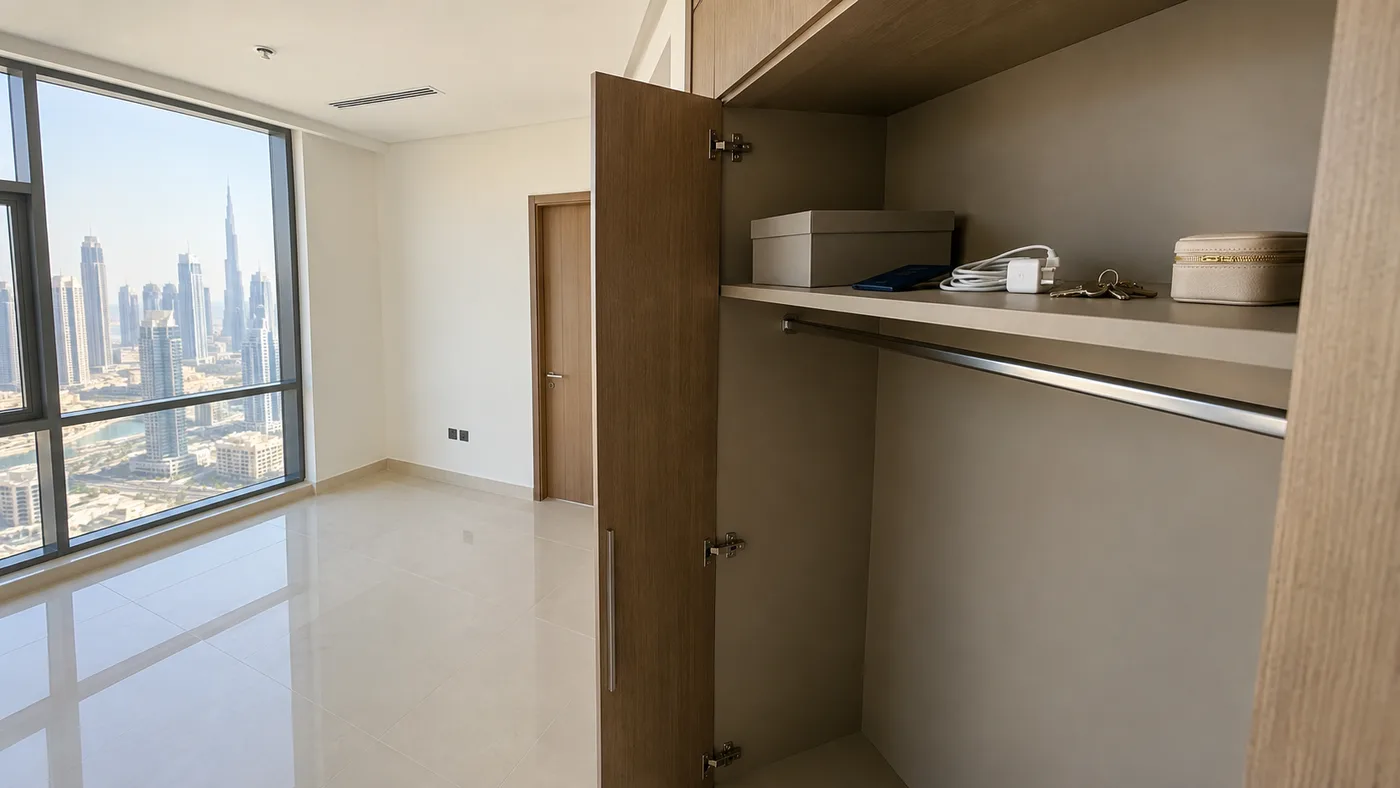
Storage furniture hides the smallest and hardest-to-replace belongings. Bedside drawers hold keys and jewellery, filing cabinets hold tenancy records, suitcases hold documents, and ottomans become long-term storage without looking like storage. A closed drawer is not an empty drawer.
Empty personal storage before the crew arrives, then leave doors and drawers open as a visible check. Items that may have resale or specialist value should be handled through the process in our guide to valuing items before a house clearance. Everything personal or uncertain goes into the hold-back room, not onto a label attached to the furniture.
Mistake 3: Discovering Building Access on Arrival
Dubai apartment buildings often control removals through their own move approval, service-lift calendar, loading position and permitted hours. Gated villa communities may need the vehicle registered before it reaches the property. These are management arrangements rather than one citywide rule, which means the answer differs from one address to the next.
Ask management whether a move approval, refundable deposit or contractor document is required.
Reserve a service lift long enough for a whole-property load rather than a single bulky item.
Confirm where the vehicle can stand and whether the basement has a height limit.
Send vehicle and crew details before the deadline set by security.
Keep the approval reference, access cards and contact number with the person meeting the crew.
The physical route and parking details are covered in our junk removal access guide. Confirm them before the crew is dispatched, because an unavailable lift cannot be solved by adding more people at the lobby.
Mistake 4: Letting Buyers and Donations Control the Deadline
A marketplace message is not a collection, and a donation enquiry is not acceptance. Buyers change plans, vehicles arrive too small, and recipient organisations may decline items because of condition, demand or collection capacity. The clearance date must survive all three outcomes.
1List sale candidates early and state a fixed collection window.
2Confirm the buyer has a vehicle and enough people for the item before reserving access.
3Ask a donation recipient to confirm the exact items accepted, not the category in general.
4Remove sold and donated items from the property before the main clearance where the schedule allows.
5Add every uncollected item back to the clearance scope at the agreed cut-off time.
This protects the property without wasting useful items. It also stops a crew from being asked to wait while a buyer who was due in the morning is still sending directions in the afternoon.
Mistake 5: Underestimating the Rooms Nobody Uses
The last ten percent of a Dubai home is rarely in the living room. It sits on the balcony, above wardrobes, in the maid's room used as a store, behind the garage shelving or inside kitchen cabinets nobody opens. Photos of the main rooms can make a load look complete while those spaces add another vehicle run.
Name each hidden area at booking and send it as a separate photograph. Villa garages in Arabian Ranches add volume, while tower stores in Dubai Marina add repeated lift trips. The square metres may be small, but the handling is not.
Mistake 6: Skipping the Final Room-by-Room Sweep
The closing sweep happens while the crew is still on site and before the last load is released. Its purpose is not cleaning. It is to prove that every agreed space is empty and every hold-back item is still where it belongs.
High shelves and storage furniture need a final look before the vehicle leaves, even when the room itself appears empty.
1Start at the entrance and move clockwise through the property so no room is checked twice while another is missed.
2Open every cupboard, drawer and storage bed, including furniture that is staying.
3Look above eye level on wardrobe tops, kitchen cabinets and high shelves.
4Check the balcony, store, maid's room, laundry area and garage as named spaces.
5Look behind curtains, doors, appliances and anything fixed that did not move.
6Confirm keys, access cards, remotes and building items are present for handover.
7Photograph each empty room and the closed hold-back room before approving departure.
What to Do If the Clearance Day Starts Going Wrong
Stop the job at the point of uncertainty rather than letting the uncertainty travel through every room. If ownership is unclear, hold the item back. If access is delayed, contact management before unloading equipment. If the load is larger than described, agree whether the crew can extend the visit or which low-priority room moves to a second slot.
A professional house and villa clearance is planned around boundaries and a closing check, not around getting objects into a vehicle at any cost. The goal is an empty property, the right belongings retained and a record everyone can rely on at handover.
Key Takeaways
Most house clearance mistakes are decision, ownership or access failures rather than lifting problems.
Use one closed hold-back room instead of labels on individual items you want to keep.
Treat every drawer, suitcase, ottoman, store and balcony as occupied until it has been checked.
Confirm building or community access before dispatching the crew, since requirements vary by address.
Give buyers and donation recipients a cut-off that leaves time for the removal fallback.
Complete a clockwise room-by-room sweep before the last vehicle leaves.
Why Choose Junk Service in Dubai
As a local, fully insured team, Junk Services Dubai makes clearing your space simple — fast pickups, fair upfront pricing and responsible disposal across every Dubai community.
Same-Day Availability
Book today and, where crews are free, we clear it today — with no rush surcharge.
Fair, Upfront Pricing
A flat price agreed before we arrive, based on volume, items and access. No surprises.
Insured, Uniformed Crews
Background-checked teams who do all the lifting and protect your floors, lifts and walls.
Responsible Disposal
We sort for reuse, donation and recycling in line with Dubai Municipality guidance.
Our editorial team is made up of the crews and coordinators who clear homes, villas and offices across Dubai every day. We share practical, first-hand guidance on decluttering, disposal and responsible waste removal in the UAE.
FAQ
Frequently Asked Questions
The most common mistake is making keep-or-clear decisions after the crew arrives. Define the scope and move everything being kept into one closed room before work starts.
Yes, if they may contain documents, jewellery, keys, medication or anything personal. Once checked, leave drawers open so the empty state is visible during the walkthrough.
Do not dispatch the crew until management confirms access. Ask for the service-lift slot, loading position, permitted hours and any contractor documents in writing, then book within that window.
No. Reserve the clearance first and give the buyer an earlier collection deadline. If the buyer does not collect by the cut-off, return the item to the clearance list so the property date stays protected.
Balconies, store cupboards, maid's rooms, villa garages and high shelves are the usual misses. Photograph each as a separate area when the job is booked.
Open every cupboard and drawer, check all named storage areas, confirm keys and remotes remain, inspect the hold-back room and photograph each empty room before approving departure.
Yes, a follow-up collection can be arranged, but it adds another visit and may clash with cleaning or handover. A timed final sweep while the crew is present is the safer option.
Final Thoughts
A good clearance day feels uneventful because the difficult choices happened earlier. The scope is fixed, personal belongings are outside the work area, access is open and every sale has either completed or expired.
Build those boundaries first, then let an experienced junk removal Dubai crew handle the lifting, loading and final sweep inside them.
Book a Pickup After the Final Check
Send photographs of every room and storage area, along with the access window and the date the property must be empty. We will size the collection around the full scope and confirm what needs to be ready before the crew arrives.
A stage-by-stage preparation checklist for a Dubai house clearance, from the decisions two weeks out to the access and paperwork the crew needs on the morning itself.
Access is what decides whether a collection finishes in one visit. The measurements a crew asks for, where a removal vehicle can wait in a tower or a gated community, and what changes when the route falls short.
What a full house clearance covers in Dubai, how long it takes by property size, how the day runs room by room, what stays behind, and how to prepare the property before the crew arrives.


 Guides