Valuing items before a house clearance in Dubai means finding the small part of a property's contents that deserves more time before the rest is removed. This guide gives you a practical triage: what to inspect, what evidence to record, when specialist help is sensible, and how to stop a possible sale from delaying the clearance date. It covers a whole property rather than the antique-furniture checks explained in our item-specific guide.
Start with items whose value is hard to judge from size or age. A heavy cabinet may be worth less than the camera in its drawer, while a plain folder may contain ownership papers that matter more than either. The first pass is about finding candidates, not assigning prices.
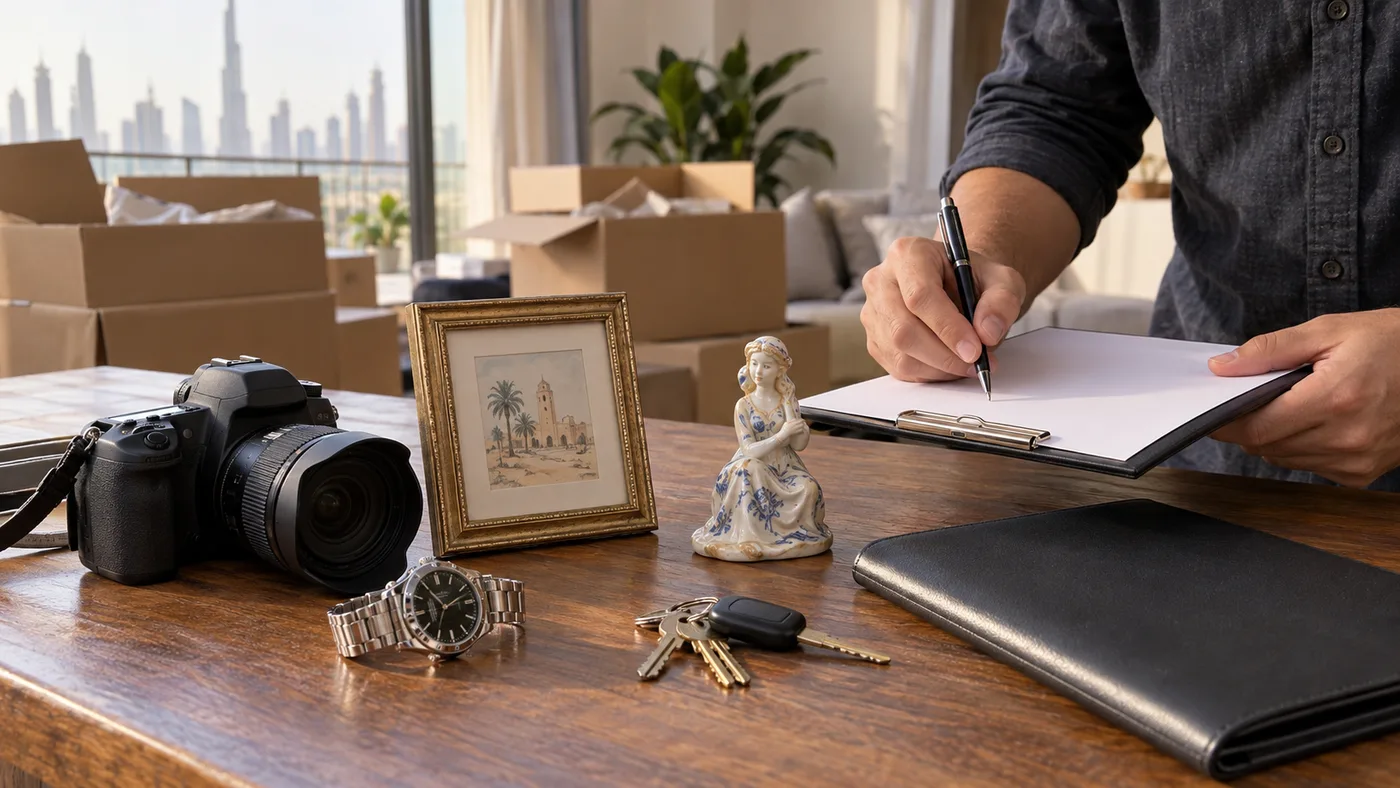
Jewellery, watches, coins and small collections, including pieces stored inside ordinary boxes or drawers.
Signed artwork, framed prints, rugs, ceramics and decorative objects with labels, marks or purchase records.
Solid-wood, designer or inherited furniture whose maker, construction or history can be identified.
Recent cameras, audio equipment, computers and other electronics that still power on and include accessories.
Working appliances with model labels, service records and enough useful life for a buyer or recipient.
Documents, photographs, keys and personal records, which may have no resale value but must never enter the clearance load.
If a piece is old furniture rather than part of a whole-property decision, use the checks in our antique furniture valuation guide. That guide owns the joinery, hardware and age question. The process here decides which categories across an apartment or villa earn that closer inspection.
Run a Three-Pass Triage Before Anything Moves
A useful valuation pass is quick because it works from broad boundaries toward individual items. Moving everything into one room first destroys context, mixes ownership, and makes condition harder to record. Walk the property while the contents are still where they were used.
1Remove passports, tenancy papers, financial records, jewellery and keys from the property before sorting begins.
2Walk every room and photograph possible value candidates where they stand, including anything inside storage furniture.
3Check the underside, back and inside of each candidate for a maker, model, hallmark, serial number or repair label.
4Match receipts, certificates, manuals and spare parts to the item without cleaning, repairing or dismantling it.
5Place candidates in one locked room or visibly marked zone that the clearance crew will not enter.
6Choose which items need a specialist opinion and which can go straight to a resale, donation or removal decision.
7Set the last date for a decision, leaving enough time to arrange collection before the property handover.
Item group
First value signal
Best next check
Jewellery and watches
Hallmark, maker, movement or supporting paperwork
Record close photographs and keep the item off site
Art and decorative objects
Signature, edition number, gallery label or provenance
Photograph front, back, frame and any labels
Furniture
Maker label, solid joinery, original hardware or known history
Record full views, joints, underside and damage
Electronics
Recent model, working condition and complete accessories
Confirm model and function without exposing private data
Appliances
Working condition, clean interior and service history
Record the model label and any faults for an honest listing
Everyday contents
Good condition in a category people reuse in quantity
Group for donation rather than pricing piece by piece
The first check identifies evidence. It does not turn an uncertain item into a guaranteed sale.
Document Condition Before Cleaning or Moving
Condition is easiest to prove before the item changes hands. Take one full view, several detail views, every label or mark, and a separate photograph of damage. Include a ruler or familiar object when scale is not obvious, but keep serial numbers and personal paperwork out of public listings.
Record a candidate's condition and identifying details before it is cleaned, packed or moved from the property.
Do not polish metal, oil timber, replace hardware or remove a frame because it looks tired. A repair can erase the evidence a specialist uses to judge age and originality. Dust that can be lifted without rubbing is one thing; restoration is a decision to make only after the value question is settled.
Keep: Personal records, heirlooms and items the household has already chosen. Remove them from the work area before the crew arrives.
Check: Items with a maker, mark, documented history or unusual construction. Hold these back until the evidence has been reviewed.
Sell: Recognisable, working items with a realistic buyer and enough time left for collection. Give each listing a hard end date.
Donate: Useful items whose placement matters more than recovering money. Confirm acceptance before counting on the route.
Clear: Broken, incomplete, worn or unclaimed contents that no longer justify storage, advertising or another appointment.
When a Specialist Opinion Is Worth the Delay
A specialist opinion earns its place when the item has evidence that an ordinary marketplace cannot interpret. A signature with a traceable history, a hallmark, a recognised maker, a documented collection or unusual construction gives somebody something concrete to assess. Age alone is not enough.
Ask what photographs and records are needed before arranging a visit. For a whole-property clearance, remote screening is useful because it narrows a room of possible candidates to the few pieces worth seeing in person. Do not name a sale figure in the listing until somebody qualified for that category has supported it.
If there is no label, no history, poor condition and no interested buyer after a short test, treat the item as a removal decision. Our guide to selling everything before leaving Dubai explains why a sale deadline matters more than a hopeful asking price when a handover date is fixed.
How Dubai Storage Conditions Affect the Decision
Dubai homes subject belongings to a repeated shift between hot, humid storage and strong indoor air conditioning. Timber can open at joints, veneer can lift, leather can dry, paper can wave and metal can spot. A piece may still be desirable, but its current condition matters more than how well it looked when it entered storage.
Balconies, villa garages, maid's rooms used as stores and air-conditioned living rooms age the same material in different ways. Record where an item has been stored and inspect the hidden side as well as the display side. A buyer will find swelling, sun fade or odour when they collect, so disclose it before the appointment rather than losing the final day to a rejected sale.
Set a Decision Deadline That Protects the Clearance
The property date is the fixed point. Work backwards from the handover, cleaning appointment or sale completion, then reserve the final collection before opening listings. An interested message is not a collected item, and a promised buyer can still fail to arrive.
Close appraisal decisions first, while there is still time for an in-person inspection if one is needed.
Give private buyers a collection window rather than an open-ended promise to hold the item.
Confirm donation acceptance and vehicle capacity before removing the item from the clearance list.
Keep a fallback list for every candidate: second buyer, donation, then booked removal.
Stop advertising before the final cleaning day so the property can become empty on schedule.
The staged timing in our Dubai house clearance checklist gives the rest of the property the same protection. Valuation sits near the start of that timeline because it depends on evidence, outside opinions and buyer availability.
Turn the Decisions Into a Clear Crew Brief
Before collection, put everything being kept or checked behind one closed door and mark that room as out of scope. Photograph the rooms being cleared after the hold-back items have moved. A physical boundary is safer than asking a crew to remember a list of twenty exceptions while furniture and boxes are moving.
Junk Services Dubai handles the clearance and removal stage, not valuations or sales. Once the decisions are finished, our house and villa clearance team can work through the remaining rooms, keep the agreed donation stream separate and leave the property ready for its next appointment.
Key Takeaways
A whole-property valuation is a triage that finds the few contents deserving more time before clearance.
Remove documents, jewellery, keys and personal records before anybody starts sorting or lifting.
Photograph value candidates in place, including labels, marks, condition and damage, before cleaning them.
Seek specialist input only where a maker, hallmark, signature, history or unusual construction supports it.
Dubai heat, humidity and air conditioning can change condition, especially in balconies, garages and store rooms.
Set a firm sale and appraisal deadline, with donation or removal as the fallback route.
Why Choose Junk Service in Dubai
As a local, fully insured team, Junk Services Dubai makes clearing your space simple — fast pickups, fair upfront pricing and responsible disposal across every Dubai community.
Same-Day Availability
Book today and, where crews are free, we clear it today — with no rush surcharge.
Fair, Upfront Pricing
A flat price agreed before we arrive, based on volume, items and access. No surprises.
Insured, Uniformed Crews
Background-checked teams who do all the lifting and protect your floors, lifts and walls.
Responsible Disposal
We sort for reuse, donation and recycling in line with Dubai Municipality guidance.
Our editorial team is made up of the crews and coordinators who clear homes, villas and offices across Dubai every day. We share practical, first-hand guidance on decluttering, disposal and responsible waste removal in the UAE.
FAQ
Frequently Asked Questions
No. A clearance crew can identify items that should be held back, but it is not a valuer, dealer or auction service. Arrange specialist advice separately for credible candidates before the collection date.
Jewellery, watches, signed art, collections, branded furniture, recent electronics and working appliances deserve the first look. Their condition, maker, model and supporting records matter more than age or size alone.
No. Remove loose dust without rubbing, but do not polish, oil, repair or replace hardware before advice. Cleaning can alter an original surface and remove evidence used to judge age and condition.
Yes, for an initial screening. Supply full views, close-ups of marks and labels, the underside or back, damage, dimensions and any receipts or history. A specialist can then say whether an in-person inspection is worthwhile.
Set the last buyer collection several days before cleaning or handover. The right buffer depends on your property schedule, but an uncollected promise should never be allowed to hold the clearance open on the final day.
Move it to secure storage or keep it with you rather than guessing under deadline pressure. Only hold back items small or credible enough to justify the cost and effort of storing them after the property is cleared.
Place them in one locked or closed room that is excluded from the job, then show that boundary during the opening walkthrough. A separate room is safer than labels attached to individual objects.
Final Thoughts
A useful valuation pass protects value without turning every cupboard into a research project. Find the credible candidates, capture their evidence and give each one a deadline that fits the property rather than the other way around.
Once the hold-back room is closed and the decisions are recorded, the rest becomes a straightforward junk removal Dubai job with an unambiguous boundary.
Arrange Collection After Valuing the Contents
Send room photographs after the items being kept, sold or checked have been separated. Tell us the property type, floor, access details and date it must be empty, and we will confirm the crew, vehicle and collection window.
An old piece is either worth appraising or worth clearing, and the difference shows in the joints, the screws and the underside. How to check before anything leaves the room.
A stage-by-stage preparation checklist for a Dubai house clearance, from the decisions two weeks out to the access and paperwork the crew needs on the morning itself.
A realistic timeline for selling up before leaving Dubai: what moves fast, what only sells as a bundle, how to price when the flight date is the constraint, and how to handle whatever is left.


 Guides