A storage unit feels like the safe, reversible choice whenever you cannot decide what to do with something. It is also the one option that keeps costing money for as long as the decision gets put off. This guide sets out when renting storage genuinely earns its cost, when it has quietly become a way of avoiding disposal, and how to sort a household before you sign a contract rather than after.
A storage unit is the right tool for a narrow set of situations: something you will need again on a known timeline, or something caught in the middle of a bigger process you do not control yet, like a property sale or a lease overlap between two homes.
Used this way, storage is a bridge, not a destination. The unit has an end date in mind from the day it is rented, even if that date is a few months out rather than a fixed one.
Seasonal items with a genuine next use: decor pieces or equipment tied to a specific time of year.
Belongings caught between two addresses during a lease gap or a property sale that has not closed yet.
A short, defined holding period while a new home is being finished or furnished.
Items with real sentimental or resale value that just need somewhere safe until there is time to deal with them properly.
If the volume is large enough that sorting itself feels like the job, that is exactly what our decluttering services page is built around.
The Bill That Keeps Running
The one thing storage does that disposal does not is keep costing money for as long as the decision gets put off. A small unit's monthly rent looks manageable in isolation, but it is a bill with no natural end date unless you set one.
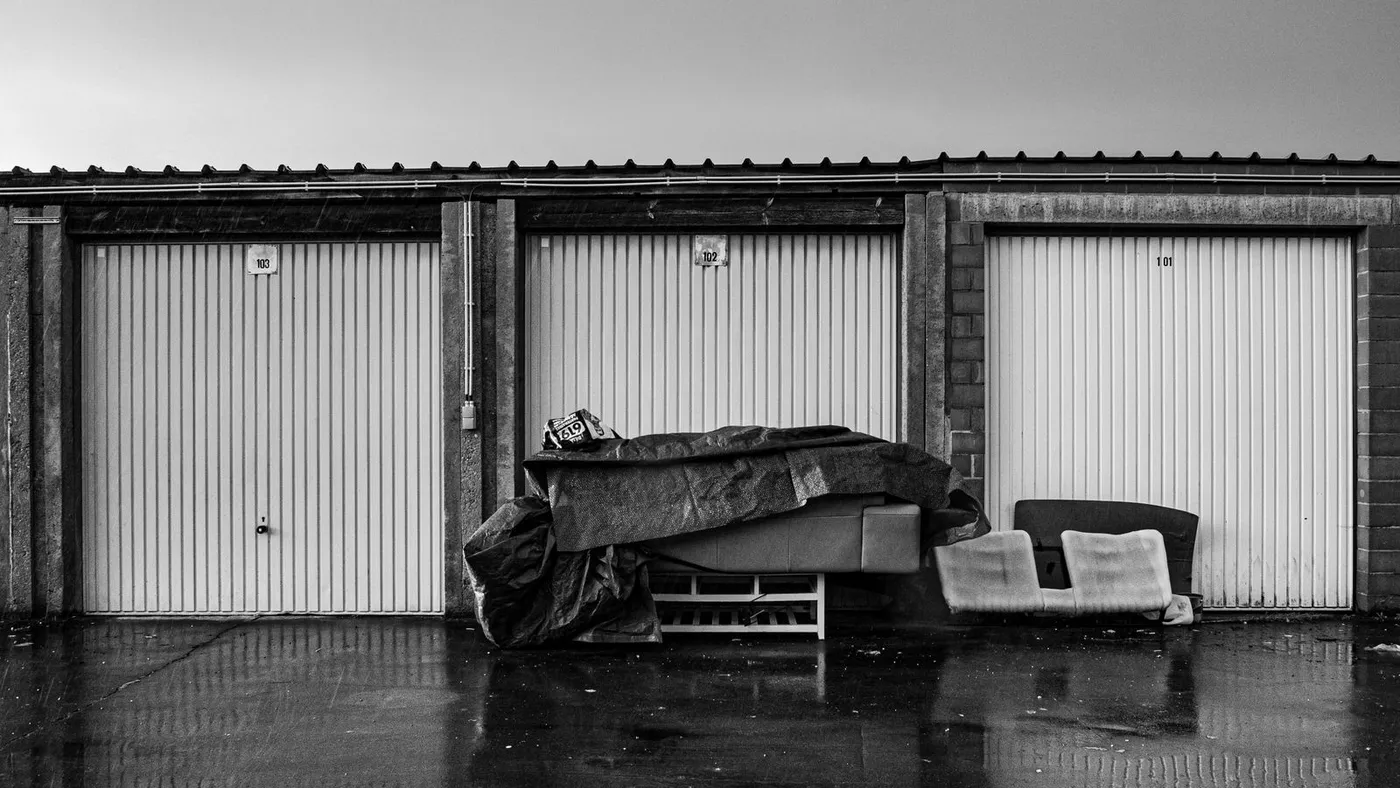
Furniture left waiting outside a unit, rather than inside it, is usually a sign the storage decision was never settled.
Add up what a unit costs over six months or a year, and it is common for the total to pass what the stored items are worth, especially for mid-value furniture that a furniture removal booking could have cleared in one visit for a single cost.
The Real Test: Rent Now vs Replace Later
The simplest way to decide is to compare three things for each item you are considering storing: what it is worth, what it would cost to store for the period you expect to need it, and what it would cost to replace later if you let it go instead.
Item type
Worth storing when
Usually better to let go when
High-value furniture, genuinely still needed later
You have a firm date it is needed again, within months rather than years
The date keeps slipping and has no fixed point
Seasonal or occasional-use items
The next use is predictable and not far off
It has been stored longer than it has ever been used
Sentimental or hard-to-replace items
The space cost stays small relative to the item's value
The item is large and low-value despite the sentiment
Mid-range furniture and appliances
A confirmed move-in date makes the gap short
No confirmed date exists yet for needing it again
The pattern that repeats across all four rows: a firm, near-term date favours storage; an open-ended one favours letting go.
When Storage Is Deferred Disposal
Storage sometimes gets rented for a different reason entirely: not because the item is needed again, but because deciding to let it go feels harder than paying to avoid the decision. A few signs point to this.
No date attached: The unit was rented without any real plan for when its contents would be needed again.
Renewed without being opened: The contract has been renewed more than once and the unit has not been visited in between.
Cheaper to replace than the rent already paid: Total rent paid so far already exceeds what it would cost to buy the item again.
Opening the unit and sorting what is inside settles the question far faster than another renewal does.
None of this is a judgement on what is inside the unit. It is a practical read on whether the storage is still doing a job, or just running a bill on something that has already been decided, quietly, by not deciding.
Sorting Before You Decide
The clearest way to avoid renting storage for the wrong reason is to sort before booking a unit, not after.
1Separate items into a firm-date pile, needed again within months, and an open-ended pile before renting anything.
2For the open-ended pile, apply the replace-later test: would it be cheaper to buy this again when it is genuinely needed?
3Set aside anything with real resale value for selling rather than storing or disposing of it outright.
4Only rent a unit for the firm-date pile, sized to what that pile needs, not to avoid deciding on the rest.
5Book collection for everything that did not make the firm-date pile, rather than storing it by default.
Our guide to decluttering cost in Dubai breaks down what a sorting-heavy job like this typically involves if the volume is large enough to need a crew rather than a weekend.
If You Already Have a Unit You No Longer Need
If this test points to giving up a unit you are already paying for, the clearance itself is a single-visit job: a crew empties the unit, sorts what is inside for donation, resale or disposal, and hands it back swept for the facility to close out. That process is covered step by step in our guide to storage unit clean out in Dubai.
Key Takeaways
Storage works best as a bridge with a firm, near-term date already in mind, not as an open-ended way to avoid a decision.
The bill keeps running every month a unit stays rented, and it is common for total rent to pass what mid-value items are worth.
The clearest test: compare the item's worth, the storage cost for the period you expect to need it, and the cost of replacing it later.
A unit renewed repeatedly without being opened, or one that has already cost more than its contents are worth, is usually deferred disposal rather than genuine storage.
Sorting before renting a unit, not after, keeps the storage decision limited to items that genuinely pass the test.
Why Choose Junk Service in Dubai
As a local, fully insured team, Junk Services Dubai makes clearing your space simple — fast pickups, fair upfront pricing and responsible disposal across every Dubai community.
Same-Day Availability
Book today and, where crews are free, we clear it today — with no rush surcharge.
Fair, Upfront Pricing
A flat price agreed before we arrive, based on volume, items and access. No surprises.
Insured, Uniformed Crews
Background-checked teams who do all the lifting and protect your floors, lifts and walls.
Responsible Disposal
We sort for reuse, donation and recycling in line with Dubai Municipality guidance.
Our editorial team is made up of the crews and coordinators who clear homes, villas and offices across Dubai every day. We share practical, first-hand guidance on decluttering, disposal and responsible waste removal in the UAE.
FAQ
Frequently Asked Questions
When you have a firm, near-term date for needing the item again, a seasonal item with a predictable next use, or belongings caught in a short lease gap or property sale. Storage works best as a bridge with an end date already in mind.
Compare what it is worth, what storing it for the period you expect costs, and what replacing it later would cost instead. If storage rent would pass the item's value before you would realistically use it again, it usually is not worth storing.
Only if the storage period is short and the item is genuinely hard or expensive to replace. For mid-value, easily replaceable furniture and appliances, ongoing rent often adds up to more than buying again later.
A unit rented with no real plan for when the contents are needed again, renewed more than once without being opened, or one where the rent paid already exceeds what it would cost to replace the contents.
Yes, sorting is part of a standard decluttering or clearance visit. We help separate what is genuinely worth storing from what is cheaper to let go of, then clear the second pile in the same visit.
That is a single-visit clearance: a crew empties the unit, sorts the contents for donation, resale or disposal, and leaves it swept for the facility to close out. Our storage unit clean out guide covers the process in full.
No. We collect and clear items, sorting for donation, resale, recycling or disposal. If storage genuinely suits your timeline, that is arranged with a self storage facility separately from our service.
Final Thoughts
Storage is not wrong, but it is not neutral either. Every month a unit stays rented is a month of rent added to whatever the contents are worth, and that math rarely gets easier by waiting.
Run the firm-date test before you sign a storage contract, not after. For anything that does not pass it, a straightforward junk removal booking clears it in one visit instead of a bill that keeps running.
Book a Pickup Instead of Another Month of Rent
If the firm-date test says an item is not worth storing, we clear it in one visit, sorting for donation, resale or disposal as we go.
WhatsApp Us photos of what you are weighing up, Call Now to talk through the sorting, or Schedule a Pickup once you have decided.
A rented storage unit costs money every month it stays full. Here is how a clean out runs in Dubai, what the facility controls, and how to close the unit in a single visit.
Decluttering help in Dubai splits into two separate services: deciding what stays, and removing what does not. Here is what each one covers and which you need.
A declutter has two separate prices: the deciding and the removal. What each one covers, what moves the removal figure up or down, and how to run the project so it clears in one visit.



 Guides