Toolbox and Hand Tool Disposal Dubai: Safe Sorting Guide
The Junk Services Dubai Team 4 min read
Old toolboxes need more preparation than an ordinary storage container because their contents may be sharp, oily, powered or still useful. This guide explains how to sort manual tools in a Dubai home, isolate items that need another route and present the safe remainder for collection.
Lift every tray, open small compartments and check beneath liners before the toolbox moves. Nails, blades, keys and loose fittings collect in corners where they can pierce a bag or fall into a corridor. The owner should remove documents, spare keys and anything that cannot be identified.
Sort in shade if the box has been stored in a hot villa garage in Arabian Ranches or The Springs. Metal handles and dark cases can become uncomfortable to touch, while brittle plastic latches may fail under a full load. A broader garage clean-out guide covers shelving and mixed stored items; this article deals with the toolbox itself.
Keep: Working tools that fit current household needs and have sound handles, jaws and cutting edges.
Pass on: Clean complete tools with no cracks, severe rust or missing safety parts.
Collect: Dry worn manual tools and empty cases that are declared and safely contained.
Separate: Chemicals, fuel, batteries, gas cartridges and unidentified liquids that cannot travel in the same load.
Separate Manual Tools from Powered and Contaminated Items
Item
Check first
Preparation
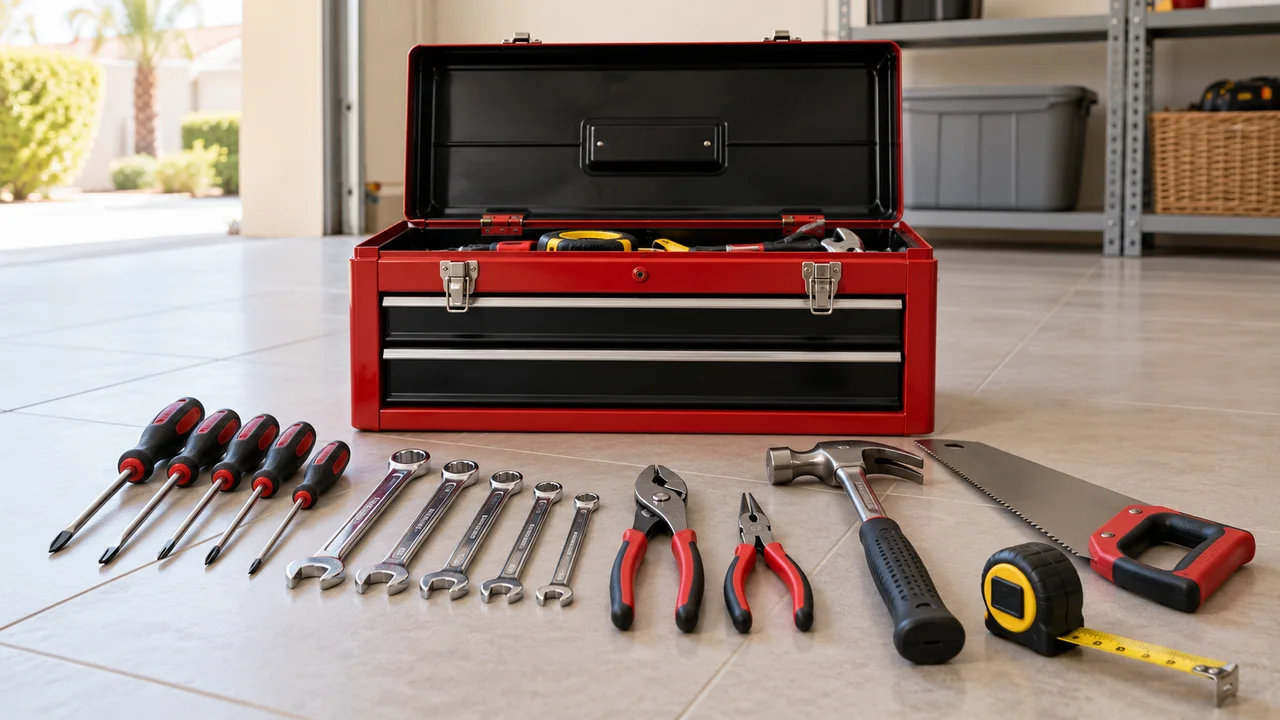
Spanners and sockets
Oil and loose pieces
Wipe dry and close in a tray
Hammers and mallets
Loose or split handle
Wrap the head and label the defect
Hand saws and chisels
Exposed cutting edge
Fit a guard or rigid cardboard cover
Cordless tools
Removable battery
Declare separately and follow the battery route
Toolbox or tool bag
Hidden contents and failed latch
Empty it and secure the lid
The safest route depends on the hazard attached to the tool, not the size of the toolbox.
A hand tool is not the same collection risk as a cordless drill, soldering device or powered cutter. Remove an accessible battery without forcing a swollen or damaged pack, then follow the battery disposal guide. Keep power leads coiled and declare the electrical item rather than hiding it beneath manual tools.
Paint, solvent, adhesive, lubricating oil and fuel stay outside the toolbox collection even when their tins look nearly empty. Keep each product in its original closed container and use the correct specialist route described in the hazardous household waste guide. Do not pour residues away to make the box appear empty.
Contain Sharp Edges and Loose Metal Parts
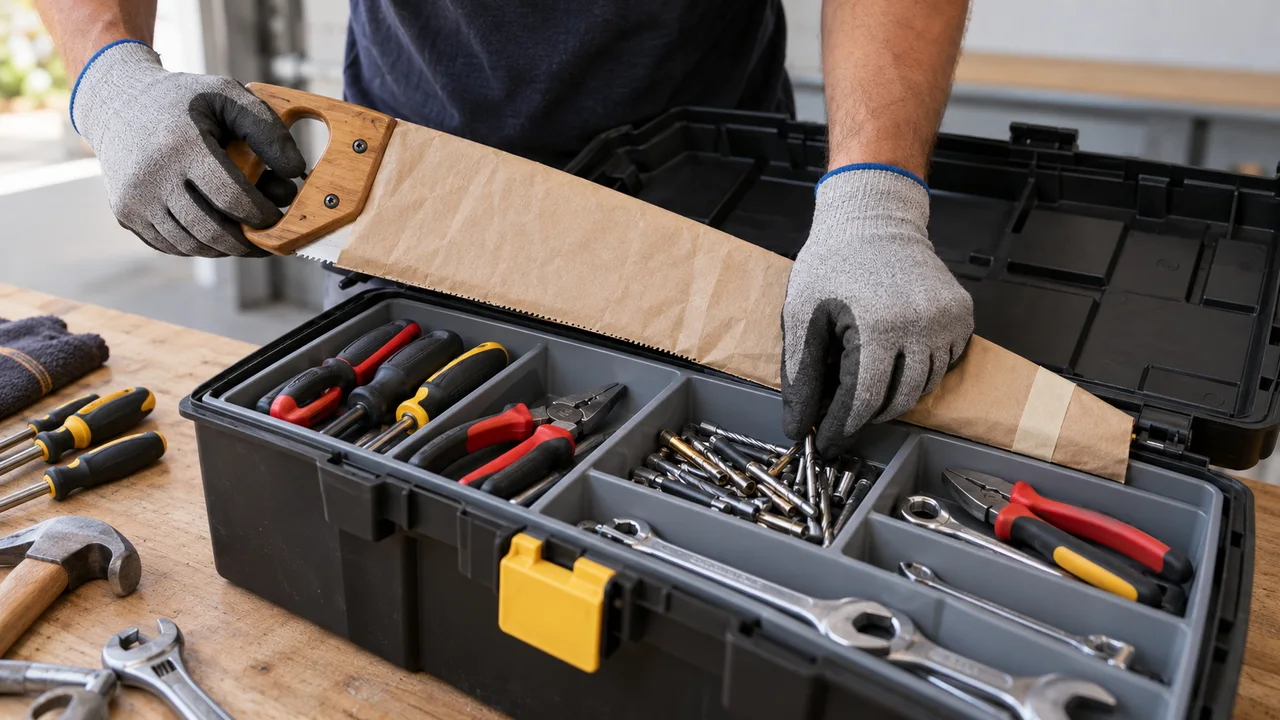
A toolbox is safe to carry only when nothing can emerge through a split case or open lid. Fit original blade guards where available. Otherwise, sandwich a cutting edge between rigid cardboard, tape the cover to itself and mark the package so the tape does not touch the blade.
Rigid edge covers and closed compartments prevent sharp or loose tools from shifting during carrying.
Place screws, nails, sockets and drill bits in a rigid lidded container.
Wrap broken handles so splinters cannot catch a hand or bag.
Keep heavy hammers and vices low in the box rather than in a top tray.
Use a strap around a case only when it cannot crush or release the latch.
Do not lift a damaged plastic box by its handle; transfer the contents first.
Choose Reuse, Material Recovery or Collection
Working hand tools often have a longer useful life than the case holding them. Build a complete, clean set before offering tools for reuse, and disclose rust, worn jaws or a loose head. A box of unidentified mixed pieces is harder for another person to assess than several labelled groups.
Broken steel tools may have a material route, but mixed plastic grips, composite handles and oily residue limit what can be recovered. Do not dismantle a tool to chase a small amount of metal. If the tools are part of a larger household clear-out, a planned junk removal pickup can keep the prepared box controlled with the rest of the declared load.
Prepare the Toolbox for Pickup in a Dubai Building
1Photograph the open box and all tools that will leave.
2Remove personal items, batteries, liquids and gas cartridges.
3Cover sharp edges and close loose metal pieces in rigid containers.
4Wipe oily surfaces and disclose any residue that cannot be removed.
5Close and test the latch, or transfer the contents if the case is weak.
6Keep the box beside the agreed route without blocking a lift lobby or fire door.
In Dubai Marina or Business Bay, include the toolbox in the building-access plan because a dense metal case can be small but heavy. Tell the collection team if the route includes stairs or a long basement walk. Photos of the case, contents and access point help the crew choose safe carrying equipment before arrival.
Key Takeaways
Empty every tray and compartment before the toolbox leaves.
Keep batteries, chemicals, fuel and powered items separate from dry manual tools.
Cover sharp edges and close loose metal parts in rigid containers.
Reuse sound tools as complete, honestly described sets where possible.
Why Choose Junk Service in Dubai
As a local, fully insured team, Junk Services Dubai makes clearing your space simple — fast pickups, fair upfront pricing and responsible disposal across every Dubai community.
Same-Day Availability
Book today and, where crews are free, we clear it today — with no rush surcharge.
Fair, Upfront Pricing
A flat price agreed before we arrive, based on volume, items and access. No surprises.
Insured, Uniformed Crews
Background-checked teams who do all the lifting and protect your floors, lifts and walls.
Responsible Disposal
We sort for reuse, donation and recycling in line with Dubai Municipality guidance.
Our editorial team is made up of the crews and coordinators who clear homes, villas and offices across Dubai every day. We share practical, first-hand guidance on decluttering, disposal and responsible waste removal in the UAE.
FAQ
Frequently Asked Questions
Yes, dry manual tools can be included when they are declared, packed securely and free from chemicals or fuel. Cover sharp edges and contain all loose parts before collection.
Cover the entire blade with a purpose-made guard or rigid cardboard secured to itself. Mark the package and disclose severe rust or a loose handle.
Declare it separately rather than hiding it in the case. Remove an accessible sound battery for the correct battery route, but do not force a swollen or damaged pack.
Put them in a rigid lidded container so they cannot spill or puncture a bag. Do not leave loose sharp metal in a toolbox tray with a failed latch.
Wipe off surface oil and keep contaminated cloths separate. Do not wash oil or solvent into a drain, and disclose any residue that remains.
Yes, after its contents are transferred or secured so the split case cannot release tools. Do not carry a damaged box by a weak handle.
Final Thoughts
A toolbox is ready to leave when its contents are known, dry and controlled. Separate the hazards first, protect every sharp edge and keep dense loose pieces inside a container that can survive the route.
Arrange Collection
WhatsApp Us photos of the open toolbox, prepared tools and access route to arrange a household collection.
A Dubai garage stops being a garage the moment it becomes storage. What accumulates there, what the summer heat does to it, and how a full clear-out runs from sorting to the last load.
A shed or garden store fills with tools, chemicals and gear that the heat quietly ruins. Here is what a clear-out covers, what needs its own disposal route, and how the job runs at a villa.
Paints, aerosols, batteries, lamps and pool chemicals are handled apart from a general clear-out. What counts as hazardous household waste in Dubai and what to do with each type.

 Guides