Colour Coded Bins in Dubai Explained: Household Sorting Guide
The Junk Services Dubai Team 6 min read
Sorting household discards correctly is one of the easiest ways residents in Dubai can support environmental sustainability. With colour-coded containers positioned across villa streets, high-rise service rooms and commercial lobbies, understanding what belongs in green versus black containers prevents batch contamination and ensures clean materials reach recycling processors.
The Core Colour-Coded Bin System Across Dubai Communities
The standard residential waste management framework across Dubai relies on a streamlined two-stream system. While industrial facilities and international office parks use multi-colour stations, residential zones in both villa neighbourhoods and tower apartments focus on two main streams:
The green bin is designated for co-mingled dry recyclables, while the black bin (sometimes grey or dark green depending on the container manufacturer) receives general residual waste. Mastering this distinction ensures that valuable materials are diverted from landfills while maintaining clean community bin enclosures. For broader guidelines, see our dedicated waste segregation at home guide.
What Goes in Each Bin Colour: Complete Household Breakdown
Separating materials at the point of disposal avoids cross-contamination. Use this reference matrix to guide your daily household sorting:
Rinse food containers clean, empty all liquids, and flatten cardboard boxes completely
Black Bin (General Waste)
Cooked food leftovers, vegetable peelings, used paper towels, hygiene items, non-recyclable wrappers, dust
Paint cans, vehicle batteries, motor oil, large appliances, furniture, hazardous chemicals
Bag in sturdy plastic sacks and tie securely to prevent liquid leaks and unpleasant odours
Brown Bin (Organic/Compost)
Raw fruit and vegetable scraps, coffee grounds, garden clippings, eggshells (where community bins exist)
Plastic packaging, pet waste, cooked meat oils, dairy remnants
Keep unbagged or use certified biodegradable plant-based compostable liners
Blue Bin (Office Paper)
White copy paper, documents, envelopes, brochures, notebooks (found in commercial office buildings)
Plastic sleeves, metal binders, soiled paper cups, food wrappers
Remove plastic spiral spines and large metallic clip binders before disposal
Standard color-coding guidelines for residential and commercial waste streams in Dubai.
How to Prevent Recycling Contamination at Home
Contamination occurs when non-recyclable or soiled items enter the green bin. A single greasy takeout container can ruin an entire batch of clean cardboard, forcing sorting facilities to redirect the load to general disposal. Follow these five rules to maintain pure recycling streams:
1Rinse food and drink containers: Give bottles, jars and aluminium cans a quick water rinse to remove sugar, sauce or oil residues before placing them in the green bin.
2Flatten all cardboard boxes: Break down delivery boxes and packaging cartons flat to maximise container space and avoid jamming communal chutes.
3Keep container lids attached: Screw plastic caps back onto rinsed water bottles so they travel together through mechanical sorting trommels.
4Deposit recyclables loose: Avoid placing recyclable items inside black plastic trash bags; drop them loose or in clear bags so collection crews can inspect the stream.
5Dispose of greasy pizza boxes in general waste: Cardboard soaked with cheese or grease cannot be pulped and belongs strictly in the black bin.
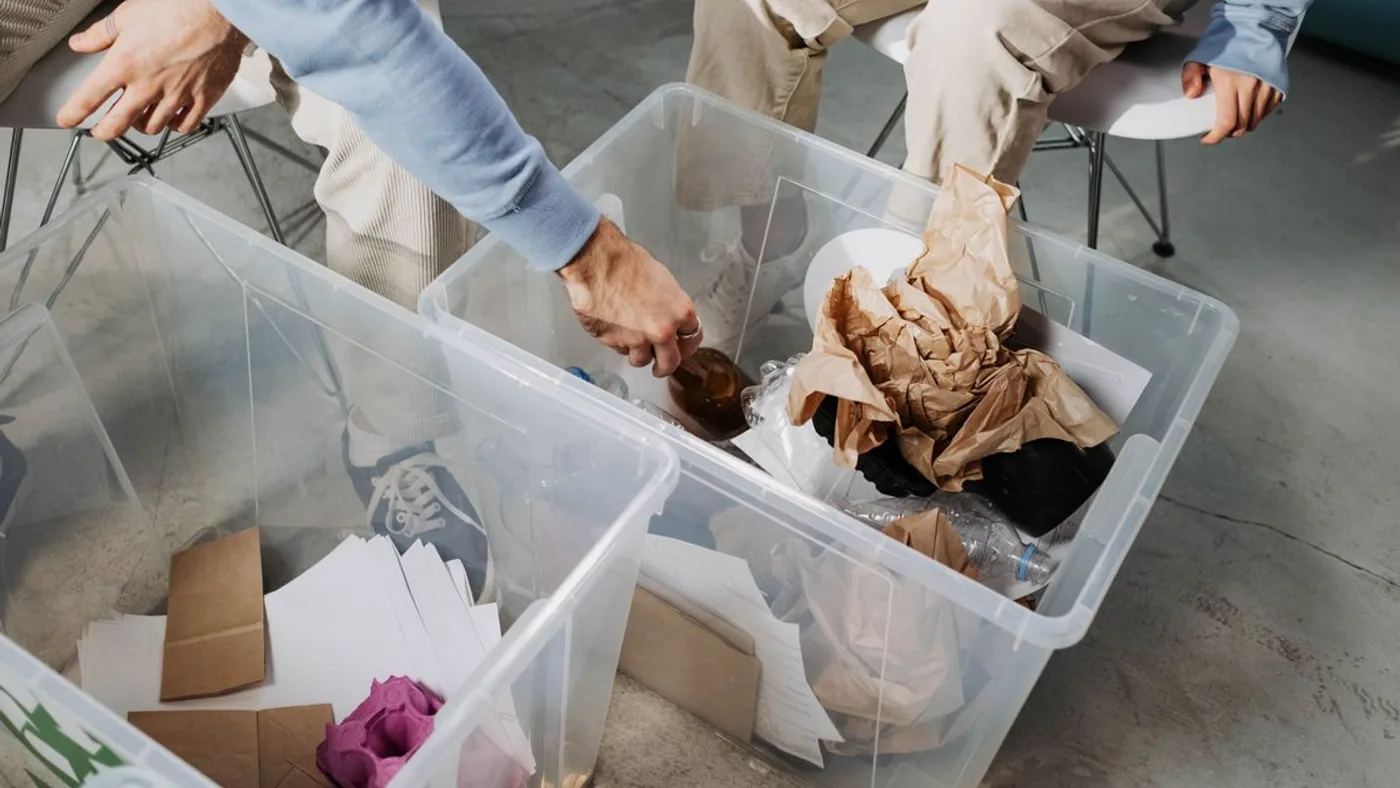
Segregating dry paper, plastics and metals into dedicated coloured bins protects items from organic contamination and enables material recovery.
Practical Tips for Setting Up a Home Sorting Station
Setting up a practical separation workflow indoors ensures family members and domestic helpers follow sorting habits effortlessly. Consider these straightforward adjustments:
Place a dual-compartment waste bin in your kitchen or pantry so food scraps and clean recyclables are segregated immediately at the preparation stage. Keep a small collapsible bin bag or paper tote beside your washing area for empty rinse-and-dry jars and aluminium beverage tins. Labelling indoor containers with simple icons reinforces the routine and ensures zero contaminated packaging reaches your main outdoor green container.
Specialised Bin Colours in Commercial and Public Facilities
While two bins predominate in private villas, you will encounter additional specialised bins across shopping malls, business hubs in Business Bay and public transport terminals:
Yellow Bins in Selected Public Hubs: Certain mixed-use developments and transport stations utilise yellow containers specifically for aluminium beverage cans and plastic bottles in high-footfall corridors.
Red Bins for Regulated Medical Discards: Red bins are strictly reserved for healthcare clinics, dental centres and veterinary offices. Domestic households must never deposit standard garbage into red containers.
Blue Bins in Corporate Offices: High-density corporate towers in DIFC and Downtown use blue bins for clean office paperwork, confidential shredding and shredded archive files.
Battery and Small E-Waste Deposit Boxes: Many residential building lobbies and supermarket entrances feature dedicated transparent collection tubes for household AA/AAA batteries and redundant mobile phones.
Bin Room and Chute Rules in High-Rise Towers
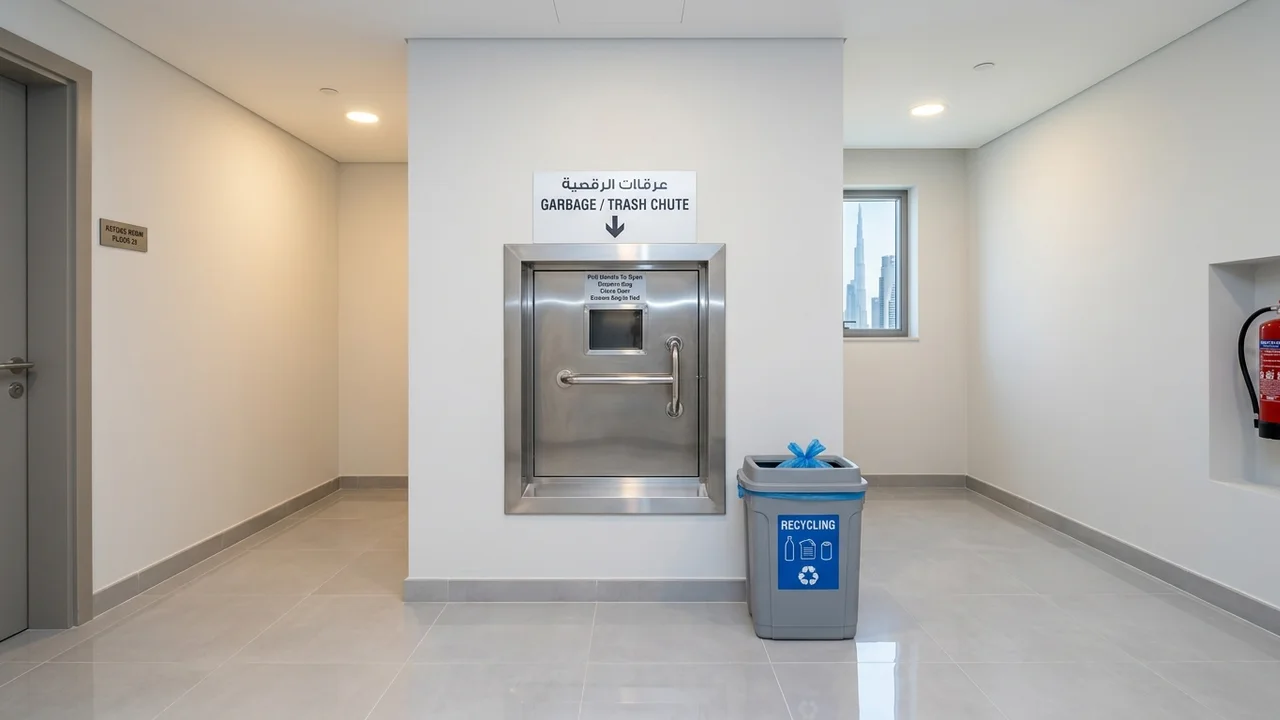
Living in an apartment tower involves shared waste facilities on every floor. Following building etiquette ensures safety and prevents unpleasant bin room conditions:
Chute segregation: Many modern towers feature dual-chute diverter buttons (one for General Waste and one for Recyclables). Select the correct button before opening the hopper.
No cardboard in chutes: Never force delivery boxes down vertical chutes; they become wedged between floors and cause dangerous blockages.
Staging boxes in service rooms: Flatten large cardboard cartons and stack them neatly in the designated floor refuse room alcove for housekeeping staff.
Secure bag sealing: Always double-knot general waste bags so food remnants do not spill onto chute lining or bin room tiling.
Certain materials cannot be processed by standard domestic trucks, whether placed in green or black containers. These items require specialised collection:
Bulky Household Furniture: Broken armchairs, dining tables, wardrobes and mattresses will damage bin lifters and chute mechanisms. Arrange an on-demand furniture collection instead.
Electrical Appliances & White Goods: Refrigerators, microwaves, washing machines and televisions contain circuit boards and refrigerants that require specialized electronics disposal.
Hazardous Chemicals and Paint: Leftover paint tins, mineral thinners, pool chlorine and automotive fluids represent fire hazards and must never enter domestic wheelie bins.
Batteries and Power Banks: Lithium-ion cells present severe combustion risks in compactor trucks and must be taken to dedicated battery deposit kiosks.
Green bins are reserved for clean, dry recyclables including paper, cardboard, plastics, cans and glass.
Black bins receive general bagged household refuse, food leftovers and non-recyclable packaging.
Rinsing food containers and flattening cardboard prevents batch contamination at sorting facilities.
Never drop cardboard boxes or glass bottles down apartment chutes; place them in service room recycling zones.
Bulky furniture, appliances, chemicals and batteries must never be placed inside domestic bins.
Why Choose Junk Service in Dubai
As a local, fully insured team, Junk Services Dubai makes clearing your space simple — fast pickups, fair upfront pricing and responsible disposal across every Dubai community.
Same-Day Availability
Book today and, where crews are free, we clear it today — with no rush surcharge.
Fair, Upfront Pricing
A flat price agreed before we arrive, based on volume, items and access. No surprises.
Insured, Uniformed Crews
Background-checked teams who do all the lifting and protect your floors, lifts and walls.
Responsible Disposal
We sort for reuse, donation and recycling in line with Dubai Municipality guidance.
Our editorial team is made up of the crews and coordinators who clear homes, villas and offices across Dubai every day. We share practical, first-hand guidance on decluttering, disposal and responsible waste removal in the UAE.
FAQ
Frequently Asked Questions
The standard residential containers in Dubai are green bins for clean dry recyclables (paper, cardboard, plastics, tins) and black bins for general household waste and food remnants.
The green bin accepts clean cardboard, newspapers, plastic drink bottles, food tins, aluminium cans and glass jars. All items must be free of food residue and liquids.
The black bin receives everyday non-recyclable discards including kitchen food scraps, soiled wrappers, used tissues, hygiene products and floor sweepings, securely bagged.
Non-recyclable or food-soiled rubbish contaminates clean paper and plastics, which can cause the entire batch to be rejected by mechanical sorters and diverted to a landfill.
Yes. Rinsed glass food jars and empty aluminium or steel cans are fully accepted in the green recycling bin across Dubai residential communities.
Yellow and blue bins are primarily used in commercial complexes, corporate towers and public transit hubs for specialised collections like office paper or beverage containers.
Final Thoughts
Proper waste segregation using Dubai colour-coded bins takes only a few extra seconds in your daily routine, but it has an immense positive impact on city recycling rates and environmental cleanliness.
If your home or office clearout produces items too large or numerous for domestic bins, our professional removal team is ready to help. Contact our team to schedule a dedicated pickup for furniture, appliances and bulk discards.
Schedule a Collection for Items That Exceed Domestic Bins
When furniture, appliances or renovation cleanouts create items that cannot fit inside standard colour-coded bins, our licensed team collects them directly from your doorstep. Book a pickup with our reliable clearance crew today.
A household guide to sorting waste in Dubai: the four streams worth separating, where the containers physically go in an apartment and a villa, and the rinse habit the summer heat makes essential.
Master Dubai apartment bin room etiquette. Learn chute rules, cardboard flattening, hazardous waste boundaries, and how to avoid building management notices.
What a recycling collection covers in Dubai, which materials leave as separate streams, how to prepare them, and when a booked pickup beats carrying it all downstairs.


 Guides