 Guides
 4 min read
How to Declutter Your Home in Dubai: A Practical Action Plan
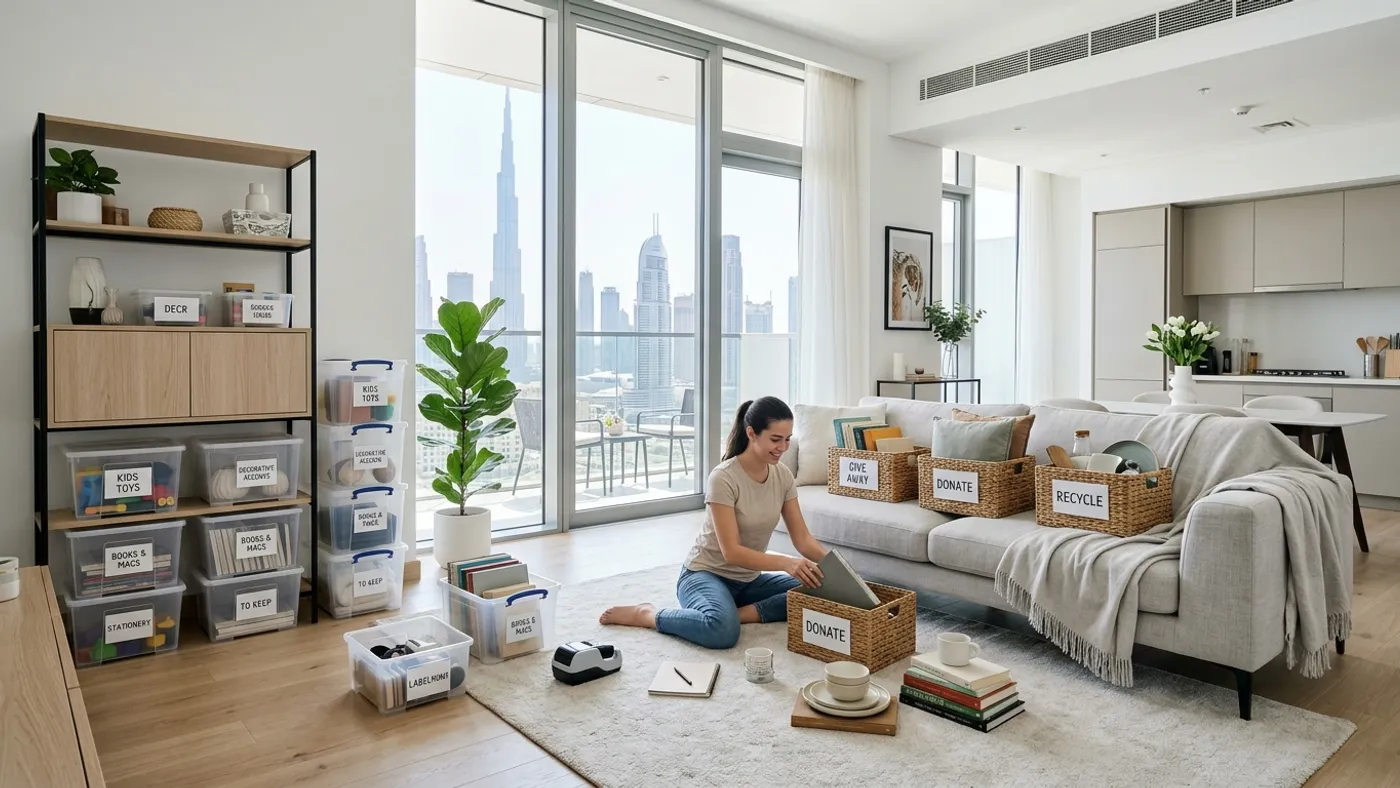
A practical guide to decluttering your Dubai home: sorting rules, managing expatriate accumulation, building momentum, and organizing discard removal.
Read Article
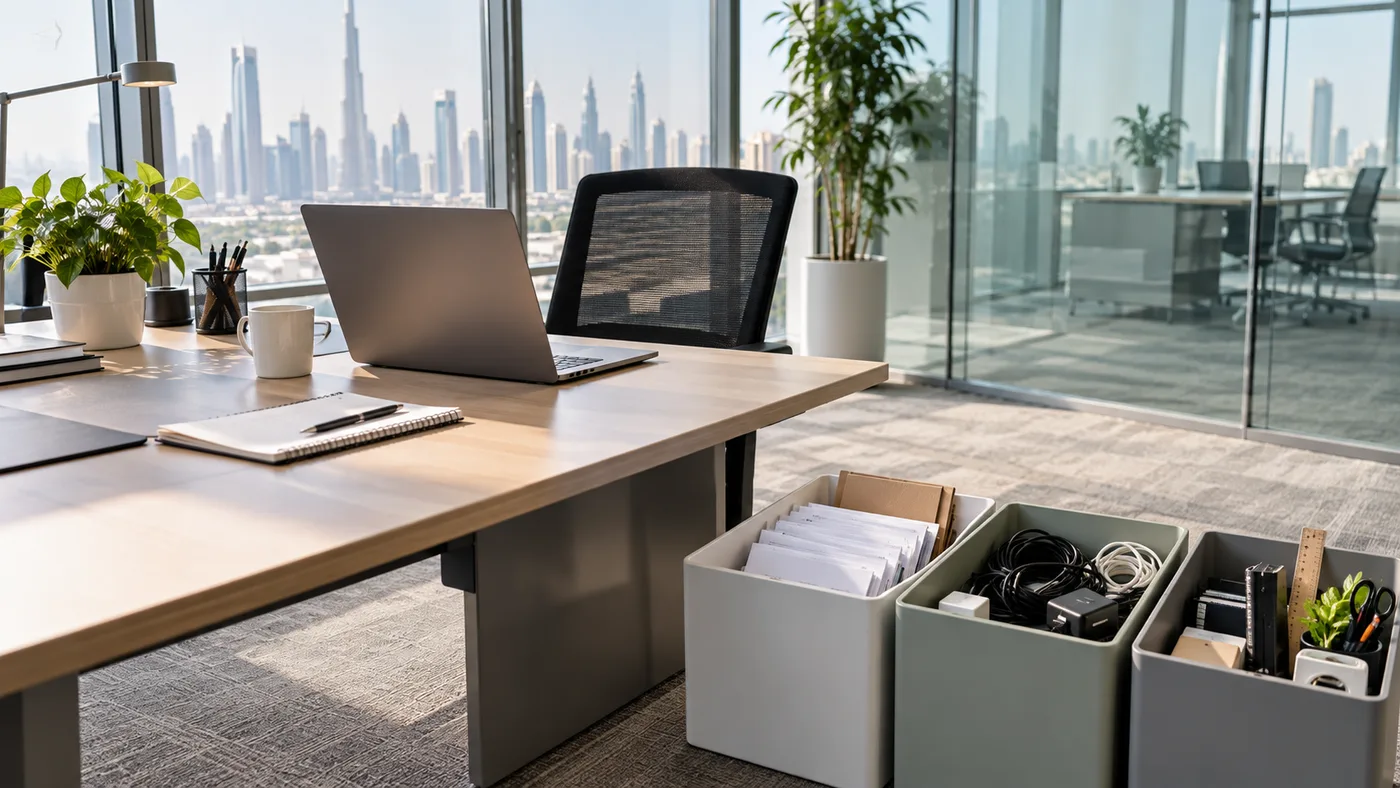
Declutter a home office by preserving the equipment you need for the next working day, then sorting everything around it in small batches. A desk in a Dubai apartment often shares space with household paperwork, delivery boxes and a guest bed, so clearing the entire room at once can interrupt both work and home life. This guide gives each category a decision and a destination before anything leaves.
List what your next work session requires: laptop, charger, monitor, headset, access token and current documents. Keep these together in a protected working area. If the desk must stay connected, begin with a drawer or bookshelf instead of unplugging equipment to make the room look empty.
A study in a villa can offer a spare surface, but a dining-table workspace in Business Bay may need to be packed away before dinner. Choose a sorting batch that fits one tray and can be finished before the room changes use. The success measure is a usable desk at the end of the session, not the number of cupboards emptied.
Keep the main surface for actions you repeat: typing, writing, calls or drawing. A printer does not need prime desk space if it is used infrequently and has another suitable indoor position. Do not buy a larger desk until you have separated active tools from old stock and household objects.
A shared desk needs separate ownership as well as separate storage. Give each user a tray for active papers, then agree which items can stay on the surface. The broader home decluttering guide covers whole-home sorting; this sequence keeps the work corner functional during that process.
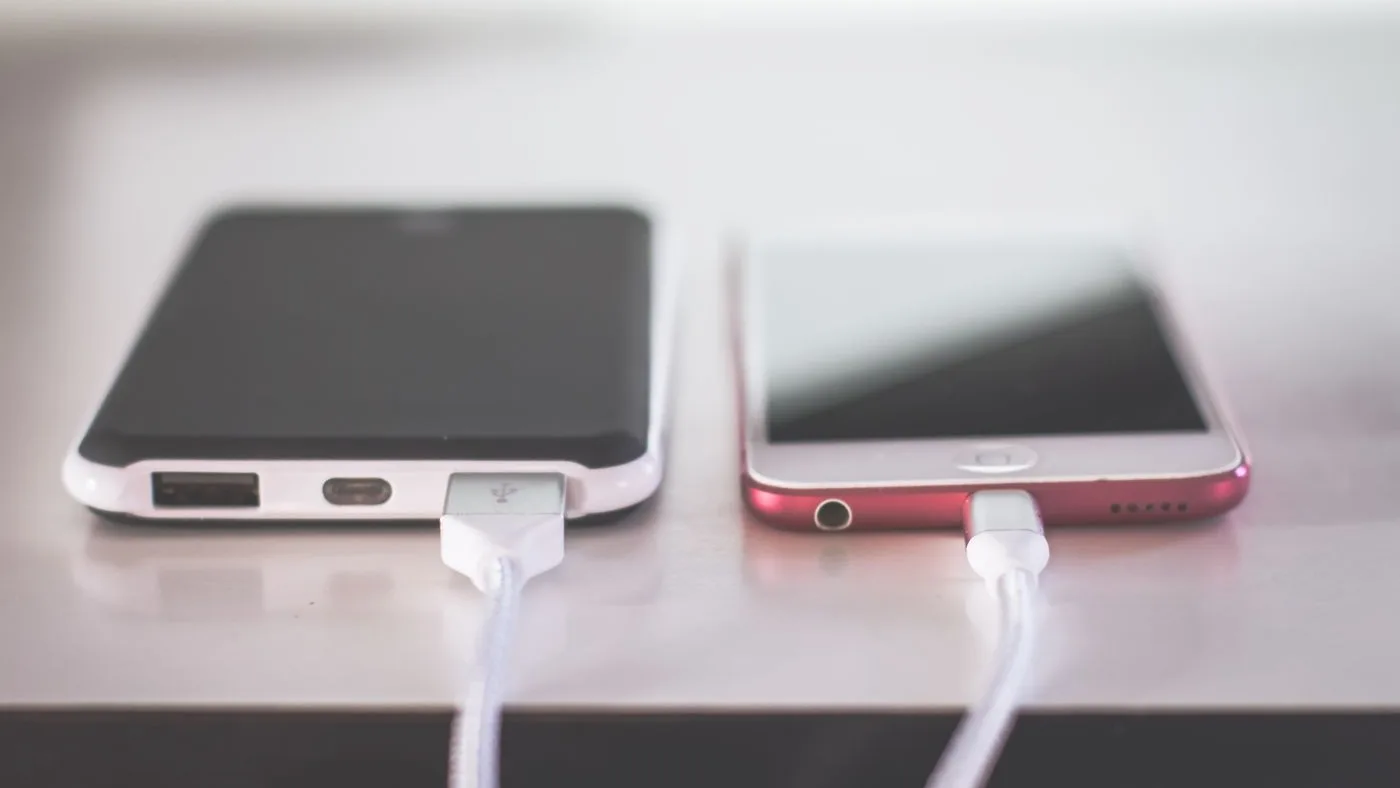
A cable drawer often contains several generations of equipment. Match a lead to an existing device and its purpose before deciding whether it is surplus. Similar-looking plugs do not prove that a charger is compatible, so check the device instructions or original accessory information instead of testing unknown power supplies at random.
| Accessory | Decision to make | Where it belongs |
|---|---|---|
| Daily charger | Does it belong to the active laptop? | With the working equipment |
| Spare display cable | Is there a specific screen it supports? | One accessible spare compartment |
| Unknown power adapter | Can its device and compatibility be confirmed? | Review tray until identified |
| Damaged cable | Is the insulation or connector damaged? | Separate for an agreed electronics route |
| Employer headset or dock | Who owns it and how must it be returned? | Separate return box |
Photograph the working connections before moving the desk. Reconnect and test the screen, microphone and charger before the discard box leaves the apartment. This catches a missing adapter while it can still be retrieved without buying another one.
Sort paperwork into action, reference and review piles before thinking about disposal. Household identity records, contracts and employer documents should not disappear into a general paper bag. This is an organisation step, not a records-retention schedule: follow the requirements of the document owner and the purpose of the record.
An old computer needs more than a physical clear-out. Follow the office electronics data-handling guide for the next stage, and ask an employer's IT team about work-owned devices. Do not treat an empty desktop screen or a deleted folder as proof that a drive is ready to leave.
Check the space with the chair pulled back and every necessary drawer open. A guest room still needs access to its bed and wardrobe; a living-room desk should not turn the route to the balcony into a storage lane. Retain furniture that supports these uses before considering extra shelves or cabinets.
In JLT apartments, a narrow turn between the study and entrance may determine whether an old desk can leave whole. Photograph its joints, dimensions and route before booking furniture removal. Keep fitted joinery separate from freestanding furniture and confirm collection scope instead of assuming everything attached to the room can be removed.
Give unwanted items a destination before they become a second office in the hallway. Clean working accessories may suit reuse if someone wants them; damaged electronics need a confirmed collection route. Cartridges should stay intact and separately packed as explained in the printer cartridge recycling guide.
For a collection in a residential tower, ask management about service-lift access and the loading point. Keep the prepared items inside your home until the agreed time. A crew needs to know which desk, chair or boxes are leaving, particularly when identical devices belonging to different people remain nearby.
End the session by opening the next task and checking that its tools are present. Put deliveries and newly printed papers through the same action-or-storage decision each week. A desk stays useful when new objects have a destination, not when yesterday's pile has been moved into a deeper drawer.
As a local, fully insured team, Junk Services Dubai makes clearing your space simple — fast pickups, fair upfront pricing and responsible disposal across every Dubai community.
Book today and, where crews are free, we clear it today — with no rush surcharge.
A flat price agreed before we arrive, based on volume, items and access. No surprises.
Background-checked teams who do all the lifting and protect your floors, lifts and walls.
We sort for reuse, donation and recycling in line with Dubai Municipality guidance.
Written by
The Junk Services Dubai Team
Junk Removal Specialists
Our editorial team is made up of the crews and coordinators who clear homes, villas and offices across Dubai every day. We share practical, first-hand guidance on decluttering, disposal and responsible waste removal in the UAE.
Use one portable work tray and a separate tray for the current sorting batch. Finish and clear the batch before the table is needed for meals, keeping work equipment together.
Only after the employer authorises disposal and confirms any data requirements. Otherwise keep it apart and arrange the specified return.
Keep it in a small review tray with the devices it might belong to. Check compatibility through the device instructions before connecting it or deciding it is surplus.
Yes, if you have checked how future printing needs will be met and own the printer. Confirm its condition and destination, and pack cartridges separately where the device instructions allow.
Agree a small shared stationery section and give each person a separate space for active work. Neither person should discard the other's records or equipment without agreement.
Ask the collection team after sending photographs and dimensions. Some desks can leave intact; others need agreed dismantling because of their size or the route through the building.
A home office is ready when the next task can begin without searching for a cable, moving a pile or recovering something discarded too soon. Protect active work first, then give the rest of the room deliberate boundaries.
Keep a small review tray and close decisions regularly. The aim is fewer unresolved objects around your work, with useful equipment still where you need it.
Share photographs of surplus desks, chairs and boxed equipment, along with your area and access details. Our team can confirm the accepted items, preparation and collection price once your sorting is complete.
GuidesA practical guide to decluttering your Dubai home: sorting rules, managing expatriate accumulation, building momentum, and organizing discard removal.
Read Article Guides
Office decluttering works when it removes friction from active desks without turning into a full clearance. Use this zone-by-zone plan for paper, equipment, cables, stores and shared areas.
Read Article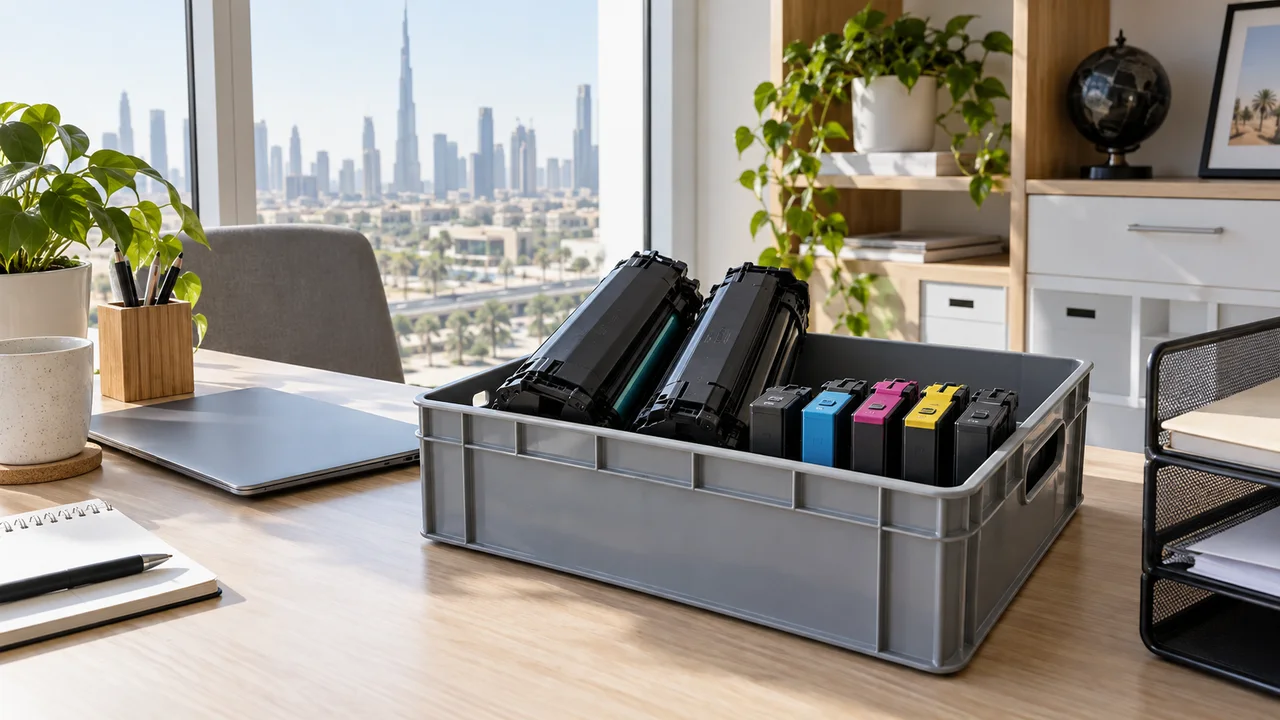 E-Waste Recycling
Keep used ink and toner cartridges intact, dry and separate from ordinary recycling. This guide covers preparation, storage and collection for homes and offices.
Read Article