Decluttering Paperwork and Documents in a Dubai Home
The Junk Services Dubai Team 6 min read
Declutter household paperwork by separating what needs action from what needs preservation, reference or a decision about disposal. In a Dubai home, tenancy papers, school records, travel documents and everyday receipts can accumulate in the same drawer despite serving different purposes. This guide builds a filing and review system; it does not set legal retention periods or treat a scan as permission to destroy an original.
Start with a drawer or a small stack, keeping folders from different people separate. A household may hold a partner's employment records, a child's school papers and work documents that belong to an employer. Shared storage does not give one person authority to discard everything inside it.
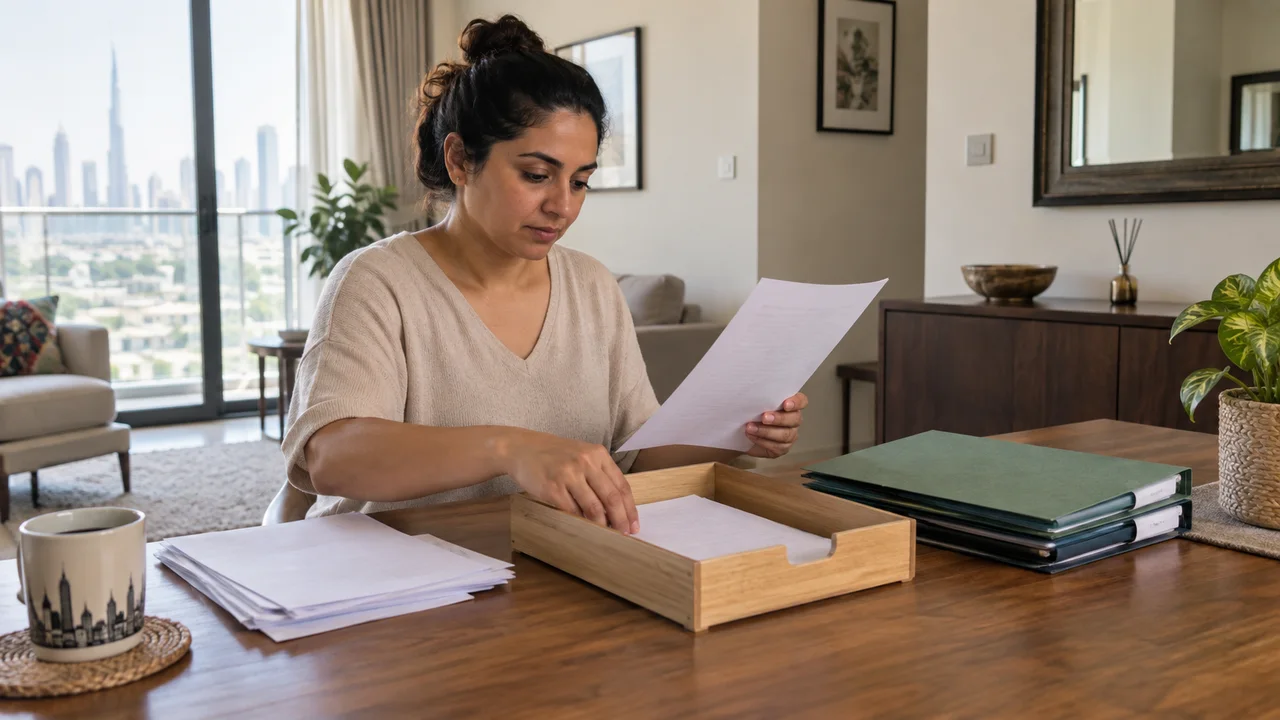
Use a cleared indoor table and enough time to pack the batch away before meals. In a compact Dubai Marina flat, a portable document tray is easier to close than papers spread over a sofa and bed. Keep drinks, cleaning products and outgoing rubbish away from the working surface.
Action: Papers requiring a response, appointment, payment check or another named next step.
Preserve: Originals and records whose ongoing purpose or owner requires them to be kept.
Reference: Useful information that can be retrieved when needed but is not awaiting action.
Review: Anything whose purpose, owner, original status or disposal decision is still uncertain.
Non-sensitive duplicates with a settled decision can leave the review process promptly, but avoid turning the first pass into a speed test. Your aim is to understand the papers, not reduce the stack by an arbitrary percentage. Keep the groups separate until each decision is recorded or completed.
Separate a Filing Decision From a Retention Decision
A filing decision says where a document belongs. A retention decision says whether it is still needed and whether an original can be replaced. The first is a household organisation task; the second depends on the record's purpose and the organisation or person relying on it.
Paper type
Useful organising action
Check before disposal
Identity and civil records
Keep originals together in protected storage
Owner and receiving organisation requirements
Tenancy and property papers
Group by property and contract
Whether a matter or contract is still active
School and qualification records
Separate certificates from routine handouts
Future use and whether an original is needed
Receipts and warranties
Link to the purchase or unresolved issue
Whether a claim, return or record purpose remains
Employer documents
Keep outside the general household discard pile
Employer instructions and confidentiality
Duplicate brochures and printouts
Compare with the retained version
Whether handwritten information makes them different
This table organises the review. It does not prescribe how many years a record must be kept.
Do not infer that a document is disposable because its visible date is old. A previous contract may relate to an unresolved matter, and an old certificate may still be required in original form. Keep uncertain records in review and ask the relevant issuer, document owner or qualified adviser about the specific need.
Create an Action File That Leads to Action
An action tray works only when each paper has a next step. Add a short note such as check the charge, send the requested copy or confirm the appointment. Keep the actual deadline visible where one exists rather than relying on the position of the paper in a pile.
1Identify what the paper asks you to do and who is responsible.
2Record any deadline in the household's normal calendar or task list.
3Keep the paper and required supporting records together.
4Complete the action and save evidence of the outcome if needed.
5Move the paper to its reference or preservation file, or review it for disposal.
If the dining table doubles as a work desk, keep household actions separate from paid work. The home-office decluttering guide covers the wider workspace. Here the priority is preventing a completed item from staying indefinitely in the active tray and hiding a new task.
Check Digital Copies Before Depending on Them
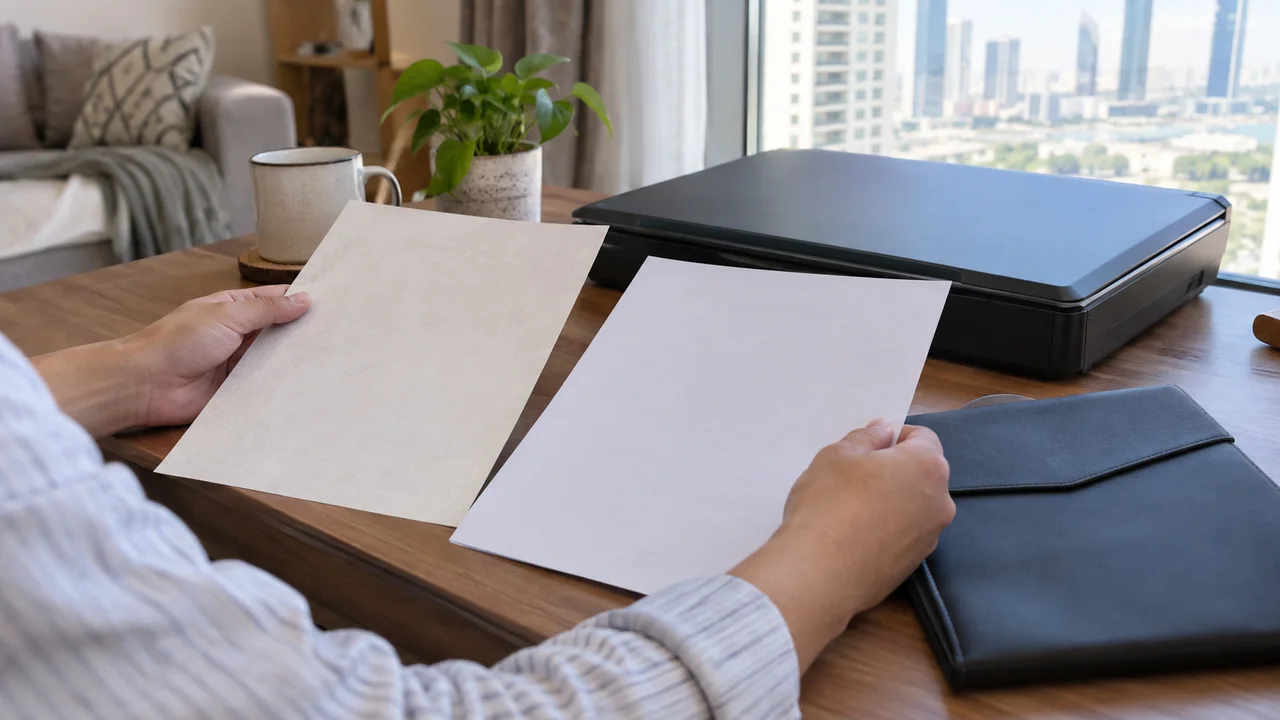
Scanning can improve access, but a file that exists is not necessarily readable or complete. Check both sides, attachments, page order and any detail near a fold or staple. Compare the saved file with the original before moving the paper into a different category.
Check completeness and readability, then keep or release the original according to its requirements.
Use a descriptive filename with the document type and relevant date.
Open the saved file from its final folder rather than relying on a scanner preview.
Confirm all pages are present and readable at normal viewing size.
Use storage and backup arrangements suitable for the information's sensitivity.
Keep originals when required or when their replacement status is unresolved.
Avoid scattering sensitive copies across personal messages merely to transfer them between devices. Use the household's agreed storage location and control who has access. Work-owned records should follow the employer's process, not an improvised personal cloud archive.
Make the Filing System Easy to Retrieve
Choose categories you would search for under pressure: property, education, personal records or a named ongoing matter. Keep the system shallow enough that another authorised household member can understand it. A folder with twenty vague subcategories can be harder to use than a small set of well-named files.
Keep paper in dry indoor storage away from direct sunlight, balcony humidity and likely leaks. Avoid putting permanent records into boxes beside a bin room or in an uncooled overflow area. In JVC homes with deep built-in cupboards, keep frequently needed files toward the front rather than underneath heavy stored goods.
Test the system by finding a recent record without searching the whole stack. If the category is unclear, rename or regroup it before buying more folders. Keep a brief index for less frequently accessed originals so their storage remains known when someone else needs to locate them.
Keep Confidential Discards Separate From Recycling
Once the owner has approved disposal, separate sensitive papers from ordinary clean paper. Removing a name from the first page may leave addresses, account details or other information elsewhere in the document. Keep confidential discards enclosed until their secure destruction method has been agreed.
Ask the receiving service what preparation it accepts and how the records remain controlled during handover. Do not assume that ordinary household paper collection includes confidential destruction. The paper recycling guide addresses material recovery after privacy decisions are complete.
If a cabinet is leaving with a wider house clearance, empty and check every drawer first. Loose papers tucked under drawer liners or behind hanging files should not travel with furniture. Retained files, review files and approved discards must remain visibly separate on collection day.
Review the action tray regularly and examine the filing categories when their purpose changes, such as a move or the end of a course. Resolve the question written on each review item rather than repeatedly moving the same stack. A useful paper system preserves what matters and makes the next decision easier to find.
Key Takeaways
Separate actions, preserved records, references and unresolved reviews.
Ownership and purpose govern disposal, not age or a tidying target.
Verify a scan before relying on it and keep required originals.
Store files indoors and test whether they can be retrieved.
Keep confidential destruction separate from ordinary paper recycling.
Why Choose Junk Service in Dubai
As a local, fully insured team, Junk Services Dubai makes clearing your space simple — fast pickups, fair upfront pricing and responsible disposal across every Dubai community.
Same-Day Availability
Book today and, where crews are free, we clear it today — with no rush surcharge.
Fair, Upfront Pricing
A flat price agreed before we arrive, based on volume, items and access. No surprises.
Insured, Uniformed Crews
Background-checked teams who do all the lifting and protect your floors, lifts and walls.
Responsible Disposal
We sort for reuse, donation and recycling in line with Dubai Municipality guidance.
Our editorial team is made up of the crews and coordinators who clear homes, villas and offices across Dubai every day. We share practical, first-hand guidance on decluttering, disposal and responsible waste removal in the UAE.
FAQ
Frequently Asked Questions
Not automatically. Check whether the original is required and verify the saved copy before relying on it. Keep the original if its status remains uncertain.
Record the question and responsible person for each item, such as confirming an original requirement or checking an unresolved charge. A generic later label leaves the decision undefined.
Choose the system that supports retrieval. Linking a receipt to its purchase, warranty or ongoing issue often makes it easier to find when needed than filing solely by shop name.
Separate them by owner before scanning or disposal. Follow the employer's instructions for its records and do not move them into a personal archive without authorisation.
Keep it separate until its owner approves disposal and a suitable secure destruction route is agreed. Ordinary recycling should not be treated as a confidentiality service.
Check every drawer, hanging file and hidden pocket before collection. Move retained and unresolved records to protected storage and keep approved confidential discards separate from the furniture.
Final Thoughts
Paperwork becomes manageable when each record has a purpose, an owner and a retrievable place. Reducing the pile is less important than avoiding the loss of an original or overlooking an active task.
Close review questions one at a time and keep private discards controlled. The result should be a household system you can use, not just a drawer that looks empty.
Arrange Collection
After removing and reviewing the records, send photographs of unwanted cabinets, desks and other household items with your area and access details. Our team can confirm the agreed furniture collection scope and price.
Clear a working home office in manageable stages: protect borrowed equipment, match cables, separate papers and remove surplus furniture without losing your working setup.
What qualifies as recyclable paper in Dubai, why heat and humidity make preparation matter more here than in cooler climates, and how to keep a paper stream clean enough to stay out of general waste.
Every office clearance moves devices that still hold company data, and several of them are not the ones people think of. Here is which devices to check, when wiping is enough, and where certified destruction fits.

 Guides