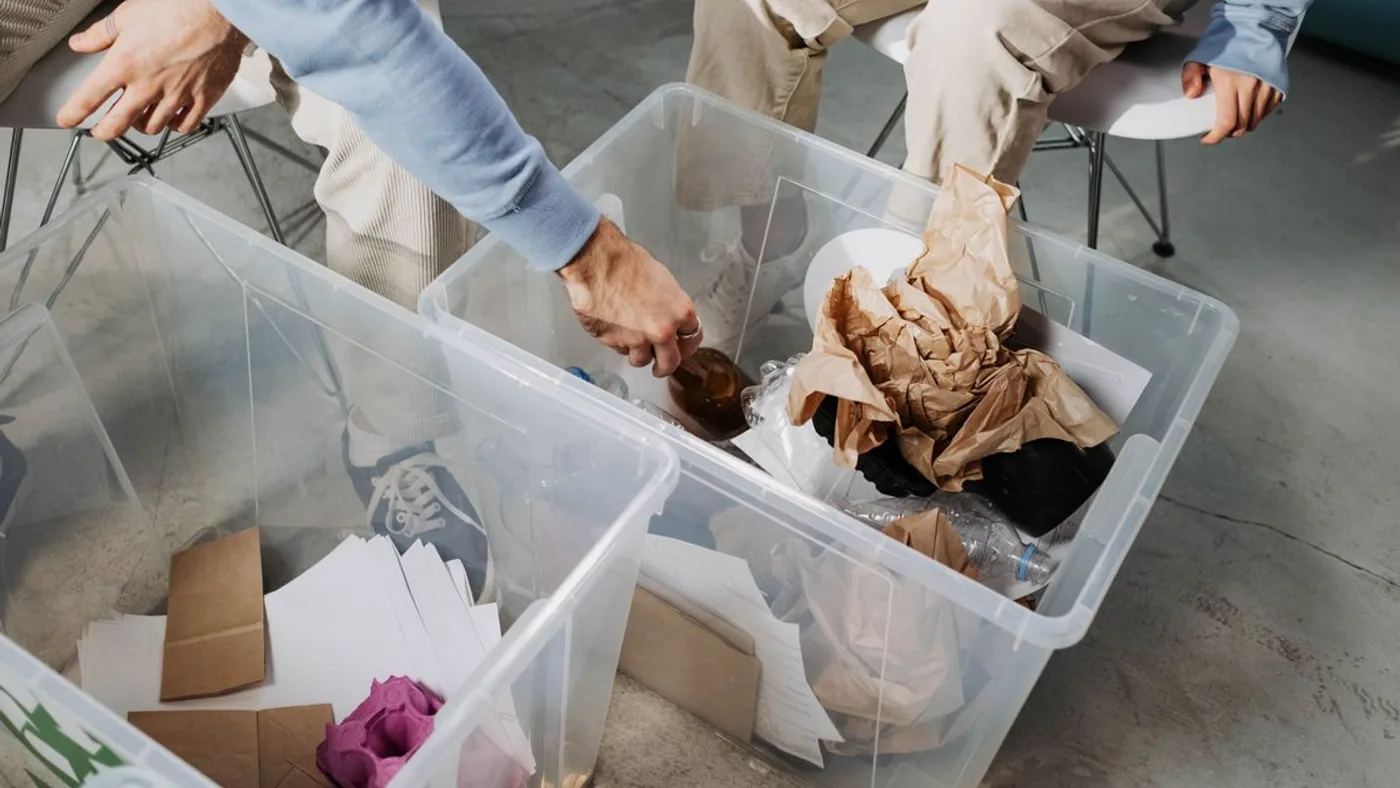
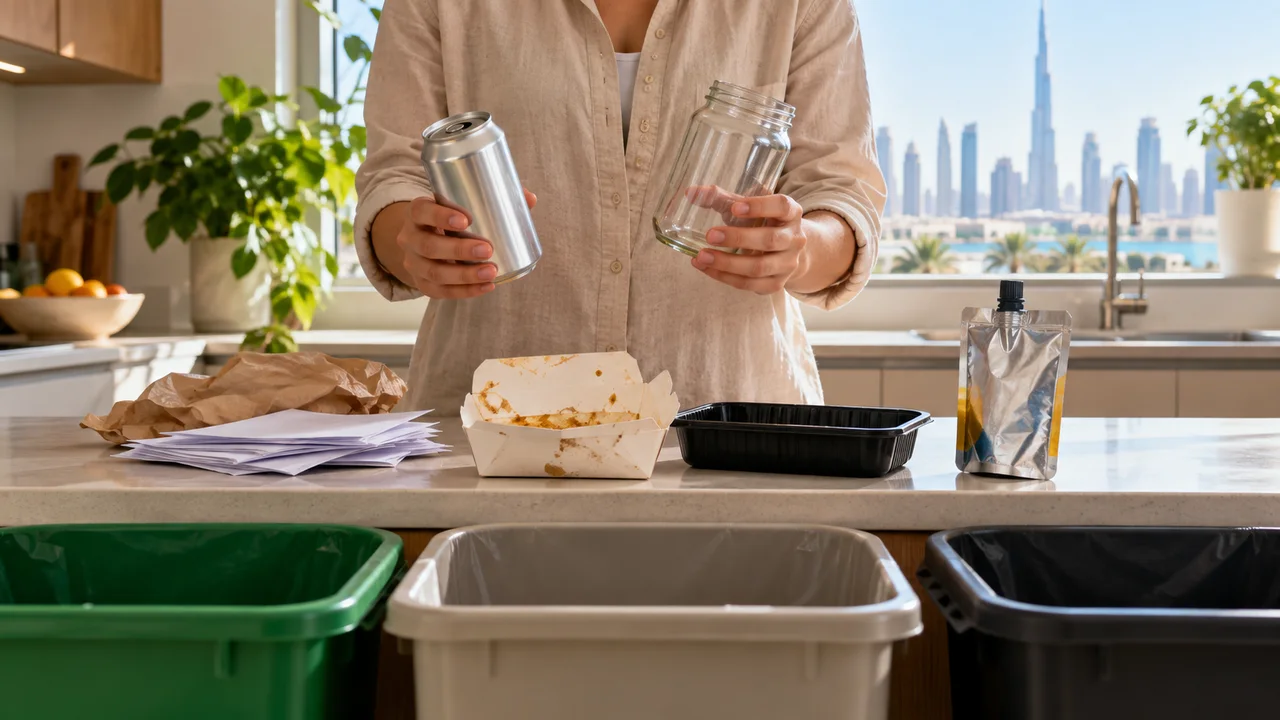
Recycling Contamination in Dubai and How to Avoid It
The Junk Services Dubai Team 5 min read
Recycling contamination happens when the wrong material, food, liquid or unsafe object enters a recyclable stream and reduces the quality or safety of the load. Dubai homes and offices can prevent most cases before collection with a short preparation routine. This guide explains the main contamination sources, the materials that need separate routes and the controls that work in apartments, villas and workplaces.
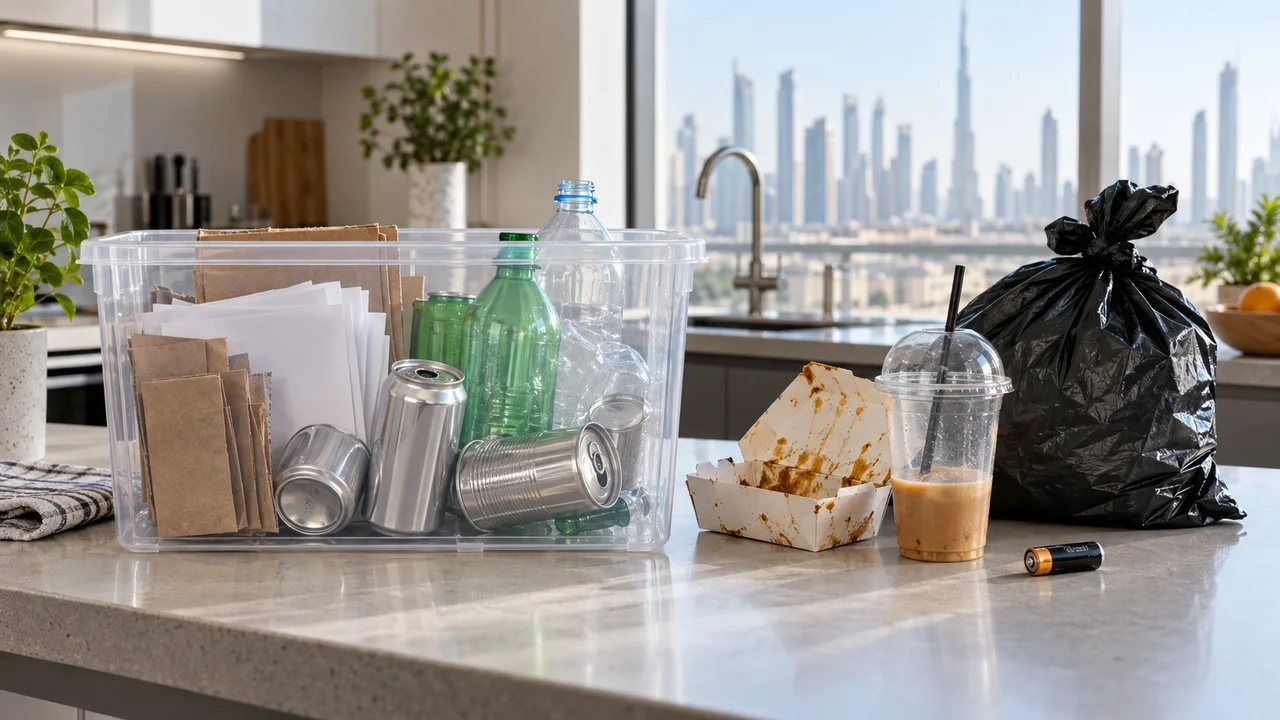
Contamination is anything that lowers the quality of a recyclable grade, creates a safety risk or cannot be handled by that collection system. It includes obvious errors such as food waste in a paper bin and less obvious ones such as liquid left inside a closed bottle, ceramic pieces mixed with container glass or a battery hidden in a bag of cans.
The problem begins before the sorting facility. Liquid spreads while a bag travels down a chute or waits in a warm bin room. Broken glass can pierce sacks, and a battery can be crushed by compaction equipment. Correct source separation protects residents, collection staff and the usable material.
Contaminant
What it affects
Better action
Food and grease
Paper, cardboard and nearby containers
Scrape out residue; exclude soaked packaging
Liquid
Dry paper grades and bag cleanliness
Empty fully and let the container drain
Soft bags and film
Sorting equipment and visibility
Keep separate unless the route accepts film
Batteries and electronics
Worker and equipment safety
Use a confirmed specialist collection
Ceramics and non-container glass
Container-glass quality
Identify and route separately
Wet cardboard
Fibre strength and storage hygiene
Keep dry; use residual waste if badly soaked
Contamination can damage material quality, hide hazards or disrupt sorting equipment.
Use a Six-Step Preparation Routine
1Read the accepted-material list for the building, community or booked collector.
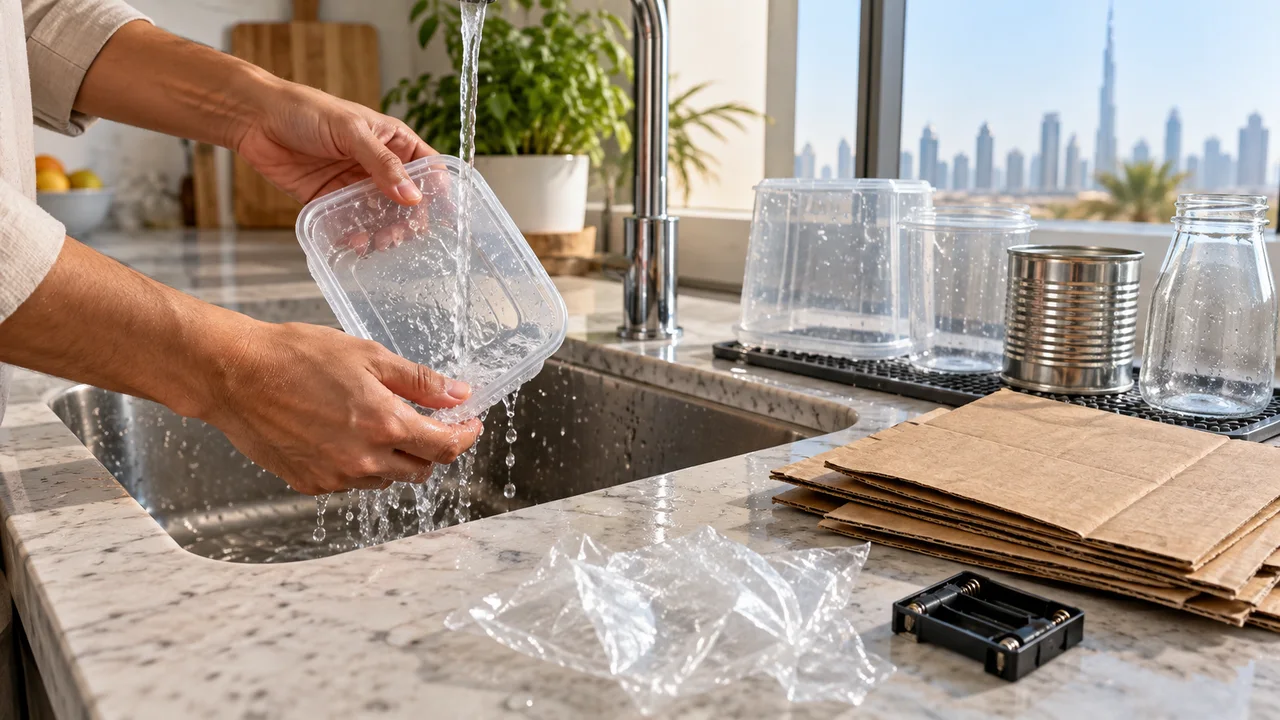
2Empty bottles, cans, jars, tubs and cartons completely.
3Scrape out food and use a quick rinse only when residue can transfer.
4Let washed containers drain before they touch paper or cardboard.
5Flatten dry boxes and remove loose plastic liners or foam inserts.
6Put uncertain, sharp or powered items in a separate check box rather than guessing.
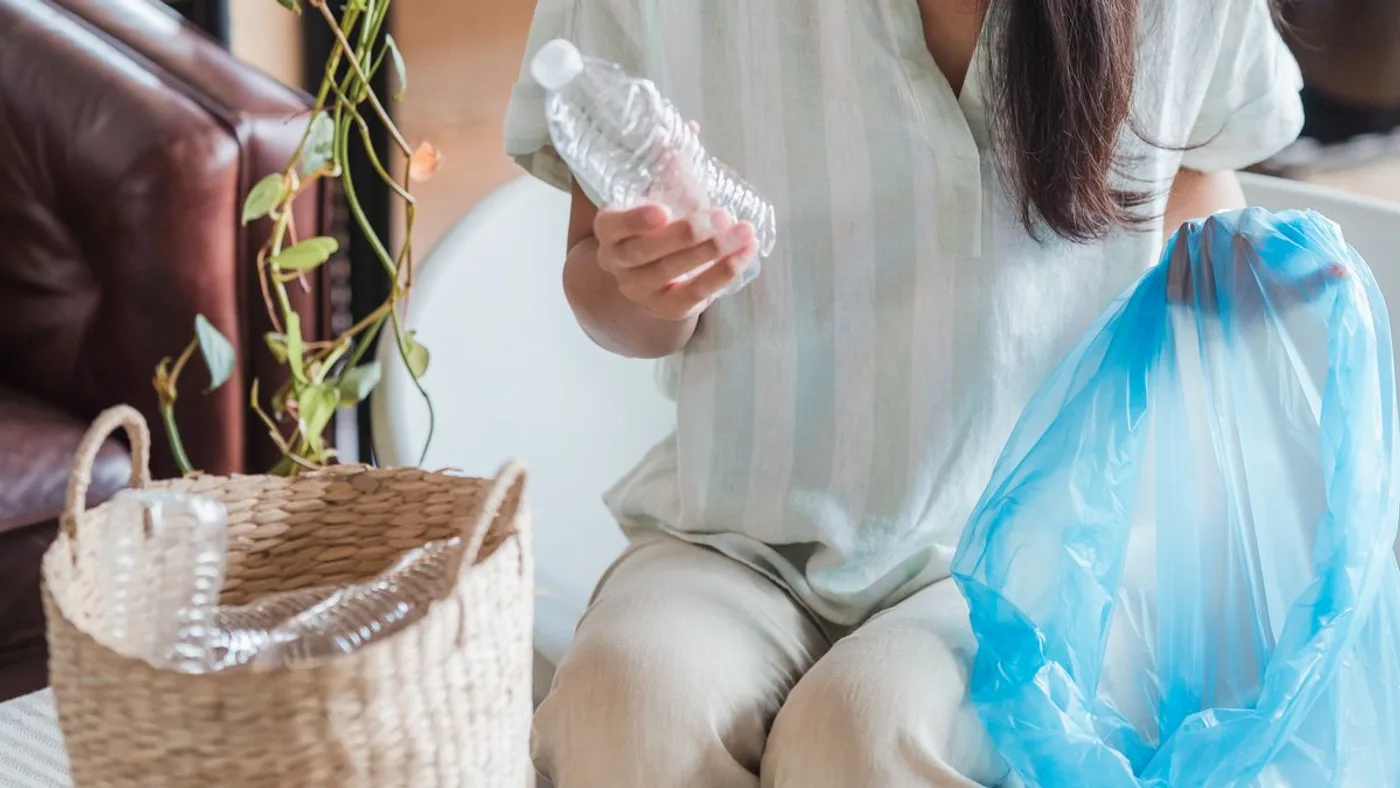
Empty, rinse when needed, dry and flatten materials before they enter the recycling container.
The routine should take seconds for ordinary packaging. It is not a demand to waste drinking water or remove every label. The aim is to stop transferable residue and keep each accepted grade usable. The waste-segregation guide explains how to position the containers so the routine is easy to repeat.
Keep Food, Liquid and Wet Paper Out
Food and liquid are common because they travel easily. One unfinished coffee can soak several newspapers below it, while oil from a takeaway box can spread across clean card. Empty containers at the sink or pantry before carrying them to the recycling point. Keep a residual-waste bin nearby for the parts that cannot be cleaned without excessive water.
Remove leftovers, tea bags and coffee grounds from cups and tubs.
Exclude cardboard that is soaked through with oil, sauce or water.
Keep dry lids off storage boxes so trapped moisture can escape before collection.
Do not place a sealed container in recycling when liquid remains inside.
Store flattened cardboard indoors instead of on a humid balcony or beside a leaking bin.
Clean fibre is especially vulnerable. Follow the condition checks in the paper recycling guide when moving boxes or delivery packaging have been stored near air-conditioning drains, balconies or bin-room wash areas.
Separate Bags, Film and Mixed Packaging
Flexible shopping bags, cling film and multilayer pouches do not behave like rigid bottles. A film may wrap around moving parts or conceal smaller contaminants. Keep these materials out of a rigid-packaging bin unless the receiving route specifically lists them.
Nested packaging: Remove plastic liners, polystyrene blocks and air pillows from cardboard boxes so each material can be checked.
Black sacks: Do not hide recycling in an opaque sack unless the collector has instructed you to use that exact bag.
Composite packs: Treat foil-lined pouches and joined paper-plastic packs as uncertain until the route confirms acceptance.
Tiny loose pieces: Do not scatter caps, clips or fragments through a bin; follow the collector's size and attachment guidance.
The material-identification steps in the plastic recycling guide help distinguish a recognisable rigid container from a mixed flexible pack that needs checking.
Remove Batteries, Electronics and Hazardous Items
A packaging-recycling bin is never a safe shortcut for batteries, power banks, phones, cables, bulbs, paint, chemicals or medical sharps. These items introduce electrical, chemical or injury risks that ordinary dry sorting is not designed to manage. Keep terminals protected where appropriate, contain damaged devices without handling leaked material and declare the item before collection.
Use a confirmed electronics disposal route for powered items. When a mixed home clear-out includes cleaning chemicals or unknown containers, isolate them from furniture and packaging and tell the collection provider exactly what is present before a vehicle is assigned.
Prevent Contamination in Towers and Offices
Shared systems fail when the instruction is far from the point where people make the decision. In an apartment, put a small dry-recycling container beside the general bin and keep specialist items in a labelled cupboard. In an office, repeat the same accepted-items guide at printer stations, pantry bins and the central waste room.
Tower systems in Business Bay and Dubai Marina may use different contractors and bin-room layouts. Confirm whether a chute is general waste only, whether recyclables must be loose or bagged, and where flattened cardboard belongs. Do not copy another building's rules.
Use pictures of accepted items where residents or staff speak different first languages.
Place a residual-waste bin beside recycling so the wrong item has an easy alternative.
Assign one person to check office collection points before bags leave the floor.
Keep a small quarantine box for batteries, cables and uncertain objects.
Report overflowing or liquid-filled communal bins before adding clean material.
Check a Mixed Load Before Collection
Walk through the load once before handover. Open visible boxes, remove food waste, separate powered items and photograph any material the collector needs to identify. Do not promise that every object will be recycled; condition, composition and receiving capacity still decide the outcome after inspection.
For bulky household items and recyclable packaging leaving together, arrange a declared waste removal collection. Send photographs, quantities and access details in advance so the team can confirm packing instructions and keep unsuitable items away from clean material during loading.
Key Takeaways
Contamination includes wrong materials, residue, liquids and unsafe objects.
Empty and dry containers before they touch paper or cardboard.
Keep soft film and opaque bags out unless the route specifically accepts them.
Batteries, electronics, bulbs and chemicals need separate confirmed routes.
Building-specific instructions matter because collection systems differ across Dubai.
Why Choose Junk Service in Dubai
As a local, fully insured team, Junk Services Dubai makes clearing your space simple — fast pickups, fair upfront pricing and responsible disposal across every Dubai community.
Same-Day Availability
Book today and, where crews are free, we clear it today — with no rush surcharge.
Fair, Upfront Pricing
A flat price agreed before we arrive, based on volume, items and access. No surprises.
Insured, Uniformed Crews
Background-checked teams who do all the lifting and protect your floors, lifts and walls.
Responsible Disposal
We sort for reuse, donation and recycling in line with Dubai Municipality guidance.
Our editorial team is made up of the crews and coordinators who clear homes, villas and offices across Dubai every day. We share practical, first-hand guidance on decluttering, disposal and responsible waste removal in the UAE.
FAQ
Frequently Asked Questions
Food and liquid left in packaging are frequent causes because they spread to otherwise clean paper, cardboard and containers during storage and transport.
Recycle only the clean, dry sections if the local route accepts cardboard. Put oil-soaked or food-covered sections in the appropriate residual-waste route.
Only when your building or collector gives that instruction. Many routes prefer loose items, while opaque bags can hide contaminants and flexible film can disrupt sorting.
Not automatically, but wrong items add sorting work and can spread residue or hazards. Repeated or severe contamination may cause recoverable material to be rejected.
Do not add it without checking the route. Broken glass creates an injury risk, and mirrors, ceramics and glassware are not the same as accepted bottle-and-jar glass.
Keep them dry, away from heat and separate from metal objects and ordinary bins. Protect exposed terminals where appropriate and follow the chosen battery collector's packing instructions.
Post one short accepted-items guide at every collection point, place residual waste beside recycling, assign a checker and keep batteries and electronics in a separate controlled box.
Keep it out of the recycling bin and place it in a temporary check box. Ask building management or the collector before the next handover.
Final Thoughts
Clean recycling is protected at the moment an item leaves your hand. Emptying a drink, keeping card dry and isolating one battery can prevent problems that are harder to correct after materials are mixed.
Use the rules for your collection route, then make them visible where people sort. A short, repeatable system is more dependable than a long list nobody checks.
Arrange a Sorted Collection
Send photographs of the load, item types, your Dubai area and building access details. We will confirm what can be collected, how to prepare it and one upfront price before dispatch.
A household guide to sorting waste in Dubai: the four streams worth separating, where the containers physically go in an apartment and a villa, and the rinse habit the summer heat makes essential.
What a recycling collection covers in Dubai, which materials leave as separate streams, how to prepare them, and when a booked pickup beats carrying it all downstairs.

 Guides