Recycling mistakes often start with a rule that sounds reasonable but is incomplete. A symbol on a package does not guarantee local acceptance, and extra washing or bagging can sometimes create a new problem instead of solving one. This guide tests the most common recycling myths against practical sorting conditions in Dubai homes, towers and offices.
Myth 1: A Recycling Symbol Means the Item Is Accepted
A recycling symbol usually identifies a material or gives manufacturing information. It does not confirm that every collection route can sort, sell or process that item. Acceptance depends on the collector, the sorting equipment and the end market for the recovered grade.
Use the label as a clue, then check the instructions on your building bin, collection notice or confirmed service. A plastic tray and a flexible pouch may both carry material markings but behave differently on a sorting line. The same rule applies across the wider Dubai recycling guide: local acceptance comes before hopeful sorting.
Common assumption
What to check instead
Safer decision
The symbol guarantees recycling
Whether the local route lists that item
Use the accepted-material list
Any numbered plastic is accepted
Container shape, resin and collector rules
Separate uncertain plastics for checking
A green package is recyclable
Actual material and removable parts
Ignore colour and marketing language
Compostable means recyclable
Whether it belongs in a confirmed compost route
Keep it out of dry recycling unless instructed
Packaging cues help identify an item, but the receiving route decides whether it belongs in the bin.
Myth 2: Recyclables Must Be Scrubbed Until Spotless
Most household containers need to be empty and free from food or liquid, not polished like dishes. Scrape out solids, use a quick rinse when residue remains, then let the item drain. A half-full drink bottle or oily tub can wet paper and spread residue through the collection bag, while a dry container with a faint stain may still be manageable if its route accepts the material.
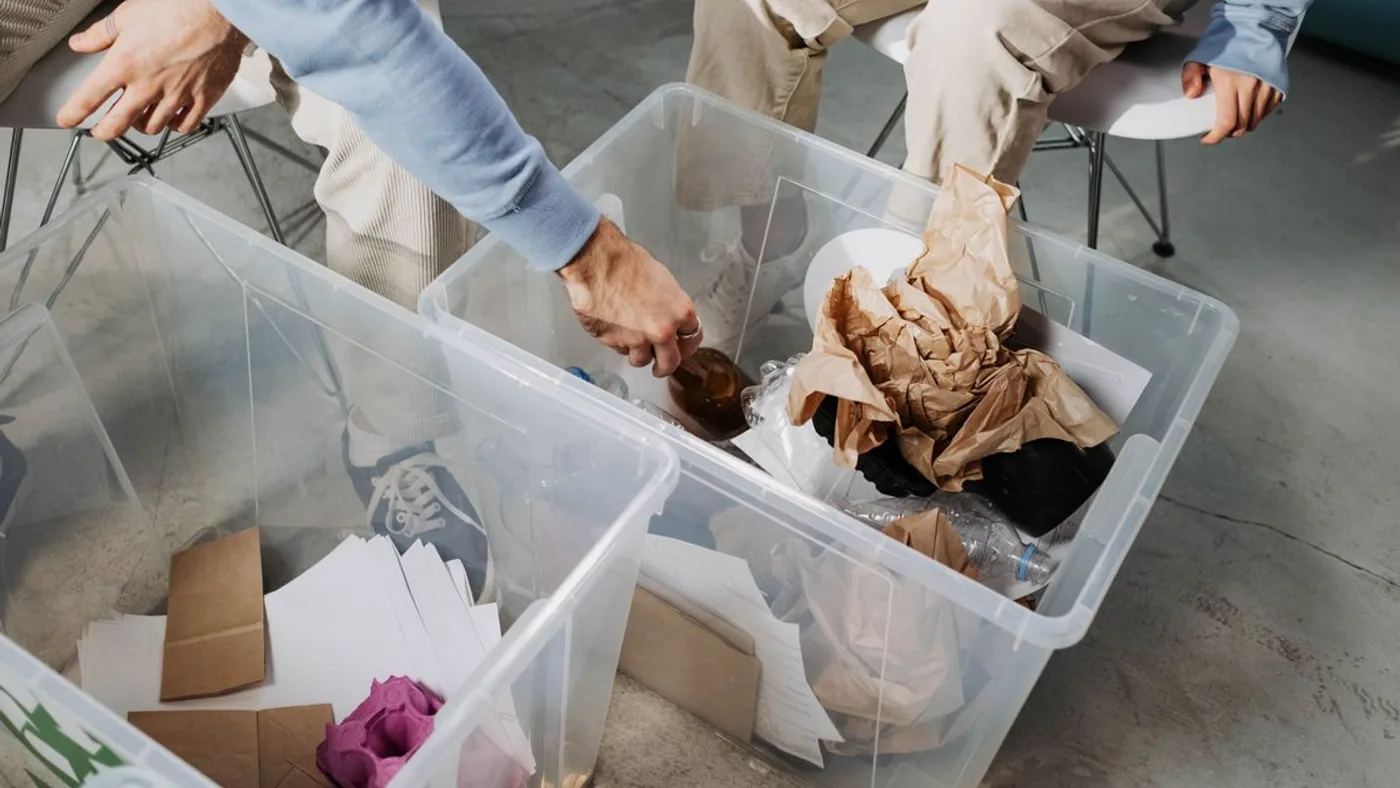
Empty every container before it reaches the recycling area.
Remove food pieces, grease and thick sauce that can transfer to other items.
Use a small rinse rather than wasting large amounts of clean water.
Let containers drain so cardboard and paper remain dry.
Put heavily soiled or absorbent packaging in the correct residual-waste route.
Material condition matters more than a perfect appearance. The preparation steps in the paper recycling guide and aluminium can guide show why dryness and separation protect the usable grade.
Myth 3: Bagging Recyclables Always Makes Collection Easier
A tied black bag hides its contents and may be treated as general waste. Loose flexible bags can also wrap around moving parts at a sorting facility. Some managed buildings require a clear bag for safe transfer from a bin room, while other routes ask for items to remain loose. Follow the instruction for that exact collection point.
Loose-item bin: Place accepted dry containers and paper directly in the marked bin without nesting them inside another bag.
Clear-bag collection: Use the specified bag only, keep contents visible and close it without overfilling.
Building chute: Do not assume a chute feeds a recycling stream. Check the floor signage or ask management before use.
Private pickup: Ask how each material should be packed before the crew arrives, especially glass and electronics.
In high-rise areas such as Dubai Marina and JLT, the bin room and chute layout can differ between neighbouring towers. The building's actual system is more useful than a citywide assumption.
Myth 4: All Glass and Plastic Can Be Mixed Together
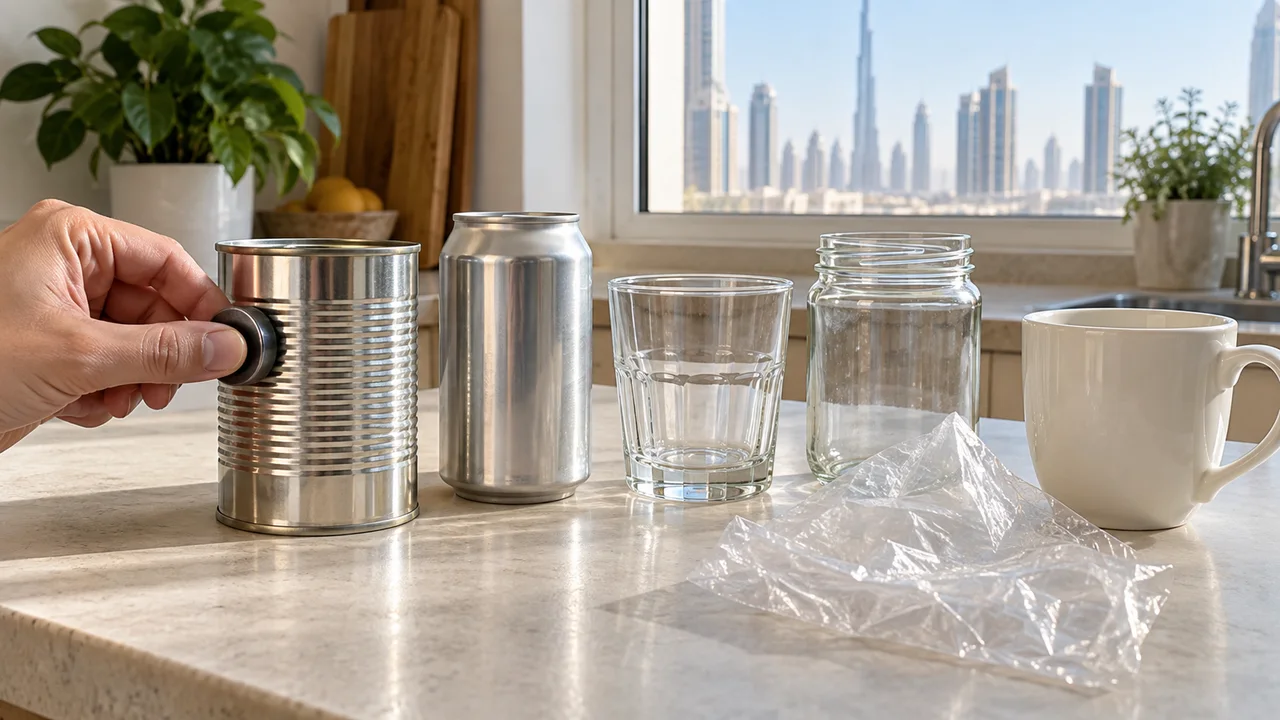
Container glass is not the same as mirrors, window panes, ceramics, drinking glasses or heat-resistant cookware. Those items melt and break differently, so adding them to a bottle-and-jar stream can damage the recovered glass grade. Read the glass recycling guide before placing an unfamiliar glass item in a communal bin.
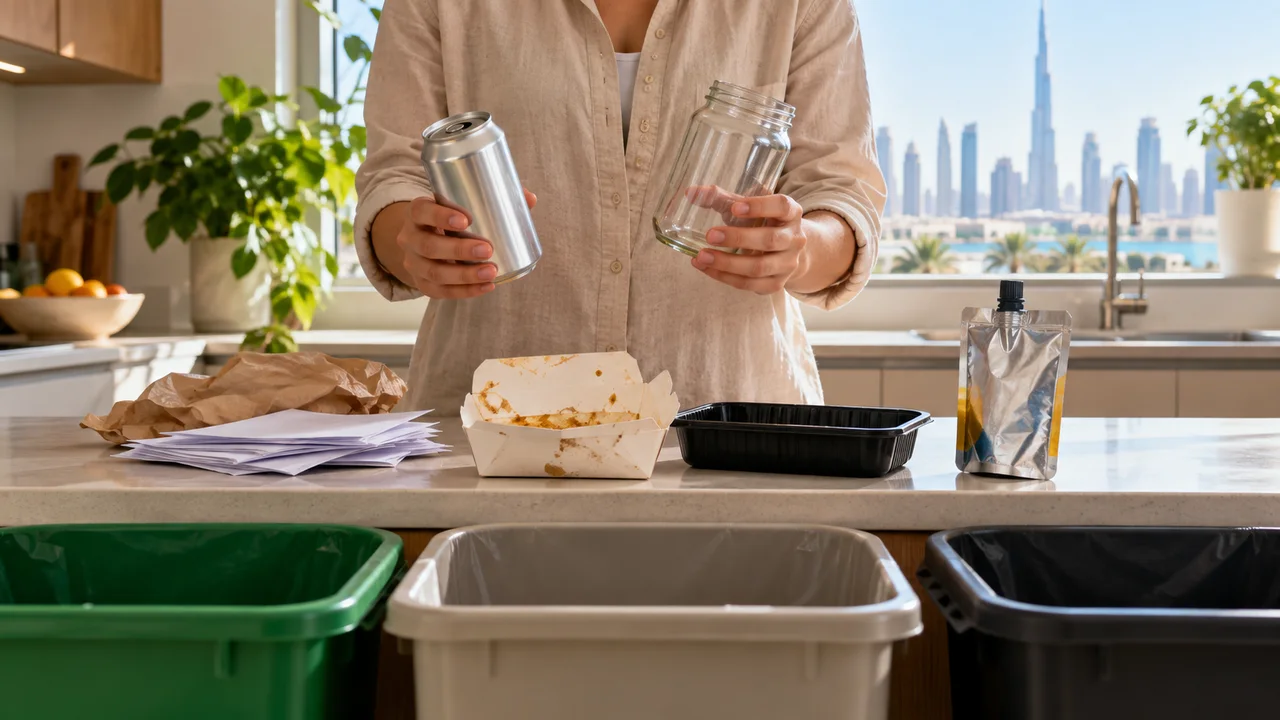
Plastic is also a family of materials rather than one uniform feedstock. A rigid bottle, black takeaway tray, foam insert and multilayer pouch differ in resin, shape and sorting behaviour. Confirm the accepted formats instead of assuming that the word plastic settles the question.
Identify the material and the collection rule before an uncertain item enters the recycling bin.
Myth 5: Small Items Are the Easiest Things to Recycle
Tiny loose pieces can fall through sorting screens, become trapped in residue or be mistaken for fragments. Bottle caps, shredded paper, loose cutlery and small metal pieces may need a different preparation method from a full-size container. Never place sharp fragments loose where residents or collection staff can touch them.
Batteries, bulbs, cables and small electronics need specialist routes even though their size makes a household bin tempting. Keep them separate and use the guidance for electronics disposal rather than mixing them with metal or plastic packaging.
Myth 6: If One Item Is Wrong, Recycling Is Pointless
A mistake does not make careful sorting pointless, but repeated contamination can reduce the value of a load and increase the work needed to recover it. Correct the routine at the source: use a short accepted-items list, place residual waste nearby and give uncertain objects a temporary check box instead of guessing.
1Photograph the instructions at the bin room or ask the collector for a written list.
2Set up separate containers for dry recycling, food waste and residual waste.
3Empty and dry packaging before it joins paper or cardboard.
4Keep batteries, electronics, bulbs and chemicals outside all ordinary bins.
5Review recurring mistakes with everyone who uses the kitchen or office pantry.
Myth 7: Recycling Is Always Better Than Reduction or Reuse
Recycling recovers material after a product has been used, but it still needs collection, sorting and processing. Avoiding an unnecessary item or keeping a usable product in service can preserve more of its original value. Refillable bottles, repaired furniture and donated household goods do not need to become raw material yet.
Use the condition-based test in donation versus recycling. Choose reuse when an item is safe, complete and genuinely wanted. Choose recycling when the useful life has ended and a confirmed material route exists. For a mixed household clear-out, a planned junk removal service can keep declared streams separate when the scope is agreed before collection.
Key Takeaways
A recycling symbol identifies material but does not guarantee local acceptance.
Empty, lightly rinse when needed and dry containers instead of scrubbing them excessively.
Use bags only when the building or collector specifically requires them.
Keep specialist items such as batteries and electronics out of packaging recycling.
Reduction and reuse can preserve more value than recycling a product too early.
Why Choose Junk Service in Dubai
As a local, fully insured team, Junk Services Dubai makes clearing your space simple — fast pickups, fair upfront pricing and responsible disposal across every Dubai community.
Same-Day Availability
Book today and, where crews are free, we clear it today — with no rush surcharge.
Fair, Upfront Pricing
A flat price agreed before we arrive, based on volume, items and access. No surprises.
Insured, Uniformed Crews
Background-checked teams who do all the lifting and protect your floors, lifts and walls.
Responsible Disposal
We sort for reuse, donation and recycling in line with Dubai Municipality guidance.
Our editorial team is made up of the crews and coordinators who clear homes, villas and offices across Dubai every day. We share practical, first-hand guidance on decluttering, disposal and responsible waste removal in the UAE.
FAQ
Frequently Asked Questions
Not by itself. The symbol may identify a material, but your building or collector must also accept that exact item and format.
No. They should be empty, free from transferable food residue and dry. A quick rinse is enough when the accepted container still has residue.
Do not use a black bag unless the collection route expressly asks for one. It hides the contents and may cause the load to be handled as general waste.
Usually not in a container-glass stream. Mirrors, ceramics, glassware and heat-resistant cookware have different compositions and should be checked separately.
No. Batteries can short-circuit, leak or ignite and need a confirmed battery or electronics collection route, not ordinary metal recycling.
Follow the collector's instructions because sorting systems differ. If no instruction is available, keep caps separate until the route confirms whether they should stay attached.
Donation is usually the better first route when the item is safe, complete and wanted. Recycling is appropriate when reuse is no longer realistic and a material route is confirmed.
Final Thoughts
Good recycling begins with one modest habit: check the receiving rule before deciding where an item belongs. Symbols, colour and broad internet lists are clues, not permission for every bin.
Keep the home or office routine short enough that people will follow it. Empty, dry, separate and ask about uncertain items rather than letting one hopeful guess become a repeated mistake.
Plan a Sorted Collection
Send photographs of the items, their condition, your area and any building access instructions. We will confirm the collection scope and one upfront price before dispatch.
What a recycling collection covers in Dubai, which materials leave as separate streams, how to prepare them, and when a booked pickup beats carrying it all downstairs.
A household guide to sorting waste in Dubai: the four streams worth separating, where the containers physically go in an apartment and a villa, and the rinse habit the summer heat makes essential.
Donation keeps a useful item in service, while recycling recovers material from one that has reached the end of its life. Use this condition-first guide to choose well.
 Guides