Corporate Sustainability and Junk Removal in Dubai
The Junk Services Dubai Team 6 min read
Corporate sustainability changes an office clear-out from a single removal job into a set of documented decisions about reuse, resale, donation, recycling and residual disposal. For a Dubai facilities or operations team, the useful work happens before the crew arrives: count what is leaving, assign each stream a realistic destination and decide what evidence the business needs afterward. This guide sets out that process without promising that every material can be recovered.
What Sustainability Changes in a Junk Removal Project
A normal office clearance asks whether the floor is empty on time. A sustainability-led clearance asks a second question: how much of what left still had a useful life or a recoverable material value? The deadline remains important, but speed no longer decides every destination.
That does not make junk removal a reporting exercise for the removal crew. The business still owns its asset register, data decisions and internal environmental claims. The collection provider owns the physical scope it agrees to carry and the information it can support about that collection.
Facilities or operations: Counts the floor, confirms building access and keeps the clearance tied to the move, handback or workspace change.
Finance or asset owner: Identifies leased equipment, tagged assets and anything that needs approval before it can leave company control.
IT and records owners: Separate data-bearing hardware and confidential paper before either stream reaches the loading area.
Collection provider: Sizes the removal, protects the route out and keeps the agreed reusable, recyclable and residual streams apart.
Start Before an Office Asset Becomes Waste
The highest-value sustainability decision is made while an item is still installed, powered and identifiable. Once matching chairs are mixed with broken ones, cables are cut from equipment and labels disappear, reuse becomes harder and the whole batch starts to look like waste.
1Walk the office while it is still in use and photograph each group of desks, chairs, cabinets, appliances and electronics.
2Record quantity, condition, ownership and the date each group must leave, without trying to price every individual item.
3Confirm buyers, recipients and supplier returns before collection day; an unconfirmed destination is not a plan.
4Set a cut-off for reuse attempts so the handback or relocation date cannot be held up by an unanswered message.
5Send the final removal list and access details to the crew, with the streams that must remain separate marked in plain language.
A full furniture-material breakdown belongs in our guide to sustainable office furniture disposal. For a wider corporate project, the inventory should stay at group level so it can be completed and approved before the access window closes.
Use a Destination Hierarchy That Survives the Deadline
Priority
Suitable items
Decision needed before collection
Keep or redeploy
Working chairs, screens, storage and spare equipment needed elsewhere in the business
Named destination and an internal owner for transport
Return
Leased printers, dispensers, routers, plants and supplier-owned equipment
Supplier confirmation and a separate collection date
Resell or donate
Complete, clean and usable furniture or appliances
Confirmed buyer or recipient plus a firm cut-off
Recycle
Separated paper, card, metal, cables and eligible electronics
A collection route that accepts the material in its current condition
Residual disposal
Contaminated, composite or damaged material with no practical recovery route
Honest classification instead of an unsupported recycling claim
The hierarchy works only when every higher-priority destination is confirmed before the office deadline.
The table is a decision order, not a promise that every item moves through the top row. A damaged laminate desk may have a recyclable metal frame and a residual composite top. A clean chair may be reusable, but only if somebody has agreed to take the matching batch before the cut-off.
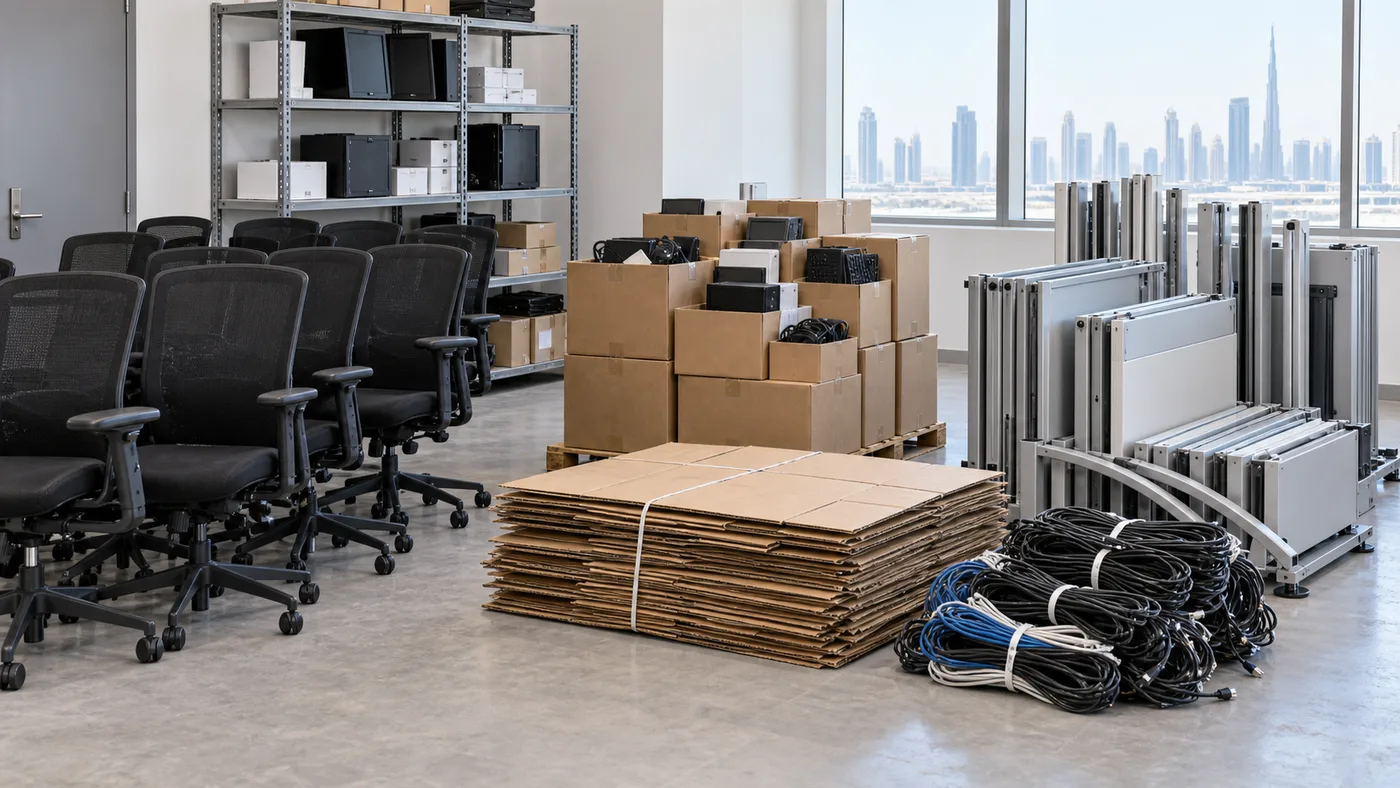
Sorting by destination before loading protects reusable assets and keeps clean material streams from becoming a mixed load.
Keep Data, Records and Leased Assets Out of the Load
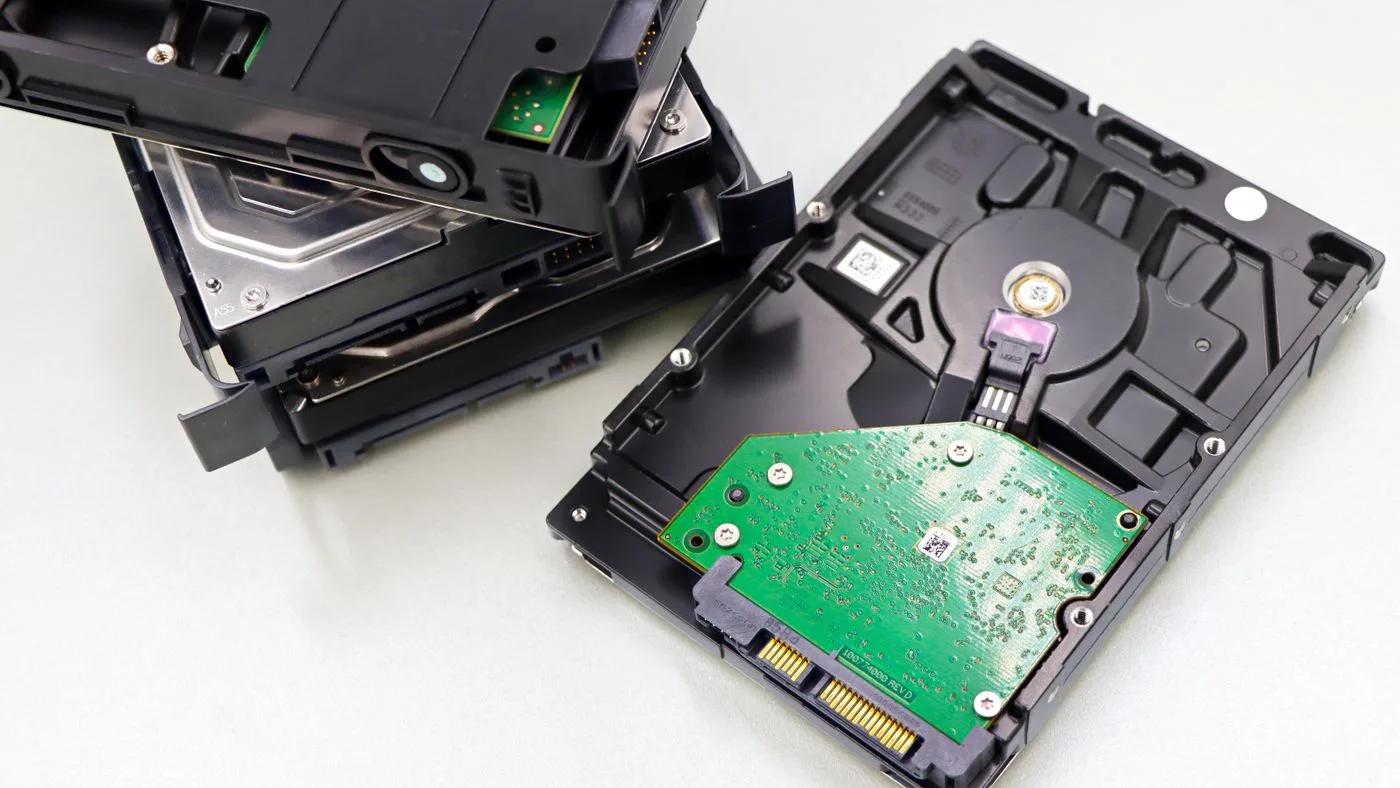
Sustainability does not override information security or ownership. Computers, storage drives, multifunction printers, network equipment and loose media need an IT decision before collection. Certified destruction is a specialist service arranged separately from the physical removal.
The same boundary applies to paper records and leased assets. Confidential files need the business's approved records route, while supplier-owned printers, coffee machines and water dispensers go back under their agreements. Our guide to data destruction for office electronics explains the order for wiping, specialist destruction and collection.
Use a separate holding zone for anything awaiting IT, finance or records approval.
Do not treat an asset tag as proof that an item is owned; check the register and any supplier agreement.
Keep batteries, lamps, liquids and other special-route items outside the general office load.
Give the crew one named decision-maker who can stop an uncertain item from being loaded.
Plan the Collection Around Dubai Building Access
A carefully sorted floor can still become one mixed pile if the loading window is too short. In Business Bay, DIFC and JLT towers, service-lift bookings, loading-bay slots and contractor entry often set the available hours. Confirm those details before deciding how many destination streams can leave in one visit.
For a large floor, stage reusable items and separated material away from fire exits and active desks, then release each zone in loading order. A route that stays open protects the office, reduces handling and avoids the temptation to combine streams when time starts running short. The wider sequence is covered in our Dubai office-clearance planning guide.
Ask for Evidence That Matches the Claim
A collection record can show what a provider collected, when it left and which broad streams were kept apart. It does not prove that every kilogram was recycled, and it is not the same document as a specialist data-destruction certificate. Corporate reporting should preserve those distinctions.
Keep the approved inventory and dated photographs of the staged groups.
Record supplier returns, staff redeployment, confirmed resale and confirmed donation separately from the junk collection.
Ask the provider which collection details it can document before booking, not after the load has left.
Describe uncertain residual destinations as residual disposal rather than converting them into estimated recycling figures.
This is the line between useful reporting and greenwashing. A smaller claim backed by the inventory is more defensible than a large diversion percentage built from assumptions. If the business needs a formal assurance, define that requirement before choosing providers and keep it outside any promise the removal crew has not made.
Turn the Project Into a Repeatable Office Standard
The best outcome is not a one-off clear-out with a polished report. It is a short internal rule for the next move, refurbishment-free workspace change or equipment refresh: who approves disposal, how long resale attempts run, which assets need specialist handling and what evidence is retained.
That rule also improves routine decluttering. Teams can move surplus items out while ownership and condition are still known, instead of waiting until an entire storeroom becomes an urgent load. In a working office, our office decluttering guide provides the zone-by-zone process.
Key Takeaways
Sustainable junk removal starts with an asset decision before the item becomes part of a mixed load.
Reuse, supplier return, resale, donation, recycling and residual disposal need different owners and deadlines.
Data-bearing hardware, confidential records and leased equipment stay outside the general collection until approved.
A collection record supports only what was collected and separated; it does not prove every downstream outcome.
Dubai building access can limit how many streams leave at once, so loading plans must follow the confirmed window.
Why Choose Junk Service in Dubai
As a local, fully insured team, Junk Services Dubai makes clearing your space simple — fast pickups, fair upfront pricing and responsible disposal across every Dubai community.
Same-Day Availability
Book today and, where crews are free, we clear it today — with no rush surcharge.
Fair, Upfront Pricing
A flat price agreed before we arrive, based on volume, items and access. No surprises.
Insured, Uniformed Crews
Background-checked teams who do all the lifting and protect your floors, lifts and walls.
Responsible Disposal
We sort for reuse, donation and recycling in line with Dubai Municipality guidance.
Our editorial team is made up of the crews and coordinators who clear homes, villas and offices across Dubai every day. We share practical, first-hand guidance on decluttering, disposal and responsible waste removal in the UAE.
FAQ
Frequently Asked Questions
No. Sustainable junk removal prioritises reuse and clean recycling streams, but damaged composites, contaminated material and items without a practical recovery route may still require residual disposal.
One facilities or operations lead should own the project, with named decisions from finance, IT and records owners. The collection provider should receive one approved scope rather than resolve company ownership questions at the loading bay.
Yes, when the furniture is clean, complete and accepted by a confirmed recipient before the cut-off. Donation plans without a recipient should not be allowed to delay the office handback.
A provider may be able to record collection date, item groups and the streams kept separate. Confirm the available evidence before booking, because a collection record is not a universal recycling certificate or a data-destruction certificate.
No, unless the supplier has transferred ownership and the business has approved disposal. Printers, dispensers, routers and plants are often supplier-owned and should be checked against their agreements first.
Start while the office is still operating and set the final decisions before the collection scope is issued. Resale, donation and supplier returns need more lead time than physical removal, so each needs a firm cut-off.
Photographs can support what was staged and separated, but they do not confirm the final treatment of every material. Report only outcomes backed by the records available to the business and its providers.
Final Thoughts
A sustainable office clear-out is a chain of decisions, not a different kind of truck. Protect reusable assets while they are identifiable, keep sensitive and supplier-owned items outside the load, and separate clean material before the access window begins.
Define the evidence you need at the same time as the removal scope. When the office is ready, our junk removal service can collect the approved load around the building's access window.
Arrange Collection for a Sorted Office Load
Send photographs, quantities, the streams you have separated and the access window your Dubai building allows. We will confirm the collection scope and a fixed price before the crew is assigned.
WhatsApp Us the inventory photographs, Call Now to discuss staging, or Arrange Collection once internal approvals are complete.
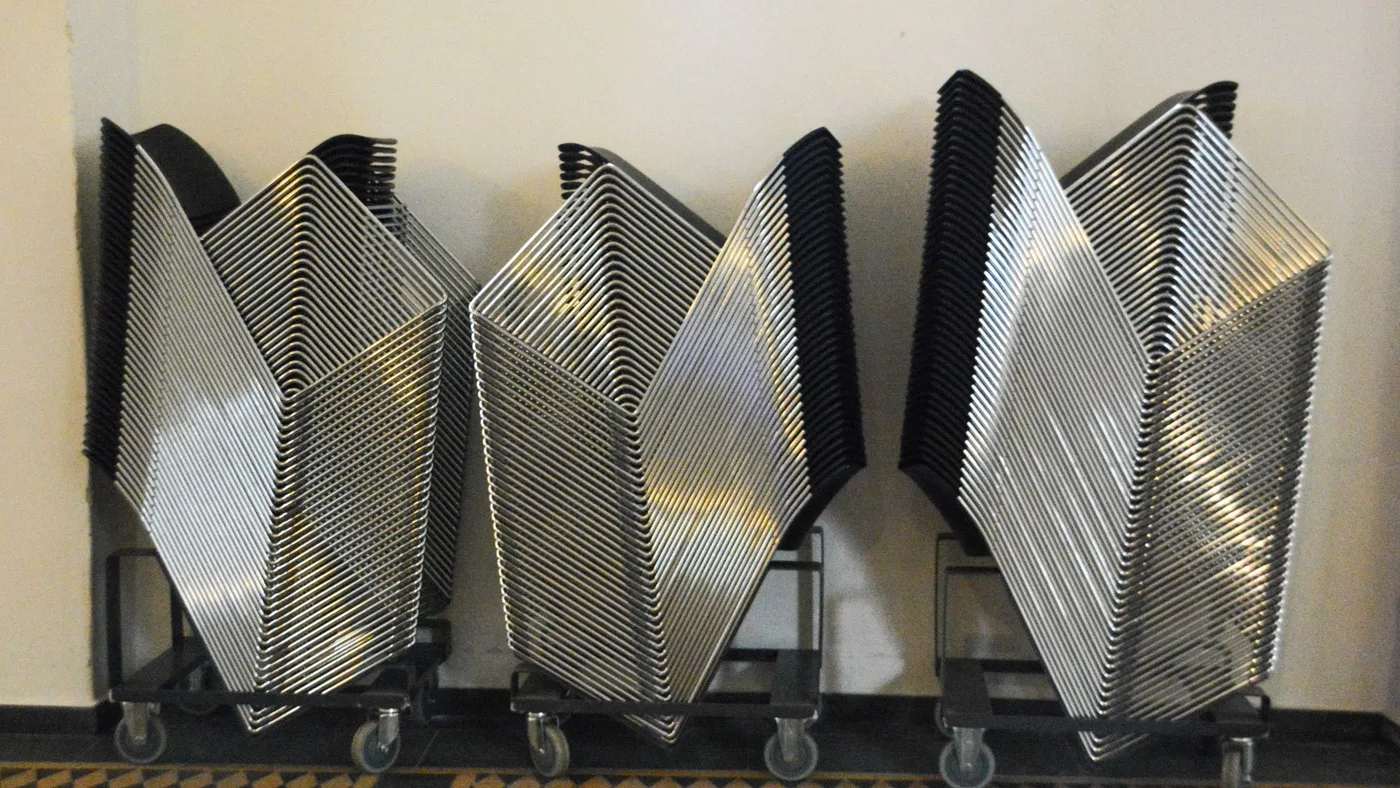
Office furniture is some of the easiest material in a building to keep out of landfill, because it is uniform: metal frames, laminate panels, foam and fabric, repeated across dozens of identical pieces. Here is what a sorted, sustainable disposal involves.
Every office clearance moves devices that still hold company data, and several of them are not the ones people think of. Here is which devices to check, when wiping is enough, and where certified destruction fits.
Office decluttering works when it removes friction from active desks without turning into a full clearance. Use this zone-by-zone plan for paper, equipment, cables, stores and shared areas.

 Guides