Recycling Bins for Apartments in Dubai: What Your Building Provides
The Junk Services Dubai Team 7 min read
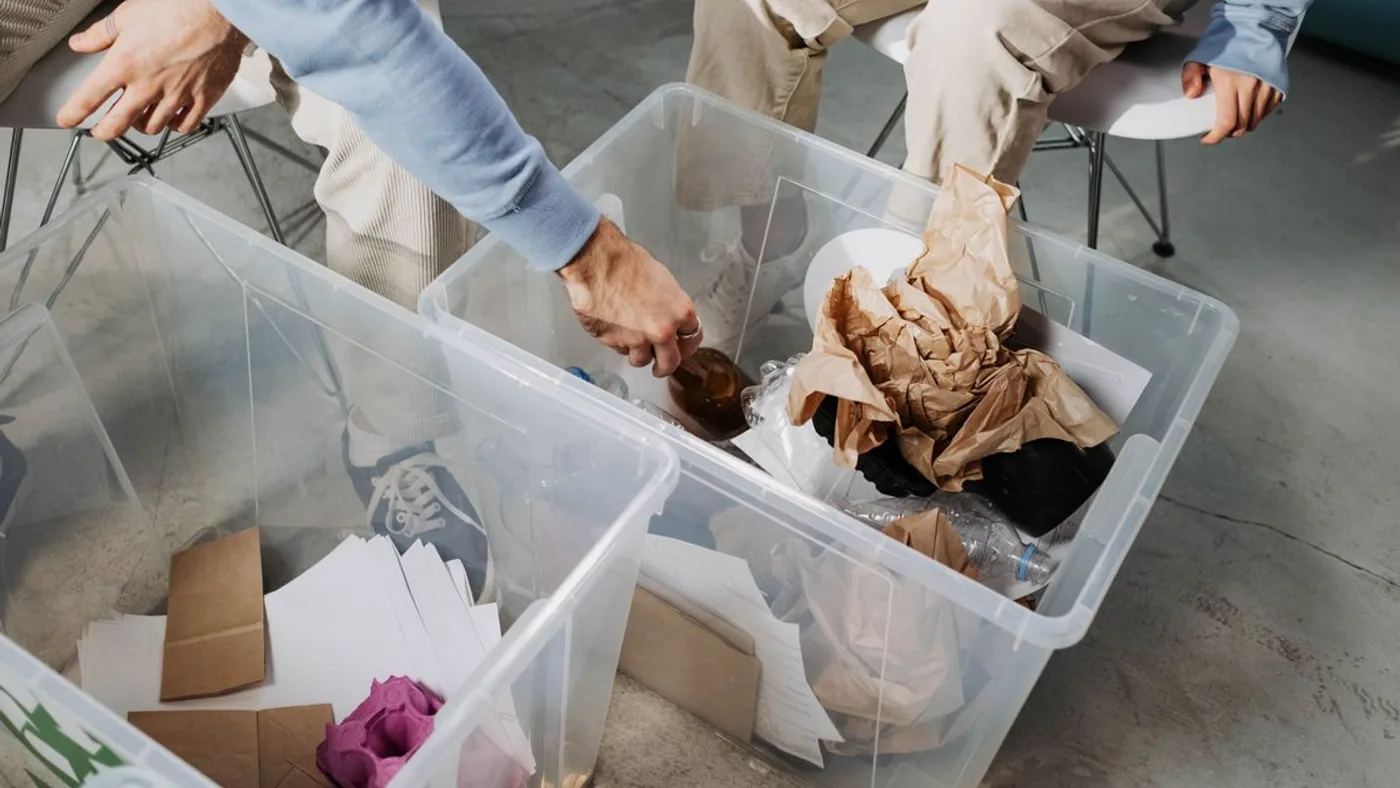
Most recycling advice assumes you have a set of colour-coded bins a few steps from your front door. In a Dubai apartment that is often not what you have. This guide covers what recycling provision looks like inside the city's towers, how to work out which setup yours uses, and what to do with the material your building has no route for.
Recycling provision in Dubai apartments is set building by building rather than city-wide. Two towers on the same street can run entirely different systems, which is why a neighbour's answer is rarely the answer for your address.
Setup
What you see
What you can sort
Where it falls down
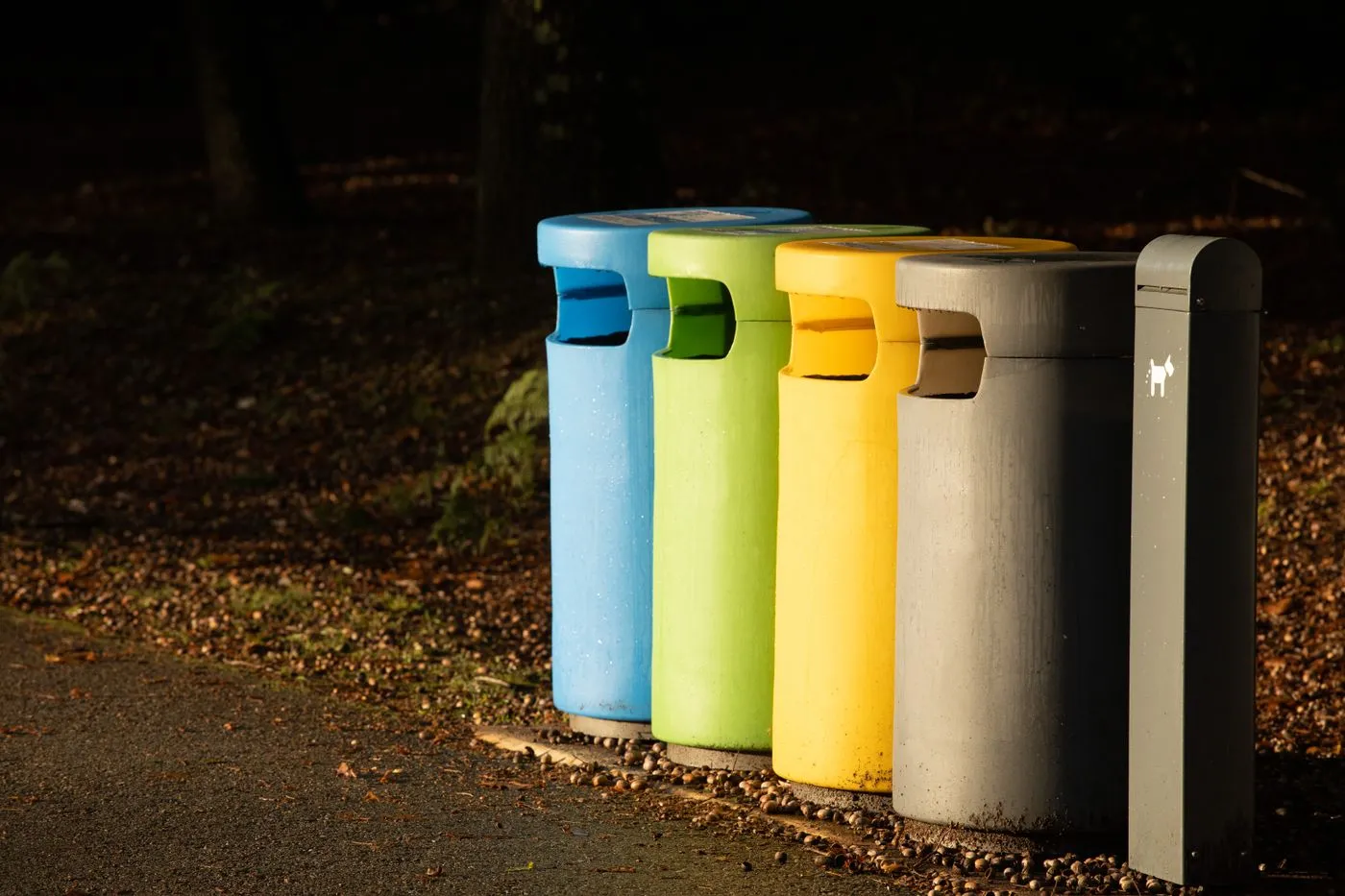
Segregated bin room
Two or more labelled containers in the ground-floor or basement waste room, usually beside the service lift
Dry recyclables kept apart from general waste, sometimes with glass separated again
You carry every recyclable down yourself, since no chute feeds these containers
Community recycling point
Shared containers at a car park edge, a podium level or a cluster serving several buildings
The streams the point is signed for, commonly paper, card, plastics and cans
It sits outside the building, so a trip needs planning rather than being part of taking the rubbish out
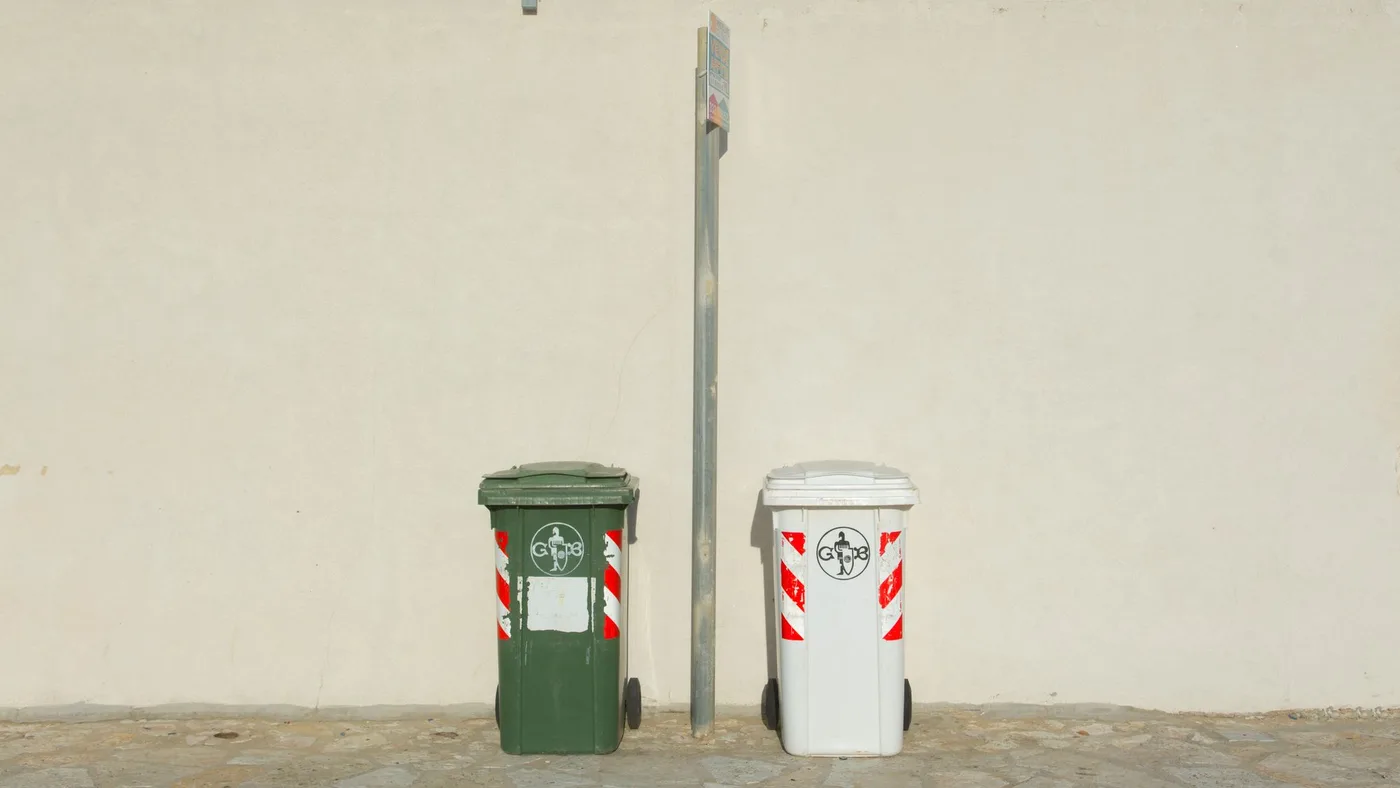
Single chute only
A refuse chute hatch on each residential floor and nothing else
Nothing, unless you arrange a route yourself
Everything posted down the chute is compacted into one mixed load and cannot be separated afterwards
The three recycling arrangements found across Dubai apartment buildings and the practical limit each one imposes.
The chute is the detail worth understanding first. It exists for daily bagged waste, and there is no recycling equivalent of it, so in every setup above the recyclable material travels down in your hands or in the service lift. That single fact shapes every other decision in this article. Our guide to waste segregation at home covers the household routine that feeds whichever route your building offers.
How to Find Out What Your Building Has
Ten minutes of checking saves you from buying containers for streams your building cannot take. Do this before you rearrange a kitchen cupboard around a system with nowhere to go.
1Take the service lift to the ground floor or basement and look at the waste room itself. Labels, container colours and how full each one is tell you more than any notice board.
2Note whether the containers are genuinely separate or whether a single bin sits behind a recycling sign. A sign without a second container is not a recycling route.
3Check the access. Some bin rooms are open to residents at any hour, others sit behind a door only the building's cleaning team uses.
4Ask reception or building management which streams the collection contractor takes away. Provision and collection are two different things, and the second is what matters.
5Walk the perimeter and the car park for a community recycling point serving your cluster, which is common in newer developments even where individual towers have none.
Two containers at a building waste point means two streams, whatever the signage above them promises.
Choosing Containers That Match Your Building
The right number of containers in your apartment is the number of streams your building can receive, plus one for general waste. Any more than that and you end up tipping material back together on the way downstairs, which is the point most households give up.
Buildings with a segregated bin room: Two containers in the kitchen work well: general waste under the sink and dry recyclables in the tallest bin that fits. Dry material is bulky rather than heavy, so height matters more than capacity in litres.
Buildings with a community point only: Use one collection bag or crate kept out of the way and taken down on a fixed day rather than when it fills. A weekly trip becomes a habit; an unpredictable one stays a chore.
Buildings with a chute and nothing else: Keep dry recyclables in a lidded container in a store cupboard and book a sorted collection once the volume justifies a visit, rather than letting it accumulate with no end point.
Flattening is not optional in a tower. A carried load is limited by what fits in your arms and in the lift, so a box left assembled costs you a whole trip. Breaking down delivery cartons as they arrive is the one change that makes apartment recycling sustainable, and it matters far more here than in a villa where a bin stands at the gate.
The Contamination Problem in Shared Bins
A shared container in a residential building collects whatever a hundred households put in it. One bag of food waste is enough for a collection contractor to treat the whole container as general waste, which is why buildings that provide separate bins do not always achieve separate outcomes.
Rinsed, dry and loose is what a shared container needs. Bagged and wet is what downgrades one.
Rinse anything that held food or drink. A residue that would be harmless in a villa bin ferments fast in a warm basement waste room.
Put recyclables in loose rather than sealed inside a black bag, which a sorting line cannot see into and treats as general waste.
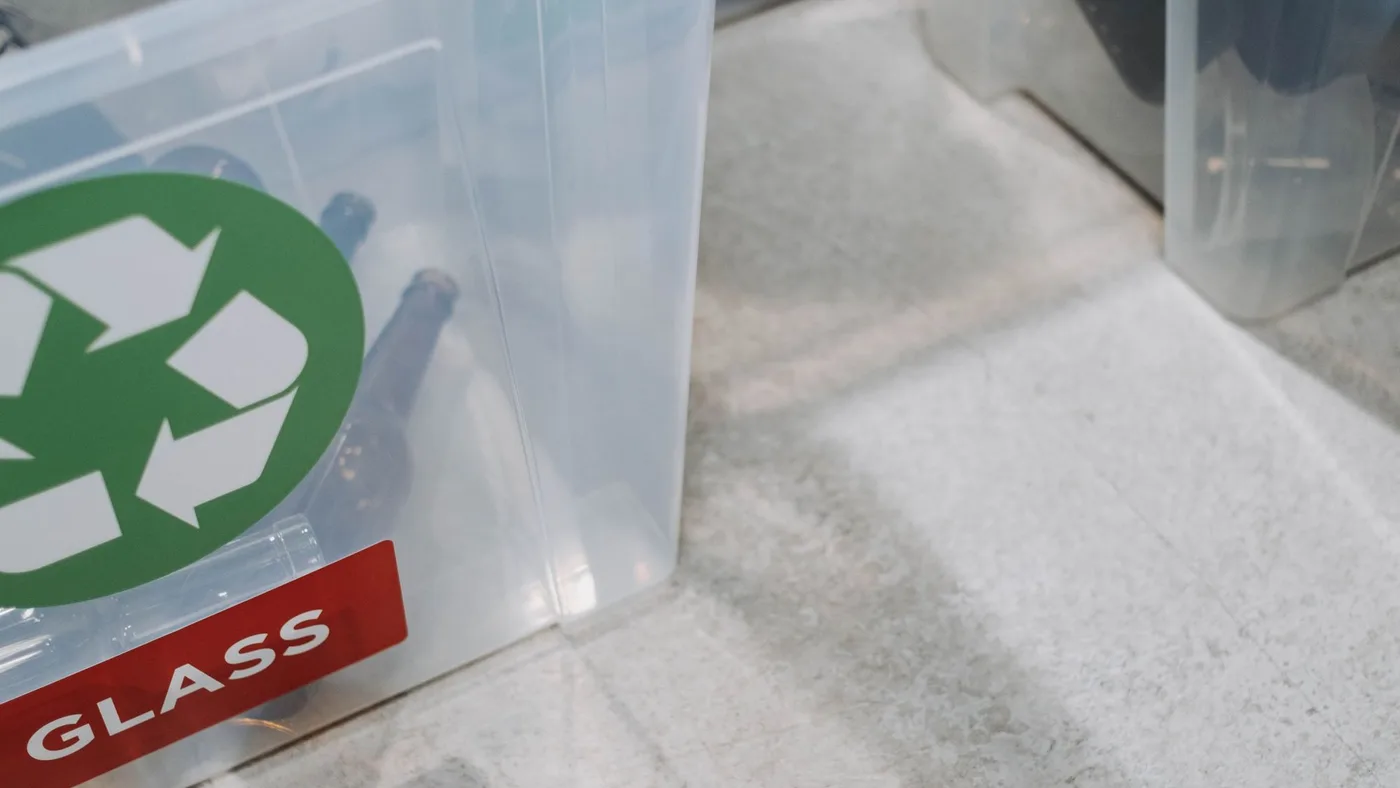
Keep glass out of the paper and card container. Broken glass among fibre is one of the few contaminants nobody can pick back out.
Leave lids on plastic bottles and squash each bottle flat first, so the container holds more before it overflows into the corridor.
Never post anything you have already separated into the chute. The chute compacts, and compaction ends the sorting question.
Materials behave differently once they reach a shared container, and the preparation that protects each one is specific to it. Our guides to paper recycling and glass recycling in Dubai go into the stream-level detail this section only summarises.
What to Do When Your Building Has No Recycling Bins
A tower with a chute and no containers is common, particularly in older buildings around Dubai Marina, Business Bay and JLT where the waste room was designed before segregated collection was a consideration. Nothing about that stops you recycling, but it moves the job from a daily habit to a scheduled one.
Store the dry stream indoors or in a shaded cupboard rather than on the balcony. Between May and September the balcony is the hottest storage in the apartment, and anything unrinsed will announce itself.
Set a volume trigger instead of a calendar one. When the crate is full the trip happens, which stops a corner of the apartment turning into permanent storage.
Book a sorted collection for the accumulated material, which takes the whole lot in one visit and keeps it out of the general load.
Raise it with the owners association if your building has one. Container provision is a building-level decision, and resident requests are how most towers ended up with a bin room in the first place.
A booked recycling collection is the practical answer for a household producing more dry material than a weekly walk downstairs can move, and it is the only route that works at all when the building offers none.
The Material No Building Bin Will Take
Every apartment eventually produces something the bin room was not built for. A waste room is sized for daily bagged rubbish and a few crates of dry recyclables, and items outside that range need their own route however good your building's provision is.
Furniture, mattresses and anything that will not pass through a container lid, which counts as bulky waste and needs a booked collection.
Appliances and electronics, which carry components that have to be recovered rather than crushed inside a mixed load.
Batteries, paint, aerosols and cleaning chemicals, which belong on a specialist route and never in a shared container.
The volume left after a move or a full clear-out, which will fill a bin room and block it for every other resident in the building.
For anything on that list, a scheduled waste removal collection takes it from the apartment door rather than leaving you to negotiate the lift and the bin room with it. Leaving bulky items beside a communal container is the one route that causes a problem with building management every time.
Key Takeaways
Recycling provision in Dubai is set by each building, so two neighbouring towers can offer completely different routes.
There is no recycling chute, which means every recyclable travels down by hand or in the service lift.
Match the number of containers in your apartment to the number of streams your building collects separately.
One bag of food waste can downgrade a whole shared container, so rinse, dry and put material in loose.
Where a building offers nothing, storing the dry stream indoors and booking a sorted collection is the workable alternative.
Why Choose Junk Services Dubai for Apartment Recycling?
As a local, fully insured team, Junk Services Dubai makes clearing your space simple — fast pickups, fair upfront pricing and responsible disposal across every Dubai community.
Built for Tower Access
Our crews work around service lift windows, loading bays and building approval requirements as a matter of routine.
Sorted, Not Mixed
Material you have separated stays separated. We collect streams apart and route each one to its own recovery channel.
One Visit for the Backlog
Months of stored card, plastics and glass go in a single scheduled collection rather than a dozen trips downstairs.
Our editorial team is made up of the crews and coordinators who clear homes, villas and offices across Dubai every day. We share practical, first-hand guidance on decluttering, disposal and responsible waste removal in the UAE.
FAQ
Frequently Asked Questions
There is no single arrangement covering every building. Provision is decided at building or community level, which is why some towers run a fully segregated bin room and others offer nothing beyond a refuse chute.
In the ground-floor or basement waste room, almost always beside the service lift rather than on residential floors. Residential floors carry the refuse chute hatch and nothing else.
No. A chute compacts everything into one mixed load, so separated material posted down it stops being separated the moment it lands. Carry recyclables to the bin room instead.
Two in most apartments: one for general waste and one for dry recyclables. A third earns its space only if your building genuinely collects a third stream separately.
Flatten each box as it arrives and stack the pieces behind a door or in a store cupboard. Flattened card takes a fraction of the space and turns several trips downstairs into one.
It defeats the effort, and it happens where containers are unlabelled or overflowing. Raising it with building management is worth doing, since the fix is usually clearer labelling or a more frequent collection.
Yes. We collect sorted dry recyclables directly from apartments across Dubai, working around service lift hours and building access rules, and route the material to recovery instead of into a mixed load.
Final Thoughts
Recycling in a Dubai apartment is less about willingness than about matching your household routine to what the building downstairs can take. Check the bin room, size your containers to the streams that are genuinely collected, and treat the chute as general waste only.
For the material no shared container will take, from furniture to appliances, a booked collection is the route that keeps it out of the corridor. Our guide to apartment junk removal in Dubai covers how that visit is scheduled around your building.
Recycling Piling Up With Nowhere to Go?
If your building has no recycling route, or the backlog has outgrown the trip downstairs, WhatsApp Us to arrange collection from your apartment door anywhere in Dubai.
A household guide to sorting waste in Dubai: the four streams worth separating, where the containers physically go in an apartment and a villa, and the rinse habit the summer heat makes essential.
What a recycling collection covers in Dubai, which materials leave as separate streams, how to prepare them, and when a booked pickup beats carrying it all downstairs.
Waste rules in Dubai arrive in three layers: the emirate, your community, and your building. Here is what each one governs and what never belongs in a bin.

 Guides